
How Varanasi’s Handloom Weavers Cooperative Is Fighting Back Against Powerloom and Fast Fashion

How Varanasi's Handloom Weavers Cooperative Is Fighting Back Against Powerloom and Fast Fashion

In a narrow lane off Madanpura in Varanasi, a pit loom clacks at a rhythm that has not changed in three centuries — but the man operating it earns less in a month than a food delivery rider earns in a week. I travelled to this ancient ghaat city in early 2026 to understand why Varanasi’s handloom weavers cooperative — once the backbone of a ₹3,000 crore Banarasi silk economy — is now locked in what members call an existential fight against powerloom duplicates and the ruthless economics of fast fashion.

Mohammed Irfan, a third-generation weaver in the Lohta cluster, showed me a kadhua brocade saree he spent 22 days weaving. His cooperative pays him approximately ₹8,500 for it. An almost-identical powerloom copy, produced in Surat in under four hours, retails on e-commerce platforms for ₹1,200. That single statistic tells you everything about the crisis — and the courage it takes to keep the loom running.

Read more

The Coconut Cooperative of Thrissur That Took on Multinational FMCG Companies — and Won

The Coconut Cooperative of Thrissur That Took on Multinational FMCG Companies — and Won

In the summer of 2019, a coconut farmer named Rajan in Irinjalakuda, Thrissur district, sold his entire seasonal harvest — roughly 12,000 coconuts — to a local copra trader for ₹5.80 per nut. After deducting transport and labour, he pocketed about ₹58,000 for six months of work. Forty kilometres away, a bottle of virgin coconut oil carrying a cooperative label from his own district was retailing at ₹430 per litre in a Kochi supermarket. The arithmetic was cruel and simple: the farmer who grew the coconut earned a fraction of what the processor who branded it took home. That gap — between the palm and the shelf — is what one cooperative federation in Thrissur decided to collapse.

I first encountered this story while reporting on Kerala’s cooperative ecosystem for IICTF, and what I found challenged nearly every assumption I had about cooperatives being slow, bureaucratic, and incapable of competing in modern FMCG markets. This is the account of how a network of coconut producer societies in Thrissur built a supply chain, launched branded products, entered supermarket shelves dominated by Marico’s Parachute and Dabur, and actually grew market share — all without a single venture capital rupee.

Read more

How Himachal’s Apple Growers Cooperative Beat the Middlemen Who Were Taking 60% of Their Income

How Himachal's Apple Growers Cooperative Beat the Middlemen Who Were Taking 60% of Their Income

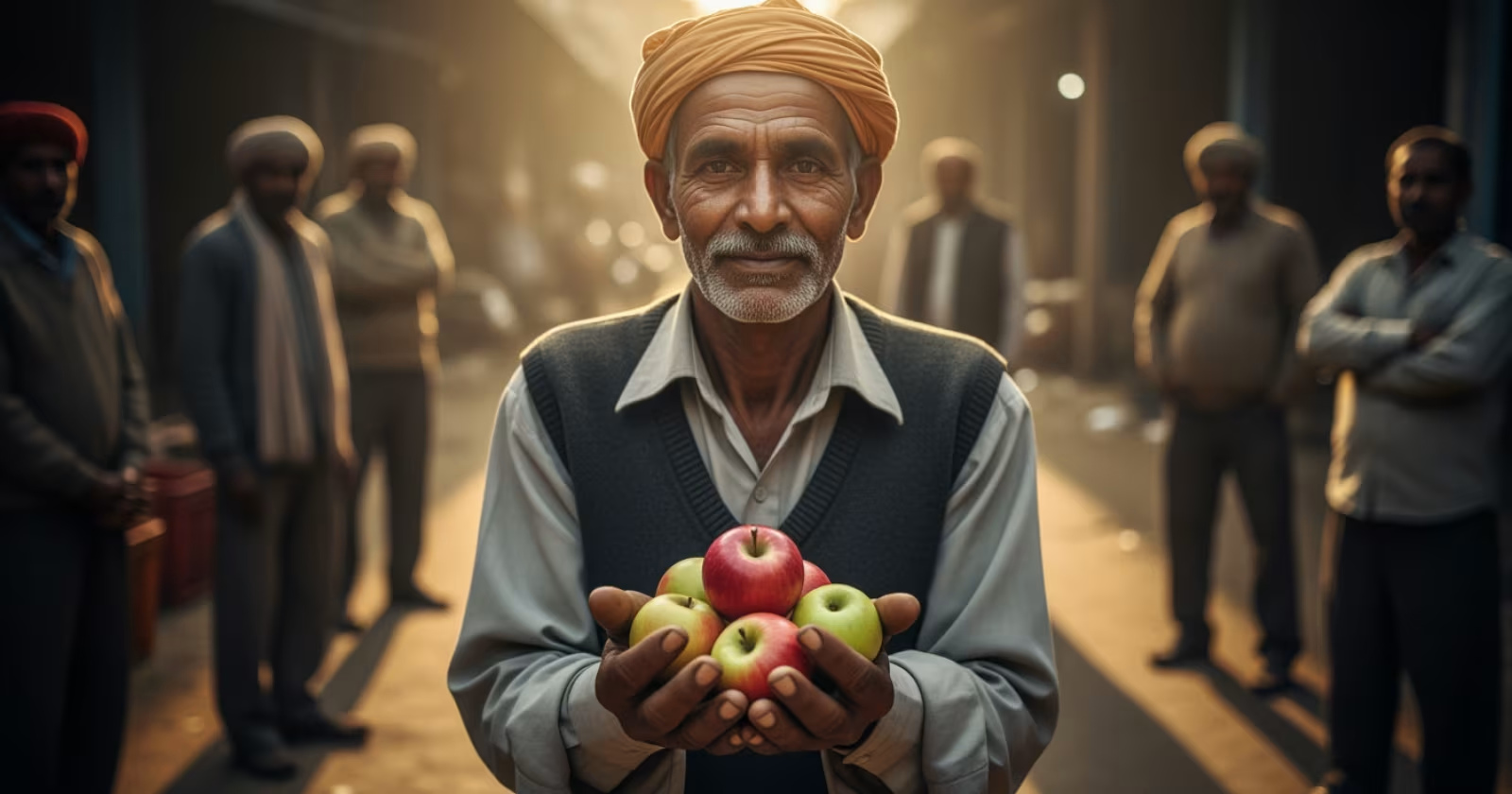
In the autumn of 2023, a small-holding apple farmer in Kotkhai, Shimla district, watched a commission agent in Delhi’s Azadpur Mandi sell his Royal Delicious apples at ₹120 per kilogram — while he had received just ₹38 per kg at the farm gate. The arithmetic was brutal: the middleman chain swallowed roughly 60% of the final consumer price, leaving the person who actually grew the fruit with barely enough to cover inputs. That farmer’s name was among the first 200 to join a restructured fruit growers’ cooperative that would, within two seasons, change the equation entirely.

I have been tracking the cooperative movement in India‘s hill states for years, and what happened next in Himachal’s apple belt is one of the most compelling turnaround stories I have encountered. It is not a story of government subsidy alone — it is a story of growers choosing collective bargaining over individual helplessness.

Read more

Indian Cooperative Societies Have a Fraud Problem — Blockchain Might Be the Only Fix

Indian Cooperative Societies Have a Fraud Problem — Blockchain Might Be the Only Fix

In Sangli district, Maharashtra, a sugarcane farmer named Ramesh Patil discovered in late 2024 that ₹14 lakh he had deposited over seven years into his local cooperative credit society had essentially vanished. The society’s books showed a healthy balance, but a forensic audit — triggered only after members staged a three-day sit-in — revealed that the managing committee had been siphoning funds through ghost loans, fictitious member accounts, and inflated procurement bills. Patil’s story is not an outlier. It is the norm across thousands of cooperative societies in India, where trust-based systems have become breeding grounds for financial manipulation on a staggering scale.

I have been tracking the cooperative sector for over a decade, and the pattern is depressingly consistent: charismatic local leaders capture cooperative boards, manipulate paper-based ledgers, disburse loans to shell members, and funnel public money into private pockets. The Reserve Bank of India flagged cooperative bank frauds worth approximately ₹1,875 crore in the 2023-24 fiscal year alone. The real number, when you factor in non-banking cooperative societies — dairy, sugar, housing, fisheries — is almost certainly multiples of that figure. And this is precisely why blockchain technology, once dismissed as a crypto-bro fantasy, is now being seriously discussed in the corridors of the Ministry of Cooperation as a structural fix.

Read more

UP’s Sugar Belt Has 100+ Cooperative Mills — Most Are Sick, A Few Are Thriving — Here’s the Difference

UP's Sugar Belt Has 100+ Cooperative Mills — Most Are Sick, A Few Are Thriving — Here's the Difference

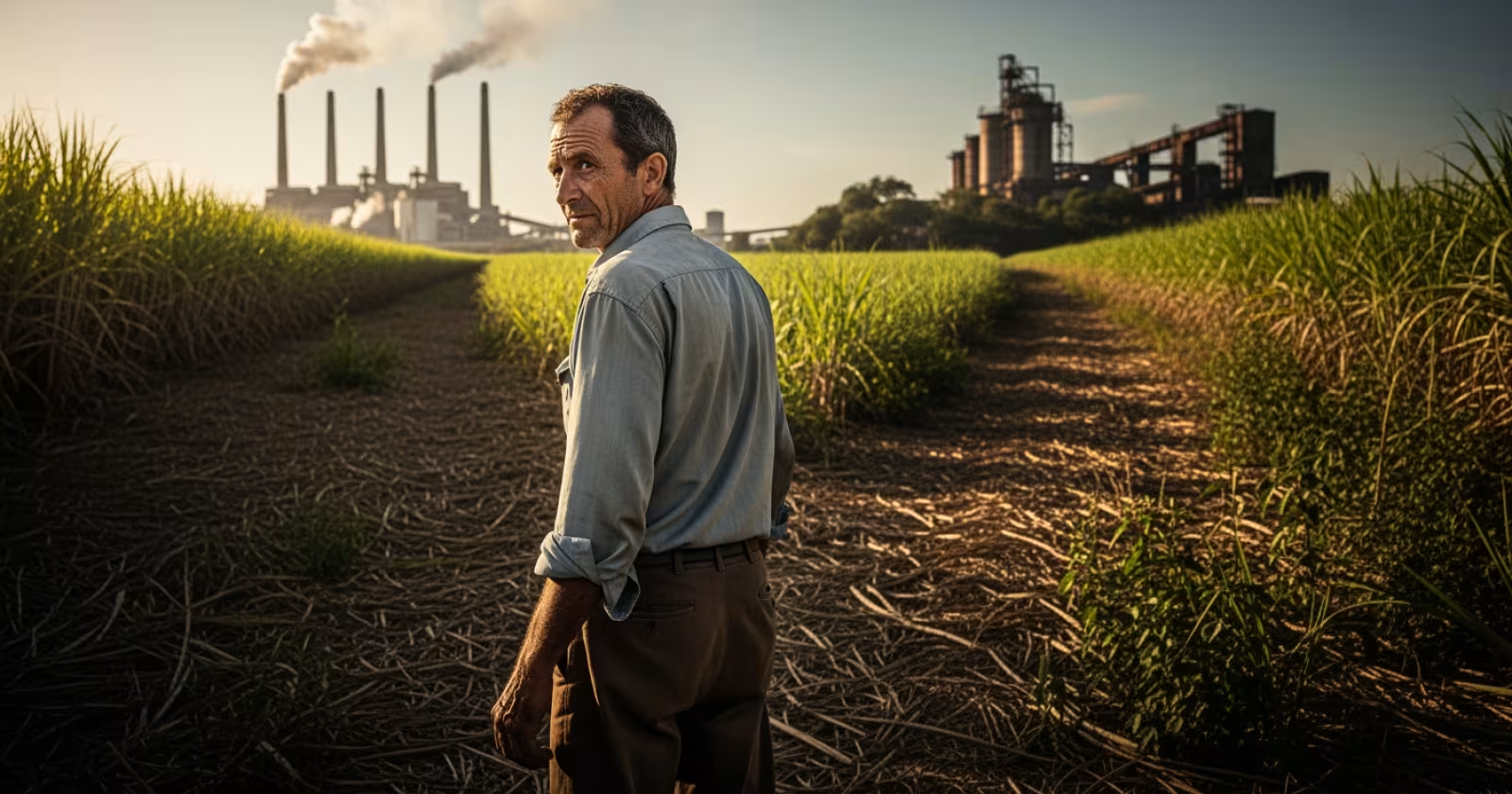
In Shamli district, barely two hours from Delhi, a rusted padlock hangs on the gates of a cooperative sugar mill that once crushed 2,500 tonnes of cane daily. Weeds push through the concrete yard. The boiler house, silent since the 2019-20 season, looks like an industrial ruin. Seven kilometres east, another cooperative mill — similar vintage, similar capacity — hums through the crushing season, pays farmers within fourteen days, and posted an operating surplus of approximately ₹11 crore last year. I have spent months trying to understand what separates the dead from the living in Uttar Pradesh’s cooperative sugar sector, and the answer is far more uncomfortable than “poor management.”

Uttar Pradesh produces more sugar than any other Indian state — over 12 million tonnes in the 2026-26 season by most estimates. Yet its cooperative sugar mills, once envisioned as farmer-owned engines of rural prosperity, are overwhelmingly sick. Of the 100-plus cooperative mills established across the sugar belt spanning Muzaffarnagar, Shamli, Meerut, Saharanpur, Bijnor, and parts of Rohilkhand, only a fraction operate at viable capacity today. The rest are closed, partially functional, or surviving on government lifelines.

Read more

How Karnataka’s Coffee Cooperative in Coorg Exports to Starbucks Without Losing Farmer Control

How Karnataka's Coffee Cooperative in Coorg Exports to Starbucks Without Losing Farmer Control

In the mist-wrapped hills of Kodagu district, a 62-year-old grower named Suresh Ponnappa tends to four acres of Arabica coffee that his grandfather first planted in the 1940s. His entire annual harvest — roughly 1,200 kilograms of cherry — now travels from his small estate to a Starbucks Reserve counter in Mumbai. Yet Suresh has never spoken to a single Starbucks buyer. His cooperative did that for him, negotiating a price nearly ₹40 per kilogram higher than what the local trader offered last season. I travelled to Coorg in early 2026 to understand how this arrangement actually works, and what I found challenged almost everything I assumed about Indian cooperatives.

This is not just a feel-good story about farmers and fair trade. It is a structural lesson in how a cooperative coffee model in Karnataka has cracked the export supply chain to one of the world’s largest coffee brands — without surrendering governance to corporate intermediaries or government bureaucrats. At a time when the Ministry of Cooperation is pushing to modernise India’s 8.5 lakh cooperative societies, Kodagu’s coffee growers offer a rare working blueprint.

Read more

How MP’s Tribal Cooperative TRIFED Is Turning Forest Produce Into Premium Export Products

How MP's Tribal Cooperative TRIFED Is Turning Forest Produce Into Premium Export Products

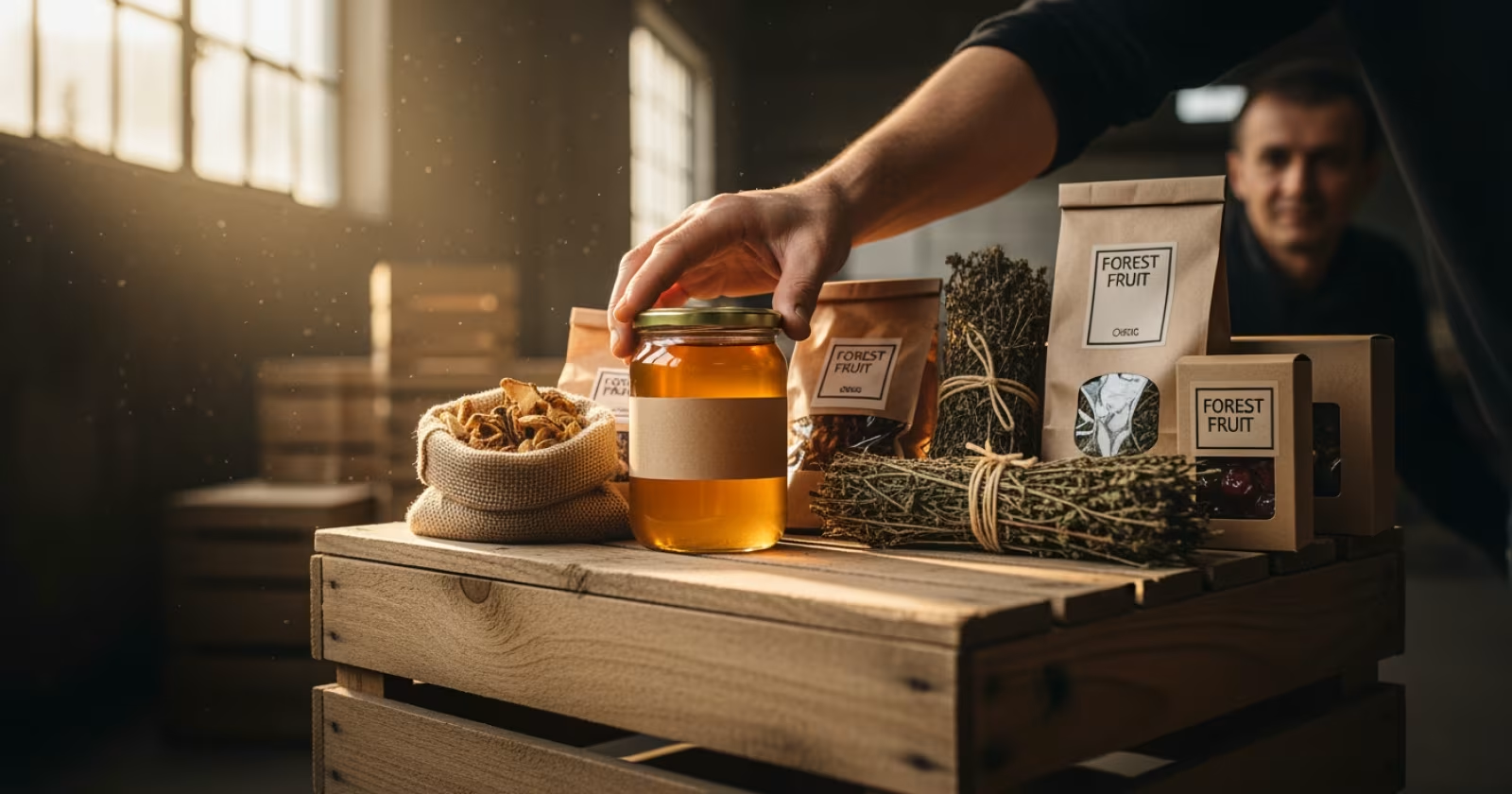
In Dindori district’s Karanjia village, a Baiga tribal woman named Sukhiyabai earned ₹47,000 in a single season selling processed mahua flowers and sal seeds — nearly three times what middlemen paid her just four years ago. Her story is not an outlier. It is the direct result of a cooperative infrastructure quietly reshaping how India‘s … Read more

Fonterra vs Amul: One Dairy Cooperative Made Farmers Rich, the Other Didn’t — Here’s Why

Fonterra vs Amul: One Dairy Cooperative Made Farmers Rich, the Other Didn't — Here's Why

In the village of Kuha, roughly forty kilometres from Anand in Gujarat, a woman named Ramaben pours eight litres of buffalo milk into a steel canister every morning. She earns approximately ₹57 per litre — deposited directly into her bank account within days. Halfway across the planet, in the Waikato region of New Zealand, a Fonterra shareholder-farmer checks a global commodity index before breakfast, knowing that his annual payout depends not on local consumers but on the price Chinese importers are willing to pay for whole milk powder. Two cooperatives, both claiming to serve farmers first — but only one has consistently delivered on that promise.

I have spent years tracking the cooperative dairy sector across continents, and this comparison haunts me because it reveals something fundamental: structure determines destiny. The way a cooperative is designed — who controls it, where its revenue comes from, how decisions flow — matters more than scale, technology, or even geography. And the Amul-Fonterra divergence is the sharpest case study I know.

Read more

40 Auto-Rickshaw Drivers in Pune Built a Cooperative — Now Ola and Uber Have a Problem

40 Auto-Rickshaw Drivers in Pune Built a Cooperative — Now Ola and Uber Have a Problem

Somewhere in Pune’s Kothrud neighbourhood, a man named Raju Shinde used to earn roughly ₹900 a day ferrying passengers through the city’s chaotic traffic. That was before Ola and Uber slashed fares and flooded his routes with incentivised drivers. By 2023, his daily take-home had dropped to ₹500 on good days, and nearly 25% of that vanished into app commissions. Then, in early 2024, Shinde and 39 other auto-rickshaw drivers in his locality did something that most gig economy observers didn’t see coming — they registered a cooperative society under the Maharashtra Cooperative Societies Act and launched their own ride-hailing service.

I first heard about this initiative through a cooperative sector contact in Maharashtra, and frankly, I was sceptical. A forty-member auto-rickshaw cooperative going up against billion-dollar platforms? It sounded like a headline designed for social media sympathy, not a sustainable business. But the more I dug into it, the more I realised this wasn’t a stunt. It was a structural response to a structural problem — and it carries lessons for the entire cooperative movement in India.

Read more

How Rajasthan’s Women Dairy Cooperatives Are Quietly Out-Earning the Men in Rural Households

How Rajasthan's Women Dairy Cooperatives Are Quietly Out-Earning the Men in Rural Households

In a dusty village called Bansur in Alwar district, a woman named Kamla Devi walks to the milk collection centre every morning at 5:30 AM, balancing two steel canisters on her head. She pours approximately 14 litres of buffalo milk into the cooperative’s bulk cooler, collects her digital receipt, and walks home — having already earned more that day than her husband will from his rain-dependent mustard crop all week. Across Rajasthan, this scene is repeating itself in thousands of villages, and the numbers tell a story that few policy reports have bothered to narrate properly.

I have been tracking India‘s cooperative movement for years, and what is unfolding in Rajasthan’s dairy sector deserves serious attention. Women members of dairy cooperatives in the state are now contributing, on average, ₹8,000 to ₹12,000 per month to household income — figures that frequently surpass what male family members bring in from traditional agriculture. This is not a government press release talking point. This is a quiet economic revolution happening one milk canister at a time.

Read more