What Happens When Weavers Own the Factory? India Has the Answer

What Happens When Weavers Own the Factory? India Has the Answer

A master weaver in Varanasi can spend three months producing a single Banarasi silk sari worth ₹40,000 in a Delhi boutique — and walk away with less than ₹4,000 of that. The gap between what skilled hands create and what they earn has defined India’s handloom economy for generations — until a quiet ownership revolution … Read more

How Varanasi’s Handloom Weavers Cooperative Is Fighting Back Against Powerloom and Fast Fashion

How Varanasi's Handloom Weavers Cooperative Is Fighting Back Against Powerloom and Fast Fashion

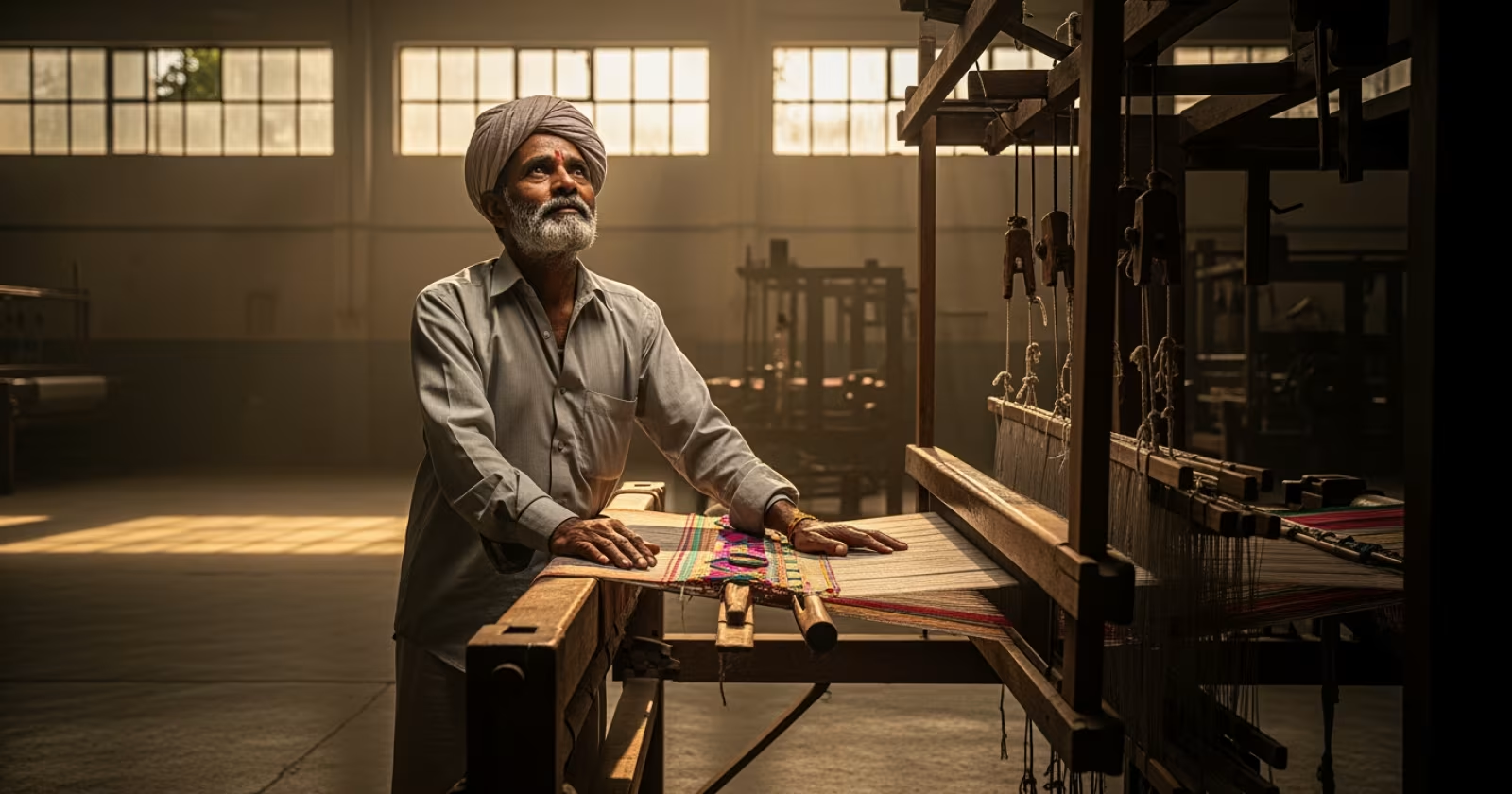
In a narrow lane off Madanpura in Varanasi, a pit loom clacks at a rhythm that has not changed in three centuries — but the man operating it earns less in a month than a food delivery rider earns in a week. I travelled to this ancient ghaat city in early 2026 to understand why Varanasi’s handloom weavers cooperative — once the backbone of a ₹3,000 crore Banarasi silk economy — is now locked in what members call an existential fight against powerloom duplicates and the ruthless economics of fast fashion.

Mohammed Irfan, a third-generation weaver in the Lohta cluster, showed me a kadhua brocade saree he spent 22 days weaving. His cooperative pays him approximately ₹8,500 for it. An almost-identical powerloom copy, produced in Surat in under four hours, retails on e-commerce platforms for ₹1,200. That single statistic tells you everything about the crisis — and the courage it takes to keep the loom running.
Read more

Jaipur’s Carpet Weavers Are Disappearing — A Cooperative Might Be the Only Thing That Can Save Them

Jaipur's Carpet Weavers Are Disappearing — A Cooperative Might Be the Only Thing That Can Save Them

In a narrow lane behind Jaipur’s Sanganer bypass, Ramlal Meena sits before a wooden loom that his grandfather built in 1971. His fingers move mechanically, knotting wool into a pattern he has repeated for thirty years. But the order pinned to his wall — a single 6×9 carpet for a Delhi exporter — is the … Read more

Co-optex Has 65,000 Weavers and Zero Venture Capital — Tamil Nadu’s Cooperative That Silicon Valley Can’t Explain

Co-optex Has 65,000 Weavers and Zero Venture Capital — Tamil Nadu's Cooperative That Silicon Valley Can't Explain

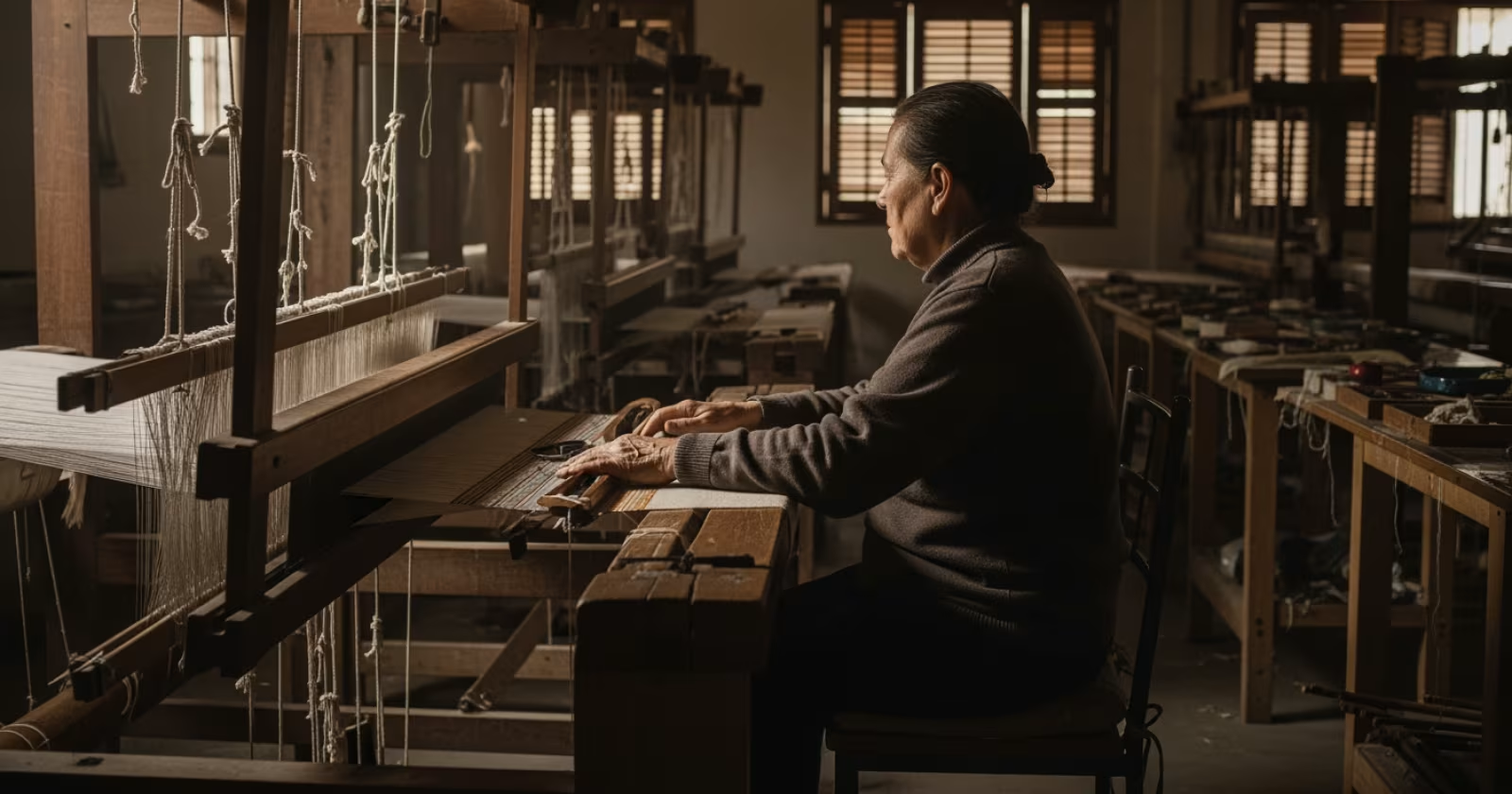
In a small cement-floored shed in Kanchipuram district, a woman named Lakshmi operates a pit loom that is older than most startups’ founding documents. She earns approximately ₹9,000 a month weaving silk sarees — each one taking four to twelve days — and she has never heard the phrase “series A funding.” Yet the organisation that buys her fabric, markets it across India, and deposits money into her bank account operates at a scale that would make many venture-backed D2C brands envious. I find that irony impossible to ignore.

That organisation is Co-optex — formally known as the Tamil Nadu Handloom Weavers’ Co-operative Society — and it connects roughly 65,000 weavers across the state to consumers through a network of showrooms, exhibitions, and increasingly, digital channels. It has no equity investors, no cap table, and no Silicon Valley pitch deck. It runs on membership fees, government support, and the sheer stubbornness of a model that was born in 1935.

Read more