
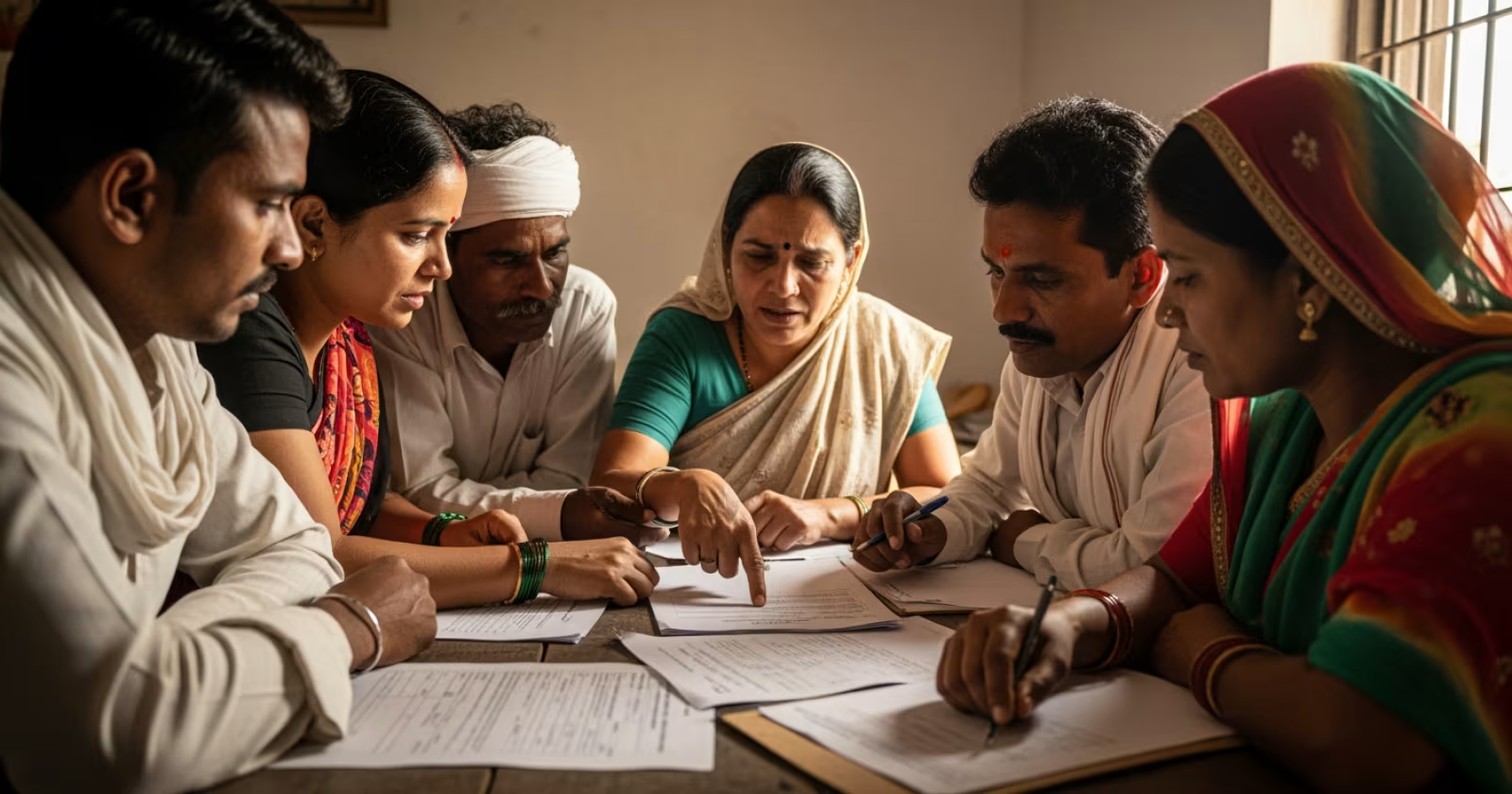








In January 2019, the secretary of a housing cooperative society in Pune’s Kothrud neighbourhood opened a tax demand notice for ₹3.8 lakh. Her society had collected monthly maintenance from 84 flat-owners for years — money that everyone understood moved from residents to the collective and straight back out as building services. Nobody had imagined it as a “supply of services.” Nobody had thought they needed a GST registration number. That envelope was the moment I first understood how completely the new tax architecture had unsettled India‘s cooperative sector.
How Farmer Producer Organizations Differ from Cooperatives

Two farmers sitting in the same village, growing the same crop, can belong to two entirely different organizational structures — and that single difference can shape their income, bargaining power, and market access for decades. I’ve spent considerable time studying both models, and the distinctions between them are far more significant than most people realize. … Read more