


Fonterra vs Amul: One Dairy Cooperative Made Farmers Rich, the Other Didn’t — Here’s Why

Fonterra vs Amul: One Dairy Cooperative Made Farmers Rich, the Other Didn't — Here's Why

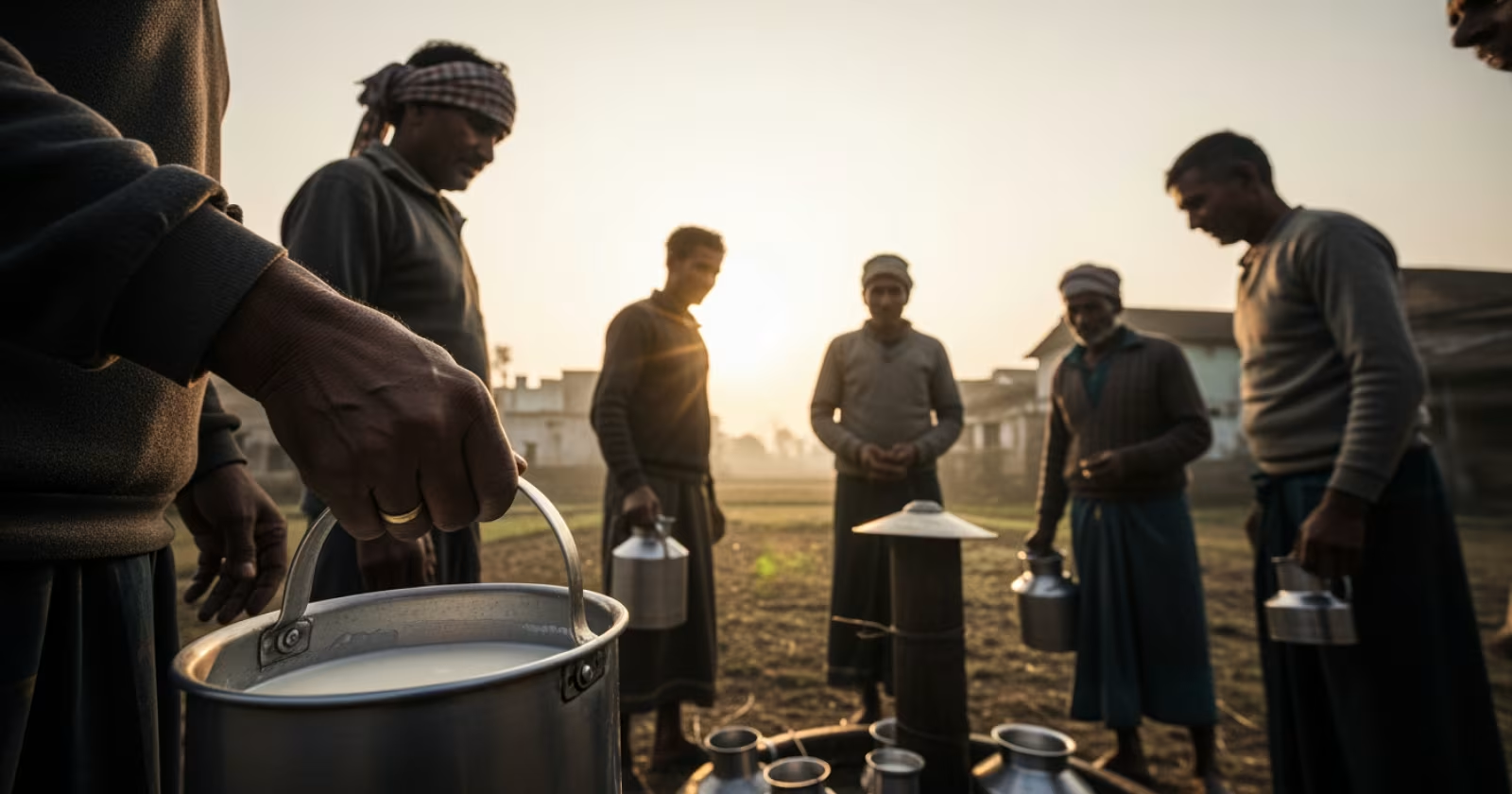
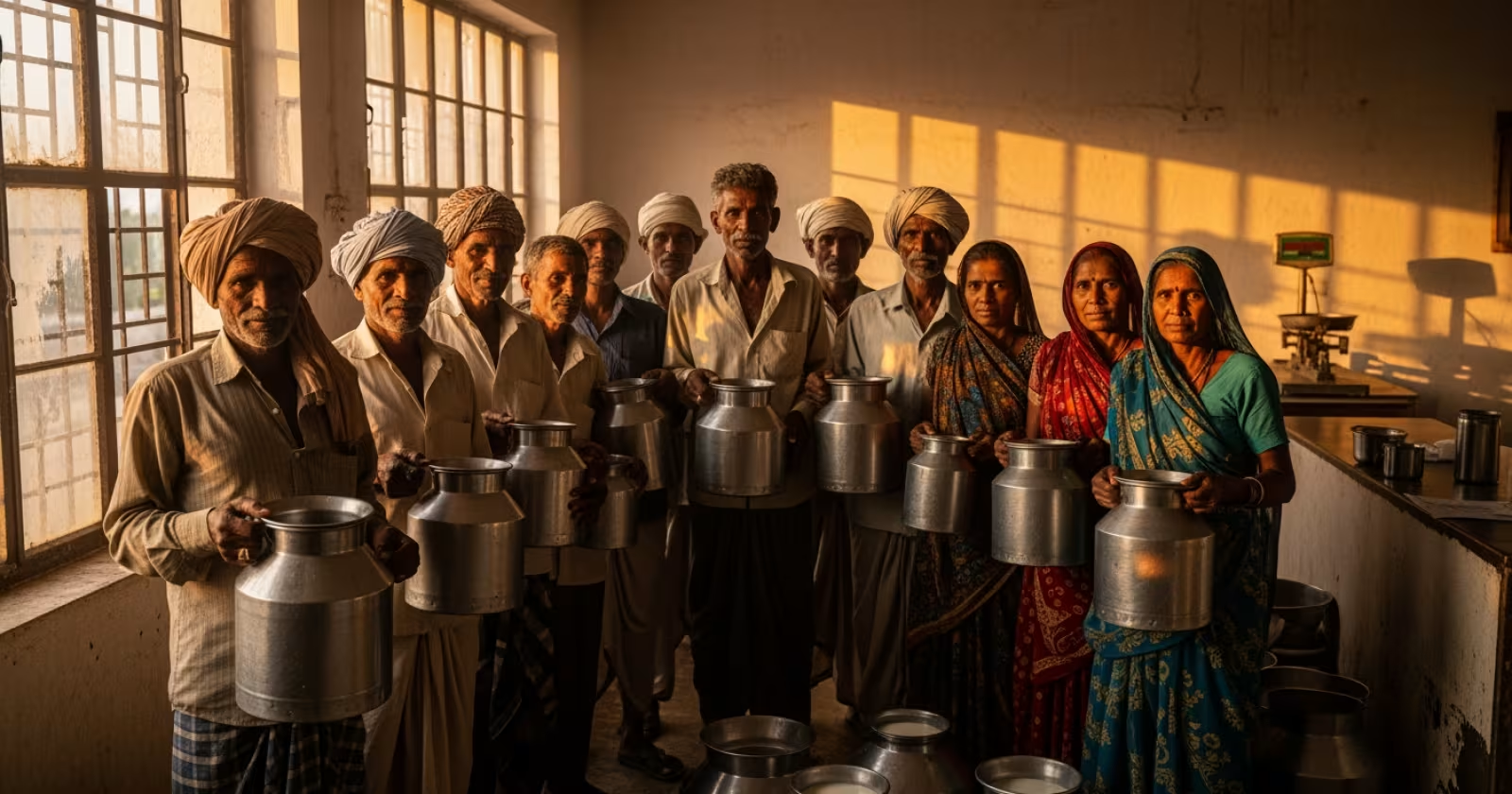
In the village of Kuha, roughly forty kilometres from Anand in Gujarat, a woman named Ramaben pours eight litres of buffalo milk into a steel canister every morning. She earns approximately ₹57 per litre — deposited directly into her bank account within days. Halfway across the planet, in the Waikato region of New Zealand, a Fonterra shareholder-farmer checks a global commodity index before breakfast, knowing that his annual payout depends not on local consumers but on the price Chinese importers are willing to pay for whole milk powder. Two cooperatives, both claiming to serve farmers first — but only one has consistently delivered on that promise.

I have spent years tracking the cooperative dairy sector across continents, and this comparison haunts me because it reveals something fundamental: structure determines destiny. The way a cooperative is designed — who controls it, where its revenue comes from, how decisions flow — matters more than scale, technology, or even geography. And the Amul-Fonterra divergence is the sharpest case study I know.
Read more

The Amul Story Keeps Repeating Itself — And That’s a Beautiful Thing

The Amul Story Keeps Repeating Itself — And That's a Beautiful Thing

When a small group of farmers in Anand, Gujarat handed their milk cans to a barely-organized cooperative in 1946, they weren’t launching a brand — they were staging a revolt. That act of collective defiance against exploitative middlemen became the seed of what is now India‘s largest food products organization, one whose annual turnover has … Read more

This 100-Year-Old Business Model Is Disrupting Indian Retail in 2026

This 100-Year-Old Business Model Is Disrupting Indian Retail in 2026

While Blinkit and Zepto were burning through hundreds of crores in venture capital to deliver groceries in 10 minutes, a business model born in a British mill town in 1844 was quietly outpacing both of them in the Indian heartland. Nobody in a Mumbai boardroom saw it coming — but the numbers in 2026 are … Read more

The Cooperative Movement That Quietly Feeds Half of India Every Morning

The Cooperative Movement That Quietly Feeds Half of India Every Morning

Before most of India wakes up, a chain of 3.6 million dairy farmers has already set the morning in motion. Every glass of milk, every cup of chai, every cube of butter on a breakfast plate carries the quiet fingerprints of one of the most consequential economic experiments any democracy has ever attempted — and … Read more

India’s Rural Economy Has a Secret Weapon: It’s Called Cooperative Trade

India's Rural Economy Has a Secret Weapon: It's Called Cooperative Trade

When AMUL’s annual turnover crossed ₹72,000 crore in the fiscal year ending 2026, most business desks treated it as a corporate milestone worth a paragraph. What they consistently missed is that AMUL is not a corporation — it is 3.6 million dairy farmers across Gujarat who collectively own every rupee of that figure, and that … Read more

How AMUL Built a ₹72,000 Crore Cooperative Empire

How AMUL Built a ₹72,000 Crore Cooperative Empire

A tiny milk cooperative born out of a farmer revolt against exploitative middlemen in 1946 now commands annual revenues exceeding ₹72,000 crore. I find this story endlessly fascinating because it proves that millions of small dairy farmers, when organized under a cooperative structure, can outperform multinational corporations and reshape an entire nation’s food economy. The … Read more