IFFCO Was Born in Gujarat — Here’s the Untold Story of How It Became the World’s Largest Fertiliser Cooperative

IFFCO Was Born in Gujarat — Here's the Untold Story of How It Became the World's Largest Fertiliser Cooperative

In the summer of 1966, a groundnut farmer in Mehsana district, Gujarat, watched his crop wilt — not from drought, but from the sheer impossibility of buying fertiliser at a price he could afford. That year, India imported nearly 60% of its fertiliser requirement, and private traders in rural Gujarat marked up prices by margins that made farming a losing bet. I have spent years covering the cooperative sector, and no origin story fascinates me quite like what happened next — how that farmer’s desperation became the seed for an institution that now serves over 35,000 cooperative societies and touches the lives of approximately 50 million Indian farmers.

The institution I am talking about is Indian Farmers Fertiliser Cooperative Limited (IFFCO), registered on 3 November 1967. What most people do not know is that IFFCO was not a government project imposed from Delhi. It was a grassroots demand, channelled through cooperative networks in Gujarat, that eventually convinced policymakers to back one of the boldest experiments in India’s agricultural history.

Read more

Your Cooperative Chairman Is Corrupt — Here’s the Legal Way to Remove Him

Your Cooperative Chairman Is Corrupt — Here's the Legal Way to Remove Him

Last monsoon, in Osmanabad district of Maharashtra, a dairy farmer named Ramesh Jadhav watched his Primary Agricultural Credit Society (PACS) chairman approve a ₹14 lakh fertiliser contract with his own brother-in-law’s supply firm. Fourteen members knew it was wrong. Not one knew what to do about it. I’ve heard versions of this story from Rajasthan … Read more

Rajasthan’s Last-Mile Farmers Need Credit — Here’s Which Grameen Cooperatives Are Actually Reaching Them

Rajasthan's Last-Mile Farmers Need Credit — Here's Which Grameen Cooperatives Are Actually Reaching Them

In Barmer district’s Chohtan tehsil, a groundnut farmer named Ramdev Bishnoi walked seventeen kilometres last monsoon season to reach the nearest bank branch — only to be told his loan application would take another forty-five days. By then, the sowing window had closed. He returned home, borrowed ₹38,000 from a local moneylender at 36% annual … Read more

UP’s Sugar Belt Has 100+ Cooperative Mills — Most Are Sick, A Few Are Thriving — Here’s the Difference

UP's Sugar Belt Has 100+ Cooperative Mills — Most Are Sick, A Few Are Thriving — Here's the Difference

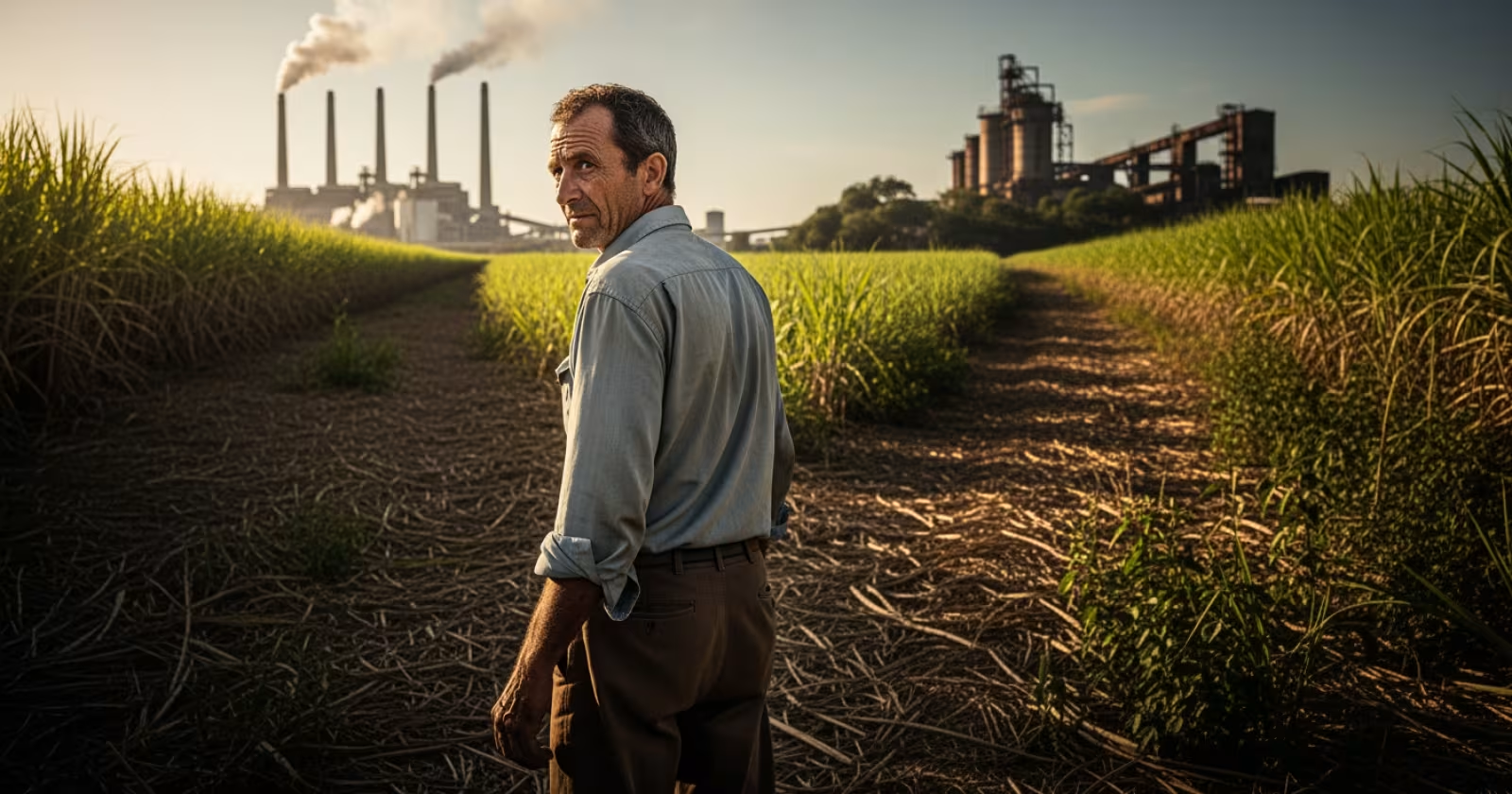
In Shamli district, barely two hours from Delhi, a rusted padlock hangs on the gates of a cooperative sugar mill that once crushed 2,500 tonnes of cane daily. Weeds push through the concrete yard. The boiler house, silent since the 2019-20 season, looks like an industrial ruin. Seven kilometres east, another cooperative mill — similar vintage, similar capacity — hums through the crushing season, pays farmers within fourteen days, and posted an operating surplus of approximately ₹11 crore last year. I have spent months trying to understand what separates the dead from the living in Uttar Pradesh’s cooperative sugar sector, and the answer is far more uncomfortable than “poor management.”

Uttar Pradesh produces more sugar than any other Indian state — over 12 million tonnes in the 2026-26 season by most estimates. Yet its cooperative sugar mills, once envisioned as farmer-owned engines of rural prosperity, are overwhelmingly sick. Of the 100-plus cooperative mills established across the sugar belt spanning Muzaffarnagar, Shamli, Meerut, Saharanpur, Bijnor, and parts of Rohilkhand, only a fraction operate at viable capacity today. The rest are closed, partially functional, or surviving on government lifelines.

Read more