

Maharashtra’s Sugar Cooperatives Don’t Just Make Sugar — They Make Chief Ministers

Maharashtra's Sugar Cooperatives Don't Just Make Sugar — They Make Chief Ministers

In Sangli district’s dusty town of Walwa, a single sugar factory controls more than sweetness — it controls who gets elected to the state assembly, who gets a bank loan, and whose son gets a government job. I have spent years tracking India‘s cooperative movement, and nowhere is the entanglement between cooperative economics and raw political power more visible than in Maharashtra’s western sugar belt.

This is not a story about agriculture alone. This is the story of how a network of roughly 200 cooperative sugar factories across Maharashtra became the most effective political machine in Indian democracy — one that has produced at least seven chief ministers, dozens of cabinet ministers, and an entire class of rural oligarchs who straddle the worlds of farming, industry, and governance simultaneously.

Read more

How Himachal’s Apple Growers Cooperative Beat the Middlemen Who Were Taking 60% of Their Income

How Himachal's Apple Growers Cooperative Beat the Middlemen Who Were Taking 60% of Their Income

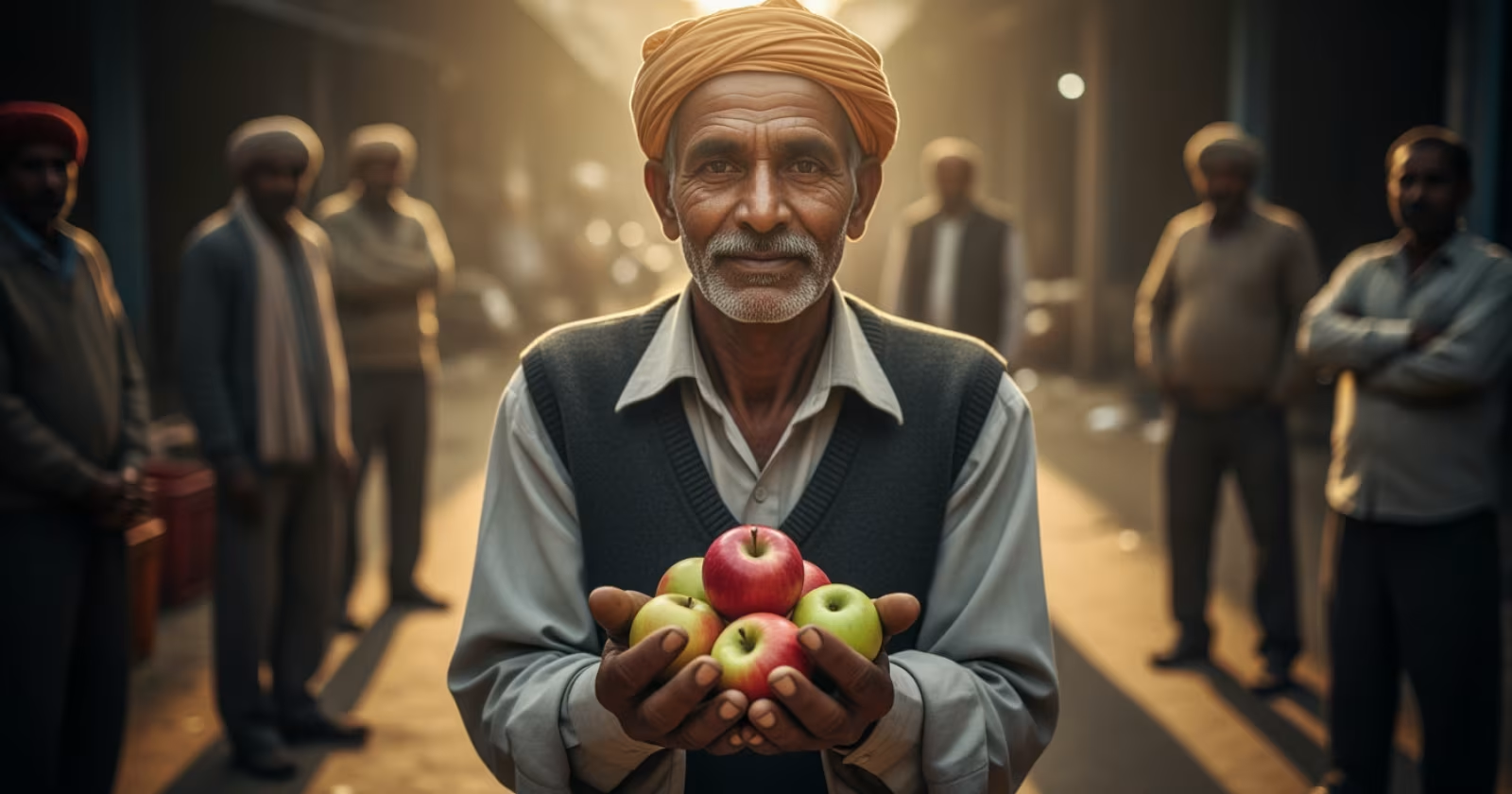
In the autumn of 2023, a small-holding apple farmer in Kotkhai, Shimla district, watched a commission agent in Delhi’s Azadpur Mandi sell his Royal Delicious apples at ₹120 per kilogram — while he had received just ₹38 per kg at the farm gate. The arithmetic was brutal: the middleman chain swallowed roughly 60% of the final consumer price, leaving the person who actually grew the fruit with barely enough to cover inputs. That farmer’s name was among the first 200 to join a restructured fruit growers’ cooperative that would, within two seasons, change the equation entirely.

I have been tracking the cooperative movement in India‘s hill states for years, and what happened next in Himachal’s apple belt is one of the most compelling turnaround stories I have encountered. It is not a story of government subsidy alone — it is a story of growers choosing collective bargaining over individual helplessness.

Read more

How Karnataka’s Coffee Cooperative in Coorg Exports to Starbucks Without Losing Farmer Control

How Karnataka's Coffee Cooperative in Coorg Exports to Starbucks Without Losing Farmer Control

In the mist-wrapped hills of Kodagu district, a 62-year-old grower named Suresh Ponnappa tends to four acres of Arabica coffee that his grandfather first planted in the 1940s. His entire annual harvest — roughly 1,200 kilograms of cherry — now travels from his small estate to a Starbucks Reserve counter in Mumbai. Yet Suresh has never spoken to a single Starbucks buyer. His cooperative did that for him, negotiating a price nearly ₹40 per kilogram higher than what the local trader offered last season. I travelled to Coorg in early 2026 to understand how this arrangement actually works, and what I found challenged almost everything I assumed about Indian cooperatives.

This is not just a feel-good story about farmers and fair trade. It is a structural lesson in how a cooperative coffee model in Karnataka has cracked the export supply chain to one of the world’s largest coffee brands — without surrendering governance to corporate intermediaries or government bureaucrats. At a time when the Ministry of Cooperation is pushing to modernise India’s 8.5 lakh cooperative societies, Kodagu’s coffee growers offer a rare working blueprint.

Read more