How a Small Dairy Village Built a Business Bigger Than Many Startups

How a Small Dairy Village Built a Business Bigger Than Many Startups

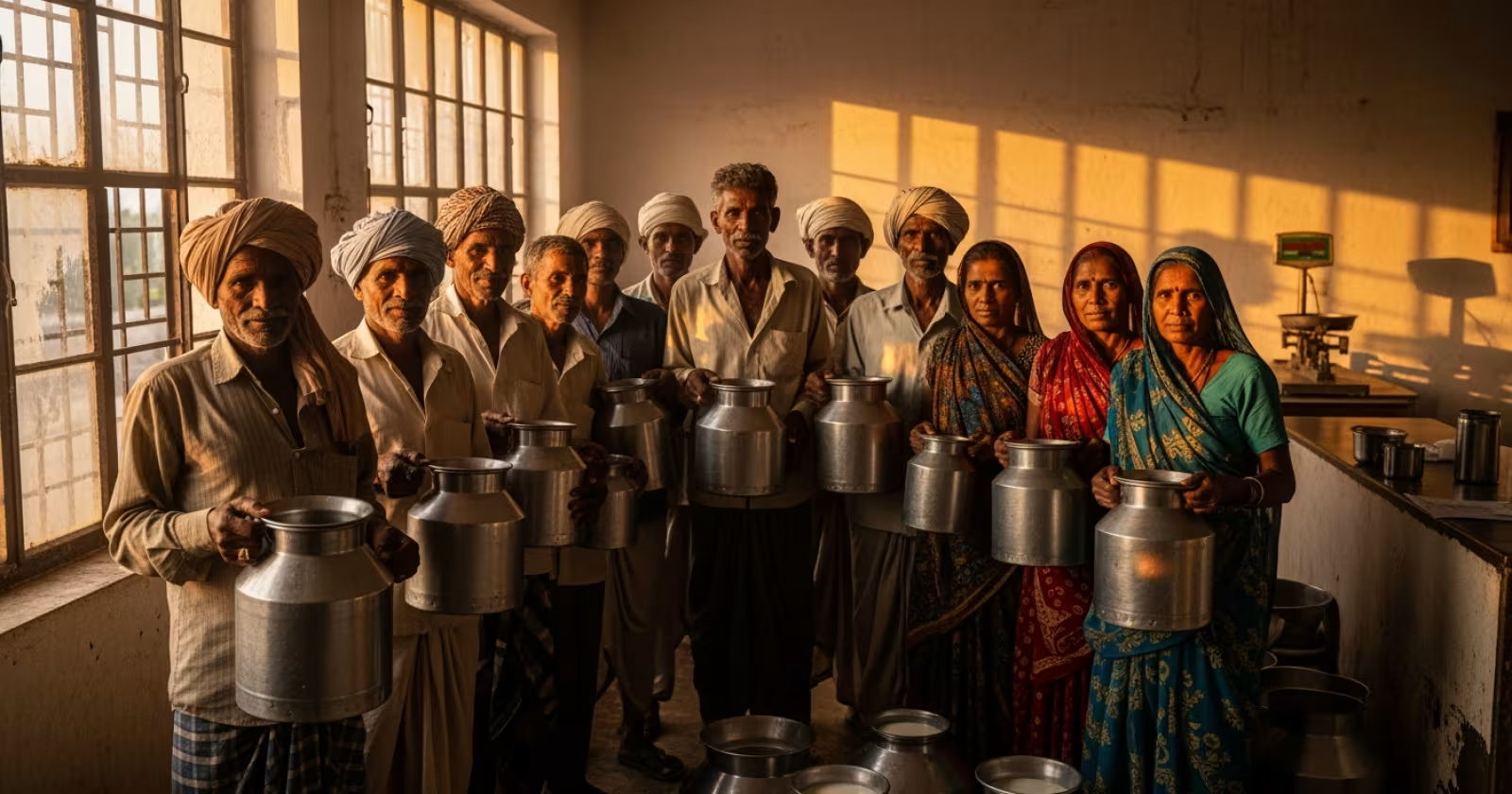
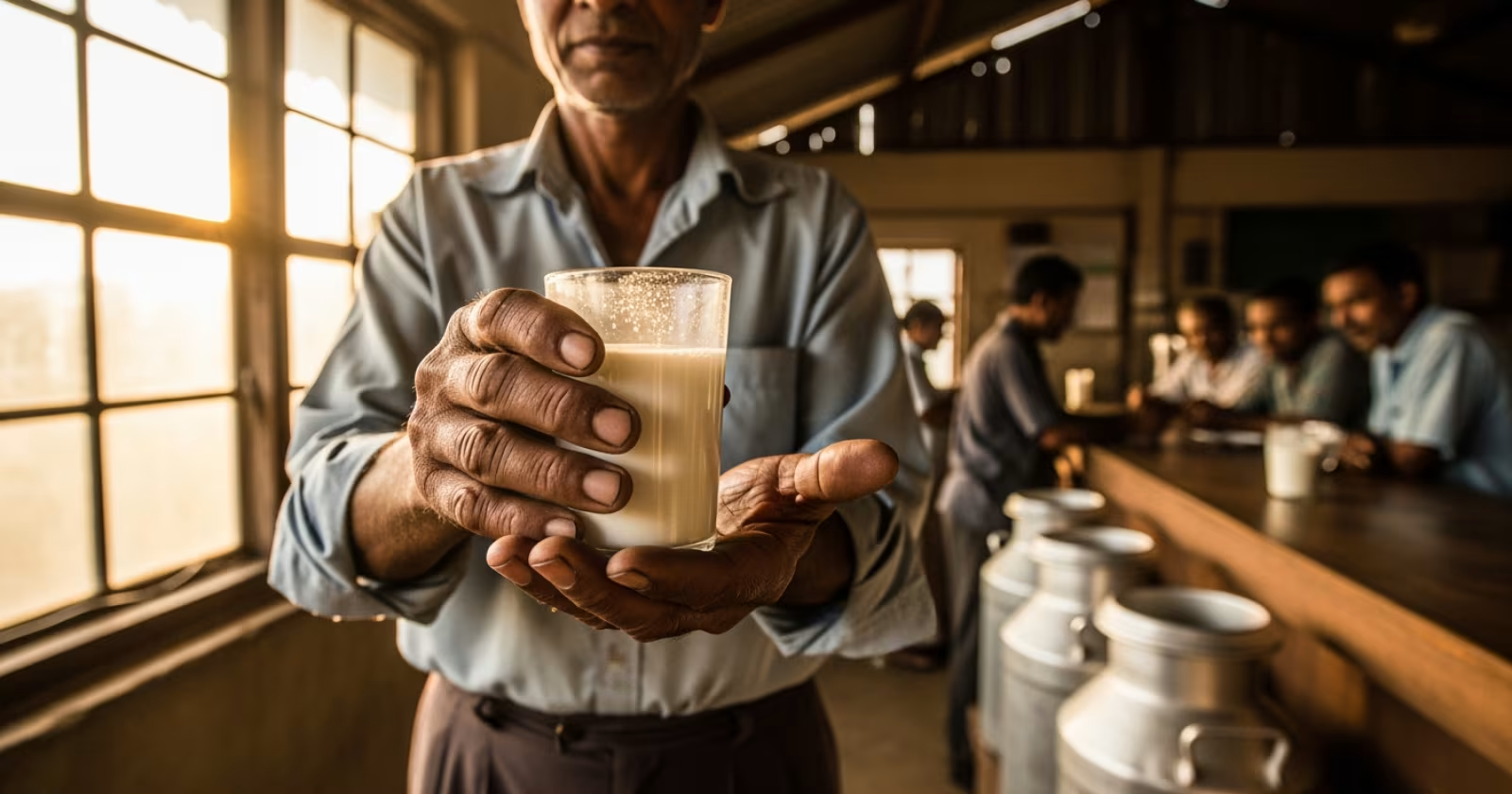
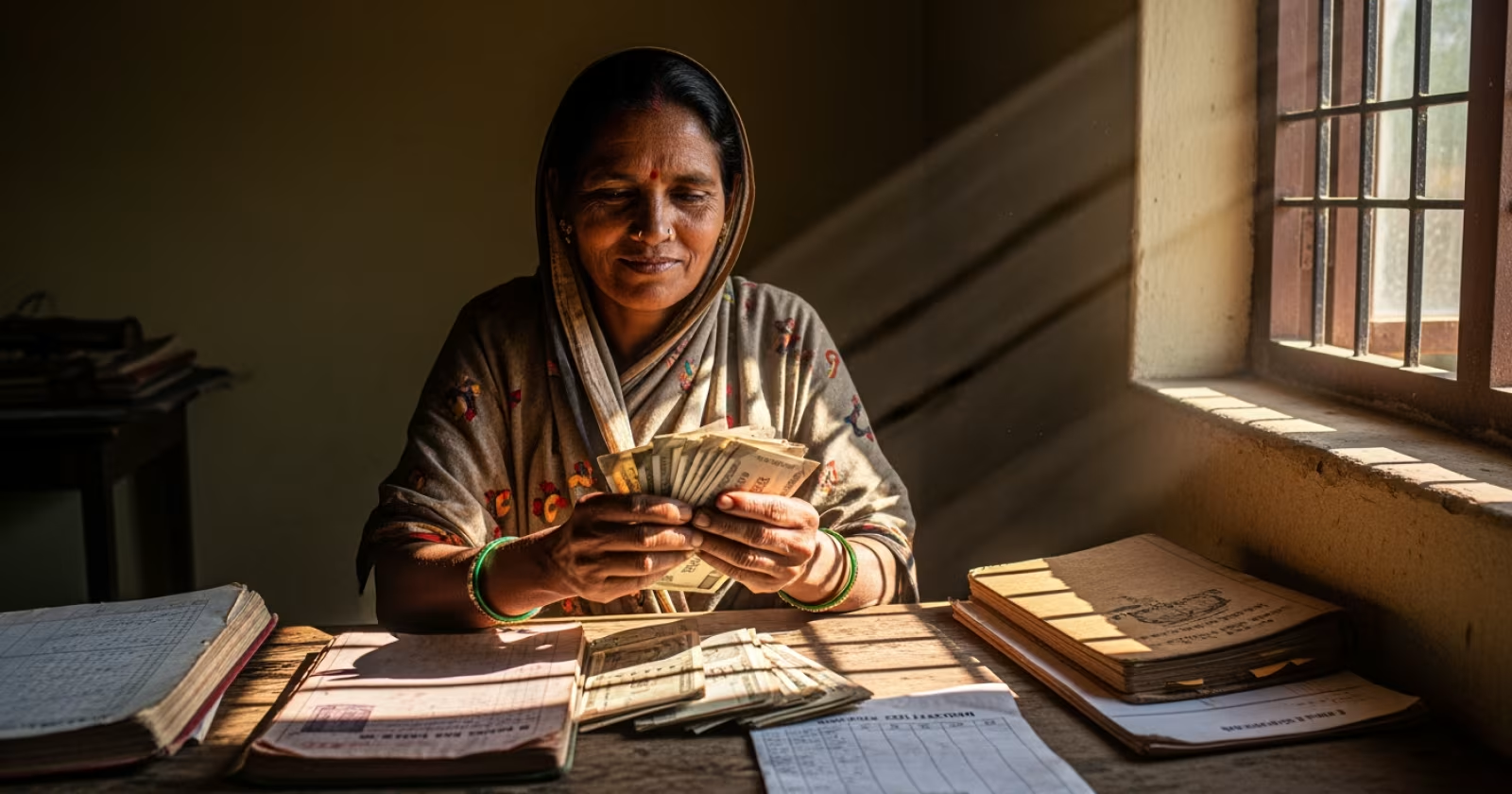
In a village of barely 800 households in Kheda district, Gujarat, the local dairy cooperative society processes approximately 12,000 litres of milk every single day — and channels annual revenues that would make a Series-A funded startup blush. I first encountered this story not through a business journal but through a farmer named Rameshbhai, who … Read more

The Village That Decided to Compete With MNCs — and Won

The Village That Decided to Compete With MNCs — and Won

When the farmers of Anand — a small, dust-settled town in Gujarat, India — formed a dairy cooperative in 1946, they collectively processed just 247 liters of milk a day, owned no refrigeration equipment, and had no brand anyone had ever heard of. The company they were about to challenge, Polson Dairy, had British colonial … Read more

KMF — Karnataka’s Milk Cooperative Federation That Quietly Became Amul’s Biggest Rival

KMF — Karnataka's Milk Cooperative Federation That Quietly Became Amul's Biggest Rival

In Mandya district, roughly 120 kilometres southwest of Bengaluru, a 54-year-old farmer named Rangaswamy pours approximately 18 litres of milk every morning into a stainless steel can at his village collection centre. He has done this for over two decades. The board above the centre reads “Mandya District Co-operative Milk Producers’ Societies Union” — one of 14 district unions feeding into a machine most Indians outside Karnataka barely know about. That machine is the Karnataka Milk Federation (KMF), and its flagship brand, Nandini, outsells every dairy brand inside the state — including Amul. Rangaswamy earns roughly ₹32 per litre at the procurement point, a figure that has climbed steadily over the past five years. For him, KMF is not a corporate entity. It is the reason his two daughters went to college.

I have tracked India’s cooperative dairy sector for over a decade, and KMF’s story remains one of the most underreported success narratives in the country. While Amul commands national headlines and advertising budgets, KMF has quietly assembled a turnover exceeding ₹22,000 crore, making it India’s second-largest dairy cooperative. What makes this even more remarkable is that KMF operates almost entirely within one state.

Read more

The Silent Network Powering India’s Milk, Sugar and Cotton Economy

The Silent Network Powering India's Milk, Sugar and Cotton Economy

In Sabar village, Sabarkantha district of Gujarat, a woman named Jashiben walks two kilometres every morning with eight litres of buffalo milk to reach her nearest Primary Agricultural Credit Society (PACS) collection point. She earns roughly ₹480 per day from this routine — money that paid for her daughter’s nursing diploma last year. What Jashiben … Read more

Fonterra vs Amul: One Dairy Cooperative Made Farmers Rich, the Other Didn’t — Here’s Why

Fonterra vs Amul: One Dairy Cooperative Made Farmers Rich, the Other Didn't — Here's Why

In the village of Kuha, roughly forty kilometres from Anand in Gujarat, a woman named Ramaben pours eight litres of buffalo milk into a steel canister every morning. She earns approximately ₹57 per litre — deposited directly into her bank account within days. Halfway across the planet, in the Waikato region of New Zealand, a Fonterra shareholder-farmer checks a global commodity index before breakfast, knowing that his annual payout depends not on local consumers but on the price Chinese importers are willing to pay for whole milk powder. Two cooperatives, both claiming to serve farmers first — but only one has consistently delivered on that promise.

I have spent years tracking the cooperative dairy sector across continents, and this comparison haunts me because it reveals something fundamental: structure determines destiny. The way a cooperative is designed — who controls it, where its revenue comes from, how decisions flow — matters more than scale, technology, or even geography. And the Amul-Fonterra divergence is the sharpest case study I know.

Read more

Why This Rural Business Idea Is Quietly Creating Crorepatis Across India

Why This Rural Business Idea Is Quietly Creating Crorepatis Across India

In Sanosara village, Mehsana district, Gujarat, a farmer named Rameshbhai Patel poured 400 litres of buffalo milk daily into his local cooperative collection centre last winter. His annual household income from milk alone crossed ₹18 lakh — a figure that would have seemed absurd to his father, who sold milk to a private middleman for … Read more

The Amul Story Keeps Repeating Itself — And That’s a Beautiful Thing

The Amul Story Keeps Repeating Itself — And That's a Beautiful Thing

When a small group of farmers in Anand, Gujarat handed their milk cans to a barely-organized cooperative in 1946, they weren’t launching a brand — they were staging a revolt. That act of collective defiance against exploitative middlemen became the seed of what is now India‘s largest food products organization, one whose annual turnover has … Read more

New Zealand’s Fonterra vs India’s Amul — Who Actually Serves Farmers Better?

New Zealand's Fonterra vs India's Amul — Who Actually Serves Farmers Better?

A dairy farmer in Waikato, New Zealand, earns roughly NZD 8.50 per kilogram of milk solids from Fonterra in a good season. A dairy farmer in Sabarkantha, Gujarat, takes home approximately ₹55-65 per litre from her village cooperative linked to Amul. On paper, the Kiwi farmer looks wealthier. But strip away currency conversions, input costs, … Read more

How Rajasthan’s Women Dairy Cooperatives Are Quietly Out-Earning the Men in Rural Households

How Rajasthan's Women Dairy Cooperatives Are Quietly Out-Earning the Men in Rural Households

In a dusty village called Bansur in Alwar district, a woman named Kamla Devi walks to the milk collection centre every morning at 5:30 AM, balancing two steel canisters on her head. She pours approximately 14 litres of buffalo milk into the cooperative’s bulk cooler, collects her digital receipt, and walks home — having already earned more that day than her husband will from his rain-dependent mustard crop all week. Across Rajasthan, this scene is repeating itself in thousands of villages, and the numbers tell a story that few policy reports have bothered to narrate properly.

I have been tracking India‘s cooperative movement for years, and what is unfolding in Rajasthan’s dairy sector deserves serious attention. Women members of dairy cooperatives in the state are now contributing, on average, ₹8,000 to ₹12,000 per month to household income — figures that frequently surpass what male family members bring in from traditional agriculture. This is not a government press release talking point. This is a quiet economic revolution happening one milk canister at a time.

Read more

This 100-Year-Old Business Model Is Disrupting Indian Retail in 2026

This 100-Year-Old Business Model Is Disrupting Indian Retail in 2026

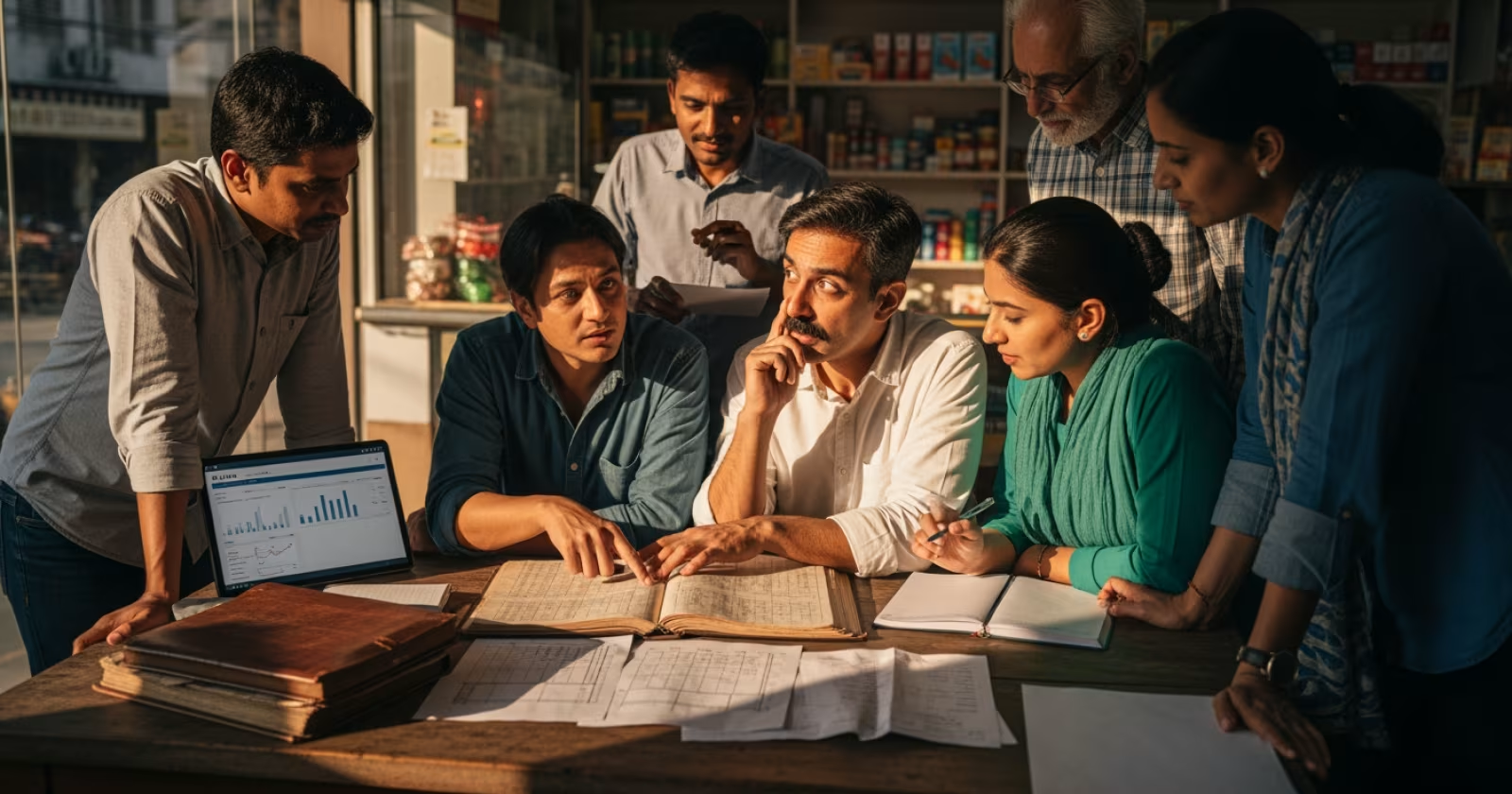
While Blinkit and Zepto were burning through hundreds of crores in venture capital to deliver groceries in 10 minutes, a business model born in a British mill town in 1844 was quietly outpacing both of them in the Indian heartland. Nobody in a Mumbai boardroom saw it coming — but the numbers in 2026 are … Read more