


Shrinkflation Data Exposes How Families Are Losing $741 Annually to Hidden Grocery Cost Increases

Shrinkflation Data Exposes How Families Are Losing $741 Annually to Hidden Grocery Cost Increases

Americans are now paying US$741 more per year to buy the same basket of groceries they bought in 2020 — and most of them have no idea why. Shrinkflation, the practice of reducing pack weight or volume while holding or lifting the retail price, has been quietly eroding real purchasing power in ways that headline … Read more

India’s Rural Economy Has a Secret Weapon: It’s Called Cooperative Trade

India's Rural Economy Has a Secret Weapon: It's Called Cooperative Trade

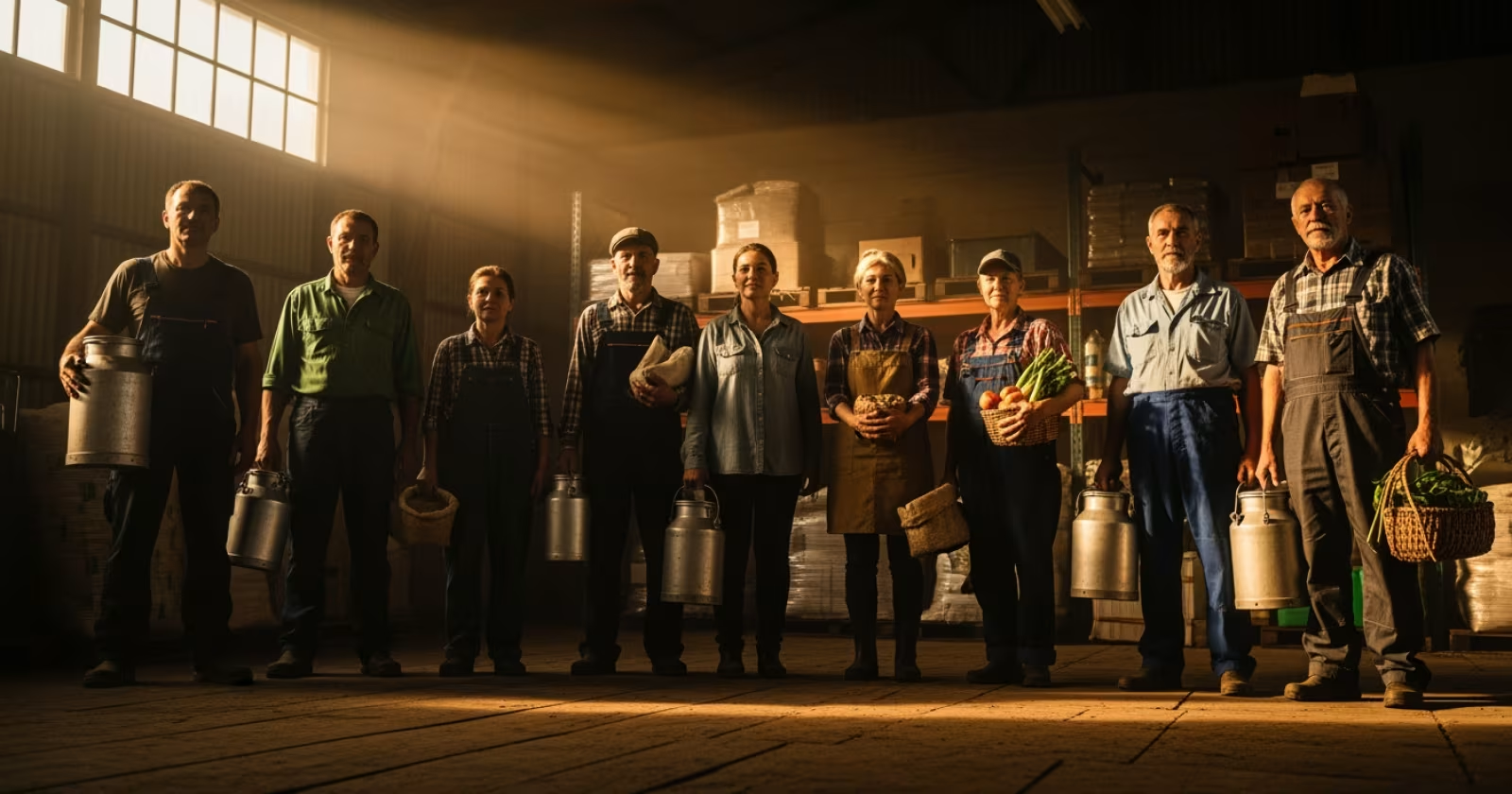
When AMUL’s annual turnover crossed ₹72,000 crore in the fiscal year ending 2026, most business desks treated it as a corporate milestone worth a paragraph. What they consistently missed is that AMUL is not a corporation — it is 3.6 million dairy farmers across Gujarat who collectively own every rupee of that figure, and that … Read more

The Warana Cooperative Complex in Kolhapur That Built an Entire Township From Scratch

The Warana Cooperative Complex in Kolhapur That Built an Entire Township From Scratch

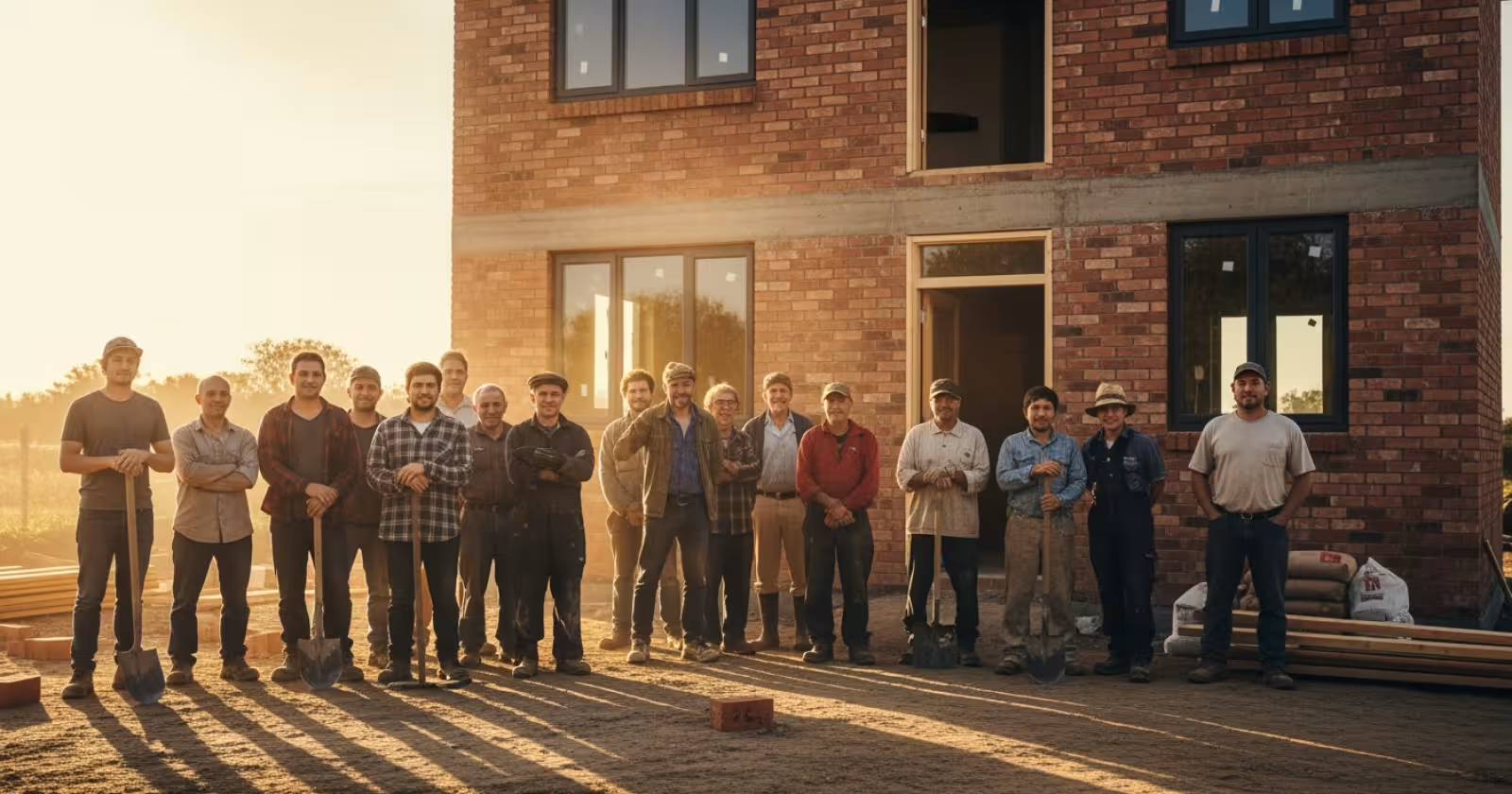
Imagine standing on a stretch of dry, undulating land in western Maharashtra where nothing existed — no school, no clinic, no market, no paved road — and being told that within a few decades, a self-sufficient township of over 50,000 people would rise here, complete with sugar factories, dairies, engineering works, shopping complexes, colleges, and … Read more

RE&UP and ISKO Unite to Give Circular Denim Massive Industrial Backing and Transform Fashion Forever

RE&UP and ISKO Unite to Give Circular Denim Massive Industrial Backing and Transform Fashion Forever

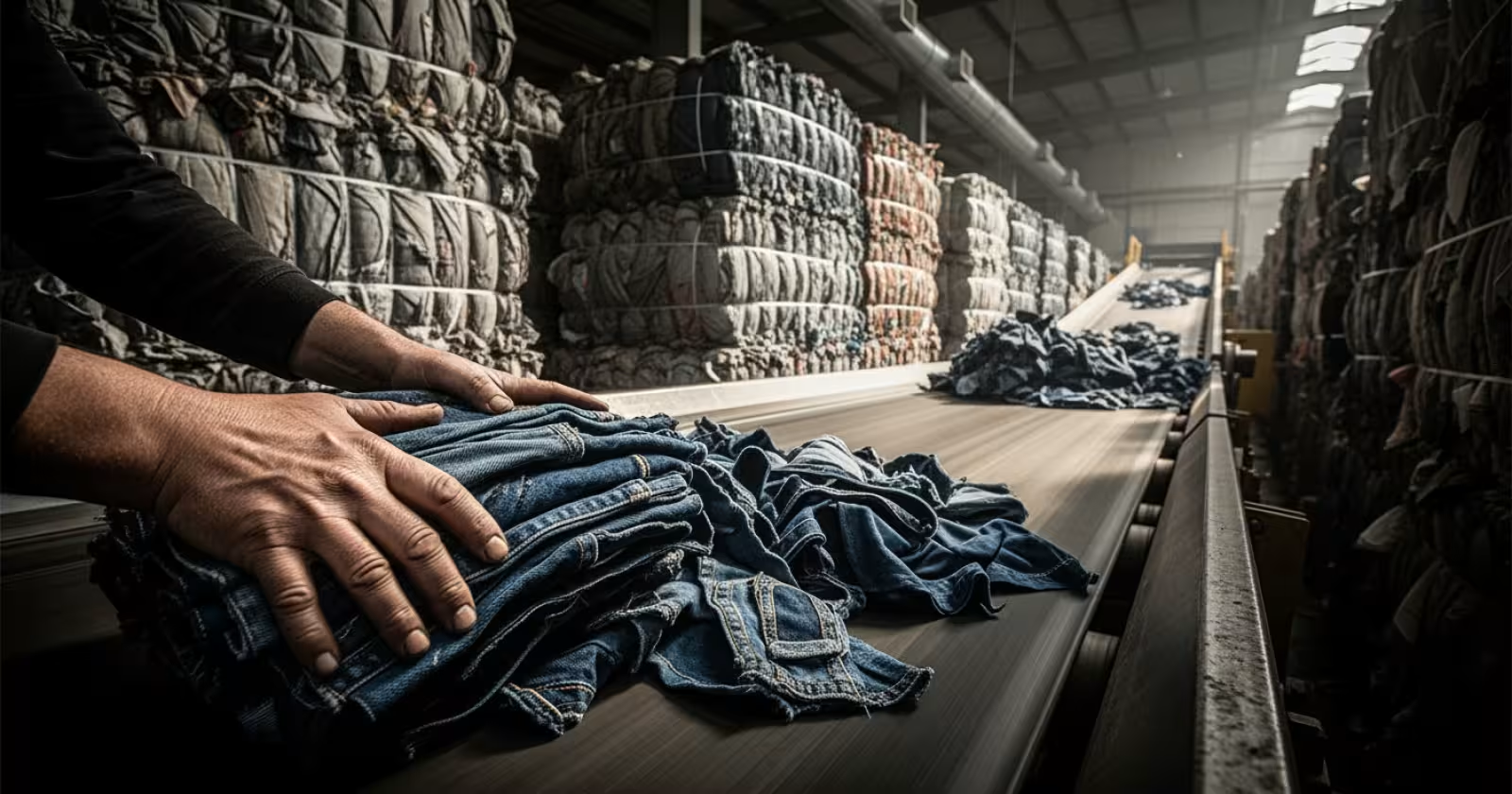
Post-consumer denim has long been one of textile recycling’s harder technical problems. Stretch construction, polycotton blends with varied mechanical histories, and the performance demands of premium fabric specifications have kept circular systems for denim largely at the pilot stage — and this collaboration is a direct answer to that stall. RE&UP Recycling Technologies, Madewell, and … Read more

The Untold Story of How Cooperative Societies Rebuilt Post-Flood Kerala

The Untold Story of How Cooperative Societies Rebuilt Post-Flood Kerala

When the floodwaters finally retreated across Kerala in August 2018 — the worst inundation the state had witnessed in 94 years — the damage bill had already crossed ₹31,000 crore, more than 480 people were dead, and over a million had been displaced from fourteen of the state’s fourteen districts. Government helicopters and military boats … Read more

How Varanasi’s Handloom Weavers Cooperative Is Fighting Back Against Powerloom and Fast Fashion

How Varanasi's Handloom Weavers Cooperative Is Fighting Back Against Powerloom and Fast Fashion

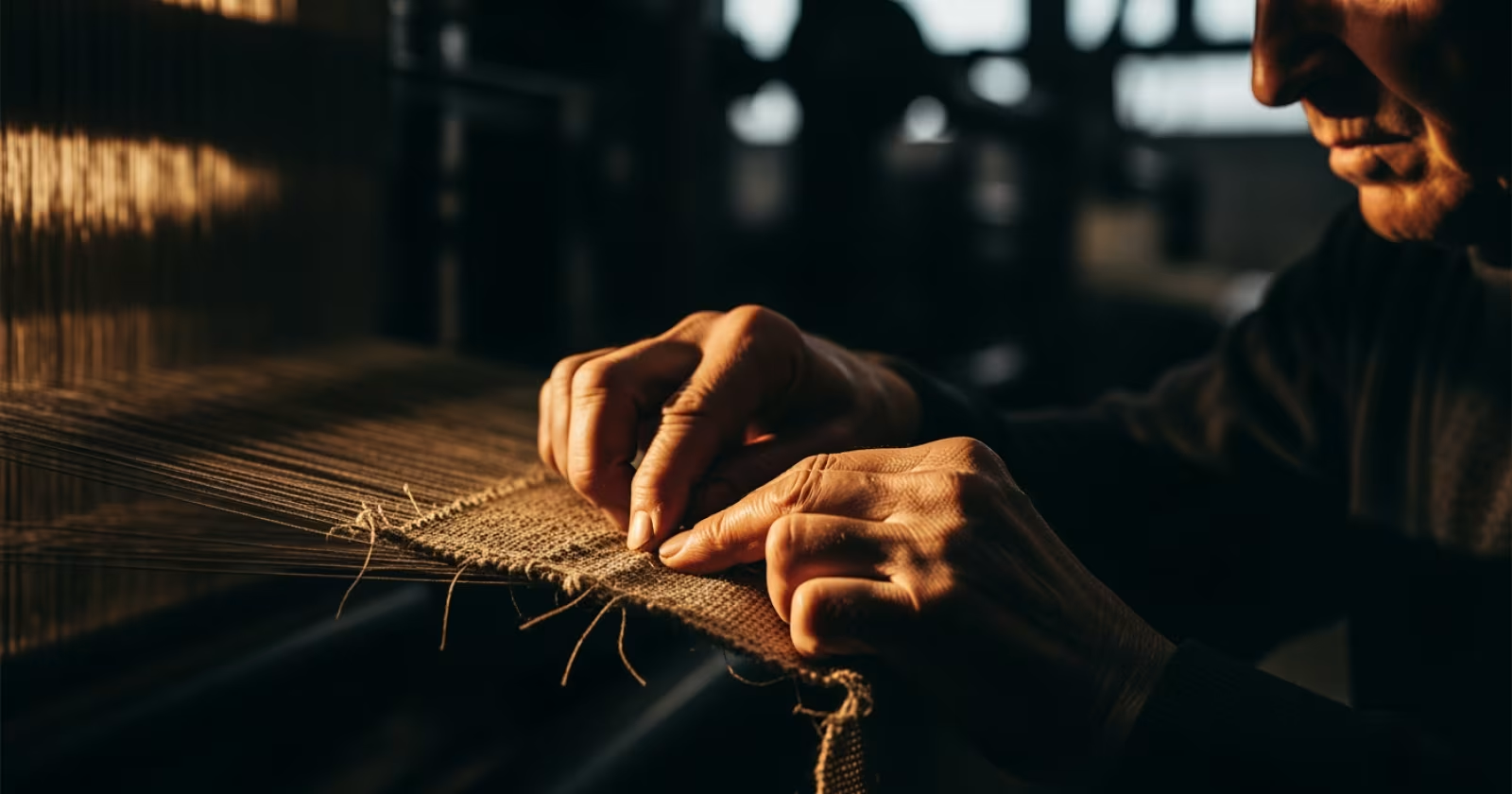
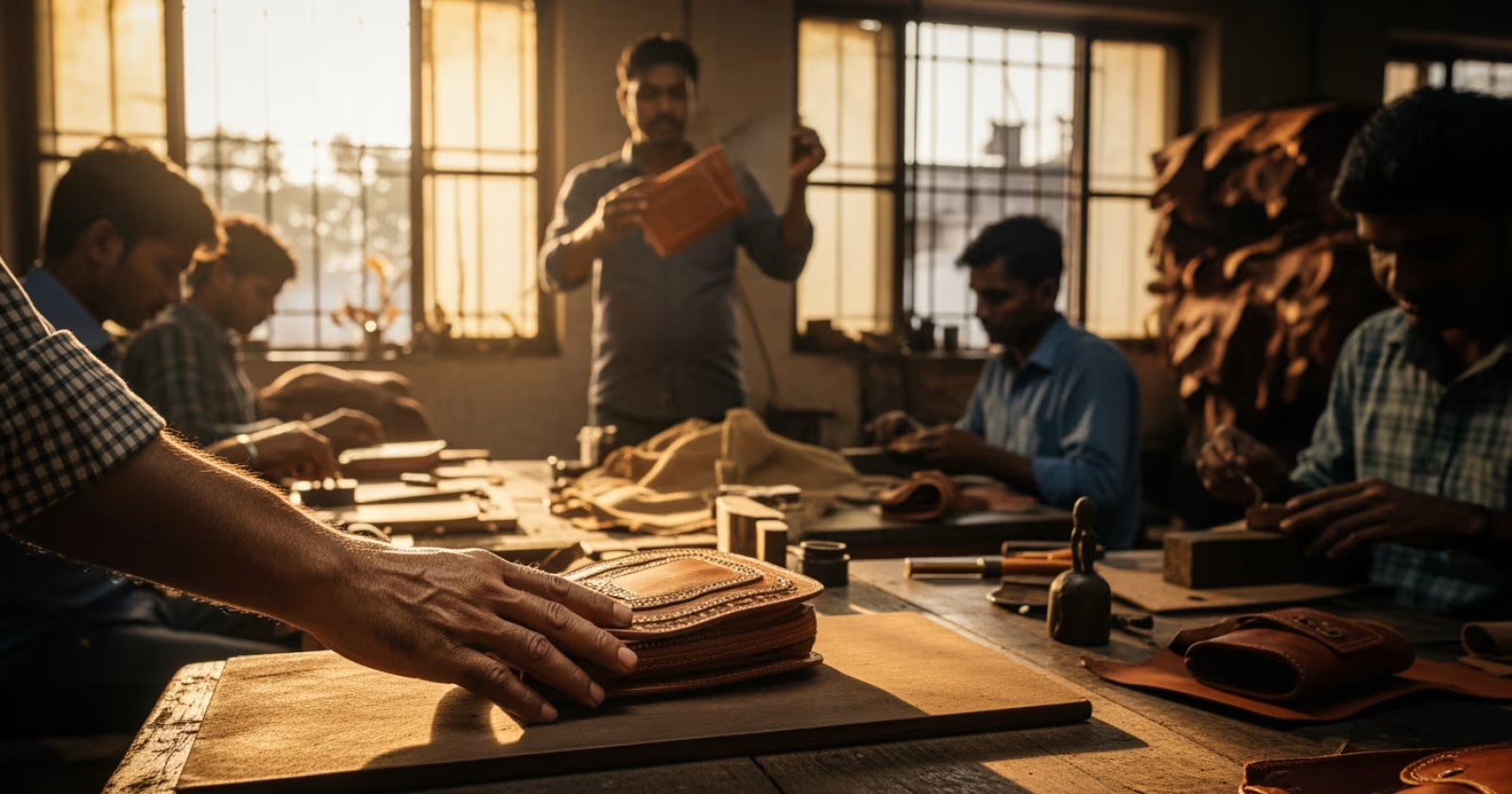
In a narrow lane off Madanpura in Varanasi, a pit loom clacks at a rhythm that has not changed in three centuries — but the man operating it earns less in a month than a food delivery rider earns in a week. I travelled to this ancient ghaat city in early 2026 to understand why Varanasi’s handloom weavers cooperative — once the backbone of a ₹3,000 crore Banarasi silk economy — is now locked in what members call an existential fight against powerloom duplicates and the ruthless economics of fast fashion.

Mohammed Irfan, a third-generation weaver in the Lohta cluster, showed me a kadhua brocade saree he spent 22 days weaving. His cooperative pays him approximately ₹8,500 for it. An almost-identical powerloom copy, produced in Surat in under four hours, retails on e-commerce platforms for ₹1,200. That single statistic tells you everything about the crisis — and the courage it takes to keep the loom running.

Read more

The Pushkar Cooperative That Turned Camel Herders Into Leather Exporters

The Pushkar Cooperative That Turned Camel Herders Into Leather Exporters

Somewhere on the sandy periphery of the Pushkar Camel Fair in 2019, a Raika herder named Bhawani Ram sold his last female camel for ₹8,000 — roughly the price of a mid-range smartphone. His family had maintained a herd of forty camels across three generations in Ajmer district, Rajasthan. By that winter, he was down … Read more

40 Auto-Rickshaw Drivers in Pune Built a Cooperative — Now Ola and Uber Have a Problem

40 Auto-Rickshaw Drivers in Pune Built a Cooperative — Now Ola and Uber Have a Problem

Somewhere in Pune’s Kothrud neighbourhood, a man named Raju Shinde used to earn roughly ₹900 a day ferrying passengers through the city’s chaotic traffic. That was before Ola and Uber slashed fares and flooded his routes with incentivised drivers. By 2023, his daily take-home had dropped to ₹500 on good days, and nearly 25% of that vanished into app commissions. Then, in early 2024, Shinde and 39 other auto-rickshaw drivers in his locality did something that most gig economy observers didn’t see coming — they registered a cooperative society under the Maharashtra Cooperative Societies Act and launched their own ride-hailing service.

I first heard about this initiative through a cooperative sector contact in Maharashtra, and frankly, I was sceptical. A forty-member auto-rickshaw cooperative going up against billion-dollar platforms? It sounded like a headline designed for social media sympathy, not a sustainable business. But the more I dug into it, the more I realised this wasn’t a stunt. It was a structural response to a structural problem — and it carries lessons for the entire cooperative movement in India.

Read more

This Government Scheme Is Helping Villagers Earn Without Job

This Government Scheme Is Helping Villagers Earn Without Job

Millions of Indian villagers are quietly earning steady income — not from a factory job, not from a government post — but through schemes most people have never heard of. The problem is not that these schemes do not exist. The problem is that most people never understand how to use them. This article breaks … Read more

Maharashtra’s Sugar Cooperatives Don’t Just Make Sugar — They Make Chief Ministers

Maharashtra's Sugar Cooperatives Don't Just Make Sugar — They Make Chief Ministers

In Sangli district’s dusty town of Walwa, a single sugar factory controls more than sweetness — it controls who gets elected to the state assembly, who gets a bank loan, and whose son gets a government job. I have spent years tracking India‘s cooperative movement, and nowhere is the entanglement between cooperative economics and raw political power more visible than in Maharashtra’s western sugar belt.

This is not a story about agriculture alone. This is the story of how a network of roughly 200 cooperative sugar factories across Maharashtra became the most effective political machine in Indian democracy — one that has produced at least seven chief ministers, dozens of cabinet ministers, and an entire class of rural oligarchs who straddle the worlds of farming, industry, and governance simultaneously.

Read more