
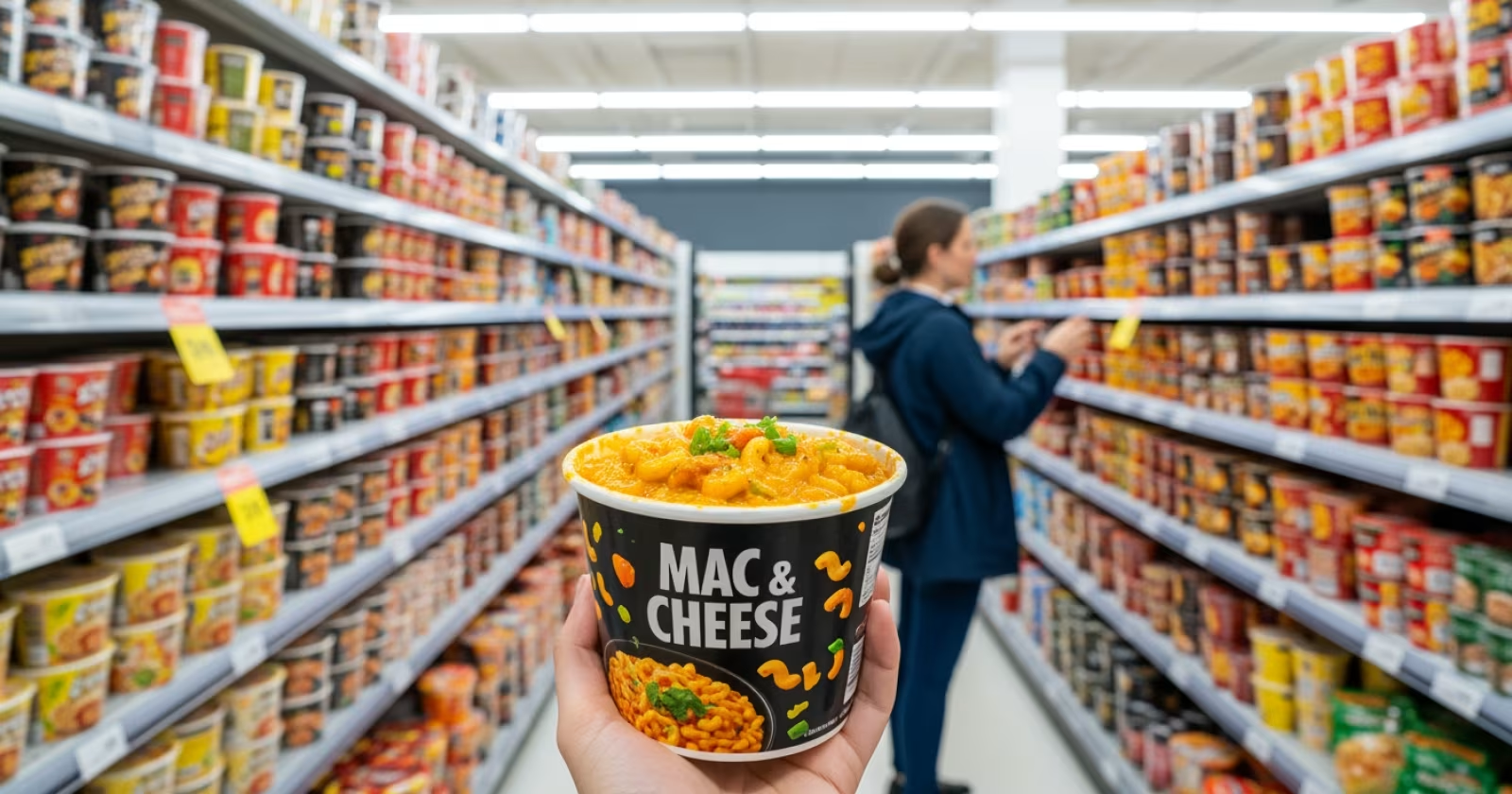
Mr Chen’s is trying to do something clever in the meal kits aisle: make Asian flavours feel familiar enough to buy on a weeknight, but different enough to win a second look at shelf. The Asian Mac & Cheese range does that by wrapping spice-led flavours inside a format shoppers already know.
For FMCG teams, the signal is clear. This is not just another limited-edition comfort-food twist; it is a shelf strategy aimed at lowering the barrier to the Asian food section and giving Woolworths shoppers an easier entry point into the category.
What Is the Asian Mac & Cheese Range and Why It Matters for FMCG
The Asian Mac & Cheese range sits in the meal kits section of the Asian food aisle at selected Woolworths stores. It combines a familiar pasta base with regional flavour cues, which is exactly the sort of hybrid product that can broaden household penetration without asking shoppers to relearn the category.
That matters because the Asian pantry and meal-solutions space has long faced a trade-off. Traditional products can feel authentic but intimidating to casual buyers, while mainstream comfort foods can feel too safe to stand out. Mr Chen’s is betting that the overlap between those two groups is large enough to justify a dedicated launch.
In Australia, where dinner occasions are increasingly shaped by convenience, novelty and family acceptance, products that bridge cuisines can earn faster trial. For buyers, that can mean incremental basket value; for brands, it can mean a better shot at range expansion beyond the core ethnic aisle.
Mr Chen’s Asian Mac & Cheese range at selected Woolworths stores
Mr Chen’s has expanded its supermarket meal kits presence with three varieties in the new line: Spicy Carbonara, Japanese Curry and Korean Gochujang. The company said the products are distributed in selected Woolworths stores, positioned in the Asian food aisle rather than the standard pasta fixture.
Each retail box serves four people and carries an RRP of $8.00. The products are shelf-stable and require consumers to add water, butter and milk for preparation, which keeps them closer to a pantry meal solution than a chilled convenience item.
Lucy Chen, co-CEO of Mr Chen’s, said the range is designed to make Asian flavours more accessible by combining traditional comfort food with regional spices. The brand also said the products contain no artificial colours, flavours or preservatives.
| Variety | Flavour cue | Format | RRP |
|---|---|---|---|
| Spicy Carbonara | Spice-led fusion | Shelf-stable meal kit | $8.00 |
| Japanese Curry | Regional curry profile | Serves four | $8.00 |
| Korean Gochujang | Fermented chilli heat | Add water, butter and milk | $8.00 |
How the product is built to win shelf attention
In practical terms, this looks like a category-meets-category play. Mac & cheese gives the shopper an instant reading of value and comfort, while the Asian flavour cues add novelty without forcing a leap into an unfamiliar cooking routine.
The packaging is part of that strategy too. Mr Chen’s said it has introduced updated colour schemes to improve shelf visibility, and the front-of-pack design includes a “Hack Your Mac” section with alternative uses such as toasties, fritters and pancakes.
That kind of second-use messaging matters in FMCG because it increases the sense of utility. If a shopper sees one box as dinner plus leftovers plus an improvised lunch, the value proposition becomes easier to justify at the shelf edge.
For retailers, the range also fits neatly into the growing demand for products that cross over between convenience, pantry and fusion. It is a smaller format bet, but the logic is familiar: give shoppers a quick win and they are more likely to take the risk on a flavour they have not bought before.
What this does not change for competitors and buyers
The launch does not change the fact that range space remains tight in major supermarkets. Selected Woolworths distribution is useful, but it is not national coverage, and the source does not indicate a broader rollout timetable.
It also does not prove that every Asian-inspired fusion product will work. If the flavour balance feels forced, the concept can quickly slip from accessible to gimmicky, especially in a category where repeat purchase matters more than one-off curiosity.
For now, the commercial case still depends on shopper trial, strong facings and whether Woolworths sees enough basket lift to keep the line moving.
Mr Chen’s Asian Mac & Cheese range is likely to benefit first from meal-kit shoppers, younger households and families looking for easy weeknight meals with a bit more flavour. Suppliers watching the aisle should also note the packaging approach, because anything that improves shelf cut-through can change how a product performs before a tasting ever happens.
Why fusion comfort foods are becoming a serious supermarket tactic
I see this launch as part of a wider move in Australian grocery toward familiar formats with sharper cultural cues. Private label has trained shoppers to expect value, while branded suppliers now have to offer either a clearer point of difference or a stronger reason to trade up.
The Asian Mac & Cheese range does both in a modest way. It is easy to understand, easy to prepare and different enough to create curiosity, which is exactly the kind of proposition that can earn shelf space in a crowded meal-solutions market.
If the range gains traction, I would expect more brands to use the same playbook: keep the comfort, sharpen the flavour and make the pack do more of the selling at shelf.
For FMCG teams, this is worth tracking closely, because the next fusion hit is likely to come from the same place — a familiar format, a well-chosen aisle and a shopper who wants dinner to feel new without feeling risky.
If you manage a category, buyer relationship or brand pipeline, this is the sort of launch I would study for packaging cues, price architecture and shelf placement before the next reset rolls around.