
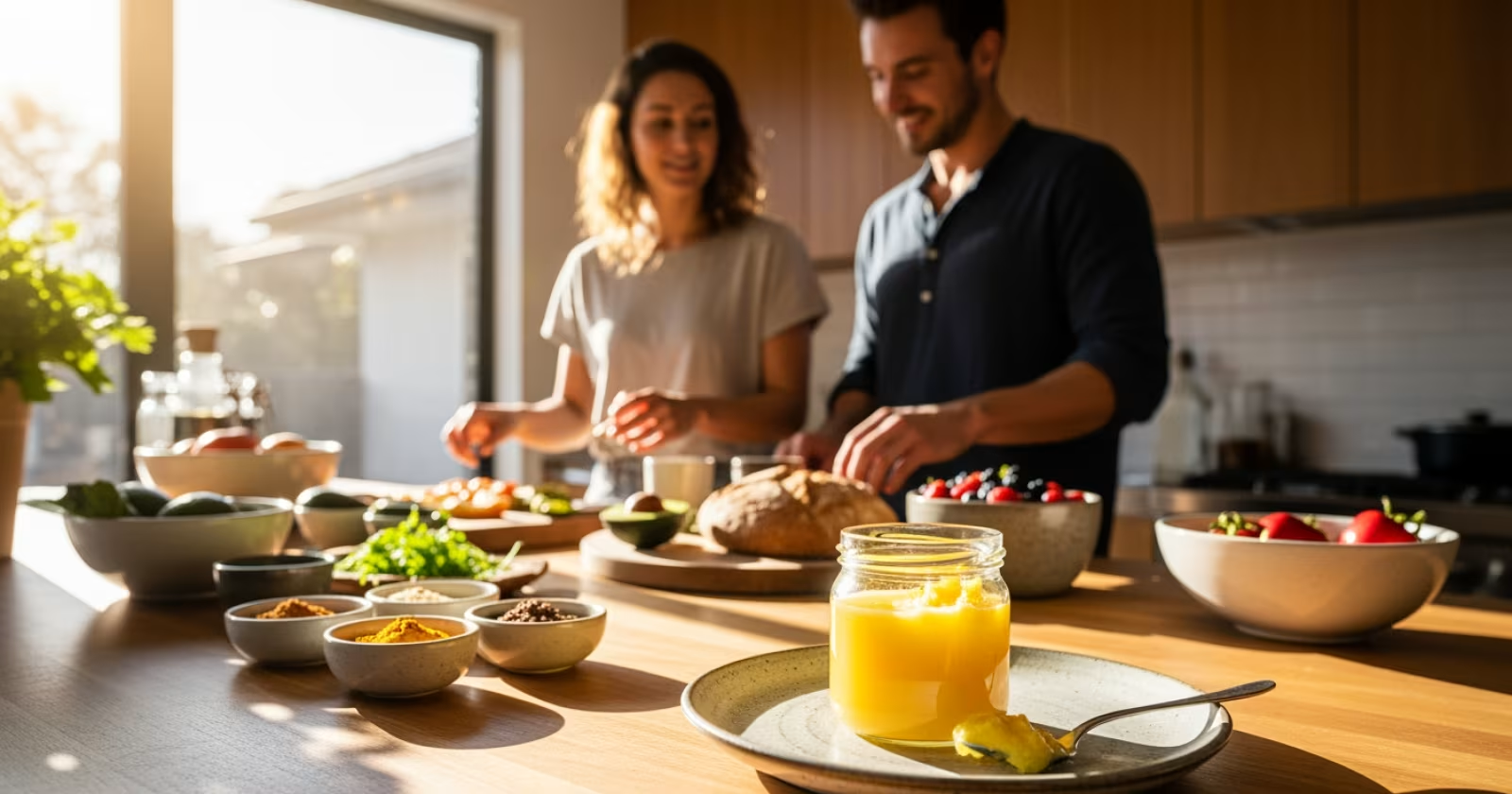
Ghee is moving out of the pantry and into the wellness aisle, and that shift matters more than it first appears. If consumers start treating it like an everyday ritual rather than a cooking fat, the category could grow beyond its niche food roots.
For FMCG teams, that changes how the product is positioned, merchandised and explained. It also shows how a small Australian brand can use origin, function and ritual to build a premium story around a familiar ingredient.
What ghee wellness means for FMCG
Ghee, also known as clarified butter, has been used for centuries in Eastern traditions and cooking. In Australia, though, it has largely sat in the cooking ingredient lane, where it competes on function rather than aspiration.
That is the gap Drops of Gold is trying to close. The brand is pitching ghee as part of a daily wellness routine, with beauty and digestion cues aimed at consumers who want something natural, simple and premium. In FMCG terms, this is the classic move from commodity usage to ritual-led consumption.
The opportunity is obvious. Products that can claim a place in a morning habit, a coffee routine or a skincare-adjacent wellness stack tend to earn more frequent use and stronger margin than ingredients that rely only on dinner occasions.
Drops of Gold launches ghee as a wellness product in Australia
Katrina Uttam, a practising lawyer, said her family heritage shaped the idea behind Drops of Gold. She pointed to a tradition in which her great grandfather began each day with a spoonful of ghee in tea to support digestion and, in her telling, help his skin glow.
She launched the brand in 2026 into select health food stores in Sydney, then moved online after customer demand grew. The first signal came from a customer in Perth, who sent an Instagram direct message asking how to buy the product outside health food stores.
The brand now delivers across Australia. Uttam said the product is organic, grass-fed and made locally in Australia, with naturally occurring vitamins A, K, E and D. She also described the texture as smooth and mousse-like, designed to make it easy to add to coffee, tea, smoothies, toast and soups.
| Brand element | Confirmed detail | Commercial significance |
|---|---|---|
| Launch channel | Select health food stores in Sydney, then online across Australia | Shows a test-and-scale path familiar to premium FMCG start-ups |
| Product positioning | Wellness product rather than only a cooking ingredient | Moves the brand towards ritual, repeat use and higher perceived value |
| Format | Organic, grass-fed, locally made ghee | Supports premium shelf placement and clean-label messaging |
| Use occasions | Coffee, tea, smoothies, toast and soups | Broadens consumption beyond meal preparation |
How the brand is building a habit, not just a recipe
The way Drops of Gold is being framed is more important than the ingredient itself. Uttam said the brand wants customers to see ghee as part of a wellness routine, supported by content creators and influencers who demonstrate how they use it every day.
That is a familiar playbook in health and beauty, where education often does the selling before distribution does. The brand’s tagline, “spoon, sip and glow”, turns a single serve into a behavioural cue. Even the golden spoon included with orders is doing work here, because it gives the product a small sense of ceremony.
I see this as an attempt to make ghee feel as easy as adding collagen powder to coffee or protein to a smoothie. The difference is that ghee already has culinary credibility, so the brand does not need to invent legitimacy. It only needs to redirect usage.
What this does not change in the category
This is still an early-stage wellness play, not a broad supermarket reset. Most shoppers will still encounter ghee first as a cooking ingredient, and mainstream grocery buyers will keep asking for velocity, price discipline and repeat purchase before they give a niche wellness SKU more space.
There is also no evidence yet that the wider market will follow this exact positioning. The claim stack remains focused on tradition, natural ingredients and routine, rather than regulated health outcomes, so the brand’s growth will depend on consumer education more than hard medical proof.
For premium health food retailers, online channels and influencer-led brands, the upside is clearest in the near term. For major supermarkets, the category may need stronger shopper pull before it earns wider ranging. If the education layer works, then ghee wellness could become a small but commercially useful subcategory rather than a one-off curiosity.
Why this fits the next wave of functional pantry products
This story sits at the intersection of wellness, premiumisation and diaspora-led food innovation. FMCG brands are increasingly trying to turn familiar ingredients into functional daily habits, because that is where loyalty and margin usually improve.
Ghee wellness also reflects a broader shift in how Australian shoppers discover products. Social content, community cues and founder storytelling now shape demand long before a supermarket planogram does. For emerging brands, that means the shelf is only part of the strategy.
For the category, the test will be whether consumers buy ghee once for the idea, then keep it in their routine for the habit. If they do, the business case for more premium functional pantry products gets stronger very quickly.
If you are tracking the next premium health food trend, this is one to watch closely because the real prize is not just a better ingredient story, but a repeatable daily ritual.