
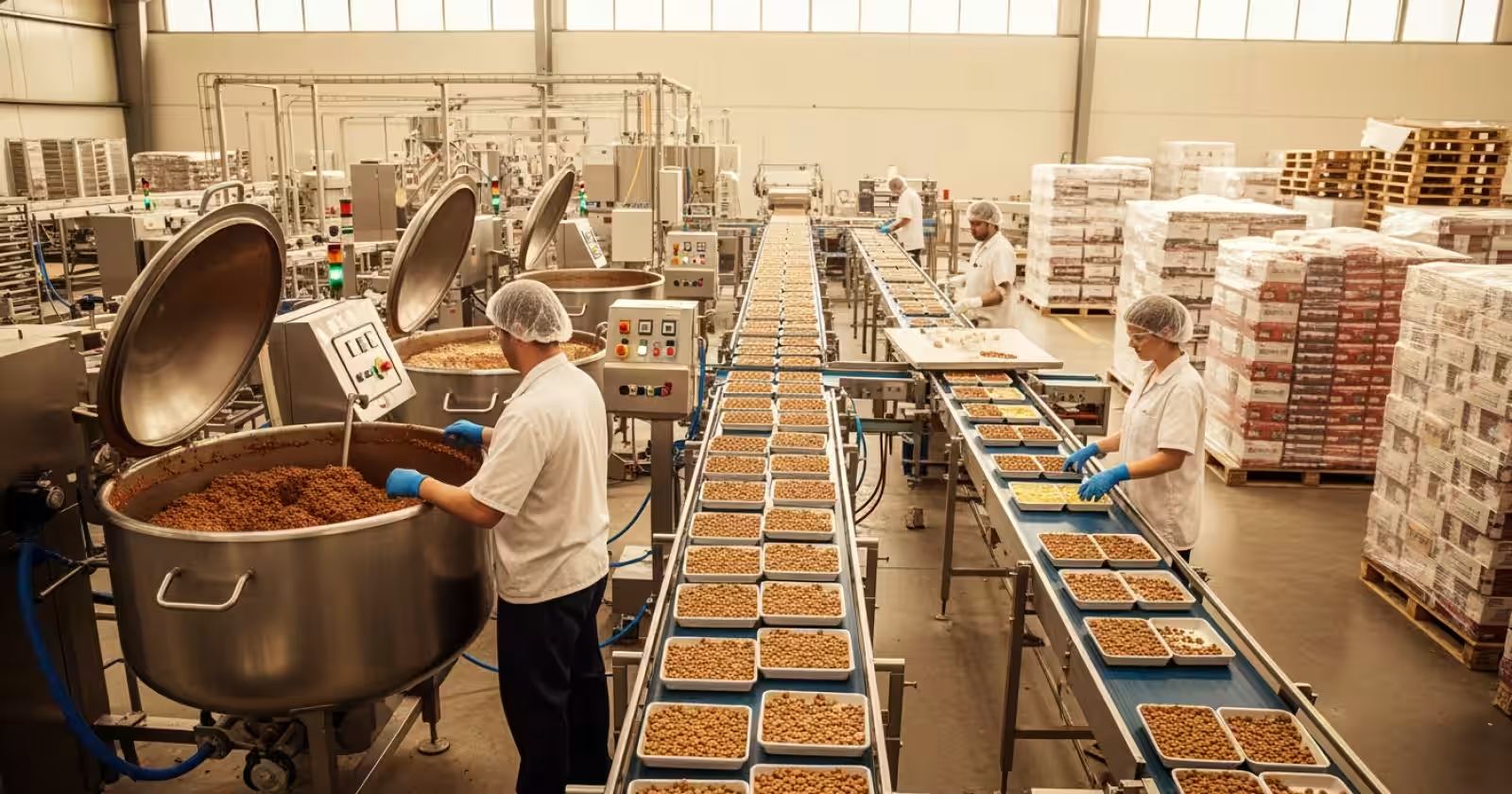
Mars has just raised the bar for local petcare manufacturing in Australia, and the scale matters as much as the symbolism. Its new cat food kitchen in Wodonga is designed to produce 290 million pouches a year, which is a serious signal about how far pet food demand has shifted.
For FMCG teams, the commercial takeaway is simple. More output is staying onshore, more supply is being pulled closer to market, and one of the biggest petfood players is backing automation, local jobs and supply resilience in the same move.
What Is Mars’s Wodonga Cat Food Kitchen and Why It Matters for FMCG
The new facility is Mars’s latest step in building a deeper Australian manufacturing base for petcare, particularly cat food. It sits next to the company’s existing Wodonga operations and lifts the role of the site from a regional plant to a major production hub.
That matters because pet food is no longer a niche category tucked away at the edge of grocery. It now sits in the same strategic conversation as other high-frequency FMCG lines: supply continuity, shelf availability, labour productivity and localised production. When a company this size commits $112.6 million to a single cat food kitchen, buyers and suppliers should read that as a long-term category bet rather than a short-term capacity fix.
The move also fits a broader shift in Australian manufacturing. Brands are trying to reduce reliance on imported goods, shorten replenishment cycles and protect themselves from logistics shocks. In that environment, local plant capacity is becoming a competitive asset, not just an operating cost.
Mars Petcare ANZ’s Wodonga Expansion and the $200 Million Investment
Mars has opened the $112.6 million cat food facility in Wodonga as part of a wider $200 million investment in Australian manufacturing. The company said the new plant will make pouches for Whiskas, Dine, Optimum and Advance, with annual output set at 290 million pouches.
The company also said 90 per cent of its pet care products will be manufactured locally once the expansion is in place. That is the most commercially important number in the announcement, because it suggests Mars is moving from a mixed local-import model to a much heavier domestic footprint.
Victorian government support backs the project, and Mars said the facility will create more than 67 new jobs plus more than 100 additional roles in the region. Total workforce at Wodonga will rise to about 500 associates. Melodie Nye, MD and GM at Mars Petcare ANZ, framed the investment as a continuation of the company’s presence in Wodonga, where it has operated since 1967.
| Facility detail | Confirmed information |
|---|---|
| Location | Wodonga, next to Mars’s existing operations |
| Investment | $112.6 million for the cat food facility |
| Broader investment | $200 million in Australian manufacturing |
| Annual capacity | 290 million pouches of cat food |
| Brands produced | Whiskas, Dine, Optimum and Advance |
| Jobs impact | Over 67 new jobs and more than 100 additional regional roles |
How the New Plant Works and What the Technology Changes
The new kitchen is built around advanced manufacturing rather than a simple capacity add-on. Mars says the site will use autonomous mobile robots, automated packaging systems, a next-generation cooker and selectively implemented AI-enabled planning tools to improve efficiency and flexibility.
In practical terms, that means the plant should behave more like a tightly managed warehouse and production line combined. AMRs can move materials with less manual handling, automated packaging can stabilise throughput, and planning tools can help the site respond faster when demand spikes or a SKU mix changes.
The renewable energy initiatives are also notable, even if Mars has not broken out the operating metrics. For FMCG operators, the point is not just cleaner language on the announcement. It is the company’s attempt to build a more resilient cost base around energy, labour and logistics at the same time.
Here is the operational shape of the project in plain terms:
| Element | What it does | Commercial effect |
|---|---|---|
| AMRs | Move materials through the site | Reduces manual handling and supports throughput |
| Automated packaging | Speeds pack-out and consistency | Improves efficiency and packaging control |
| Next-generation cooker | Supports production of cat food pouches | Backs larger-scale, modernised output |
| AI-enabled planning tools | Helps schedule and coordinate operations | Improves flexibility when demand shifts |
The strongest signal here is that Mars is treating pet food like an industrial category, not a legacy one. That approach usually translates into better service levels for retailers and fewer supply disruptions for brands that need consistent fill rates.
What This Does Not Change in the Pet Food Supply Chain
The expansion does not erase retailer power, and it does not remove the normal pressure points in grocery supply chains. Mars still has to keep costs controlled, manage labour, and protect service levels across a broad portfolio.
It also does not mean every pet food line will be made locally, despite the 90 per cent figure. Imported inputs, packaging dependencies and category-specific constraints can still shape how the business runs in practice.
For suppliers, the biggest benefit should land with those tied into petcare ingredients, packaging, automation and logistics around regional Victoria. Retailers should also benefit if the plant improves continuity, because local production usually gives a manufacturer more room to react when demand shifts or freight gets tight.
What Mars’s Wodonga Bet Says About the Next Phase of Australian Manufacturing
This is bigger than a single cat food kitchen. Mars is showing how FMCG groups now think about Australian manufacturing: closer to market, more automated, and anchored by supply resilience rather than just labour arbitrage.
That matters because petcare is one of the categories where shoppers still trade up, down and across brands, but expect availability to remain stable. If Mars can keep Wodonga efficient while lifting local production to 90 per cent of its pet care portfolio, it sets a template that other multinational manufacturers will study closely.
The real test will be whether that mix of automation, local jobs and manufacturing depth can hold up under pressure from cost inflation and demand volatility. If it does, more FMCG groups will be pushed to rethink what “local manufacturing” should actually look like in Australia.
I would keep a close eye on this one if you manage petcare, procurement or retail supply. Mars has put real capital behind a clearer, more local operating model, and the next advantage may belong to the companies that can match that discipline fastest.