
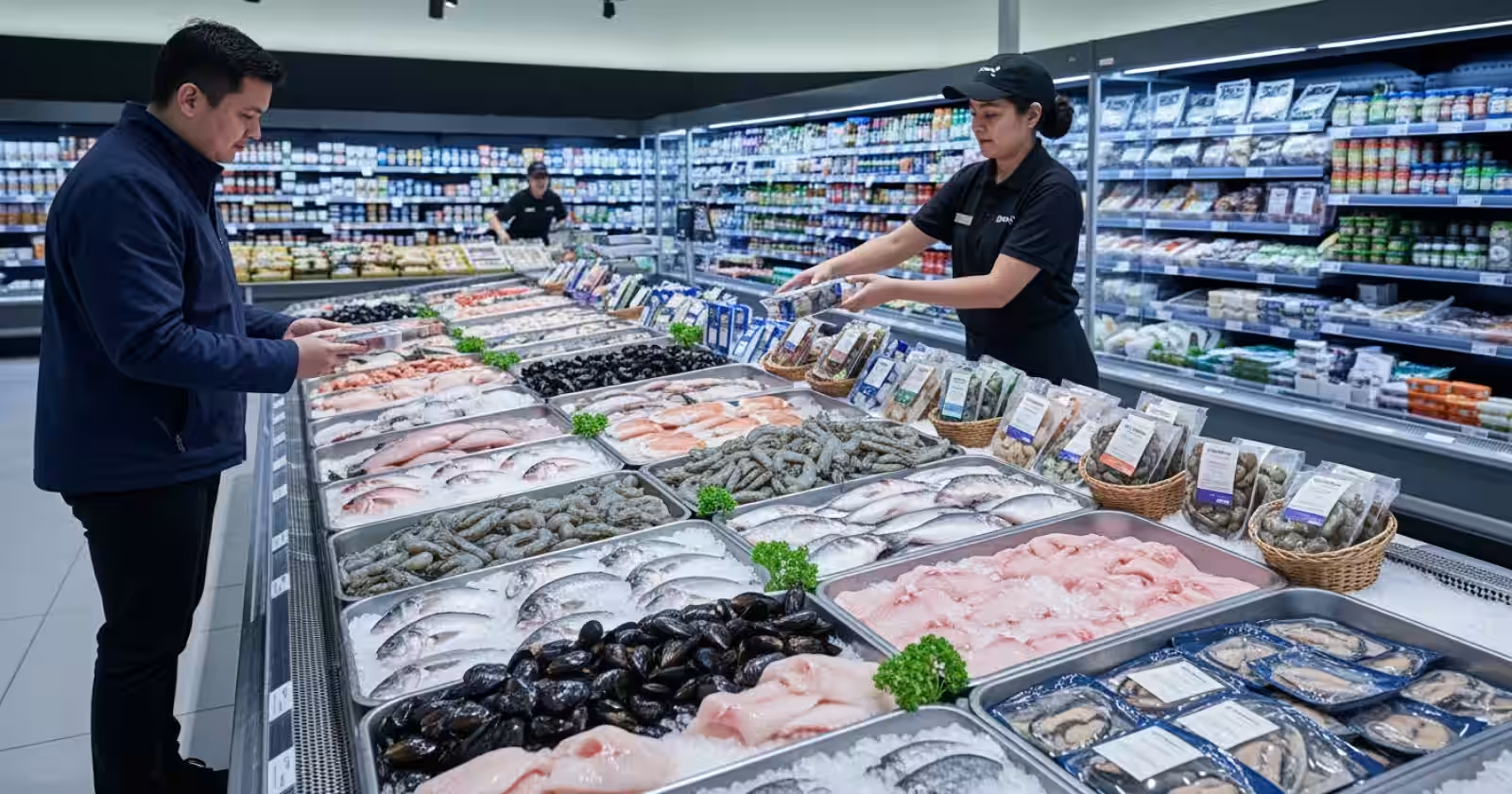
Pams seafood has reached a point many supermarket own brands still struggle to claim: every product in the range now sits under a responsible sourcing framework. For Foodstuffs, that matters because seafood is one of the most exposed categories in the private label aisle, where traceability, ethics and shelf confidence all intersect.
For buyers, brand teams and supply chain leads, the commercial signal is clear. The group has turned a sourcing policy into a customer-facing standard, and it now applies across Pams, Pams Value, Pams Finest and Gilmours.
What Is Pams Seafood and Why It Matters for FMCG
Private label seafood sits in a difficult part of the grocery market. Shoppers want value, but they also expect reassurance that the fish, prawns or canned tuna on shelf have not come with hidden environmental baggage.
That is why responsible sourcing now matters as much as price and availability. In New Zealand and Australia, supermarket own brands are under growing pressure to prove traceability, avoid fisheries linked to overfishing, and show they can back up sustainability claims with standards rather than marketing language. For FMCG suppliers, that shift affects not just compliance, but the way retailers assess category risk and long-term range strategy.
Pams Seafood Completes Foodstuffs’ Responsible Sourcing Shift
Foodstuffs said Pams seafood is now 100 per cent responsibly and ethically sourced as part of its plan to transition all private label seafood to responsible sourcing standards by the end of this year. The policy covers products where seafood is the primary ingredient, including tuna, salmon, prawns, hoki and other lines sold under its own brands.
The company said suppliers must be able to trace seafood back to source and demonstrate action on environmental issues such as bycatch and shark finning. That is the practical test here: not a broad sustainability promise, but a sourcing rule that reaches back through the supply chain.
Foodstuffs Own Brands general manager Lisa Oldershaw said the commitment gives customers confidence that Pams seafood meets clear environmental standards. She said the work was about making responsible choices and giving shoppers confidence across everyday dinner solutions, from canned tuna to battered fish.
One important caveat sits inside the announcement. Foodstuffs said most actively ranged products have met the policy requirements, but Pams mackerel remained in the supply chain for a period because of its long shelf life, after the company decided to stop offering the product because of overfishing concerns.
| Brand / range | Coverage | Sourcing standard | Notes |
|---|---|---|---|
| Pams | All seafood products | Responsible and ethical sourcing | Now reported as fully covered |
| Pams Value | Private label seafood lines | Responsible sourcing policy | Included in Foodstuffs’ transition |
| Pams Finest | Private label seafood lines | Responsible sourcing policy | Included in Foodstuffs’ transition |
| Gilmours | Foodservice and own brand seafood | Responsible sourcing policy | Covered by the same standard |
How the seafood sourcing policy works in practice
The mechanics matter because this is not simply a label update. Foodstuffs has tied its policy to traceability and environmental due diligence, which means suppliers need evidence all the way back to the source fishery or farm.
That evidence can come through certification programmes or equivalent third-party standards. Around 70 per cent of Own Brands seafood products are Marine Stewardship Council-certified, while the remaining 30 per cent are certified through programmes such as the Aquaculture Stewardship Council and Best Aquaculture Practices.
For an FMCG reader, the easiest way to think about it is this: the retailer has moved from asking whether seafood can be sold at the right price to asking whether it can be defended at the point of scrutiny. That changes supplier selection, documentation, and the amount of risk a category manager carries.
It also creates a clearer frame for shelf management. When a retailer can point to standards across the full own brand range, it reduces the chance that one weak link undermines trust in the whole category.
What This Does Not Change for Suppliers or Shoppers
This does not mean every seafood product in the broader Foodstuffs network suddenly carries the same certification badge. The announcement is specific to own brands, and it does not rewrite the sourcing rules for every branded product sold through the channel.
It also does not remove the structural pressures facing seafood buyers. Availability, seasonal supply, freight costs and fisheries performance still shape the category, and certification alone does not solve every sustainability concern.
For suppliers, the biggest benefit sits with those already invested in traceability systems and recognised certification schemes. For retailers, the value lands in margin protection, reputational defence and a cleaner story to tell shoppers. The near-term winners are the brands and categories that can document their sourcing now rather than scramble later.
The Bigger Picture for Private Label Seafood
This is part of a wider private label shift that FMCG teams should not dismiss as a niche sustainability story. Supermarket own brands are increasingly expected to carry the same credibility as national brands, especially in categories where provenance matters and consumers are more suspicious of vague claims.
Seafood is one of the clearest tests of that shift. If Foodstuffs can maintain this standard while managing range, cost and supply continuity, other retailers will feel pressure to lift their own benchmarks as well. Pams seafood now sits in the part of the market where sustainability is no longer a side note, but a buying requirement.
For FMCG teams watching private label, traceability and category risk, this is the kind of move worth briefing into next week’s range review. If you manage seafood, own brand or sustainability claims, the standard is getting sharper, and the bar is not moving back down.