
Why Millions of Indians Trust Cooperatives More Than Private Companies

Why Millions of Indians Trust Cooperatives More Than Private Companies

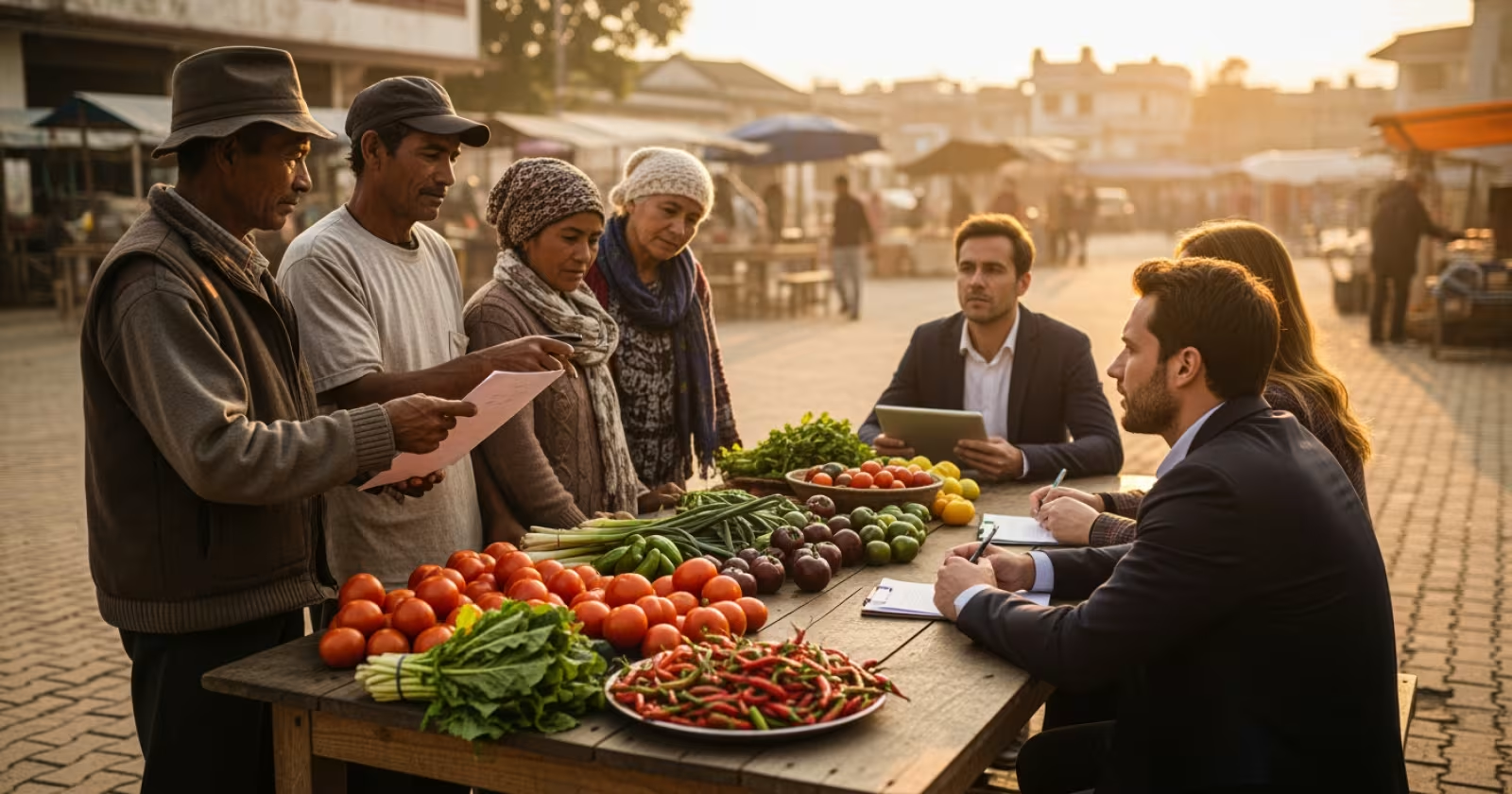
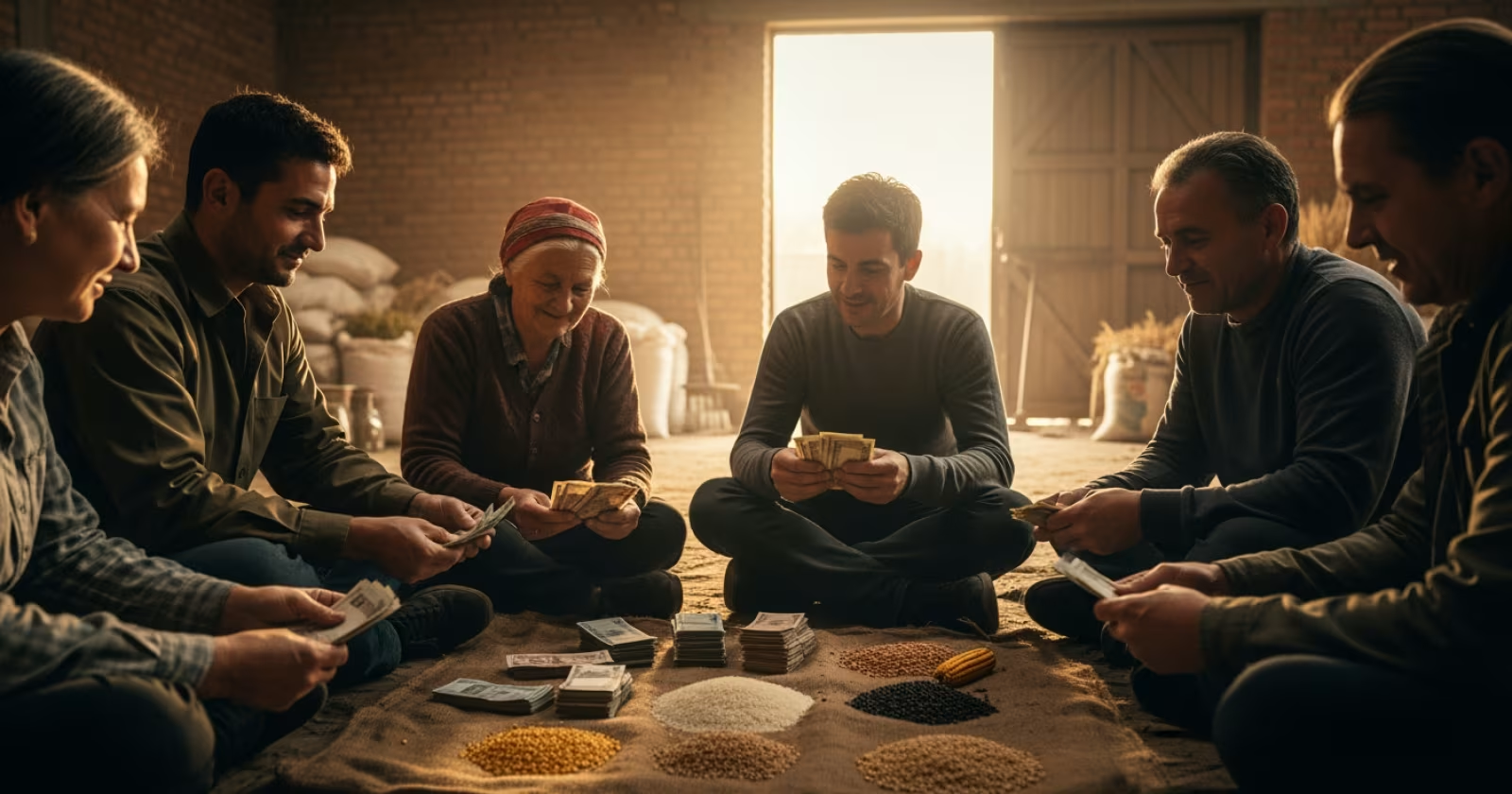
When Amul distributed the equivalent of ₹72,000 crore back to its farmer-members in a single financial year, no private dairy conglomerate in India — not Nestlé, not the corporate arm of Mother Dairy — came close to matching that payout to the people who actually produced the milk. That number stopped me cold when I … Read more

The Cooperative That Employs 80,000 People With No CEO — Mondragón vs IFFCO Explained

The Cooperative That Employs 80,000 People With No CEO — Mondragón vs IFFCO Explained

In the rain-soaked hills of Basque Country, Spain, a factory worker casting engine parts earns no less than one-sixth of what the highest-paid manager takes home — and that manager was elected by the very workers on the shop floor. Meanwhile, in Kalol, Gujarat, a marginal farmer holding two bighas of land collects his subsidised bag of Nano Urea from the local society, blissfully unaware that his purchase traces back to one of the world’s largest fertiliser cooperatives headquartered over a thousand kilometres away in New Delhi. Two cooperatives. Two continents. Two radically different answers to the same question: can ordinary people govern an enterprise worth billions?

I have spent years covering India‘s cooperative sector for IICTF, and no comparison sharpens the ideological fault lines of the movement quite like placing Mondragón Corporation beside IFFCO (Indian Farmers Fertiliser Cooperative Limited). One has no CEO and lets workers vote on salaries. The other has a Managing Director, a government-linked board, and serves over 35,000 member cooperatives across India. Both are wildly successful. Both claim the cooperative identity. Yet their DNA could not be more different.
Read more

UP’s Sugar Belt Has 100+ Cooperative Mills — Most Are Sick, A Few Are Thriving — Here’s the Difference

UP's Sugar Belt Has 100+ Cooperative Mills — Most Are Sick, A Few Are Thriving — Here's the Difference

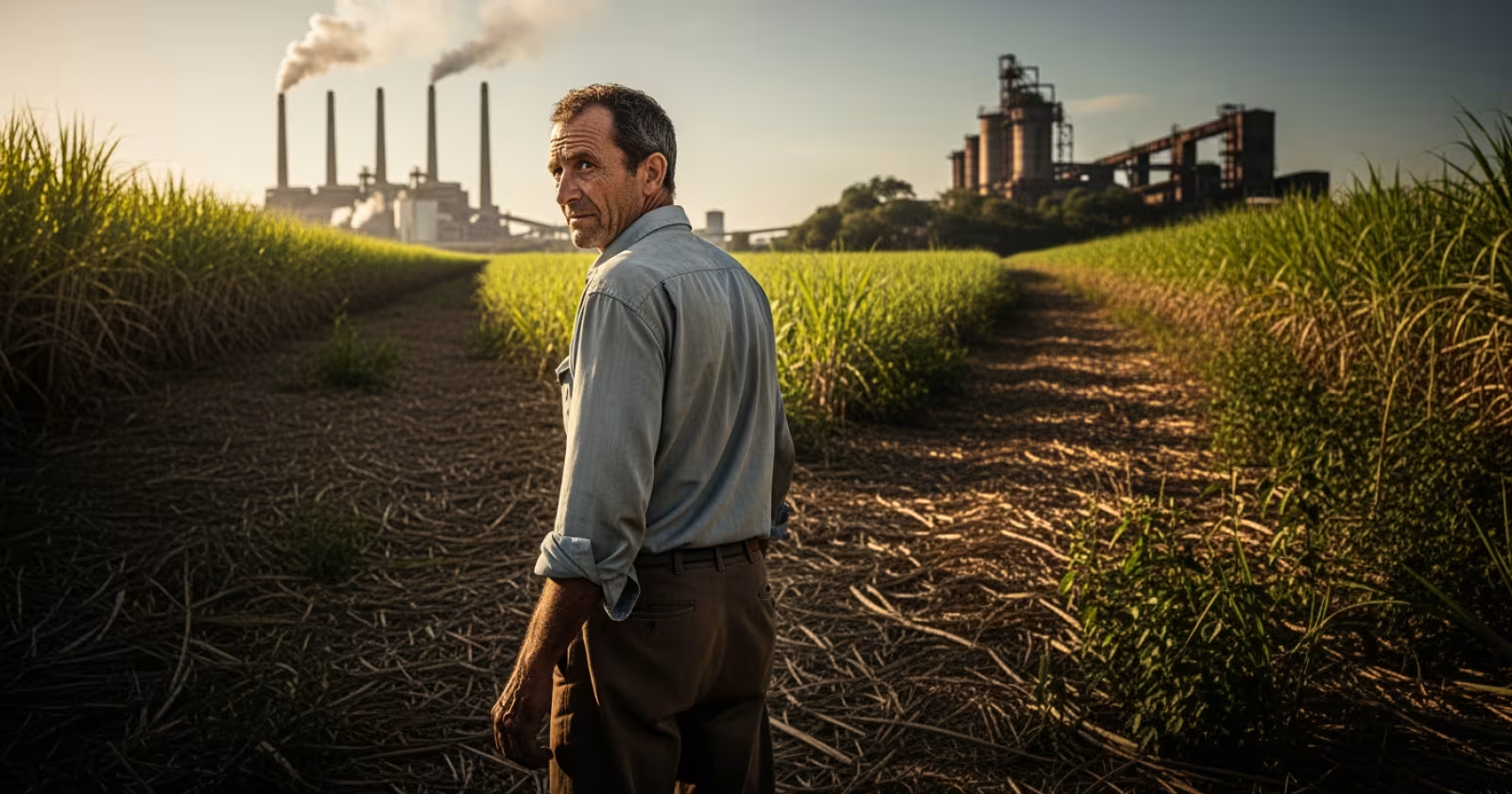
In Shamli district, barely two hours from Delhi, a rusted padlock hangs on the gates of a cooperative sugar mill that once crushed 2,500 tonnes of cane daily. Weeds push through the concrete yard. The boiler house, silent since the 2019-20 season, looks like an industrial ruin. Seven kilometres east, another cooperative mill — similar vintage, similar capacity — hums through the crushing season, pays farmers within fourteen days, and posted an operating surplus of approximately ₹11 crore last year. I have spent months trying to understand what separates the dead from the living in Uttar Pradesh’s cooperative sugar sector, and the answer is far more uncomfortable than “poor management.”

Uttar Pradesh produces more sugar than any other Indian state — over 12 million tonnes in the 2026-26 season by most estimates. Yet its cooperative sugar mills, once envisioned as farmer-owned engines of rural prosperity, are overwhelmingly sick. Of the 100-plus cooperative mills established across the sugar belt spanning Muzaffarnagar, Shamli, Meerut, Saharanpur, Bijnor, and parts of Rohilkhand, only a fraction operate at viable capacity today. The rest are closed, partially functional, or surviving on government lifelines.

Read more

How a Small Dairy Village Built a Business Bigger Than Many Startups

How a Small Dairy Village Built a Business Bigger Than Many Startups

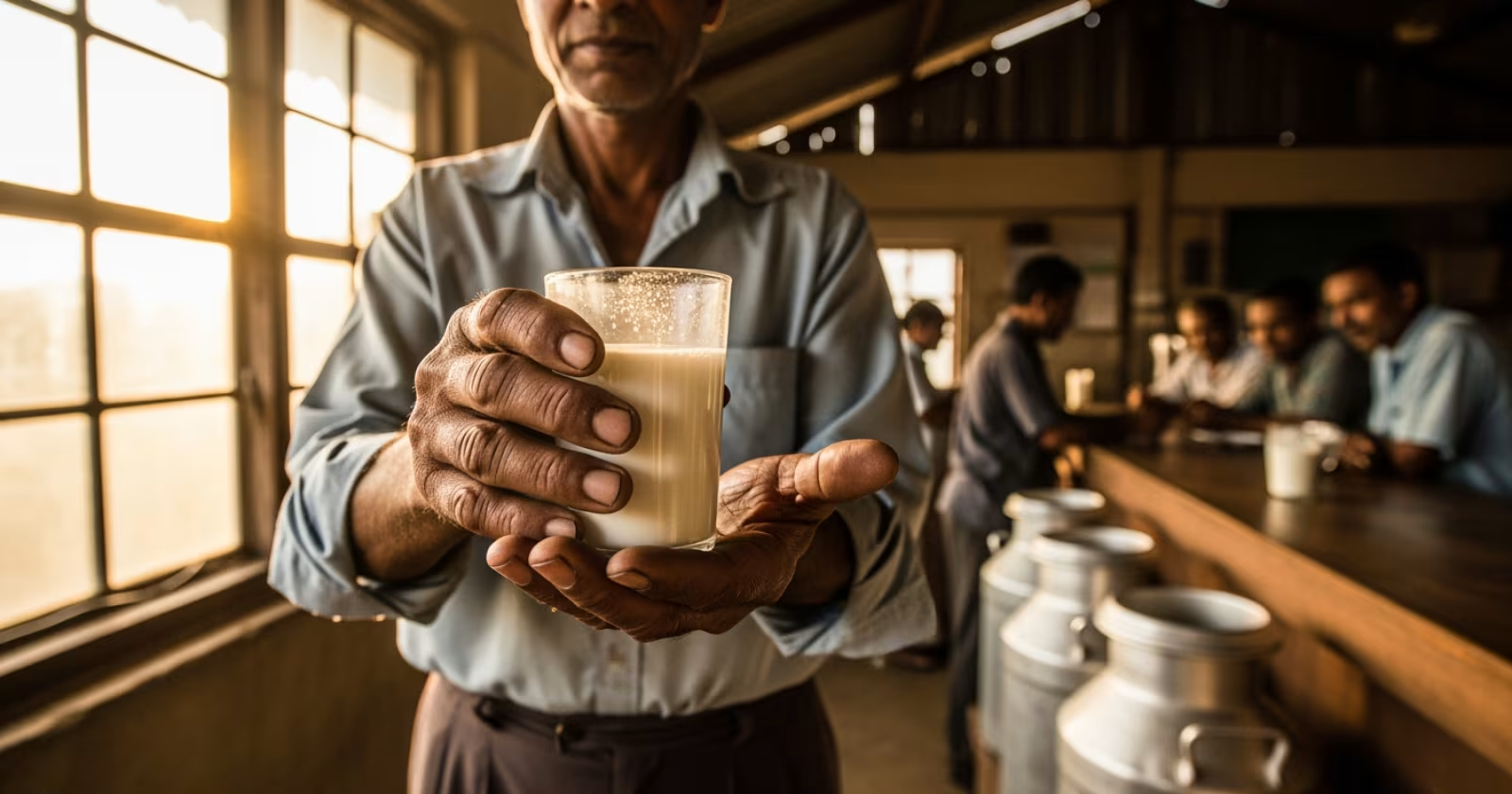
In a village of barely 800 households in Kheda district, Gujarat, the local dairy cooperative society processes approximately 12,000 litres of milk every single day — and channels annual revenues that would make a Series-A funded startup blush. I first encountered this story not through a business journal but through a farmer named Rameshbhai, who … Read more

Why India’s Oldest Business Model is Suddenly Attracting Startup Founders

Why India's Oldest Business Model is Suddenly Attracting Startup Founders

India‘s roughly 12 million kirana stores collectively process more than $700 billion in annual transactions — a figure that dwarfs what Amazon India, Flipkart, and every direct-to-consumer brand combined have achieved across two decades of aggressive digital retail. The margin advantage those stores hold, rooted in near-zero customer acquisition cost and near-perfect retention, is what … Read more

How Farmers in Meghalaya Are Beating Corporate Buyers at Their Own Game

How Farmers in Meghalaya Are Beating Corporate Buyers at Their Own Game

The lakadong turmeric grown in Meghalaya’s Jaintia Hills contains up to 7.5 percent curcumin — nearly three times the concentration found in most commercial varieties and a figure that makes it the most chemically potent turmeric on earth. For three decades, that extraordinary quality translated into almost nothing for the farmers who grew it, because … Read more

What Happens When Weavers Own the Factory? India Has the Answer

What Happens When Weavers Own the Factory? India Has the Answer

A master weaver in Varanasi can spend three months producing a single Banarasi silk sari worth ₹40,000 in a Delhi boutique — and walk away with less than ₹4,000 of that. The gap between what skilled hands create and what they earn has defined India’s handloom economy for generations — until a quiet ownership revolution … Read more

The Village That Decided to Compete With MNCs — and Won

The Village That Decided to Compete With MNCs — and Won

When the farmers of Anand — a small, dust-settled town in Gujarat, India — formed a dairy cooperative in 1946, they collectively processed just 247 liters of milk a day, owned no refrigeration equipment, and had no brand anyone had ever heard of. The company they were about to challenge, Polson Dairy, had British colonial … Read more

How Sikkim’s Organic Cooperative Became the World’s First 100% Organic State’s Backbone

How Sikkim's Organic Cooperative Became the World's First 100% Organic State's Backbone

In a cardamom field tucked above Rhenock town in East Sikkim, a farmer named Dawa Lepcha watched his neighbours across the border in Darjeeling spray synthetic pesticides on their tea gardens. It was 2014, and Sikkim’s state government had just told him — along with approximately 66,000 other farming families — that chemical fertilisers were … Read more

Could Your Next Bank Be Owned by the People Who Borrow From It?

Could Your Next Bank Be Owned by the People Who Borrow From It?

The largest credit union in the United States holds more than $170 billion in assets and serves over 13 million members — yet most Americans still think of it as a niche alternative to “real” banking. Navy Federal Credit Union has no shareholders. It has members, and those members are also its borrowers, its depositors, … Read more