How Sikkim’s Organic Cooperative Became the World’s First 100% Organic State’s Backbone

How Sikkim's Organic Cooperative Became the World's First 100% Organic State's Backbone

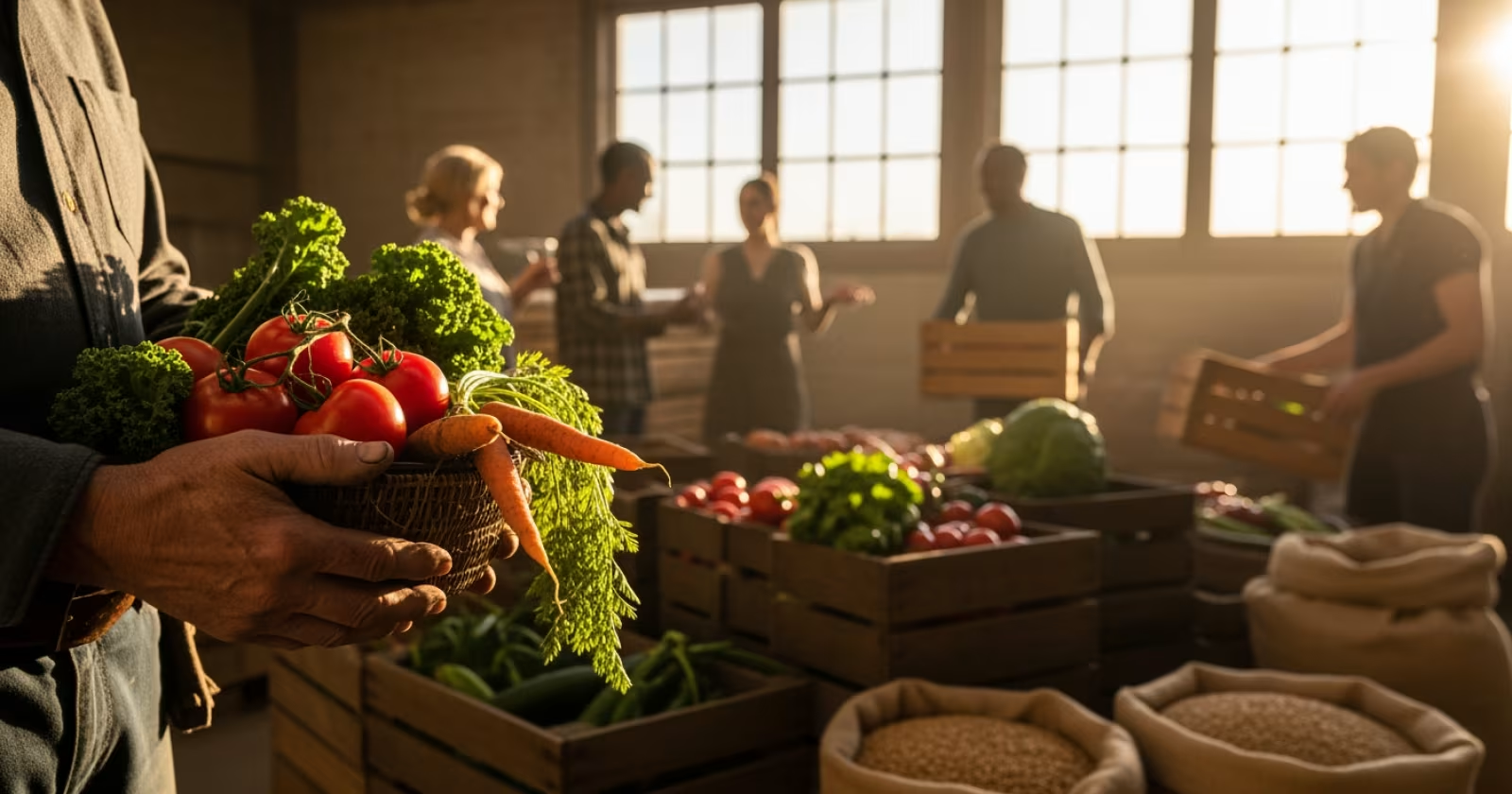
In a cardamom field tucked above Rhenock town in East Sikkim, a farmer named Dawa Lepcha watched his neighbours across the border in Darjeeling spray synthetic pesticides on their tea gardens. It was 2014, and Sikkim’s state government had just told him — along with approximately 66,000 other farming families — that chemical fertilisers were … Read more

KMF — Karnataka’s Milk Cooperative Federation That Quietly Became Amul’s Biggest Rival

KMF — Karnataka's Milk Cooperative Federation That Quietly Became Amul's Biggest Rival

In Mandya district, roughly 120 kilometres southwest of Bengaluru, a 54-year-old farmer named Rangaswamy pours approximately 18 litres of milk every morning into a stainless steel can at his village collection centre. He has done this for over two decades. The board above the centre reads “Mandya District Co-operative Milk Producers’ Societies Union” — one of 14 district unions feeding into a machine most Indians outside Karnataka barely know about. That machine is the Karnataka Milk Federation (KMF), and its flagship brand, Nandini, outsells every dairy brand inside the state — including Amul. Rangaswamy earns roughly ₹32 per litre at the procurement point, a figure that has climbed steadily over the past five years. For him, KMF is not a corporate entity. It is the reason his two daughters went to college.

I have tracked India’s cooperative dairy sector for over a decade, and KMF’s story remains one of the most underreported success narratives in the country. While Amul commands national headlines and advertising budgets, KMF has quietly assembled a turnover exceeding ₹22,000 crore, making it India’s second-largest dairy cooperative. What makes this even more remarkable is that KMF operates almost entirely within one state.

Read more

IFFCO Was Born in Gujarat — Here’s the Untold Story of How It Became the World’s Largest Fertiliser Cooperative

IFFCO Was Born in Gujarat — Here's the Untold Story of How It Became the World's Largest Fertiliser Cooperative

In the summer of 1966, a groundnut farmer in Mehsana district, Gujarat, watched his crop wilt — not from drought, but from the sheer impossibility of buying fertiliser at a price he could afford. That year, India imported nearly 60% of its fertiliser requirement, and private traders in rural Gujarat marked up prices by margins that made farming a losing bet. I have spent years covering the cooperative sector, and no origin story fascinates me quite like what happened next — how that farmer’s desperation became the seed for an institution that now serves over 35,000 cooperative societies and touches the lives of approximately 50 million Indian farmers.

The institution I am talking about is Indian Farmers Fertiliser Cooperative Limited (IFFCO), registered on 3 November 1967. What most people do not know is that IFFCO was not a government project imposed from Delhi. It was a grassroots demand, channelled through cooperative networks in Gujarat, that eventually convinced policymakers to back one of the boldest experiments in India’s agricultural history.

Read more

How a Group of Fishermen in Kerala Became Millionaires Together

How a Group of Fishermen in Kerala Became Millionaires Together

Off the coast of Thiruvananthapuram, fishermen were losing money every single morning — not because the fish had disappeared, but because they had no idea where to sell them. That changed in 2007, and what followed quietly became one of the most extraordinary wealth stories in modern India. I first heard this story from an … Read more

How Kerala’s Kudumbashree Cooperative Network Became the Largest Women-Run Cooperative in Asia

How Kerala's Kudumbashree Cooperative Network Became the Largest Women-Run Cooperative in Asia

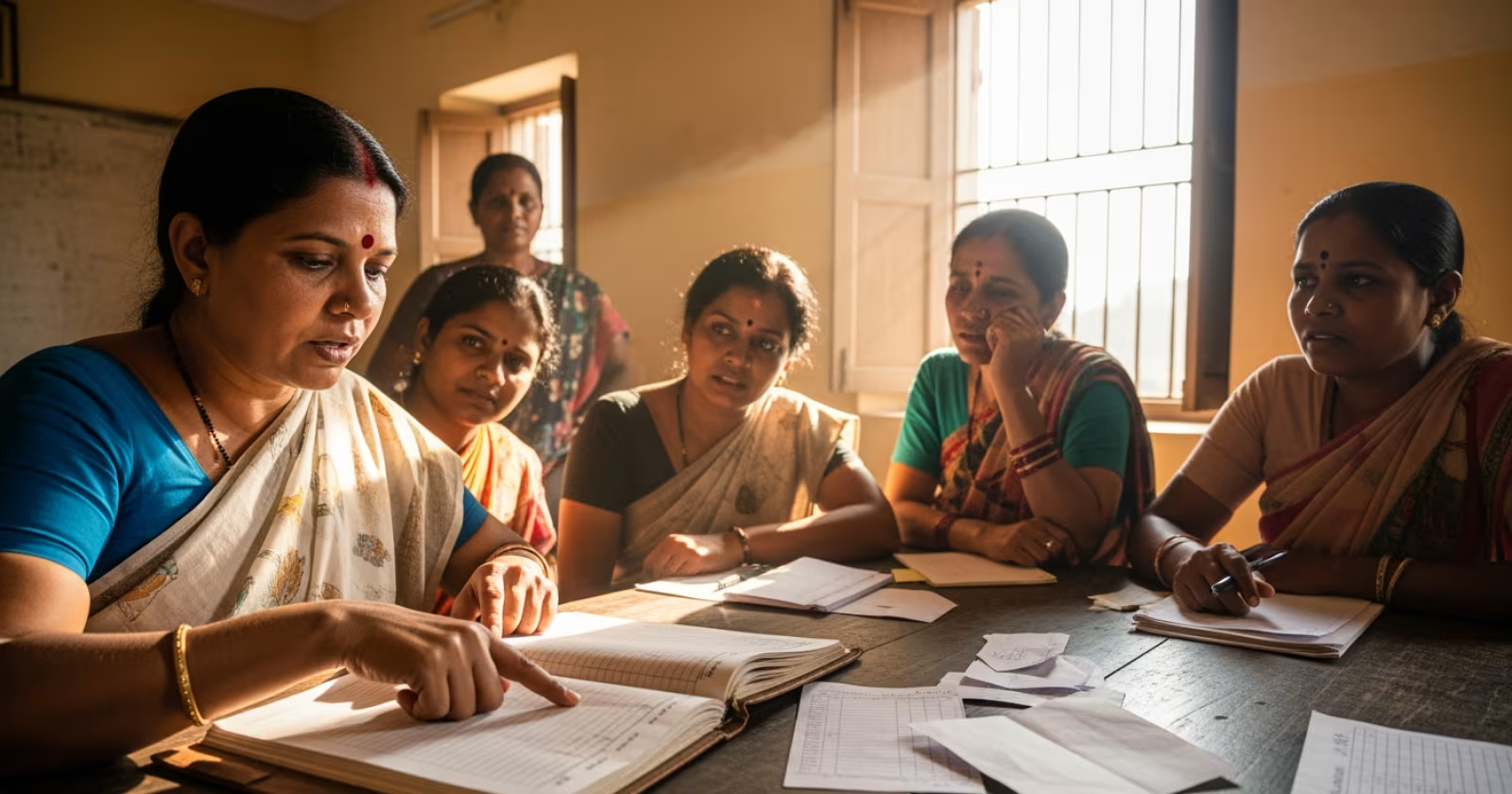
In a small rented room in Alappuzha district, a woman named Sreelatha once counted ₹47 in weekly savings collected from nine neighbours. That was 2001. Today, that same neighbourhood group manages a catering micro-enterprise turning over ₹12 lakh annually. I find her story remarkable not because it is unique — but because it has been replicated approximately 3.06 lakh times across every single ward in Kerala. This is the quiet, staggering mathematics of what cooperative mobilisation can achieve when women hold the ledger.

I have spent years covering India‘s cooperative sector for IICTF, and no model has fascinated me more than Kudumbashree — a name that translates to “prosperity of the family” in Malayalam. With over 4.5 million women members as of 2026, it is not merely Kerala’s pride; it is the single largest women-run cooperative network anywhere in Asia. Yet most Indians outside Kerala have only a vague sense of what it actually does or how it works. That gap deserves closing.

Read more