



Organic Industry Leaders Strongly Back Federal Government Push to Fix Misleading Food Labelling Rules

Organic Industry Leaders Strongly Back Federal Government Push to Fix Misleading Food Labelling Rules

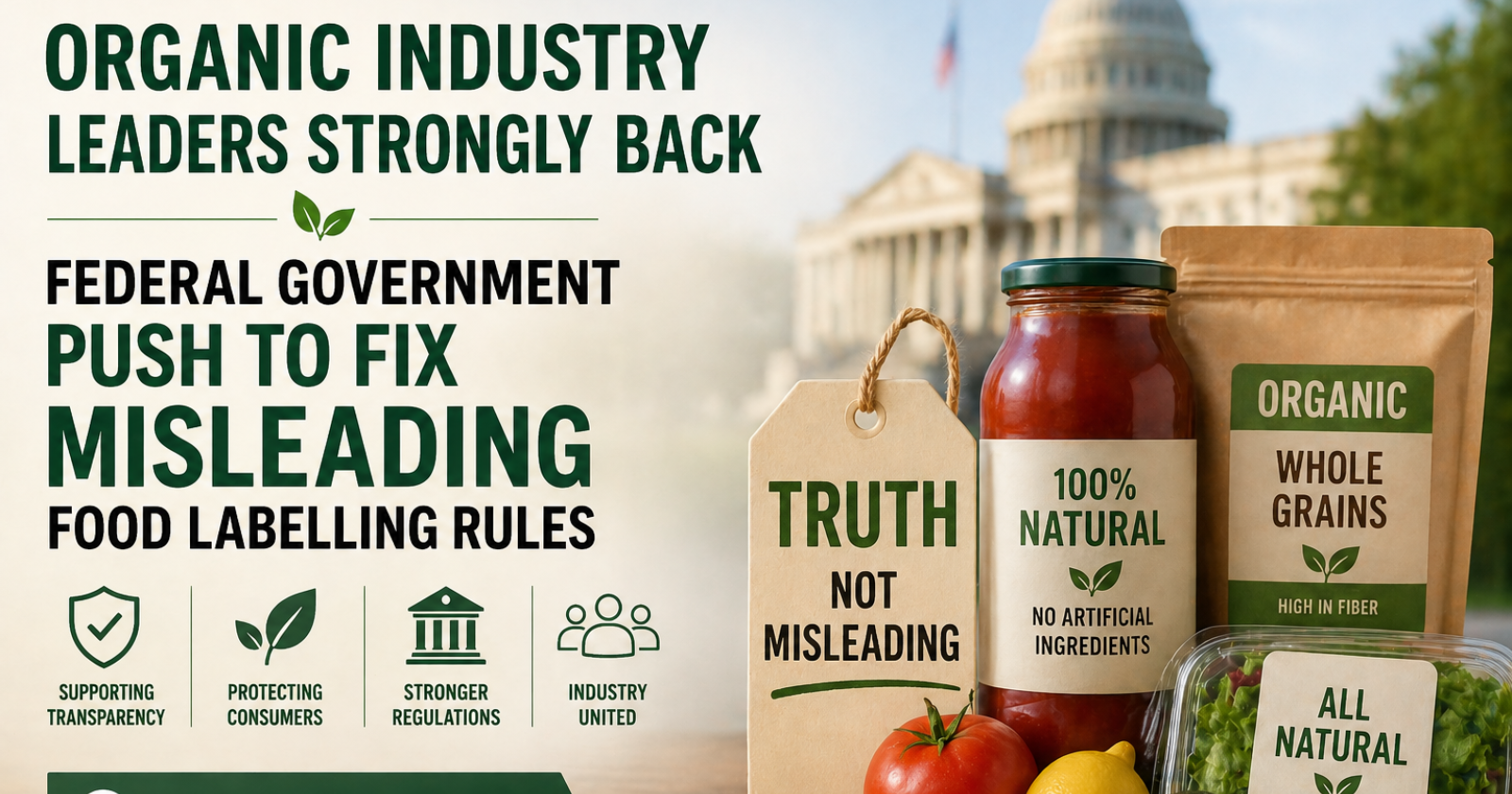
Any brand can print “organic” on a label in Australia right now, and nothing in the law stops them. That single regulatory gap has been quietly eroding the value of certified organic products for years — and the Federal Government has finally signalled it wants to fix it. Industry body Australian Organic Limited (AOL) has … Read more

How to Get Free Cold Storage Subsidy Under Govt Scheme

How to Get Free Cold Storage Subsidy Under Govt Scheme

Every year, Indian farmers lose thousands of crores worth of produce simply because cold storage is too expensive to build or rent. The problem is not that schemes don’t exist — it’s that most farmers and entrepreneurs never find out how to actually use them. If you are a farmer, FPO member, cooperative, or agri-entrepreneur … Read more

Dine Cat Food Partners With Coles to Back Reef Restoration Efforts in 2024

Dine Cat Food Partners With Coles to Back Reef Restoration Efforts in 2024

More than 32,000 coral fragments planted. That is the number sitting behind Dine’s bid to turn a supermarket shelf decision into a measurable conservation outcome on the Great Barrier Reef — and it is a harder figure to dismiss than most cause-marketing claims. What catches my attention here is not the environmental intent, which is … Read more

European Nonwovens Production Holds Firm Despite Significant Market Pressure Saving Manufacturers Millions in 2026

European Nonwovens Production Holds Firm Despite Significant Market Pressure Saving Manufacturers Millions in 2026

A 2.2% production decline across Greater Europe sounds like a contraction story at first glance. But when the sector moves nearly 2.9 million tonnes of nonwovens in a single year — against weakening demand, intensifying import competition, and a contracting hygiene segment — that number requires more than a headline read. EDANA, the international association … Read more

How Karnataka’s Coffee Cooperative in Coorg Exports to Starbucks Without Losing Farmer Control

How Karnataka's Coffee Cooperative in Coorg Exports to Starbucks Without Losing Farmer Control

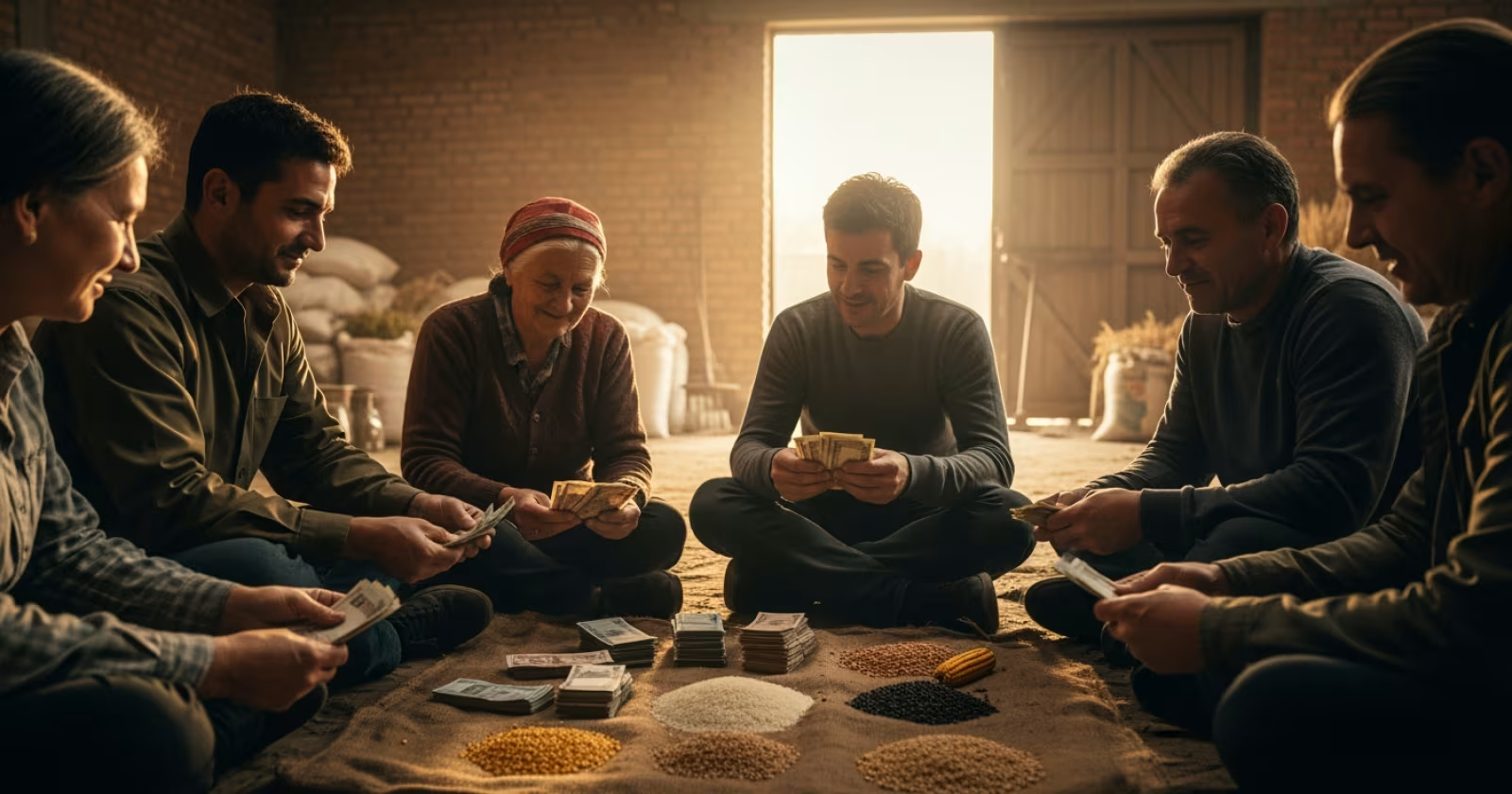
In the mist-wrapped hills of Kodagu district, a 62-year-old grower named Suresh Ponnappa tends to four acres of Arabica coffee that his grandfather first planted in the 1940s. His entire annual harvest — roughly 1,200 kilograms of cherry — now travels from his small estate to a Starbucks Reserve counter in Mumbai. Yet Suresh has never spoken to a single Starbucks buyer. His cooperative did that for him, negotiating a price nearly ₹40 per kilogram higher than what the local trader offered last season. I travelled to Coorg in early 2026 to understand how this arrangement actually works, and what I found challenged almost everything I assumed about Indian cooperatives.

This is not just a feel-good story about farmers and fair trade. It is a structural lesson in how a cooperative coffee model in Karnataka has cracked the export supply chain to one of the world’s largest coffee brands — without surrendering governance to corporate intermediaries or government bureaucrats. At a time when the Ministry of Cooperation is pushing to modernise India’s 8.5 lakh cooperative societies, Kodagu’s coffee growers offer a rare working blueprint.

Read more

How Andhra’s Cooperative Aquaculture Sector Made Krishna District the Shrimp Capital of India

How Andhra's Cooperative Aquaculture Sector Made Krishna District the Shrimp Capital of India

In Nagayalanka mandal, at the southern tip of Krishna district where the river meets the Bay of Bengal, a 62-year-old farmer named Ramaiah tends to 12 acres of shrimp ponds that earn him more than his rice paddies ever did. His cooperative society — one of over 400 fishermen cooperatives scattered across Andhra Pradesh — negotiated a collective input price for Vannamei shrimp seed that saved each member approximately ₹15,000 per acre per cycle in 2026. I first heard about Nagayalanka’s transformation from a colleague covering rural Andhra, and the numbers stunned me enough to dig deeper.

What I found was not a single success story but an entire economic ecosystem — one where cooperative aquaculture has quietly turned a coastal district into the engine room of India‘s ₹52,000 crore shrimp export industry. Krishna district alone accounts for an estimated 30-35% of Andhra Pradesh’s total shrimp output, and the state itself produces roughly 70% of India’s farmed shrimp. Those are not small numbers. They represent a cooperative-driven revolution that most of India has barely noticed.

Read more

Why Millions of Indians Trust Cooperatives More Than Private Companies

Why Millions of Indians Trust Cooperatives More Than Private Companies

When Amul distributed the equivalent of ₹72,000 crore back to its farmer-members in a single financial year, no private dairy conglomerate in India — not Nestlé, not the corporate arm of Mother Dairy — came close to matching that payout to the people who actually produced the milk. That number stopped me cold when I … Read more

UP’s Sugar Belt Has 100+ Cooperative Mills — Most Are Sick, A Few Are Thriving — Here’s the Difference

UP's Sugar Belt Has 100+ Cooperative Mills — Most Are Sick, A Few Are Thriving — Here's the Difference

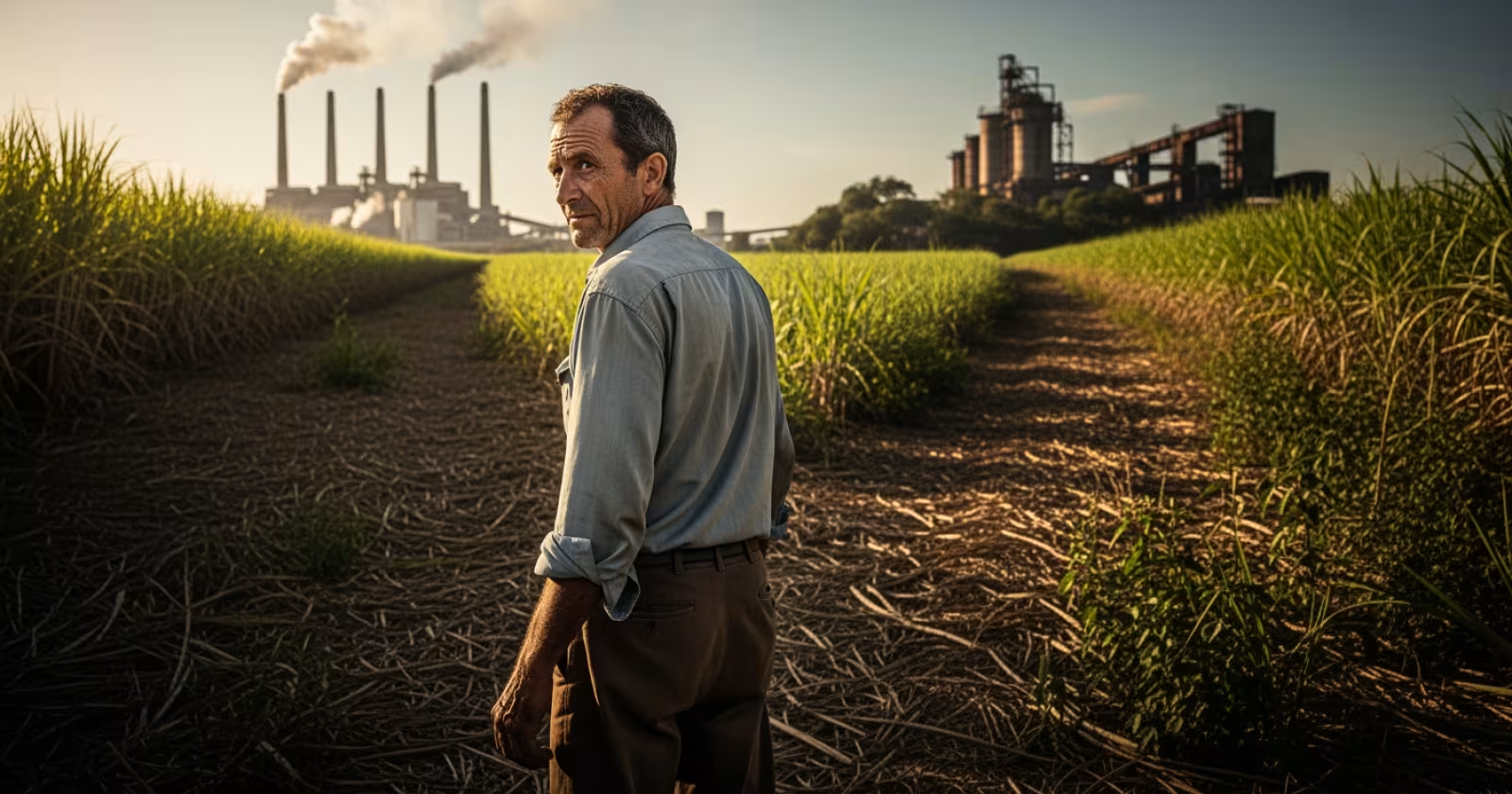
In Shamli district, barely two hours from Delhi, a rusted padlock hangs on the gates of a cooperative sugar mill that once crushed 2,500 tonnes of cane daily. Weeds push through the concrete yard. The boiler house, silent since the 2019-20 season, looks like an industrial ruin. Seven kilometres east, another cooperative mill — similar vintage, similar capacity — hums through the crushing season, pays farmers within fourteen days, and posted an operating surplus of approximately ₹11 crore last year. I have spent months trying to understand what separates the dead from the living in Uttar Pradesh’s cooperative sugar sector, and the answer is far more uncomfortable than “poor management.”

Uttar Pradesh produces more sugar than any other Indian state — over 12 million tonnes in the 2026-26 season by most estimates. Yet its cooperative sugar mills, once envisioned as farmer-owned engines of rural prosperity, are overwhelmingly sick. Of the 100-plus cooperative mills established across the sugar belt spanning Muzaffarnagar, Shamli, Meerut, Saharanpur, Bijnor, and parts of Rohilkhand, only a fraction operate at viable capacity today. The rest are closed, partially functional, or surviving on government lifelines.

Read more

How a Small Dairy Village Built a Business Bigger Than Many Startups

How a Small Dairy Village Built a Business Bigger Than Many Startups

In a village of barely 800 households in Kheda district, Gujarat, the local dairy cooperative society processes approximately 12,000 litres of milk every single day — and channels annual revenues that would make a Series-A funded startup blush. I first encountered this story not through a business journal but through a farmer named Rameshbhai, who … Read more

Bedsure Cooling Comforters Now Target Hot Sleepers Using Advanced Q-Max Technology for Better Sleep

Bedsure Cooling Comforters Now Target Hot Sleepers Using Advanced Q-Max Technology for Better Sleep

Thermal regulation in bedding textiles has long relied on phase-change coatings and cool-touch surface finishes that work for the first few minutes of contact and fade quickly after. Pairing a named functional moisture-management finish with a bio-sourced filling fibre is a more architecturally honest approach — and it’s where Bedsure has positioned its two newest … Read more