
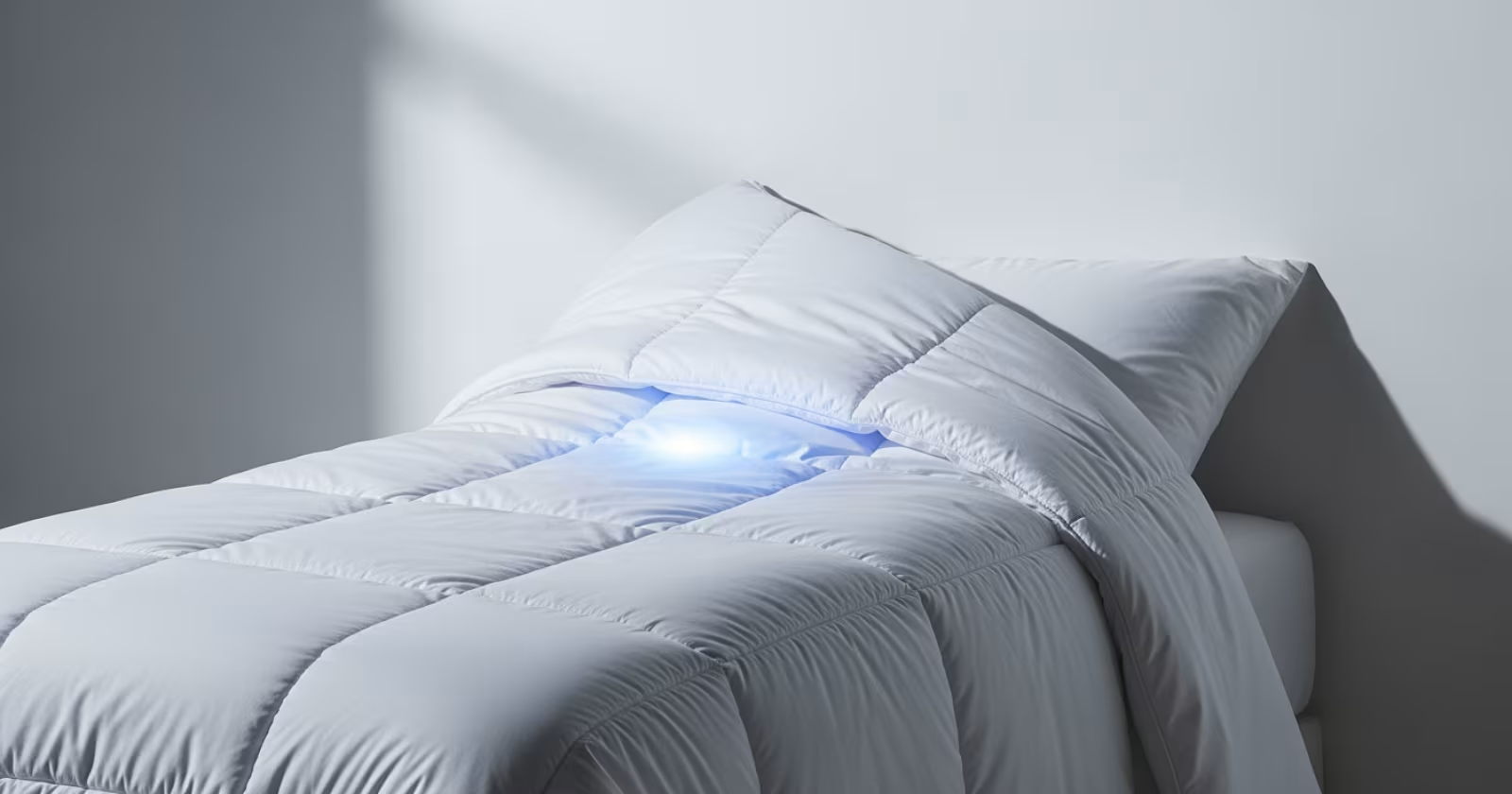
Thermal regulation in bedding textiles has long relied on phase-change coatings and cool-touch surface finishes that work for the first few minutes of contact and fade quickly after. Pairing a named functional moisture-management finish with a bio-sourced filling fibre is a more architecturally honest approach — and it’s where Bedsure has positioned its two newest cooling comforters.
On April 7, 2026, Bedsure — an online home textile brand — announced the launch of the Bedsure SleepEase Cooling Comforter Set and the Bedsure CoolOxy Comforter 2.0. Both products are built around breathable shell construction, moisture-wicking materials, and airflow-focused fill design. The stated engineering objective is long-lasting temperature regulation through the sleep cycle, not a short-duration tactile cool effect — a distinction that matters considerably at the specification and sourcing level.
What Q-Max Measures and Why It Matters for Home Textile Engineers
Q-max — the maximum heat flux coefficient — quantifies the rate of heat transfer from skin to a fabric surface at the moment of contact, expressed in watts per square centimetre (W/cm²). The higher the Q-max value, the greater the immediate cooling sensation the textile delivers. It is the dominant metric used to benchmark cooling performance in bedding and performance apparel alike.
Bedsure reports a Q-max of 0.425 for the SleepEase Cooling Comforter Set, which the brand states exceeds the industry average for cooling bedding. Standard cotton constructions typically register Q-max values in the 0.10–0.15 range. Technically engineered cooling fabrics targeting performance positioning generally aim for 0.20 and above. A value of 0.425 places this product at the higher end of commercially available cooling textiles.
Q-max measures instantaneous heat absorption, not sustained thermal management. The more relevant engineering question for all-night comfort is how shell finish and fill interact to manage moisture vapour transport and maintain airflow over several hours — which is where the Rudolf HYDROCOOL chemistry and the CASTOR filling fibre become central to the product’s performance claim.
Rudolf HYDROCOOL Finish and CASTOR Filling Fibre: Technical Architecture
The SleepEase shell applies Rudolf HYDROCOOL moisture-management technology — a functional finishing system from Rudolf Group designed to accelerate moisture transport away from the skin surface. The finish works by modifying the hydrophilic-hydrophobic balance at the fibre surface, directing moisture vapour outward and reducing the humid microclimate that accumulates between sleeper and textile through the night.
The fill is described as a “high-tech CASTOR filling fiber.” Castor-oil-derived synthetic fibres are produced from a bio-based feedstock and have gained traction in fill applications where partial renewable content and engineered loft resilience are both required. Bedsure has not disclosed denier, fill power equivalent, bio-based content percentage, or recycled content data for this fibre at launch.
The CoolOxy Comforter 2.0 takes a different performance route, prioritising continuous airflow and sustained moisture management over instant Q-max-led cooling. Its shell fabric finish, fill specification, and thermal metrics were not detailed in the launch announcement.
SleepEase vs CoolOxy 2.0: Side-by-Side Technical Comparison
| Feature | SleepEase Cooling Comforter Set | CoolOxy Comforter 2.0 |
|---|---|---|
| Primary Cooling Mechanism | Instant Q-max cooling + sustained thermal regulation | Continuous airflow + moisture management |
| Shell Finish | Rudolf HYDROCOOL moisture management | Not disclosed |
| Fill Material | High-tech CASTOR filling fibre | Breathable / moisture-wicking (unspecified) |
| Q-max Value | 0.425 | Not disclosed |
| Ideal End Use | Warm climates, humid environments, year-round | Night sweats, heat retention, poor airflow |
| Third-Party Certifications | Not confirmed at launch | Not confirmed at launch |
What the Launch Announcement Does Not Confirm
Neither product announcement references third-party testing citations, OEKO-TEX® certification status, or GRS (Global Recycled Standard) claims. For sourcing teams and retail buyers who require documentation at specification, these are relevant omissions. The bio-based content percentage of the CASTOR filling fibre is also unconfirmed, which limits its positioning in markets where environmental label claims require substantiation under current regulatory standards.
The CoolOxy Comforter 2.0 remains technically opaque at this stage. Without shell fabric specifications, fill denier, moisture vapour transmission rate (MVTR) data, or airflow metrics, benchmarking against competitive cooling constructions is not possible from the available information.
Functional Bedding Specification Is Moving Toward Performance Apparel Standards
The home textile sector is under increasing pressure to move functional performance claims beyond marketing positioning and into measurable, verifiable specification. Retailers and institutional buyers — particularly in hospitality and healthcare bedding — are beginning to demand the same technical documentation that performance apparel brands have routinely provided for years. Q-max, MVTR, and CLO values are becoming the language of specification in bedding, not just in R&D.
Bedsure’s use of a named functional finish from Rudolf Group signals awareness of that shift. Pairing a recognised moisture-management chemistry with a bio-sourced fill positions these products within a broader pattern: home textile brands are borrowing the technical credibility infrastructure of performance apparel to compete in a crowded cooling bedding market.
For mills and finishing operations working in home textiles, the engineering challenge here goes beyond sourcing the right components. Preserving Q-max performance through repeated domestic laundering cycles — without degrading the HYDROCOOL finish or compressing the CASTOR fill’s loft — is the production and durability question that cooling bedding as a category still needs to answer at scale.
If you source, specify, or manufacture in the home textiles or functional bedding segment, I’d recommend tracking how Q-max verification protocols and bio-based fill disclosure standards develop over the next product cycle — the brands and mills that build verifiable technical claims into their development process from the start will have a meaningful advantage when retailer documentation requirements tighten further.