






How a Small Dairy Village Built a Business Bigger Than Many Startups

How a Small Dairy Village Built a Business Bigger Than Many Startups

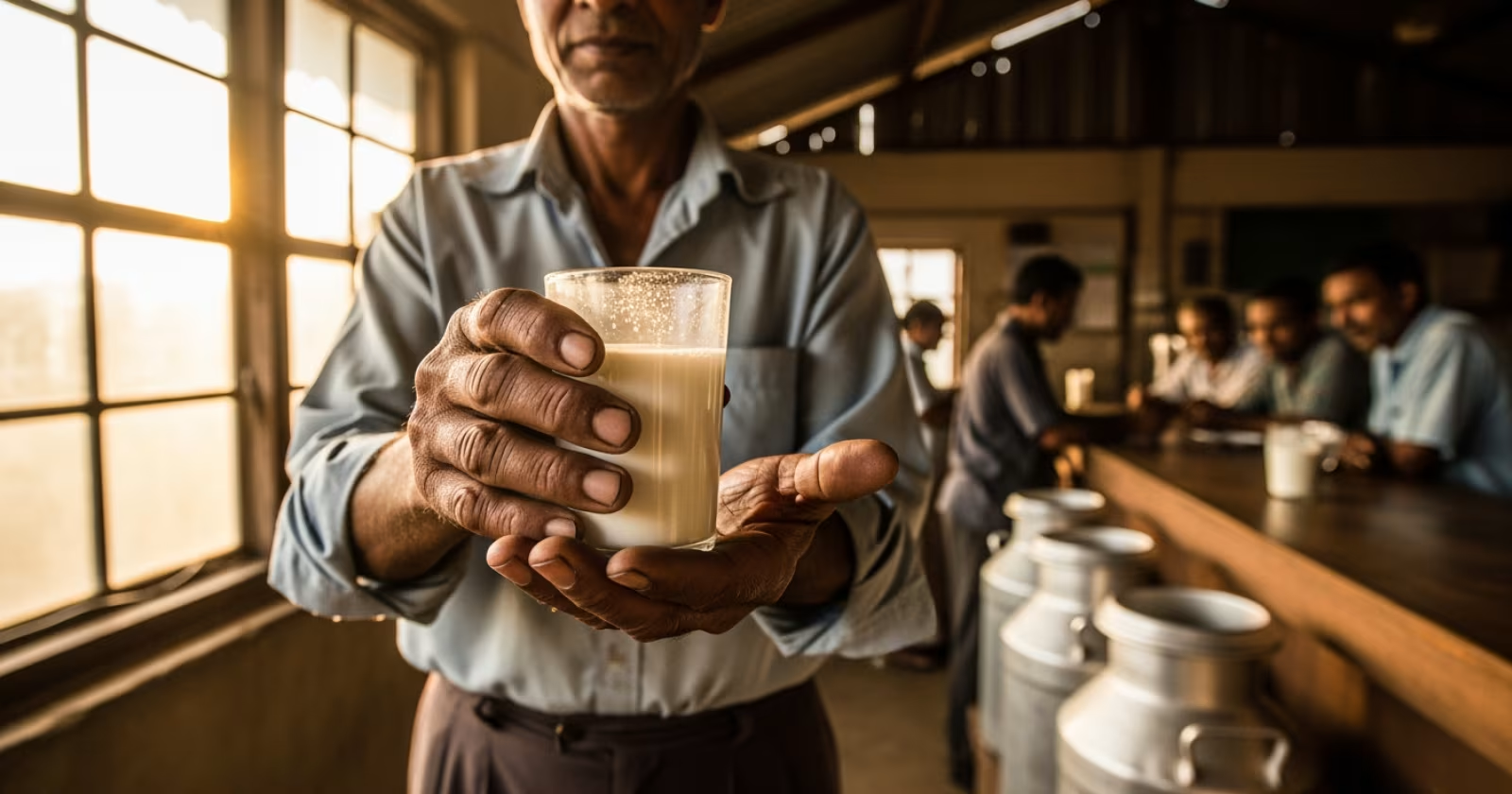
In a village of barely 800 households in Kheda district, Gujarat, the local dairy cooperative society processes approximately 12,000 litres of milk every single day — and channels annual revenues that would make a Series-A funded startup blush. I first encountered this story not through a business journal but through a farmer named Rameshbhai, who … Read more

How Farmers Are Getting Tractor Subsidy in 2026 (Full Details)

How Farmers Are Getting Tractor Subsidy in 2026 (Full Details)

Most farmers know tractors are expensive — but very few know that the government is actively subsidising the purchase price, sometimes covering up to 50% of the cost. The problem is not that these schemes do not exist — it is that most farmers never understand how to access them. In 2026, tractor subsidy is … Read more

Why India’s Oldest Business Model is Suddenly Attracting Startup Founders

Why India's Oldest Business Model is Suddenly Attracting Startup Founders

India‘s roughly 12 million kirana stores collectively process more than $700 billion in annual transactions — a figure that dwarfs what Amazon India, Flipkart, and every direct-to-consumer brand combined have achieved across two decades of aggressive digital retail. The margin advantage those stores hold, rooted in near-zero customer acquisition cost and near-perfect retention, is what … Read more

How Farmers in Meghalaya Are Beating Corporate Buyers at Their Own Game

How Farmers in Meghalaya Are Beating Corporate Buyers at Their Own Game

The lakadong turmeric grown in Meghalaya’s Jaintia Hills contains up to 7.5 percent curcumin — nearly three times the concentration found in most commercial varieties and a figure that makes it the most chemically potent turmeric on earth. For three decades, that extraordinary quality translated into almost nothing for the farmers who grew it, because … Read more

What Happens When Weavers Own the Factory? India Has the Answer

What Happens When Weavers Own the Factory? India Has the Answer

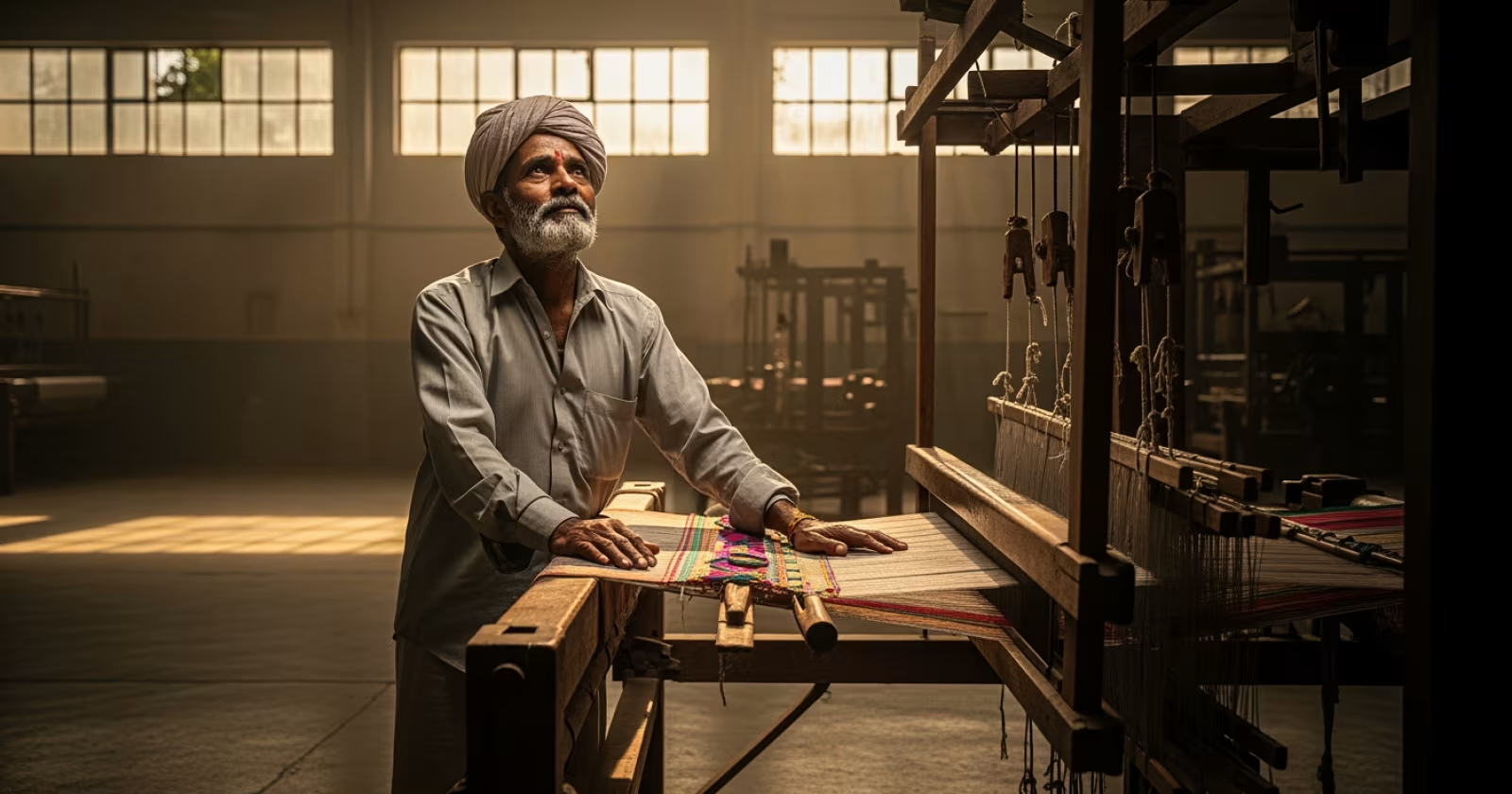
A master weaver in Varanasi can spend three months producing a single Banarasi silk sari worth ₹40,000 in a Delhi boutique — and walk away with less than ₹4,000 of that. The gap between what skilled hands create and what they earn has defined India’s handloom economy for generations — until a quiet ownership revolution … Read more

The Village That Decided to Compete With MNCs — and Won

The Village That Decided to Compete With MNCs — and Won

When the farmers of Anand — a small, dust-settled town in Gujarat, India — formed a dairy cooperative in 1946, they collectively processed just 247 liters of milk a day, owned no refrigeration equipment, and had no brand anyone had ever heard of. The company they were about to challenge, Polson Dairy, had British colonial … Read more

How Sikkim’s Organic Cooperative Became the World’s First 100% Organic State’s Backbone

How Sikkim's Organic Cooperative Became the World's First 100% Organic State's Backbone

In a cardamom field tucked above Rhenock town in East Sikkim, a farmer named Dawa Lepcha watched his neighbours across the border in Darjeeling spray synthetic pesticides on their tea gardens. It was 2014, and Sikkim’s state government had just told him — along with approximately 66,000 other farming families — that chemical fertilisers were … Read more

Could Your Next Bank Be Owned by the People Who Borrow From It?

Could Your Next Bank Be Owned by the People Who Borrow From It?

The largest credit union in the United States holds more than $170 billion in assets and serves over 13 million members — yet most Americans still think of it as a niche alternative to “real” banking. Navy Federal Credit Union has no shareholders. It has members, and those members are also its borrowers, its depositors, … Read more

KMF — Karnataka’s Milk Cooperative Federation That Quietly Became Amul’s Biggest Rival

KMF — Karnataka's Milk Cooperative Federation That Quietly Became Amul's Biggest Rival

In Mandya district, roughly 120 kilometres southwest of Bengaluru, a 54-year-old farmer named Rangaswamy pours approximately 18 litres of milk every morning into a stainless steel can at his village collection centre. He has done this for over two decades. The board above the centre reads “Mandya District Co-operative Milk Producers’ Societies Union” — one of 14 district unions feeding into a machine most Indians outside Karnataka barely know about. That machine is the Karnataka Milk Federation (KMF), and its flagship brand, Nandini, outsells every dairy brand inside the state — including Amul. Rangaswamy earns roughly ₹32 per litre at the procurement point, a figure that has climbed steadily over the past five years. For him, KMF is not a corporate entity. It is the reason his two daughters went to college.

I have tracked India’s cooperative dairy sector for over a decade, and KMF’s story remains one of the most underreported success narratives in the country. While Amul commands national headlines and advertising budgets, KMF has quietly assembled a turnover exceeding ₹22,000 crore, making it India’s second-largest dairy cooperative. What makes this even more remarkable is that KMF operates almost entirely within one state.

Read more