From Paddy Field to Supermarket Shelf: The Cooperative Supply Chain Nobody Sees

From Paddy Field to Supermarket Shelf: The Cooperative Supply Chain Nobody Sees

Rice feeds more than 3.5 billion people every single day, yet almost nobody can name the farmer who grew it. Between the waterlogged paddy fields of Vietnam’s Mekong Delta and the neatly packaged bag sitting under fluorescent lights in a London or Los Angeles supermarket, a supply chain stretches across thousands of miles and dozens … Read more

The Hidden Network Behind Every Packet of Indian Sugar, Milk and Cotton

The Hidden Network Behind Every Packet of Indian Sugar, Milk and Cotton

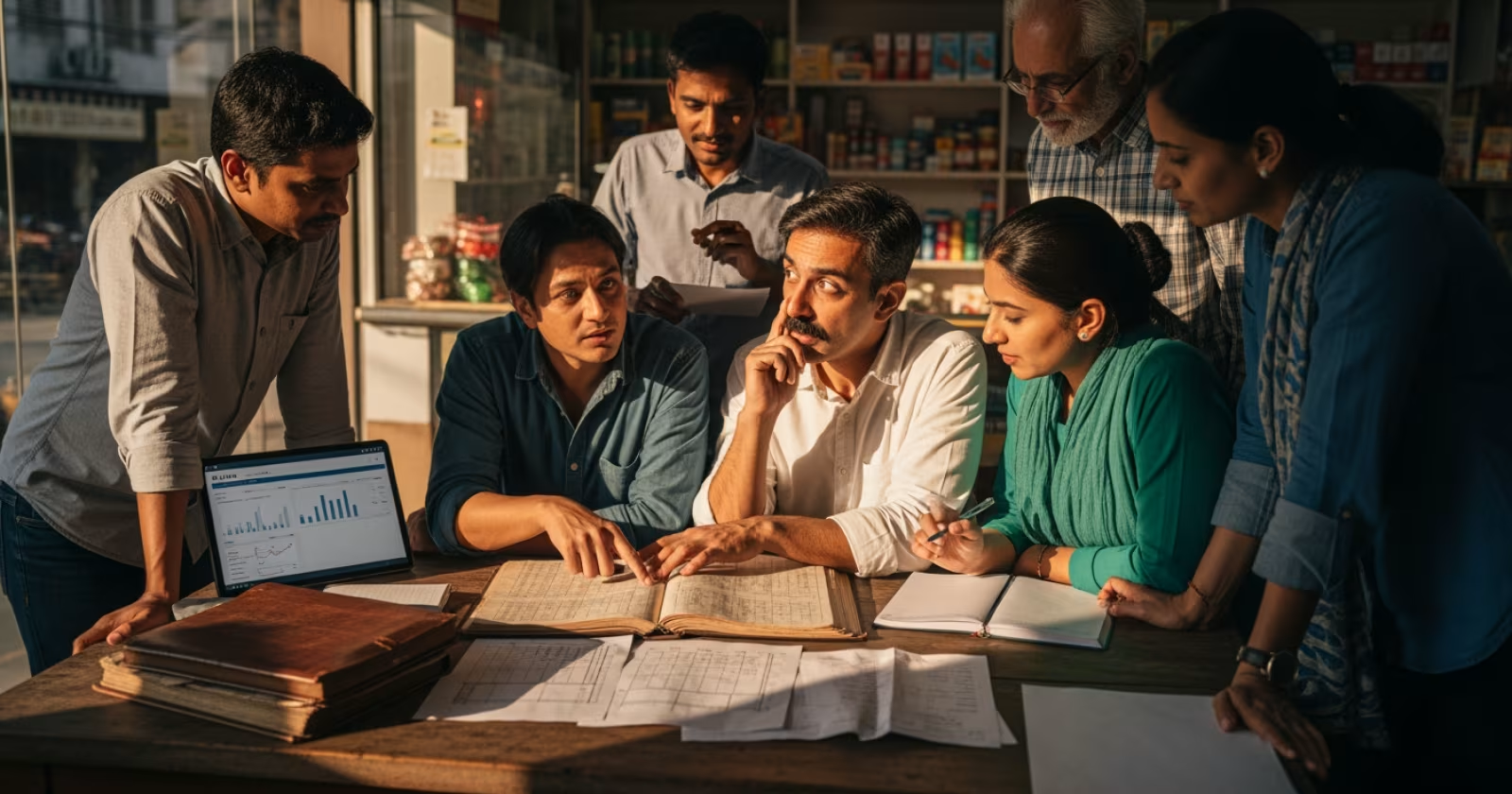
Before the white crystals in a morning cup of tea complete their journey, they pass through at least seven distinct pairs of hands across multiple states, touching cooperative societies, private traders, government warehouses, and licensed commission agents — none of which appear anywhere on the packaging. I spent months mapping these invisible chains, and the … Read more

This 100-Year-Old Business Model Is Disrupting Indian Retail in 2026

This 100-Year-Old Business Model Is Disrupting Indian Retail in 2026

While Blinkit and Zepto were burning through hundreds of crores in venture capital to deliver groceries in 10 minutes, a business model born in a British mill town in 1844 was quietly outpacing both of them in the Indian heartland. Nobody in a Mumbai boardroom saw it coming — but the numbers in 2026 are … Read more

Why Cooperatives Survived Every Economic Crisis While Companies Collapsed

Why Cooperatives Survived Every Economic Crisis While Companies Collapsed

When Lehman Brothers filed for bankruptcy in September 2008, carrying $619 billion in liabilities, it became the largest corporate collapse in American history and an instant symbol of how catastrophically fragile investor-driven institutions can become. What barely made financial headlines that same week was that Rabobank — a Dutch cooperative bank founded by farmers in … Read more

The Uttarakhand Cooperative That Turned Mountain Herbs Into a Global Brand

The Uttarakhand Cooperative That Turned Mountain Herbs Into a Global Brand

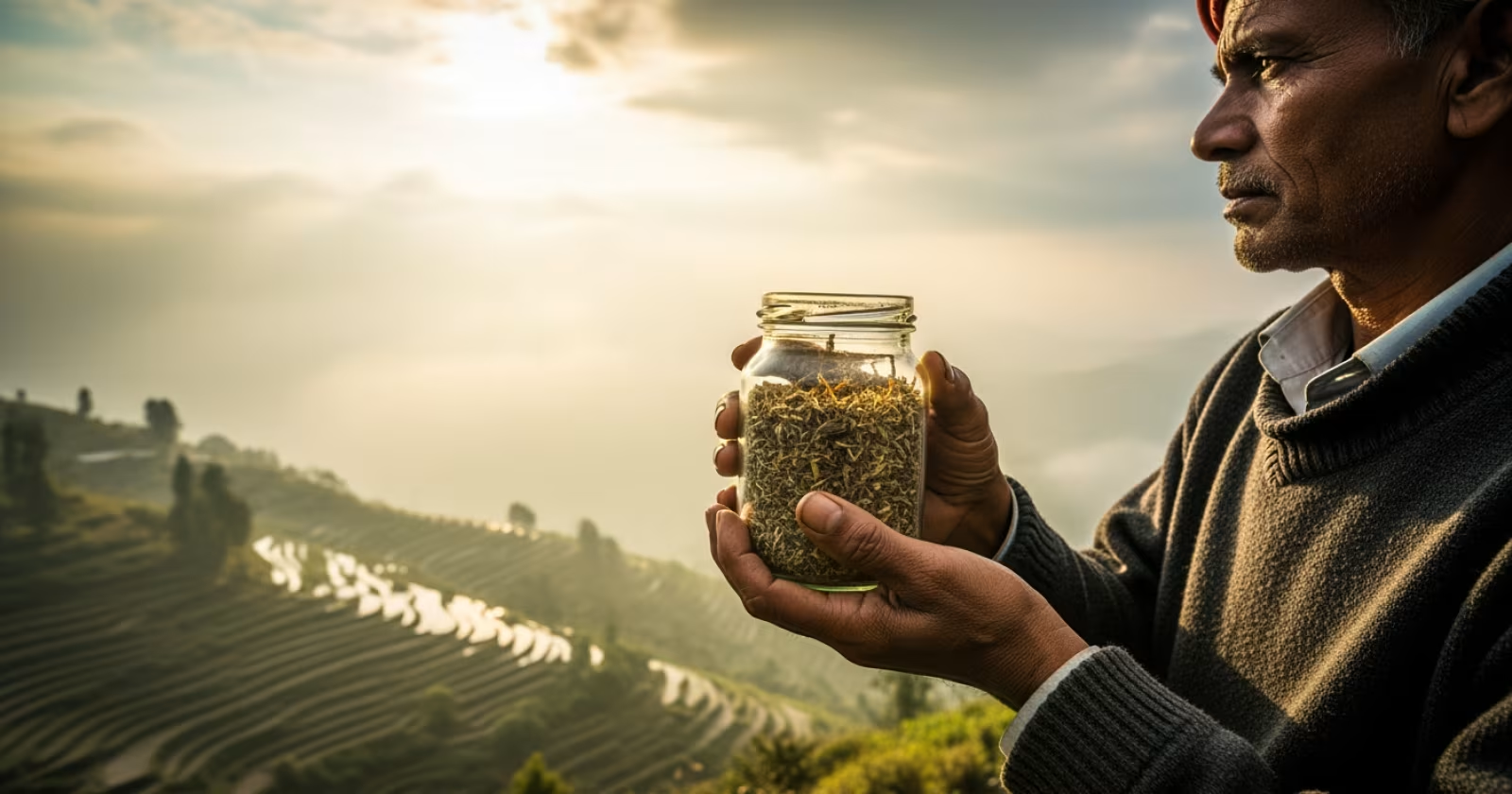
The women of Chamoli district had been picking wild brahmi from the hillsides for generations, selling it to middlemen for ₹12 per kilogram. When those same leaves arrived in wellness stores across Berlin and Amsterdam, they were priced at €45 for a small glass jar. That gap — staggering, almost grotesque in its proportions — … Read more

Meet the Women-Run Cooperatives Changing the Face of Indian Agriculture

Meet the Women-Run Cooperatives Changing the Face of Indian Agriculture

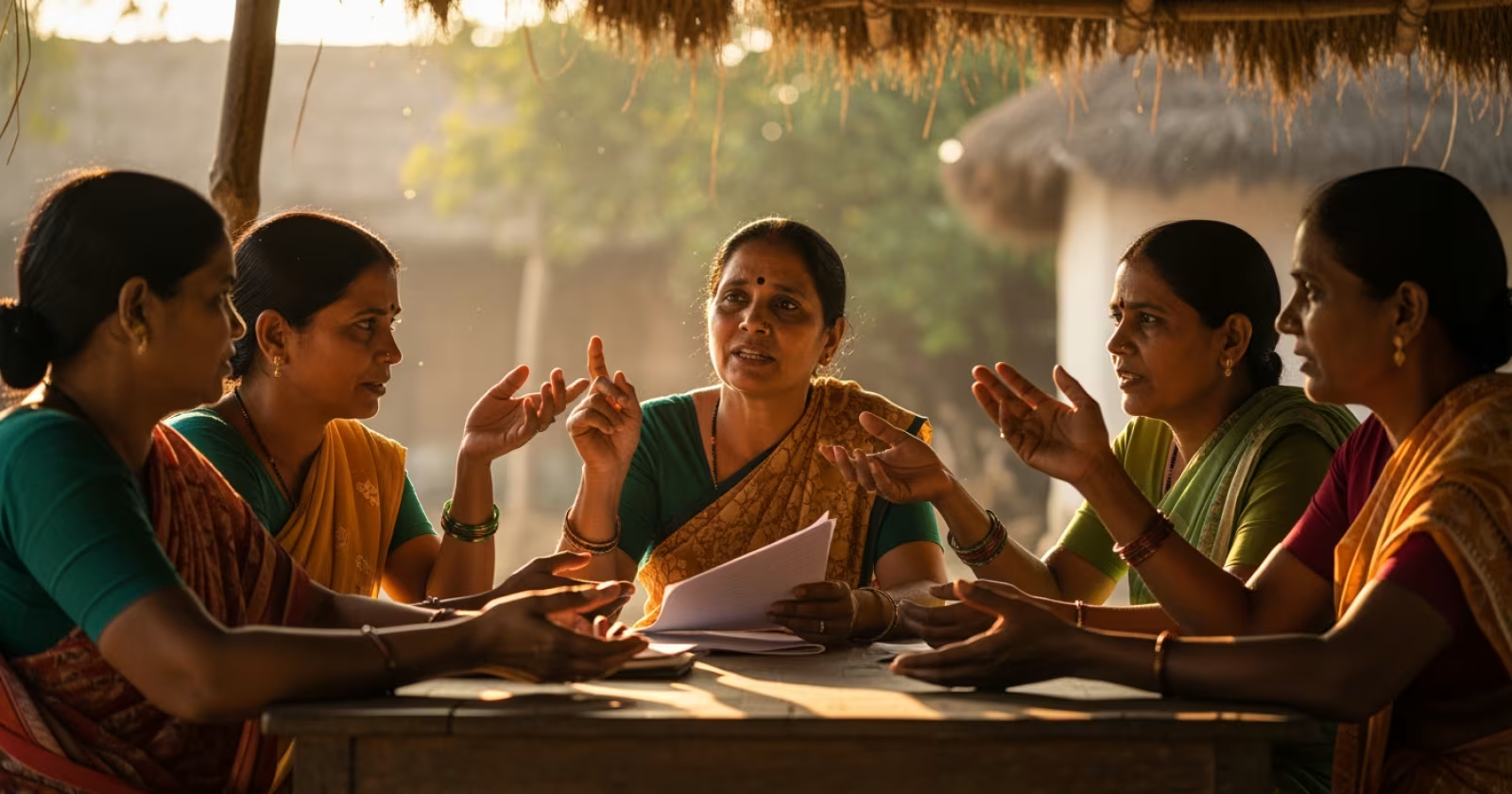
Women perform roughly 80 percent of agricultural labor across rural India, yet fewer than 13 percent of them legally own the land they cultivate. That gap between effort and ownership has quietly fueled one of the most consequential shifts in Indian rural economics — the steady, determined rise of women-run agricultural cooperatives that are rewriting … Read more

India’s Rural Economy Has a Secret Weapon: It’s Called Cooperative Trade

India's Rural Economy Has a Secret Weapon: It's Called Cooperative Trade

When AMUL’s annual turnover crossed ₹72,000 crore in the fiscal year ending 2026, most business desks treated it as a corporate milestone worth a paragraph. What they consistently missed is that AMUL is not a corporation — it is 3.6 million dairy farmers across Gujarat who collectively own every rupee of that figure, and that … Read more

The Village That Decided to Compete With MNCs — and Won

The Village That Decided to Compete With MNCs — and Won

When the farmers of Anand — a small, dust-settled town in Gujarat, India — formed a dairy cooperative in 1946, they collectively processed just 247 liters of milk a day, owned no refrigeration equipment, and had no brand anyone had ever heard of. The company they were about to challenge, Polson Dairy, had British colonial … Read more

What Happens When Weavers Own the Factory? India Has the Answer

What Happens When Weavers Own the Factory? India Has the Answer

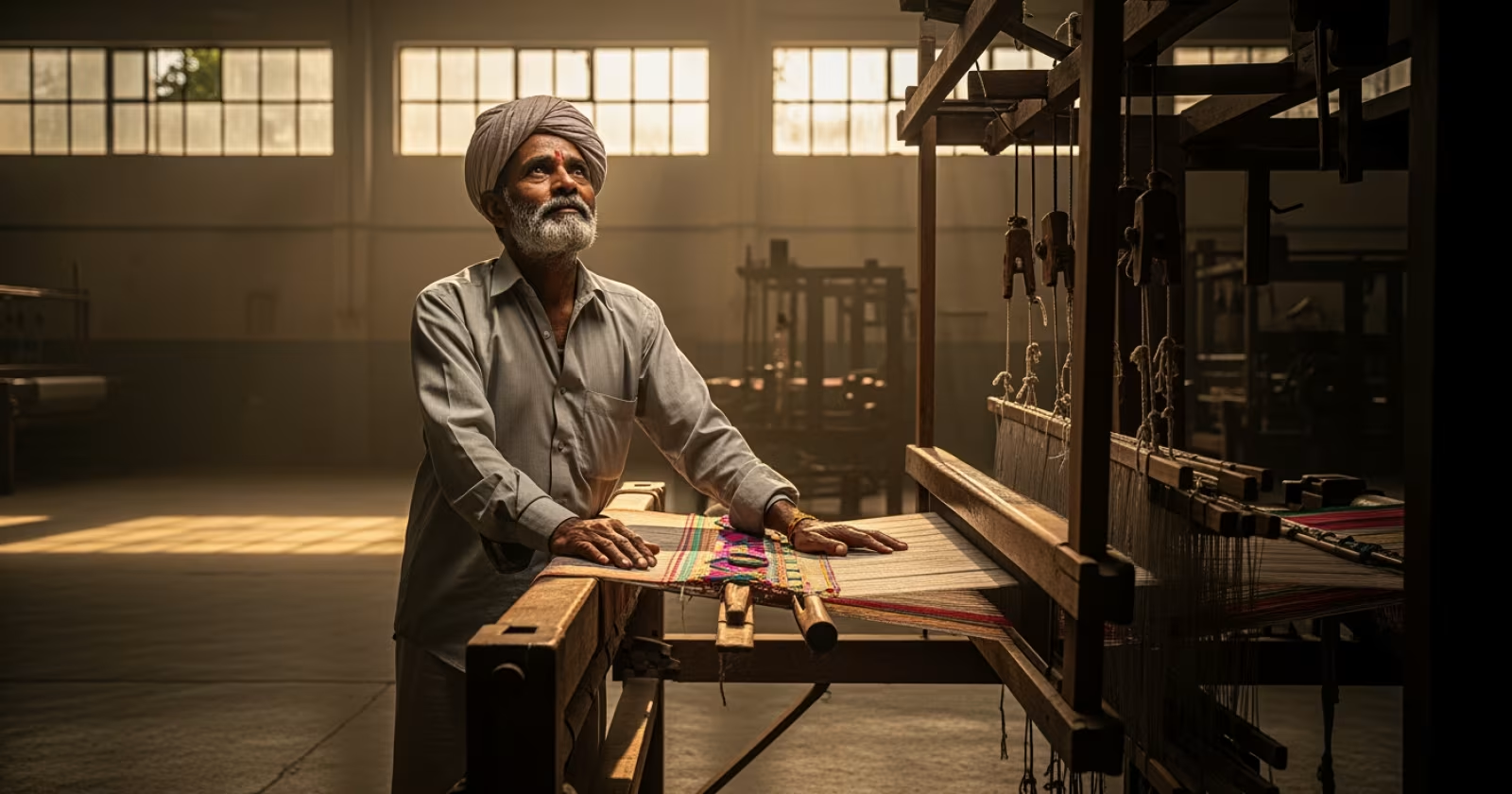
A master weaver in Varanasi can spend three months producing a single Banarasi silk sari worth ₹40,000 in a Delhi boutique — and walk away with less than ₹4,000 of that. The gap between what skilled hands create and what they earn has defined India’s handloom economy for generations — until a quiet ownership revolution … Read more

Why the World’s Largest Economies Are Quietly Embracing Cooperatives Again

Why the World's Largest Economies Are Quietly Embracing Cooperatives Again

The Mondragon Corporation — a worker-owned industrial empire headquartered in the Basque Country of Spain — generates over €12 billion in annual revenue and employs more than 80,000 people, yet most economics departments spent three decades treating it as a curiosity rather than a model worth replicating. That indifference is ending, and the reasons reveal … Read more