
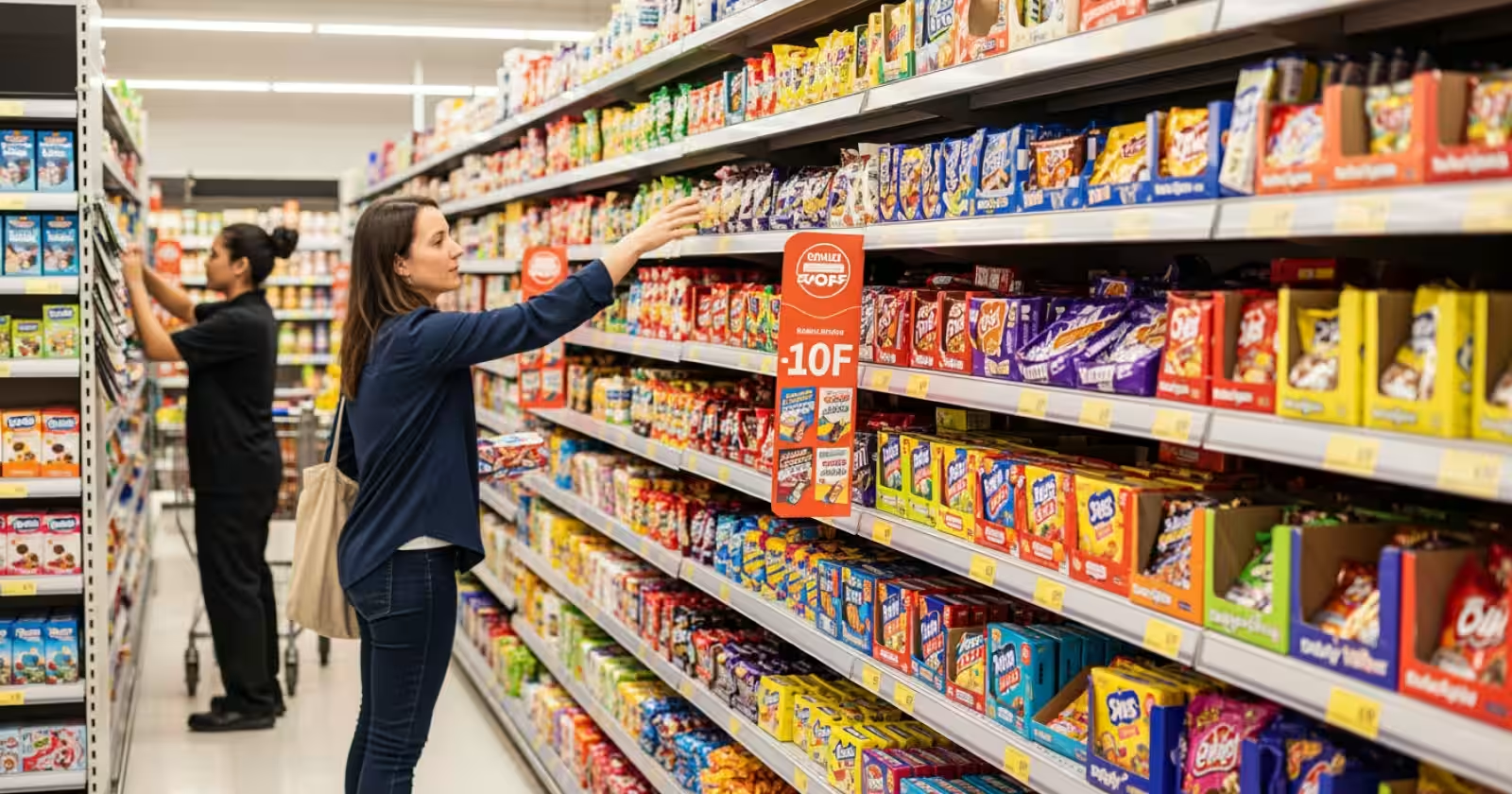
Price beats clever mechanics in confectionery, and that matters for every brand fighting for impulse sales at shelf. In a category where most shoppers still buy through supermarkets, the research shows simple discounts are doing far more work than multi-buy offers, loyalty rewards or competitions.
For FMCG teams, that is not a minor media point. It shapes how promotions get funded, how retailers frame value, and how quickly a confectionery message lands in a crowded aisle.
What is confectionery promotion behaviour and why it matters for FMCG
Confectionery is one of the most promotion-sensitive categories in grocery because the purchase is often fast, low-consideration and highly visible. That makes it a useful test case for broader FMCG pricing strategy, especially while shoppers remain under pressure and scanning for immediate value.
The commercial lesson is blunt. If an offer takes too long to understand, too many steps to redeem or too much mental effort at shelf, it risks being ignored. For brands and buyers, that changes the conversation from “how creative can the promotion be?” to “how quickly can the shopper see the value?”
Discounts trump trickery in the confectionery aisle: the key findings
The Future of Confectionery Activation report, from Shop! ANZ and Vypr, found that 85 per cent of consumers say promotions influence their confectionery purchasing decisions. Among the mechanics tested, price discounts were the clear leader, influencing 67 per cent of shoppers.
Multi-buy offers and loyalty programs were far behind at 9 per cent, while competitions attracted just 6 per cent. That gap matters because it shows value communication is still winning over delayed rewards and promotional complexity.
Carla Bridge, general manager of Shop! ANZ, said the path to purchase in confectionery has shortened. She said Australians are making rapid decisions in increasingly crowded retail environments, so promotions need to be obvious and communicate value instantly.
Chocolate bars and chocolate blocks remained the dominant formats, with purchase rates of 59 per cent and 55 per cent respectively. Among 25 to 34-year-olds, chocolate bar purchase rates lifted to 75 per cent. Premium and specialty chocolate posted a 24 per cent purchase rate across the market, rising to 32 per cent among consumers aged 18 to 24.
| Promotion or format | Reported result | Commercial read |
|---|---|---|
| Price discounts | 67% of shoppers influenced | Fastest route to value at shelf |
| Multi-buy offers | 9% of shoppers influenced | Too complex for many impulse purchases |
| Loyalty programs | 9% of shoppers influenced | Weak fit for immediate confectionery decisions |
| Competitions | 6% of shoppers influenced | Low cut-through versus direct discounting |
| Supermarkets | 93% most common channel | Retail execution remains decisive |
| Promotional signage | 43% influenced | Clear shelf messaging still matters |
| End-of-aisle displays | 31% influenced | Secondary placement can still drive conversion |
How the research translates to shelf execution
I read this as a reminder that confectionery still behaves like a classic impulse category. The shopper sees the offer, makes a split-second judgement and either reaches in or walks past. In that environment, a straight price cut acts like a loud shelf sign, while a delayed reward acts more like a whisper.
Shoppers also showed strong appetite for novelty. The research found 79 per cent are likely to try new products or limited-edition flavours, which suggests promotions and innovation are not opposing strategies. The better play is to use price visibility to earn attention, then use flavour, format or seasonal ranges to keep the category moving.
Sam Gilding, chief revenue officer at Vypr, said the findings show brands need to balance value-focused promotions with innovation. He said price visibility is driving attention, while innovation is driving excitement, and the strongest performers are those that can do both.
What this does not change for confectionery suppliers
This does not mean every confectionery brand should abandon multi-buy offers, loyalty mechanics or competitions. Those tools still have a role, especially where a retailer wants to shape basket size or support repeat purchasing over time.
It also does not remove the pressure on margin. A simple discount may convert more effectively, but it can also be the easiest promotion to overuse. Suppliers still need to protect brand equity and avoid training shoppers to wait for markdowns.
For brands, suppliers and supermarket teams, the winners are likely to be the groups that can align retail media, shelf signage and promotion funding around a simple value message. That matters now, while cost-of-living pressure keeps shoppers focused on immediate savings and while supermarkets continue to dominate confectionery distribution.
The bigger picture for confectionery promotion in Australia
This report fits a wider FMCG pattern: in price-sensitive categories, promotional clarity is outperforming promotional cleverness. That is true in confectionery, but it also echoes what buyers see across snacks, drinks and everyday indulgence categories where shoppers are making faster decisions and switching more readily.
For the confectionery aisle, the implication is that execution will matter more than ever. Brands that can pair sharp discounting with genuine novelty will be better placed to win the next purchase, while those relying on complicated mechanics may find the shopper has already moved on.
If your confectionery plan still relies on shoppers decoding the deal, I would be reconsidering the offer mix now, because the clearest value message is still the one most likely to convert at shelf.