
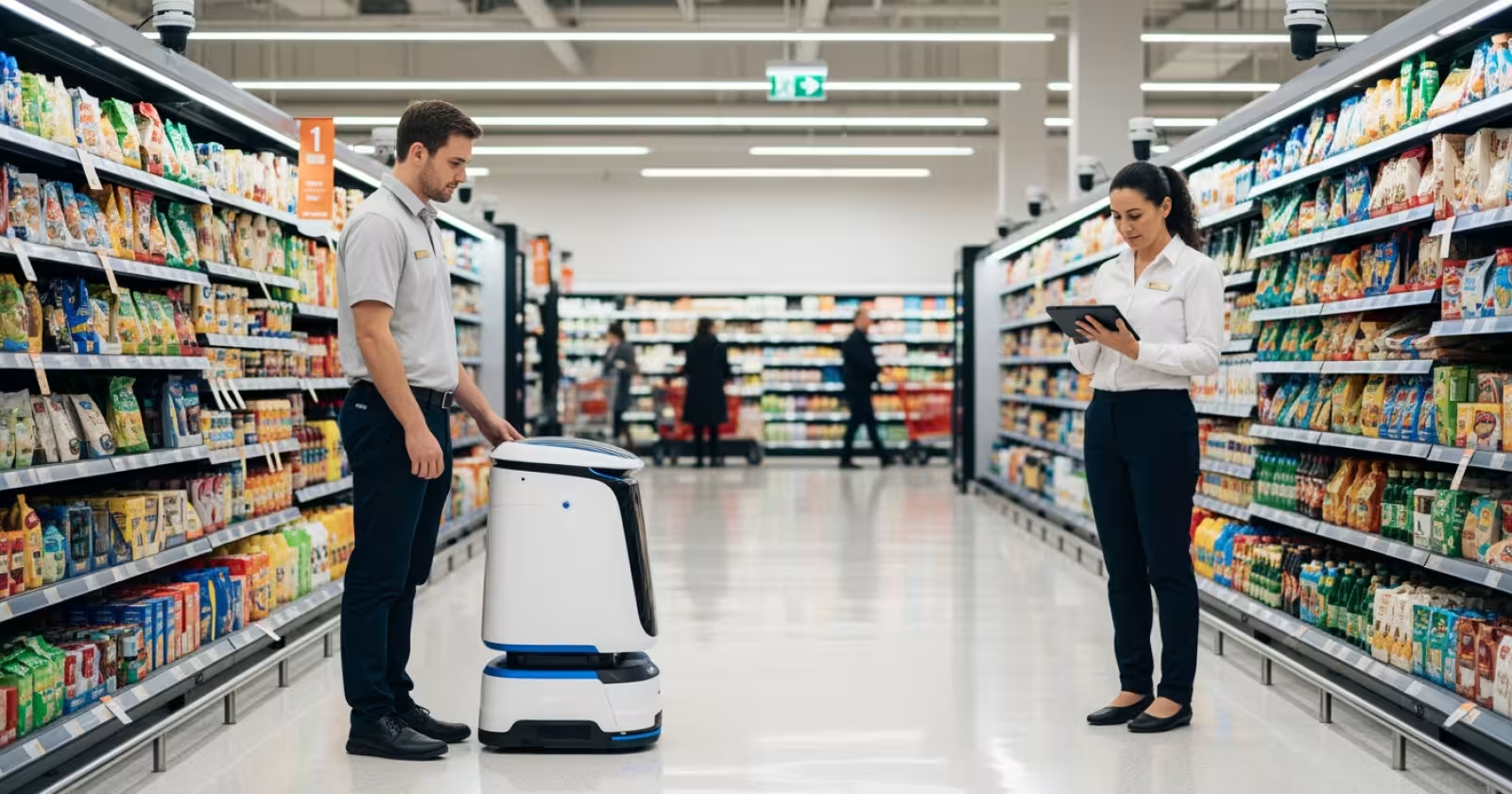
Supermarkets are moving back to a model that looks oddly familiar: smaller stores, less browsing and more of the work shifted out of sight. In the process, how supermarkets are going back to the future is becoming a live commercial question for every buyer, supplier and retailer watching labour, fulfilment and store formats collide.
For FMCG teams, the point is not nostalgia. It is cost, availability and control. The shift to online ordering, dark stores and AI-led shopping means the shelf is no longer the only place where sales are won or lost.
What Is How Supermarkets Are Going Back to the Future and Why It Matters for FMCG
The modern supermarket was built around one big idea: shoppers would visit a large store, choose most of their groceries themselves and take them home. That model held for decades because it suited car ownership, weekly shopping trips and family households.
Now the market is fragmenting. More Australians live in apartments, more households are single-person homes and more shoppers are splitting baskets across two or three retailers each week. That creates pressure for smaller stores, faster fulfilment and tighter control over what gets stocked, picked and delivered.
For FMCG businesses, that changes the economics of ranging. A store on the ground floor of a new apartment block does not behave like a 3,000 square metre suburban supermarket, and an online basket does not reward the same merchandising logic as a physical aisle.
How Supermarkets Are Going Back to the Future Through Smaller Stores and Automation
The source piece argues that the sector is already shifting from the broad suburban supermarket to smaller, more targeted formats. Examples include IGA Local Grocer and Express, Woolworths Metro and Coles Local, which fit the rise of apartment living and more frequent shopping trips.
Online grocery has accelerated that shift. The article says 23 per cent of Australians have shopped online for groceries, while Coles and Woolworths moved from online sales of 4 per cent or less before Covid-19 to 11.3 per cent and 16.6 per cent respectively. In May 2026, Coles chief executive Leah Weckert told the Australian Shareholders’ Association conference that online grocery could grow to around 30 per cent of total sales.
That online growth is expensive to service. Delivery and click-and-collect can require up to 125 per cent more labour, because retailers pay staff to fill shelves and then pay again to pick the same stock back off them.
| Format | How it works | Commercial effect |
|---|---|---|
| Traditional supermarket | Large footprint, broad range, shopper self-selects | Good for basket building, but labour-heavy at store level |
| Dark store | Closed to shoppers, pickers fulfil online orders from narrow aisles | Faster picking, better online efficiency, no browsing sales |
| Customer fulfilment centre | Automated robots pick goods from a grid system | Lower picking labour, higher throughput, strong speed advantages |
| Small-format urban store | Compact site in apartment or high-density precinct | Matches local demand and supports convenience shopping |
The next step is automation. In the article’s framing, dark stores optimise the layout for data rather than display, while customer fulfilment centres use robots to pull items from purpose-built shelving. A 50-item order can take around five minutes for a robot, which is a very different operating model from a human picker walking the same order through the store.
What the Online Grocery Shift Does Not Change
This does not mean physical supermarkets disappear overnight. Fresh food, impulse purchases and a large share of routine grocery shopping still depend on in-person trade, especially where convenience and immediate need matter. Nor does automation remove retailer power dynamics, which still shape assortment, pricing and the terms suppliers face.
The article also makes clear that fully automated purchasing is not here yet. Woolworths has drawn a line at that point for now, even as it uses Google’s Gemini platform in its chatbot assistant.
For suppliers, the practical impact will arrive unevenly. Brands with strong online search, clear pack architecture and reliable availability will benefit first, while lower-visibility products may struggle if they do not fit the algorithmic basket.
Who Benefits and When
Retailers benefit first, because automation and smaller stores can reduce cost-to-serve and improve picking speed. Large suppliers with strong digital readiness should gain next, especially in categories that travel well online and tolerate substitution less poorly than fresh lines.
Specialists in quick commerce, delivery and warehouse automation also stand to gain as the market grows. The article points to Harris Farm’s Amazon partnership and Aldi’s DoorDash tie-up as signs that online grocery is now one of the sector’s fastest-moving battlegrounds.
Why How Supermarkets Are Going Back to the Future Is More Than a Format Story
This is really about the next phase of supermarket power. If AI agents plan meals, robots pick orders and fulfilment systems control stock flow, then the retailer gains a deeper layer of behavioural data than a traditional checkout ever offered.
That raises a commercial question for FMCG suppliers. Will the system prioritise freshness, seasonality and choice, or will it push the products that protect retailer margin and fit the consumer’s time-poor habits?
The source piece lands on a simple truth: the decisions retailers make now will shape how Australians shop for years. For FMCG leaders, the smart move is to treat format change, AI adoption and fulfilment automation as one strategy, not three separate trends.
If you sell groceries, supply them or buy them, I would be planning for a market where the store matters less than the system behind it, because how supermarkets are going back to the future will decide which products stay visible and which disappear into the algorithm.