
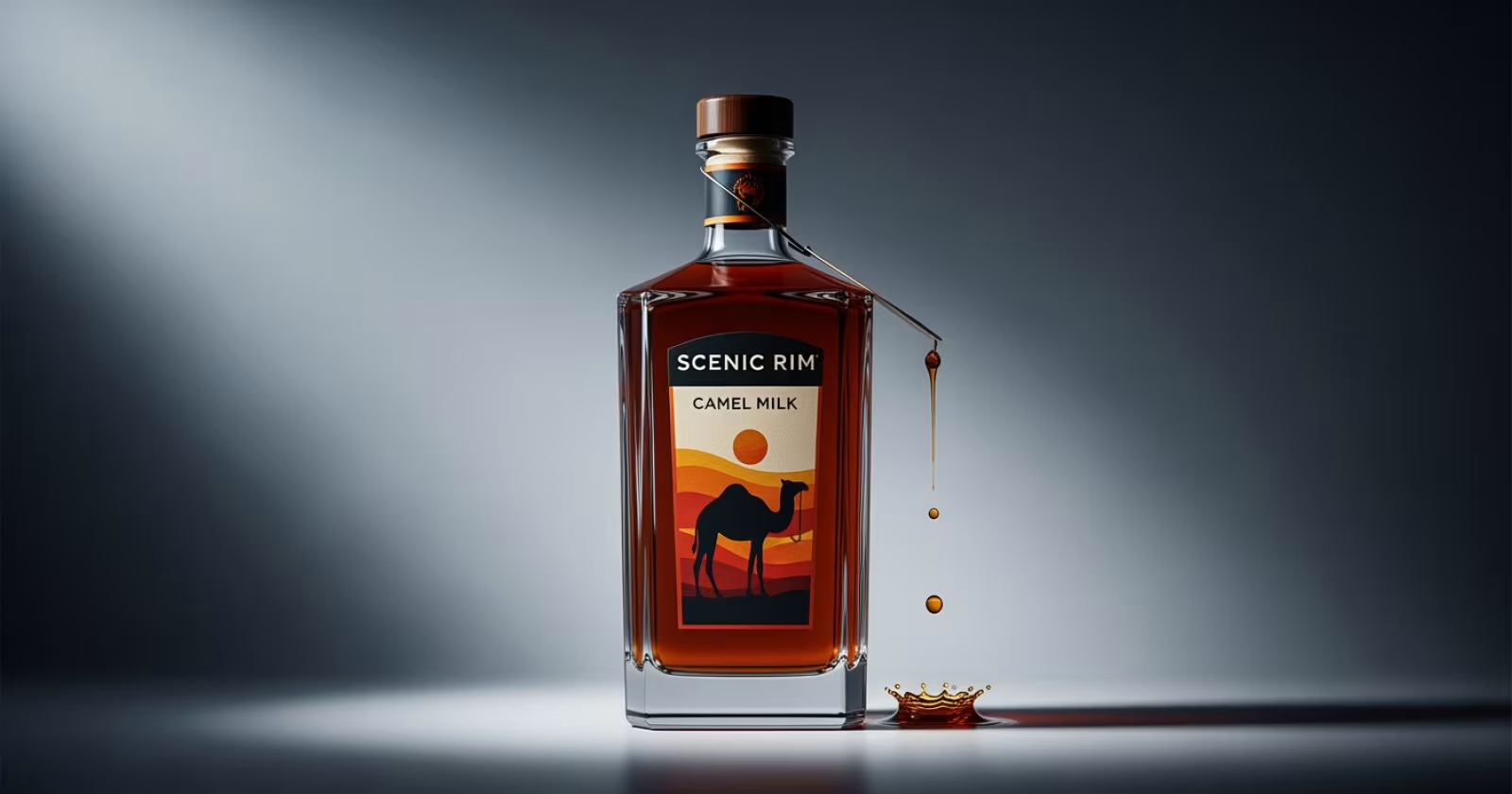
There is a reason the camel milk rum story cuts through: it is not just a novelty spirit, it is a premium-product bet built on a dairy by-product and a very specific local origin. In a drinks market crowded with flavoured launches and brand theatre, that matters because it tells you where smaller producers think margin still lives.
For FMCG teams, the key point is simple. Summer Land Camels is widening a business already known for camel milk and skincare into craft spirits, and it is doing so with a product that aims at top shelf rather than gimmick status.
What camel milk rum means for FMCG
The camel milk rum sits at the intersection of premiumisation, waste utilisation and regional brand building. It also shows how producers outside the big beverage groups are looking for ways to extend a farm-based supply chain into higher-value categories.
That matters in Australia because shoppers have become used to paying for provenance when the story is credible. A product that combines molasses, camel milk whey and barrel ageing speaks to that shift more clearly than many of the “local” claims now filling liquor aisles.
It also hints at a wider commercial pattern. Smaller brands are no longer trying to win only on novelty; they are trying to turn unusual inputs into defensible shelves, tasting notes and price points.
Inside the camel milk rum launch
Summer Land Camels says it has launched what it believes is the world’s first camel milk rum. The company will officially unveil it on Saturday at the Fermented Food Festival, part of Scenic Rim Eat Local Month.
The spirit is made from molasses refined with camel milk whey and matured in French oak barrels for two years. It sits at 43 per cent alcohol and follows a process similar to the company’s Milk and Honey Vodka, except with molasses replacing honey during fermentation.
According to the company, small batches are brewed over several weeks before being distilled by Imbibis Craft Distillery and then aged in French oak barrels. The final blend combines spirit from multiple barrels and is described as carrying caramel, crème brûlée and oak spice notes, with a creamy texture and lingering finish.
Paul Martin, managing director of Summer Land Camels, said the aim was to create a premium craft spirit rather than a sideshow product. He said the molasses provides the traditional rum profile, while camel milk whey adds a layer that makes the spirit distinct to the business.
| Attribute | Details confirmed by Summer Land Camels |
|---|---|
| Product | Camel milk rum |
| Origin | Scenic Rim, Queensland |
| Alcohol content | 43 per cent |
| Base inputs | Molasses and camel milk whey |
| Ageing | Two years in French oak barrels |
| Distillation partner | Imbibis Craft Distillery |
| Launch setting | Fermented Food Festival, Scenic Rim Eat Local Month |
How the production process changes the commercial pitch
From an FMCG perspective, the production method does more than create a talking point. It gives the brand a way to frame camel milk whey as a value-adding input rather than a processing leftover, which is exactly how food and drink businesses strengthen unit economics.
The comparison with Milk and Honey Vodka is also revealing. By swapping honey for molasses, Summer Land Camels is showing that the concept is not a one-off experiment but a repeatable production platform that can move across spirit styles.
That kind of flexibility matters in craft spirits, where operators need enough narrative depth to justify price and enough production discipline to keep quality consistent. A clever idea can win media coverage, but a repeatable process wins shelf confidence.
| Product element | Why it matters commercially |
|---|---|
| Molasses base | Anchors the product in a familiar rum structure |
| Camel milk whey | Creates a distinctive ingredient story and waste-use angle |
| Two-year barrel ageing | Signals premium positioning and supports a higher price expectation |
| French oak | Reinforces craftsmanship and flavour complexity |
What this camel milk rum does not change
This launch does not mean a new mainstream spirits category has opened up overnight. The source gives no confirmed retail rollout, no pricing and no distribution plan beyond the festival launch.
It also does not remove the usual constraints on niche beverage launches. The retailer gatekeeper still matters, scale will remain limited without trade buy-in, and a strong story does not guarantee repeat purchase once the novelty fades.
For buyers, that means the product is interesting, but not yet evidence of broad consumer demand.
Summer Land Camels is likely to benefit first from trade and tourism channels, where provenance and provenance-led storytelling carry more weight than volume. Craft spirits operators, regional producers and specialty liquor retailers will be watching the earliest sell-through signals closely, because the commercial test will come long before national supermarket interest.
The bigger picture for Australian craft spirits
The launch fits a broader move in Australian drinks toward ingredient-led premiumisation. Brands are trying to turn local supply chains, farm by-products and small-batch methods into something that feels more defensible than another flavoured spirit line.
That is especially relevant as alcohol makers face softer consumer spending and more selective premium buying. In that environment, camel milk rum is less about spectacle than about whether a regional producer can build enough credibility, flavour and story to earn a permanent place in the craft spirits set.
If that model works, more farm-based FMCG businesses will start looking at their own by-products as the beginning of a category, not the end of a process.
I would be watching how quickly the camel milk rum travels beyond the Scenic Rim launch, because that will tell the industry whether this is a clever one-off or a template other regional producers can adapt.