
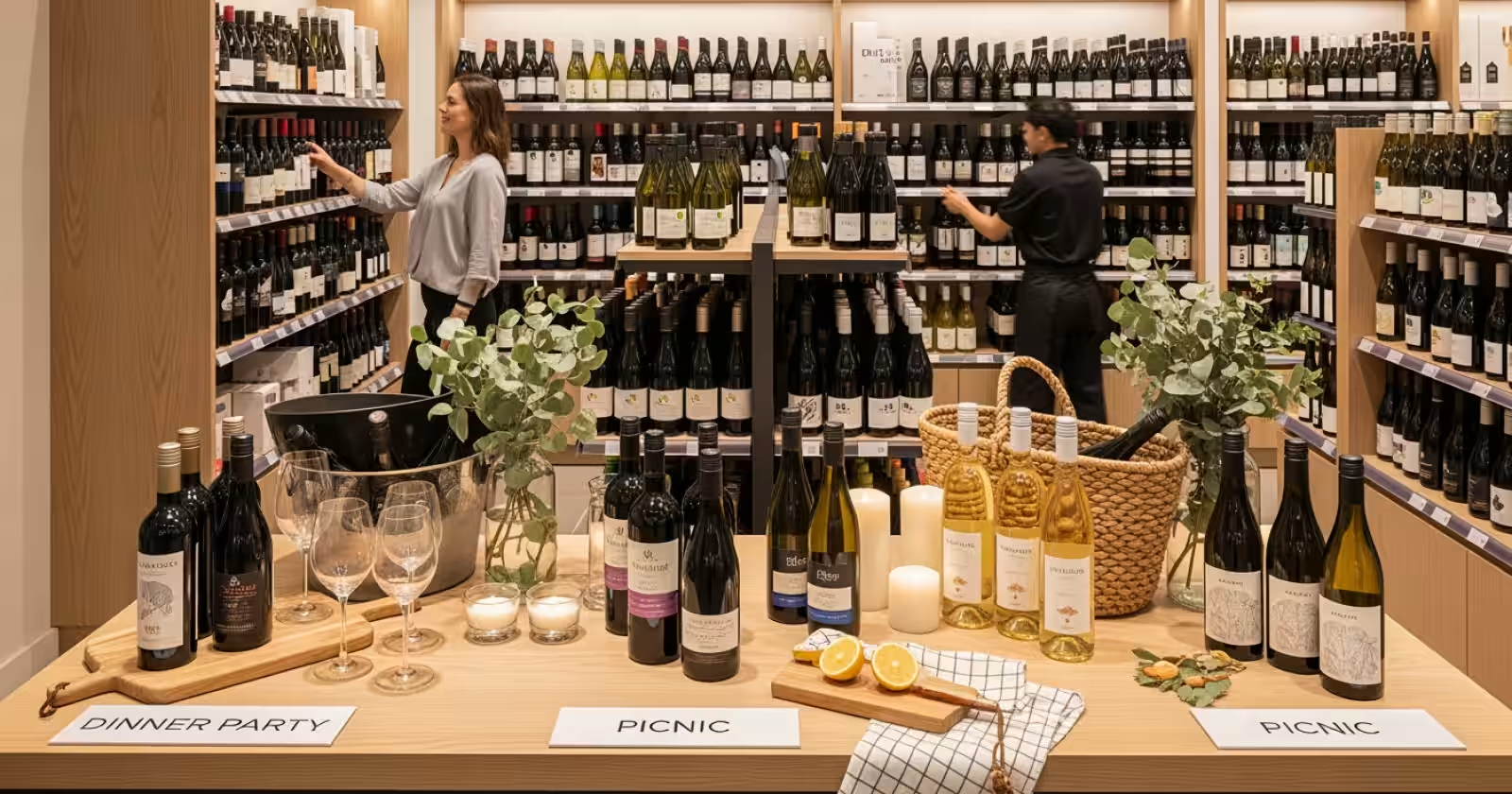
Wine retailing rarely changes its shape, but this new Brunswick East format is trying to break the habit of sorting bottles by grape, region and intimidation. Drop Shop reinvents wine retailing by organising drinks around the way people actually buy them: by occasion, budget and convenience.
That matters because the old bottle-shop model assumes shoppers arrive with knowledge and patience. This one assumes they want a quick answer, a clear price point and a purchase that feels easy.
What Is Drop Shop and Why It Matters for FMCG
I see Drop Shop as a convenience-store version of the liquor category, not a traditional specialist bottle shop. It has been built to reduce choice overload, which is a real barrier in wine, particularly for younger shoppers and time-poor customers who do not want a seminar with their purchase.
The concept also speaks to a wider FMCG problem: too many categories still rely on insider logic rather than shopper logic. In grocery, that shift has already reshaped how premium snacks, health products and ready-to-drink beverages are merchandised. Alcohol has been slower to move, which is why a format like this stands out.
For suppliers, the significance is clear. If the store can make premium wine, beer, spirits and non-alcoholic drinks feel simpler, it could create a new route to conversion for brands that struggle in large-format liquor retail.
Drop Shop reinvents wine retailing with occasion and budget cues
Drop Shop launched in Brunswick East, Melbourne, from founders Dan Sims, Courtney Keegan and Luke McKinnon. Sims is the creator of Pinot Palooza and chair of Wine Victoria, while Keegan brings drinks retail experience and McKinnon is the founder of Common State.
The founders said they developed the business as a convenience-store format for drinks. McKinnon said they wanted to create “a new category”, describing it as an occasion-based liquor format that strips out clutter and speaks directly to shoppers who are tired of choosing between a warehouse and a wine lecture.
Rather than organise stock by region or grape variety, the store groups products by occasion and budget. The wine range is split into weekday at $15 to $25, party at $25 to $40 and fancy at $40-plus.
The same logic applies across beer, spirits, ready-to-drink products and non-alcoholic products. The range prioritises Victorian producers, which gives the store a local point of difference as well as a tighter buying story for nearby shoppers.
| Range model | Drop Shop format | Typical bottle shop |
|---|---|---|
| Wine navigation | Occasion and budget | Region and grape variety |
| Wine range size | About 150 products | More than 1000 wines |
| Store size | 60sqm | Larger-format footprint |
| Design influence | Japanese konbini culture | Traditional liquor retail |
How the store works on the shelf
I think the clever part is not the curation alone, but the way the space has been designed to support fast decisions. We Are Humble designed the 60sqm store, and the layout draws on Japanese konbini culture, where small footprints still aim to feel intuitive and efficient.
That matters in alcohol retail because shelf navigation is part of the sale. If a shopper can instantly find a weeknight bottle, a party top-up or a more premium option, the store reduces friction and boosts the odds of trade-up without demanding specialist knowledge.
The founders say the space is meant to be moved through instinctively and to leave shoppers feeling good. In practical terms, that is a merchandising strategy as much as a design statement. It swaps depth of range for clarity of mission, which could suit a market where convenience is increasingly valuable.
This is also where Drop Shop reinvents wine retailing most sharply. It treats browsing as a service problem, not a celebration of category complexity.
What this does not change in liquor retail
Drop Shop is still a single store, so it does not yet prove the model can scale across suburbs, states or demographic segments. It also does not remove the underlying power of large liquor chains, which still control far more shelf space, buying leverage and promotional reach.
The format may attract attention, but it will still need to prove repeat purchase, basket size and margin discipline. For now, the concept tells us more about where shopper expectations are moving than about how fast the rest of the market will follow.
For brands, the immediate winners are likely to be Victorian producers, premium labels that need clearer context, and ready-to-drink and non-alcoholic ranges that benefit from easy navigation. Retailers will watch closely because the format offers a possible answer to the category’s flat, warehouse-style presentation. If the model resonates, the timeline for impact will be months rather than years.
Why this matters for the next wave of drinks retail
I read this as part of a broader shift towards edited retail. Across FMCG, shoppers are rewarding stores that make decisions feel quicker and less risky, whether that is in snacks, health, coffee or liquor. The strongest formats now do more than stock products; they frame the choice.
That is a threat to the idea that more range automatically means better retail. In premium categories especially, the winning move may be to simplify the path to purchase while still preserving discovery, trade-up and local relevance. Drop Shop is an early test of that thesis.
If the concept lands with shoppers, the next question for liquor retail is not whether occasion-led merchandising can work, but how long traditional bottle shops can justify making customers do all the thinking themselves.
Acting early matters here: suppliers and retailers that understand occasion-based shopping will be better placed to shape the next drinks format, rather than chase it after the shelf has already changed.