
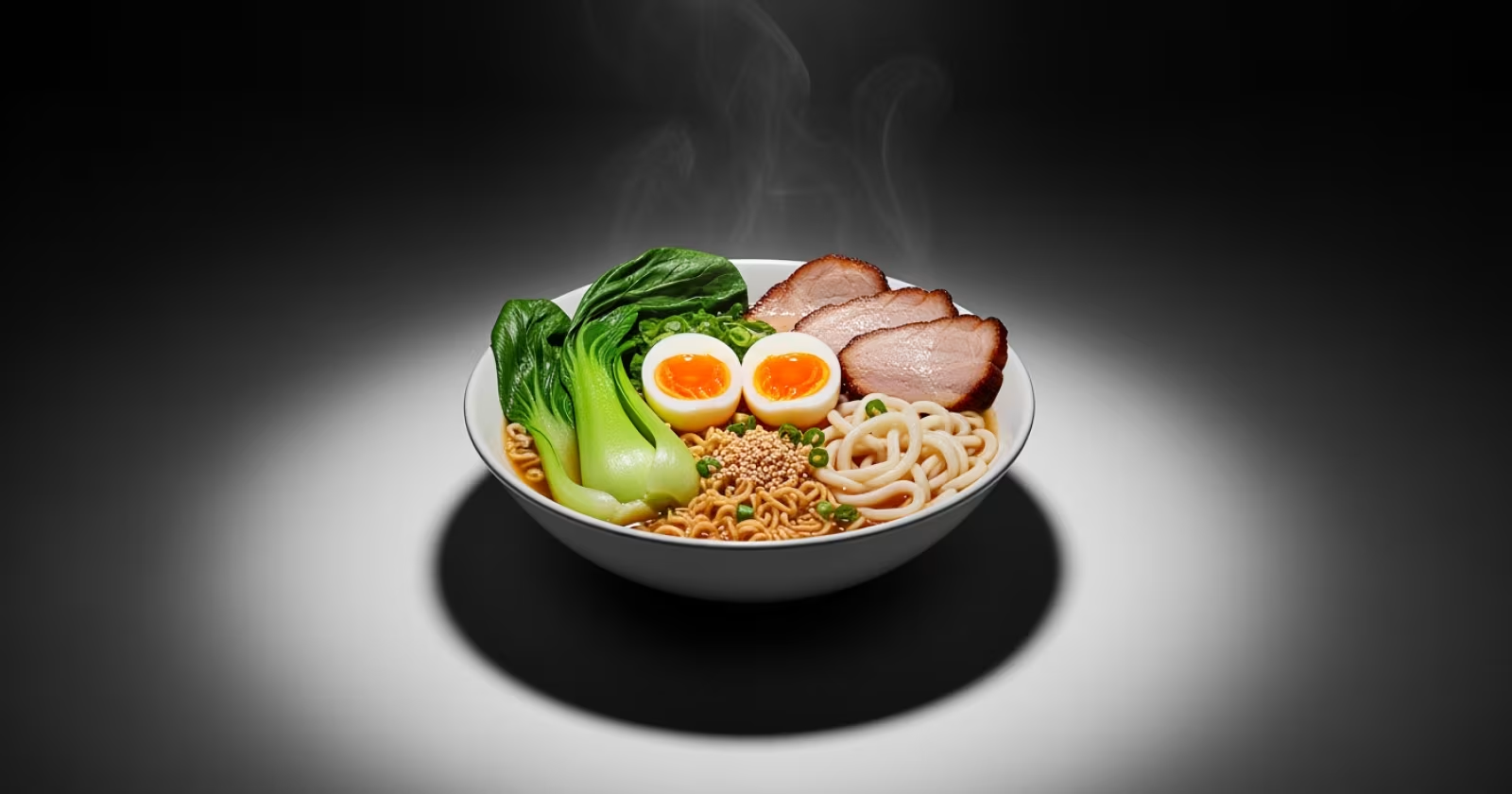
A national Woolworths listing turns a modest noodle expansion into a shelf-level play for quick dinners, protein-led meals and Asian pantry replenishment. For buyers, the more interesting point is not simply more SKUs, but how the Mr Chen’s noodle range is being positioned across texture, convenience and home-dining occasions.
The Australian family-owned brand has added new formats to its Signature Series while continuing to sell microwavable wet noodles that cook in one minute. I read this as a practical attempt to cover two shopper missions at once: the scratch-cook customer looking for a specific noodle style, and the time-poor shopper who wants dinner done fast.
What noodle expansion says about FMCG meal occasions
Noodles sit in a useful part of the grocery store because they can behave like a pantry staple, a meal base or a convenience product depending on format. That makes the category attractive for brands trying to win repeat purchase without relying entirely on price promotion.
In Australia, the broader pasta and noodle market is projected to reach $1.93 billion by 2030. That figure matters because it frames noodles as more than an ethnic food aisle opportunity. It is a mainstream dinner category competing with pasta, rice, ready meals, frozen meal kits and chilled proteins.
The growth logic is easy to see on shelf. Consumers want fast meals, but they also want more texture, variety and flavour cues than plain staples can offer. Asian-inspired meals have become familiar enough for supermarkets to support deeper ranges, especially when brands can connect the product to specific dishes and cooking occasions.
For suppliers, the challenge is to avoid adding duplication. A new noodle SKU needs to answer a clear shopper need, whether that is protein, speed, authenticity, portioning, texture or compatibility with sauces and meal kits.
Mr Chen’s noodle range gains national Woolworths reach
The company has expanded its noodle portfolio with products aimed at high-protein and home-dining market segments. The full range is available at Woolworths locations nationally, giving the launch immediate exposure through one of Australia’s major supermarket networks.
The new Signature Series additions include Extra Wide Hand Pulled Noodles, Sweet Potato Glass Noodles and Rice Ribbon Noodles. Each format is designed to provide a different texture for Asian dishes, rather than simply extending the range with another standard wheat noodle.
Mr Chen’s also continues to offer its microwavable wet noodle range. That line includes Singapore, Udon and Hokkien varieties, all positioned around a one-minute preparation time.
Recommended retail prices range from $2.00 to $3.80 per unit. That pricing keeps the products in an accessible everyday grocery band, which is important for a category where shoppers often compare noodles against pasta, rice and private-label staples.
The move follows the brand’s recent launch of a new sauce range. That timing is commercially relevant because sauces and noodles can reinforce each other in the basket, particularly when shoppers are building quick at-home Asian meals.
How the new formats map to shopper missions
The range architecture appears to split into two clear functions. The Signature Series gives shoppers more specific cooking formats, while the wet noodle range focuses on speed and low-effort meal assembly.
That distinction matters for supermarket ranging. A buyer can justify multiple noodle SKUs when each one supports a different usage occasion, rather than forcing every product to compete for the same stir-fry customer.
| Range element | Confirmed format | Main shopper cue | Commercial role |
|---|---|---|---|
| Signature Series | Extra Wide Hand Pulled Noodles | Texture-led Asian dishes | Supports home-dining and recipe-led purchasing |
| Signature Series | Sweet Potato Glass Noodles | Alternative noodle format | Adds variety beyond standard wheat noodles |
| Signature Series | Rice Ribbon Noodles | Dish-specific meal preparation | Broadens use across Asian meal occasions |
| Wet noodle range | Singapore, Udon and Hokkien varieties | One-minute convenience | Targets fast weeknight meal assembly |
The high-protein positioning is also worth watching, although the source material does not disclose protein content by SKU. Protein has become a powerful front-of-pack cue across snacks, dairy, ready meals and bakery, and noodles are now part of that wider health-and-convenience conversation.
In practical terms, the most useful analogy is the pasta aisle. Shoppers do not buy spaghetti, lasagne sheets and gnocchi for the same meal. Noodles can follow the same logic if the range makes the cooking job clear enough at shelf.
What this does not change for the category
This expansion does not remove the pressure noodles face from private label, imported Asian grocery brands and low-cost pantry staples. A national Woolworths presence creates reach, but it also places the range in a highly competitive price and promotion environment.
The announcement also does not confirm sell-through, ranging depth by store, promotional support or margin terms. Those details matter because a product can be nationally available and still face uneven performance if store execution, shelf placement or shopper education falls short.
There is also a limit to what format innovation can do on its own. If shoppers do not understand which noodle fits which dish, the range risks becoming visually interesting but operationally confusing at the point of purchase.
The clearest beneficiaries are Woolworths shoppers looking for fast Asian-style meals, and Mr Chen’s if it can use noodles and sauces to build a broader meal solution. Retailers also gain if the range lifts basket size through linked purchases such as sauces, proteins, vegetables and meal accompaniments. The commercial test will come over the next few range review cycles, when repeat purchase matters more than launch visibility.
High-protein and home dining keep reshaping the noodle aisle
This launch sits neatly inside a larger FMCG shift: consumers want meals that feel fresher and more assembled, but they still want supermarket convenience. That has opened space between raw ingredients and ready meals, where products such as noodles, sauces and prepared bases can act as shortcuts without looking like compromises.
For Australian grocery suppliers, the opportunity is not just to add flavour variants. It is to build coherent meal platforms that help shoppers solve dinner in fewer decisions. Mr Chen’s noodle range now has the broader shelf presence to test whether that logic can translate into repeat purchase at national scale.
I’d be watching three signals from here: whether Woolworths gives the range enough visibility, whether shoppers trade up from basic noodles, and whether the sauce launch helps create a stronger meal solution. If you manage a competing grocery brand, now is the time to review your own noodle, sauce and quick-meal architecture before the next category reset.