Packaging now has to do three jobs at once: protect the product, satisfy the retailer and still look premium on shelf. For FMCG brands, that makes supply reliability and verified sustainability credentials just as important as print quality.
That is the commercial pitch behind Formakote packaging, which WML Paperboard positions as a locally made paperboard with premium presentation and regional supply certainty. For brand owners and converters, the attraction is obvious: fewer supply risks, clearer ESG evidence and a board that still performs in the cold chain.
What Is Formakote Packaging and Why It Matters for FMCG
Formakote packaging sits in a part of the market where failure is expensive. If a carton misses spec, runs poorly on press or arrives late, the problem can ripple from the factory floor to the supermarket fixture in days. In Australia and New Zealand, that risk has only grown as import lead times stretch and freight volatility makes planning harder.
WML Paperboard says Formakote is the only paperboard produced in Australasia. That local production matters because packaging is no longer a simple procurement line; it is part of a brand’s service level, sustainability story and launch schedule.
For FMCG professionals, the relevance is bigger than board choice. The material has to support tight margins, seasonal peaks and retailer scrutiny without forcing a compromise between appearance and resilience. That is why packaging supply chain decisions are now a boardroom issue, not just a packaging team call.
How WML Paperboard Is Positioning Formakote Packaging
The main commercial claim is straightforward. WML Paperboard says Formakote is manufactured within the region, giving converters and brand owners shorter lead times, more responsive replenishment and better continuity than offshore sourcing. In a category where a delayed carton can hold up a product launch, that kind of certainty has real value.
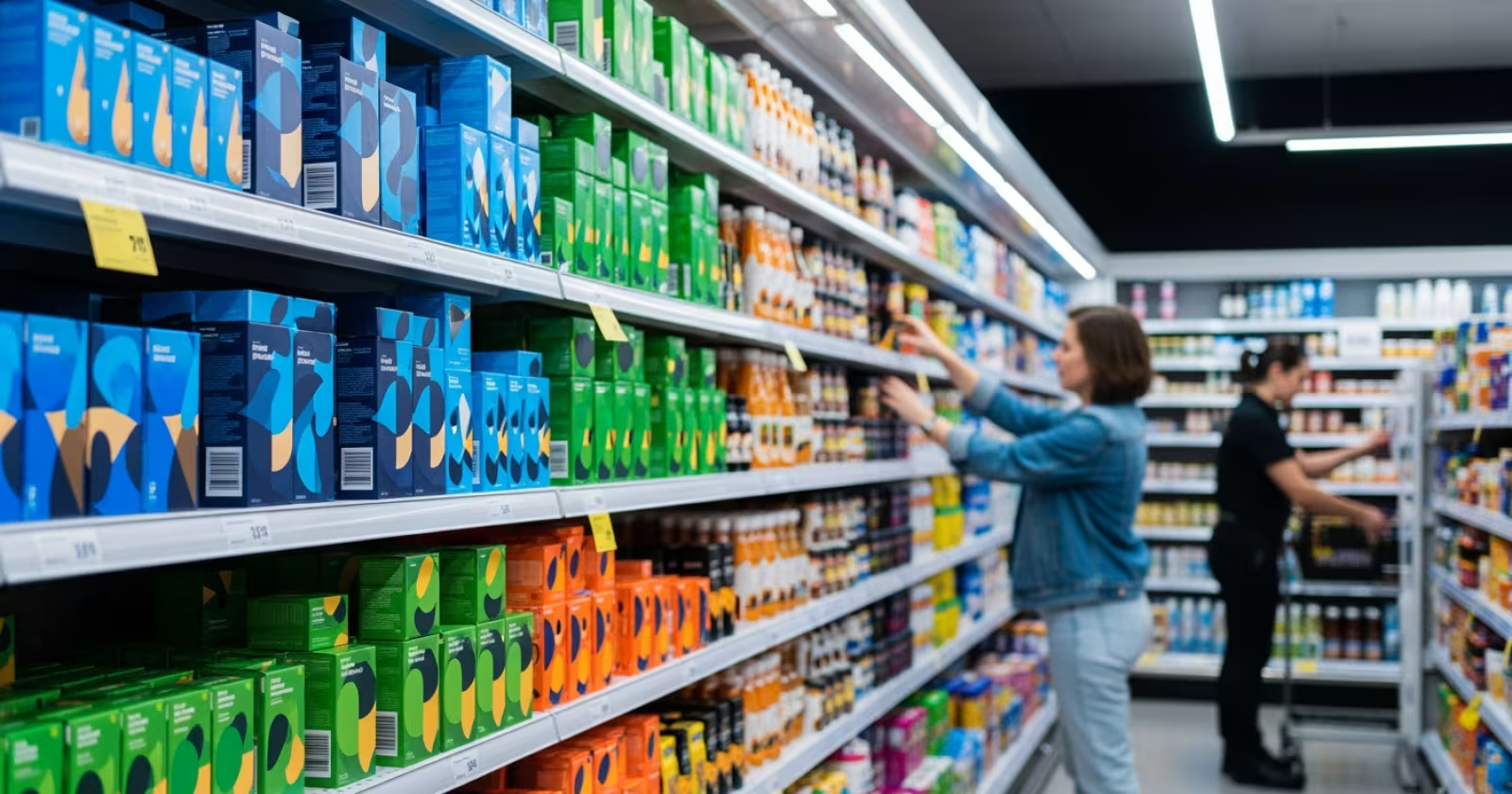
The company also says Formakote is built for premium presentation. It is used across beverage cartons, frozen food packaging, confectionery boxes and premium retail applications, which suggests it is aimed at products where shelf impact matters as much as logistics.
| Commercial factor | Formakote packaging position | FMCG impact |
|---|---|---|
| Supply origin | Produced in Australasia | Shorter lead times and local replenishment |
| Environmental proof | FSC certification and ISO accreditation | Stronger evidence for ESG reporting and retailer checks |
| End-of-life profile | Fully recyclable through existing household and commercial streams | Easier alignment with recycling claims |
| Performance claim | Structural integrity, printability and shelf presentation | Less trade-off between quality and sustainability |
WML Paperboard says the board is made from 100 per cent virgin fibre sourced from responsibly managed forests. That is paired with renewable and recyclable claims, which matters because retailers are asking harder questions and consumers are more alert to vague environmental language.
In practice, that means the packaging has to prove itself in two places at once. It must run cleanly through production and still hold its shape, colour and finish when it lands in the chiller, freezer or supermarket fixture.
What This Does Not Change for Brand Owners
Local production does not erase every supply risk. It can reduce exposure to imported freight delays, but it does not remove pressure from raw material costs, converter capacity or retailer margin demands.
Nor does certification solve every sustainability challenge. FSC and ISO provide useful proof points, but brands still need to align packaging claims with broader product, waste and reporting obligations.
That said, the immediate winners are likely to be brand owners with frequent launches, seasonal demand or premium positioning, because they feel the pain of packaging inconsistency fastest. Converters also benefit when a board runs predictably and keeps production schedules intact.
The Bigger Picture for Formakote Packaging and FMCG Supply Chains
This story fits a wider shift in FMCG packaging: buyers want more certainty, not just lower cost. After years of supply disruption, the best packaging materials now combine commercial resilience with evidence that holds up under retailer and ESG scrutiny.
That is why packaging is increasingly being judged as a strategic input rather than a technical afterthought. If Formakote can keep delivering local supply, premium performance and documented sustainability, it will appeal to the part of the market that sees packaging as a brand asset, not just a carton.
For brands weighing their next board decision, the practical test is simple: if the packaging cannot protect margin, protect supply and protect the shelf image at the same time, it is already a weak choice.