



Your Cooperative Chairman Is Corrupt — Here’s the Legal Way to Remove Him

Your Cooperative Chairman Is Corrupt — Here's the Legal Way to Remove Him

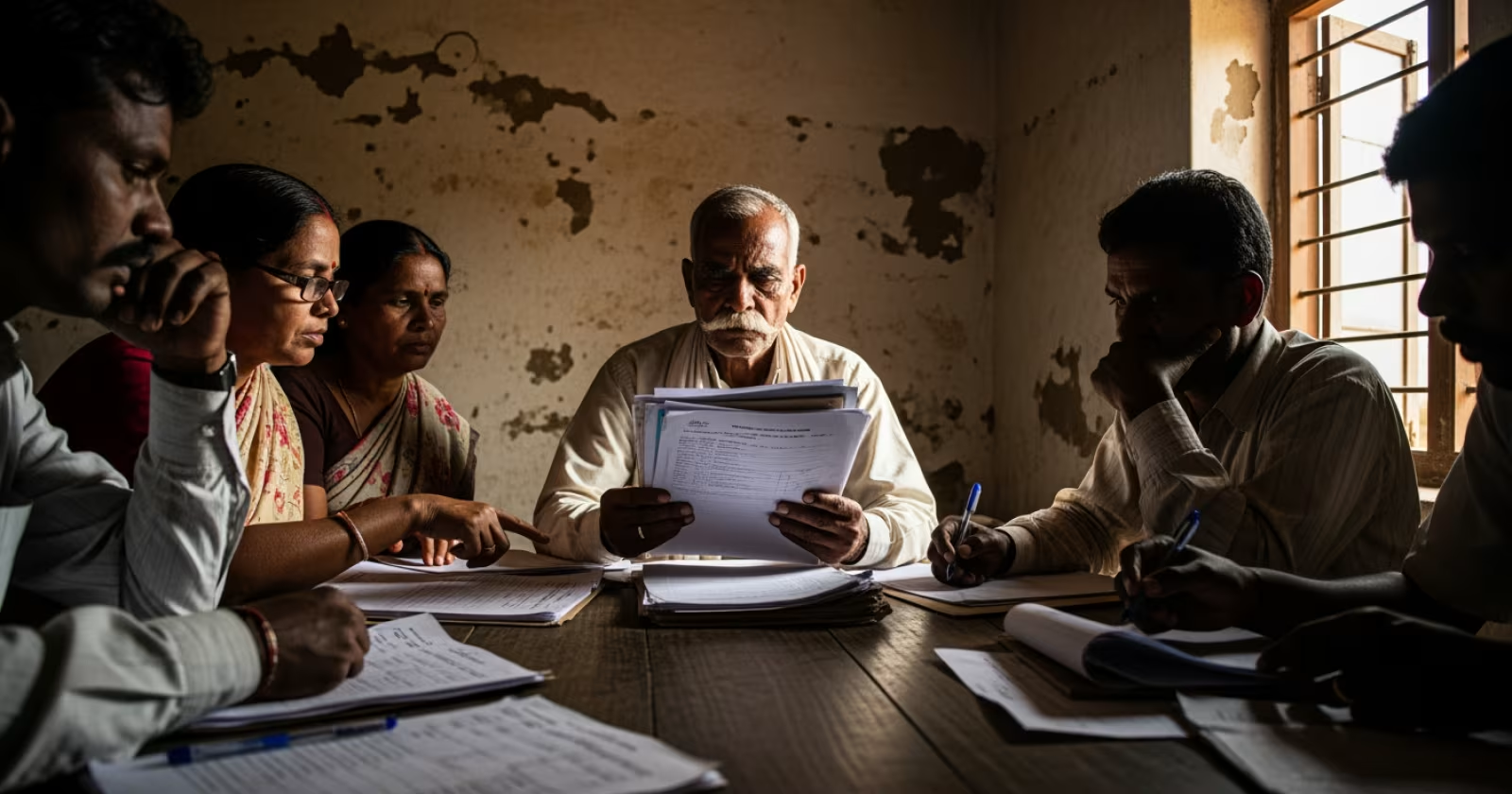
Last monsoon, in Osmanabad district of Maharashtra, a dairy farmer named Ramesh Jadhav watched his Primary Agricultural Credit Society (PACS) chairman approve a ₹14 lakh fertiliser contract with his own brother-in-law’s supply firm. Fourteen members knew it was wrong. Not one knew what to do about it. I’ve heard versions of this story from Rajasthan … Read more

This Tribal Cooperative in Bastar Has Outlived 78 Years of Government Schemes and Still Runs

This Tribal Cooperative in Bastar Has Outlived 78 Years of Government Schemes and Still Runs

Somewhere in the sal forests south of Jagdalpur, a 62-year-old Muria Gond woman named Sukhmati carries a headload of tamarind and mahua flowers to a collection centre that her grandmother also walked to. The centre belongs to a cooperative that was registered in 1948 — just months after India‘s independence — and against every reasonable … Read more

The Business Model That Made Ordinary Farmers Feel Like CEOs

The Business Model That Made Ordinary Farmers Feel Like CEOs

In Sangli district, Maharashtra, a turmeric farmer named Ramesh Patil sits at the head of a long wooden table, reviewing a quarterly balance sheet worth ₹14 crore. He never finished college. His father worked as a daily-wage labourer. Yet every month, Patil and eleven other elected board members make procurement decisions, negotiate prices with bulk … Read more

The Cooperative Movement That Quietly Feeds Half of India Every Morning

The Cooperative Movement That Quietly Feeds Half of India Every Morning

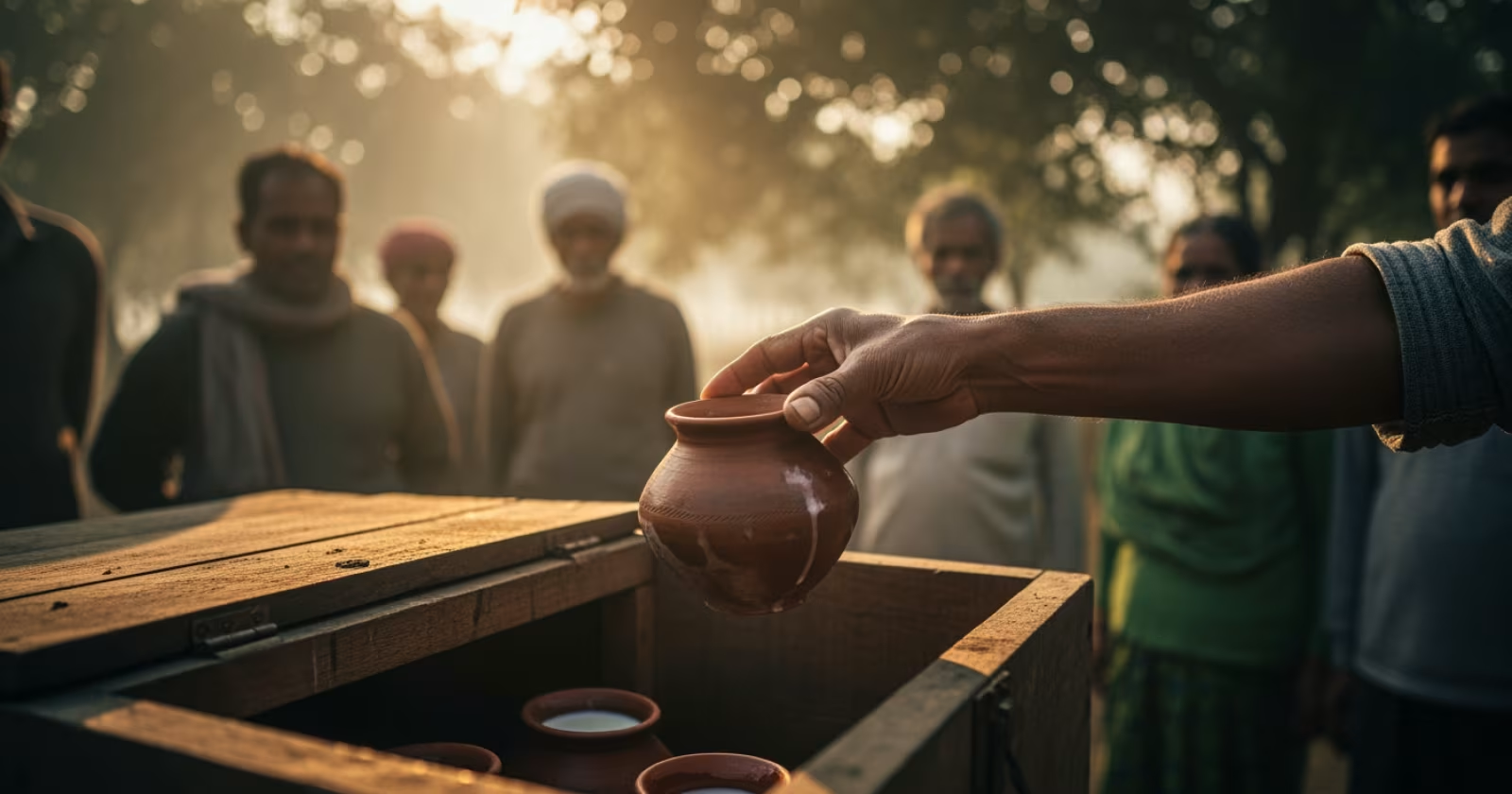
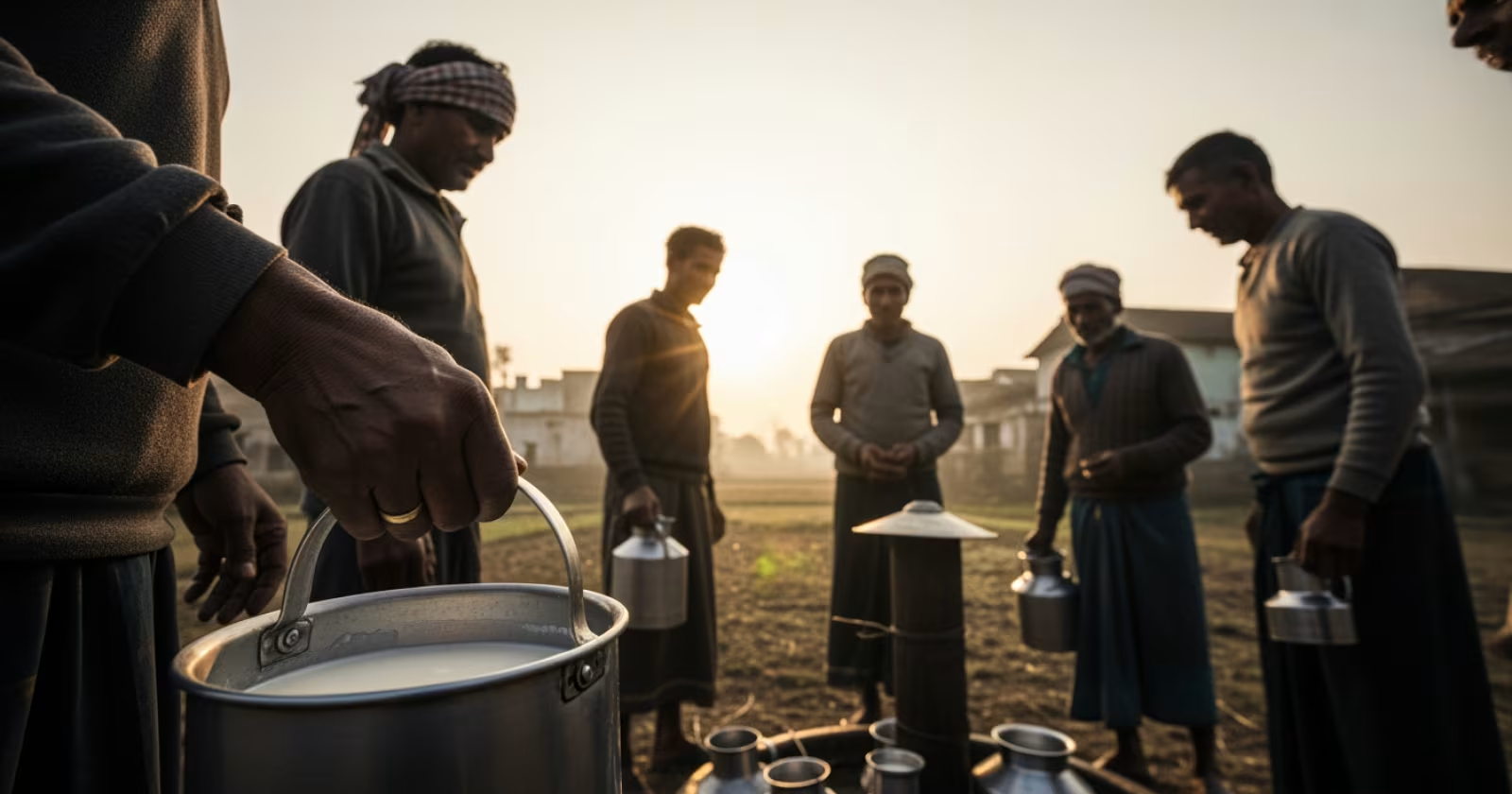
Before most of India wakes up, a chain of 3.6 million dairy farmers has already set the morning in motion. Every glass of milk, every cup of chai, every cube of butter on a breakfast plate carries the quiet fingerprints of one of the most consequential economic experiments any democracy has ever attempted — and … Read more

Odisha’s Tribal Cooperative Movement Is Sitting on ₹15,000 Crore of Forest Resources — Most Untapped

Odisha's Tribal Cooperative Movement Is Sitting on ₹15,000 Crore of Forest Resources — Most Untapped

In a weekly haat in Koraput district, a Kondh tribal woman named Kamala Majhi spread out her sal seeds, dried mahua flowers, and hill broom grass on a plastic sheet last monsoon. A middleman offered her ₹8 per kilogram for sal seeds — the same seeds that, once processed into sal butter, fetch ₹300 per … Read more

Why Young Indians Are Leaving Corporate Jobs to Join Cooperatives

Why Young Indians Are Leaving Corporate Jobs to Join Cooperatives

Last monsoon, Priya Sharma, a 28-year-old MBA graduate from Pune, walked out of a Rs 18-lakh-per-year consulting job at a Big Four firm. Three months later, she was standing ankle-deep in a turmeric field in Sangli district, Maharashtra, helping onboard 340 smallholder farmers onto a cooperative’s new digital procurement platform. She had taken a 40% … Read more

40 Auto-Rickshaw Drivers in Pune Built a Cooperative — Now Ola and Uber Have a Problem

40 Auto-Rickshaw Drivers in Pune Built a Cooperative — Now Ola and Uber Have a Problem

Somewhere in Pune’s Kothrud neighbourhood, a man named Raju Shinde used to earn roughly ₹900 a day ferrying passengers through the city’s chaotic traffic. That was before Ola and Uber slashed fares and flooded his routes with incentivised drivers. By 2023, his daily take-home had dropped to ₹500 on good days, and nearly 25% of that vanished into app commissions. Then, in early 2024, Shinde and 39 other auto-rickshaw drivers in his locality did something that most gig economy observers didn’t see coming — they registered a cooperative society under the Maharashtra Cooperative Societies Act and launched their own ride-hailing service.

I first heard about this initiative through a cooperative sector contact in Maharashtra, and frankly, I was sceptical. A forty-member auto-rickshaw cooperative going up against billion-dollar platforms? It sounded like a headline designed for social media sympathy, not a sustainable business. But the more I dug into it, the more I realised this wasn’t a stunt. It was a structural response to a structural problem — and it carries lessons for the entire cooperative movement in India.
Read more

The Untold Story of How Cooperative Societies Rebuilt Post-Flood Kerala

The Untold Story of How Cooperative Societies Rebuilt Post-Flood Kerala

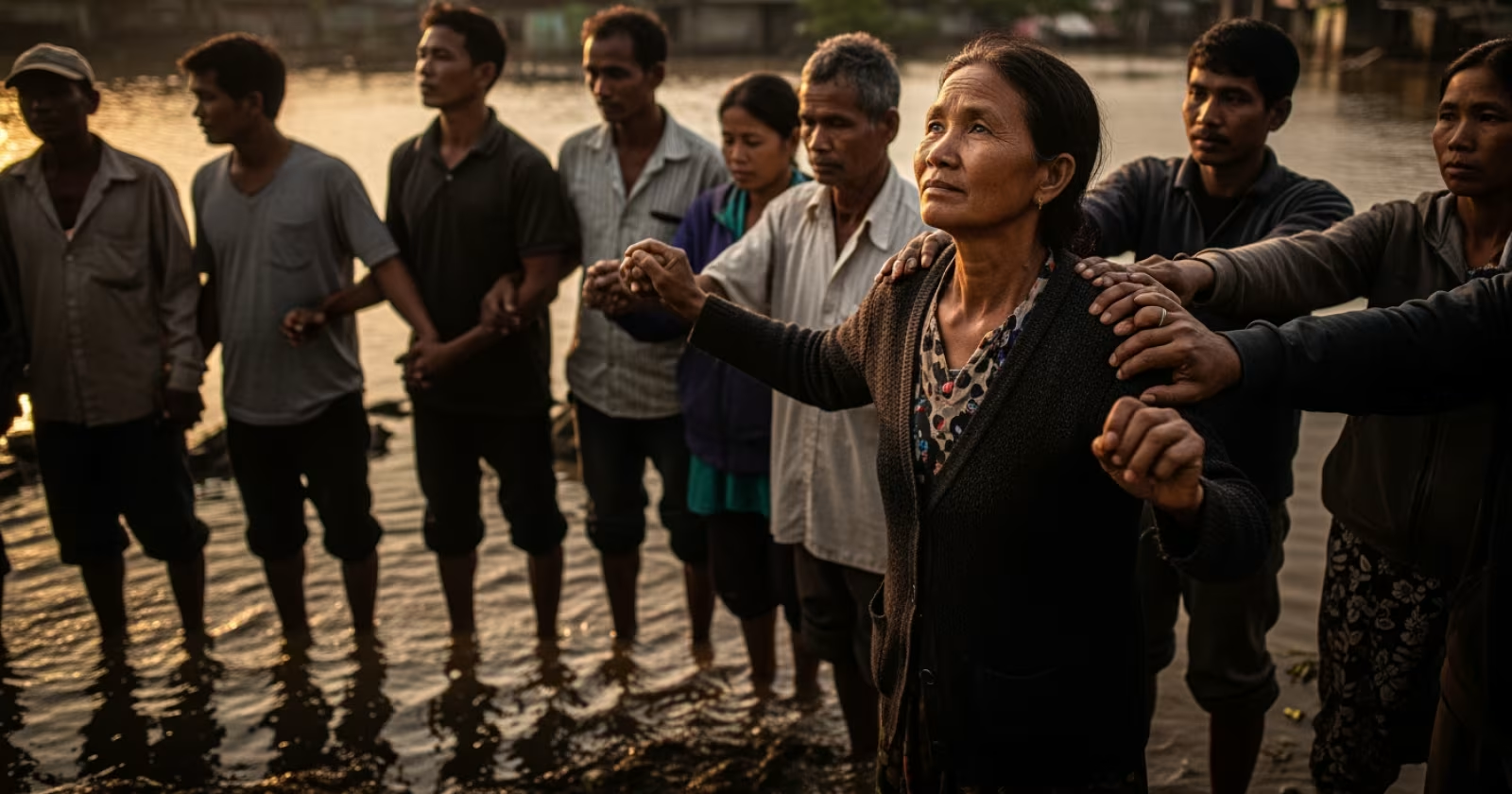
When the floodwaters finally retreated across Kerala in August 2018 — the worst inundation the state had witnessed in 94 years — the damage bill had already crossed ₹31,000 crore, more than 480 people were dead, and over a million had been displaced from fourteen of the state’s fourteen districts. Government helicopters and military boats … Read more

The Pushkar Cooperative That Turned Camel Herders Into Leather Exporters

The Pushkar Cooperative That Turned Camel Herders Into Leather Exporters

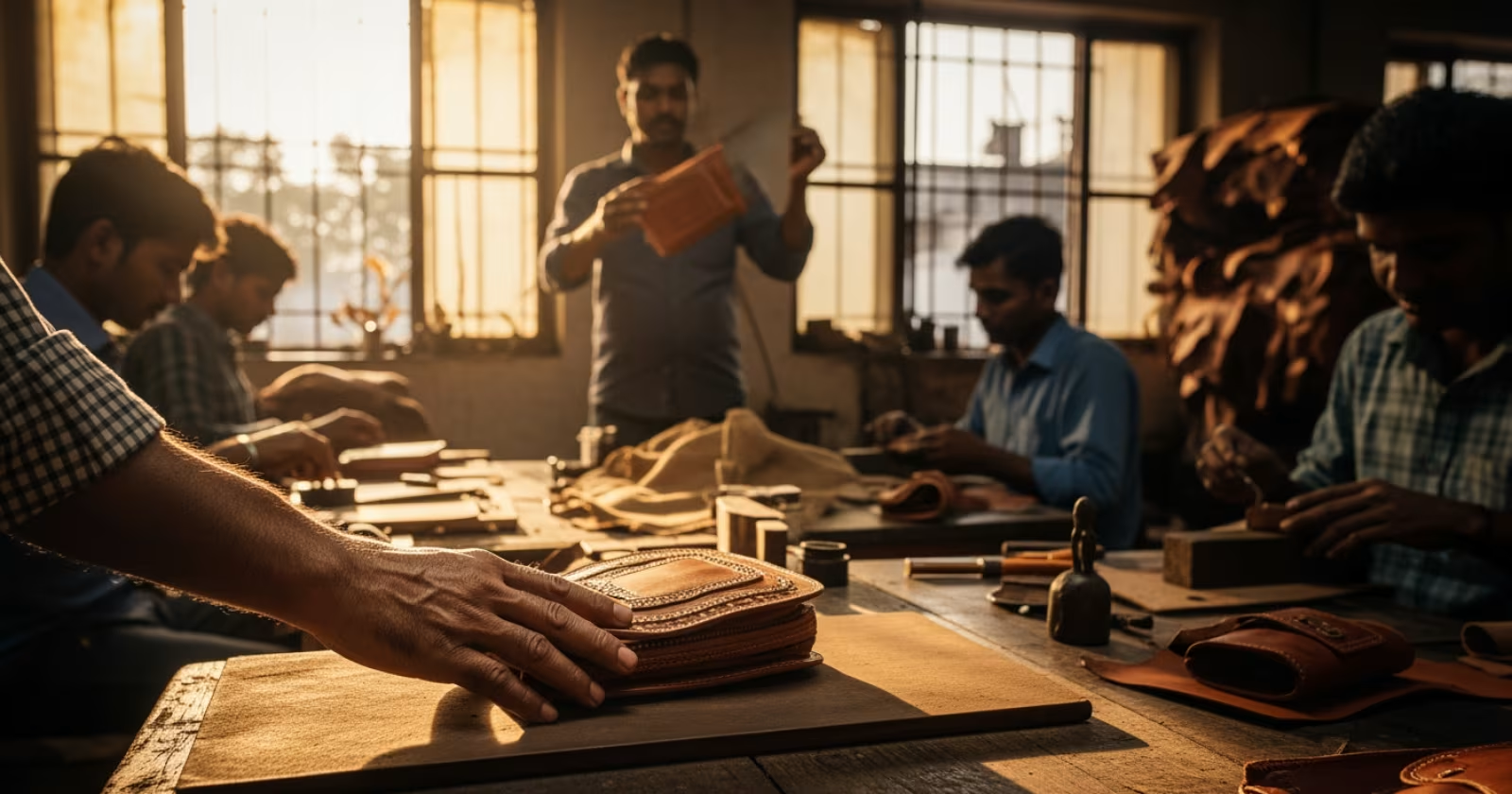
Somewhere on the sandy periphery of the Pushkar Camel Fair in 2019, a Raika herder named Bhawani Ram sold his last female camel for ₹8,000 — roughly the price of a mid-range smartphone. His family had maintained a herd of forty camels across three generations in Ajmer district, Rajasthan. By that winter, he was down … Read more

Maharashtra’s Sugar Cooperatives Don’t Just Make Sugar — They Make Chief Ministers

Maharashtra's Sugar Cooperatives Don't Just Make Sugar — They Make Chief Ministers

In Sangli district’s dusty town of Walwa, a single sugar factory controls more than sweetness — it controls who gets elected to the state assembly, who gets a bank loan, and whose son gets a government job. I have spent years tracking India‘s cooperative movement, and nowhere is the entanglement between cooperative economics and raw political power more visible than in Maharashtra’s western sugar belt.

This is not a story about agriculture alone. This is the story of how a network of roughly 200 cooperative sugar factories across Maharashtra became the most effective political machine in Indian democracy — one that has produced at least seven chief ministers, dozens of cabinet ministers, and an entire class of rural oligarchs who straddle the worlds of farming, industry, and governance simultaneously.

Read more