





Fonterra vs Amul: One Dairy Cooperative Made Farmers Rich, the Other Didn’t — Here’s Why

Fonterra vs Amul: One Dairy Cooperative Made Farmers Rich, the Other Didn't — Here's Why

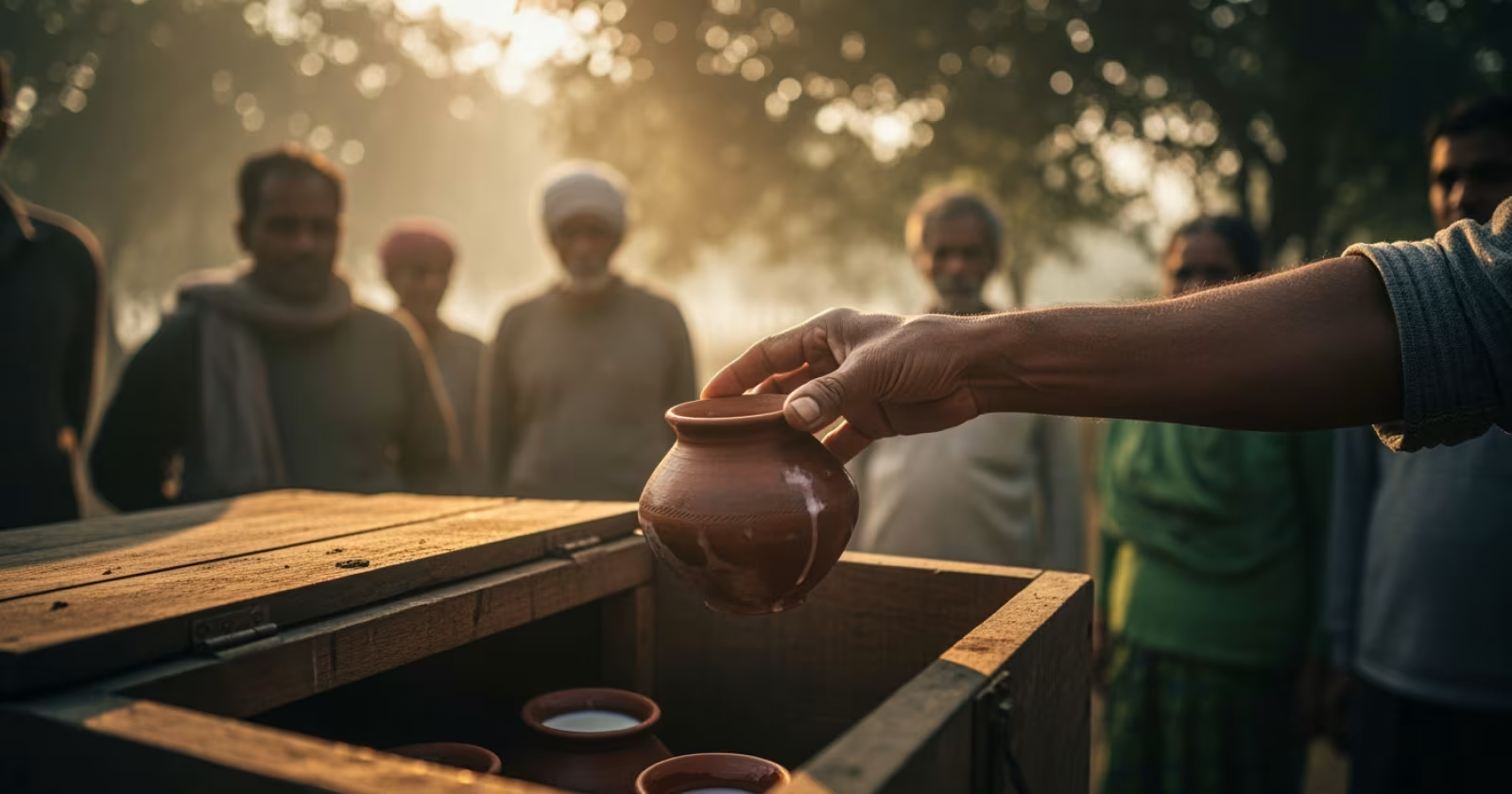
In the village of Kuha, roughly forty kilometres from Anand in Gujarat, a woman named Ramaben pours eight litres of buffalo milk into a steel canister every morning. She earns approximately ₹57 per litre — deposited directly into her bank account within days. Halfway across the planet, in the Waikato region of New Zealand, a Fonterra shareholder-farmer checks a global commodity index before breakfast, knowing that his annual payout depends not on local consumers but on the price Chinese importers are willing to pay for whole milk powder. Two cooperatives, both claiming to serve farmers first — but only one has consistently delivered on that promise.

I have spent years tracking the cooperative dairy sector across continents, and this comparison haunts me because it reveals something fundamental: structure determines destiny. The way a cooperative is designed — who controls it, where its revenue comes from, how decisions flow — matters more than scale, technology, or even geography. And the Amul-Fonterra divergence is the sharpest case study I know.

Read more

Punjab’s MARKFED Is India’s Largest State Cooperative — So Why Have Most Indians Never Heard of It?

Punjab's MARKFED Is India's Largest State Cooperative — So Why Have Most Indians Never Heard of It?

In the winter of 2024, a wheat farmer in Mansa district told a reporter from a Chandigarh daily that he had sold grain to “the government” every rabi season for nineteen years — and had never once heard the word MARKFED. Yet it was MARKFED that issued his payment, MARKFED that ran the mandi procurement centre, and MARKFED that moved approximately ₹25,000 crore worth of grain through Punjab’s cooperative supply chain in a single year. I find this paradox endlessly fascinating: India‘s largest state-level cooperative marketing federation operates at a scale that dwarfs most listed FMCG companies, and yet it occupies almost zero space in public imagination.

This isn’t just a branding failure. It’s a window into how India’s cooperative infrastructure — vast, essential, politically entangled — remains invisible to the very people it serves. And if you care about the future of Indian agriculture, MARKFED’s story demands attention.

Read more

How Youth Are Earning Without Degree Using Govt Schemes

How Youth Are Earning Without Degree Using Govt Schemes

The problem is not that opportunities don’t exist — it’s that most young people in India never find out how to access them. Every year, thousands of youth without college degrees are quietly building income, businesses, and skills using government schemes most people have never heard of. This is not a single government scheme. What … Read more

Silk and Coir Cooperative Societies: Opportunities for Rural Entrepreneurs

Silk and Coir Cooperative Societies: Opportunities for Rural Entrepreneurs

Two of India‘s most ancient natural fibers — silk and coir — are quietly fueling a new wave of rural prosperity, and most people outside these communities have no idea how profitable these cooperative ventures have become. I’ve been tracking the growth of fiber-based cooperatives across southern and eastern India, and the numbers tell a … Read more

How Gujarat’s Fishermen Cooperatives Along the Saurashtra Coast Are Fighting Chinese Fish Imports

How Gujarat's Fishermen Cooperatives Along the Saurashtra Coast Are Fighting Chinese Fish Imports

In Veraval’s crowded fish auction yard in Junagadh district, a kilogram of locally caught ribbonfish fetched ₹85 last monsoon season. Three years ago, the same fish commanded ₹140. I spoke to cooperative members along this stretch of Gujarat who told me the culprit isn’t overfishing or a bad season — it’s containers of frozen Chinese … Read more

The Nilgiris Cooperative That Sells Tea, Coffee and Spices to 14 Countries — Without a Single Middleman

The Nilgiris Cooperative That Sells Tea, Coffee and Spices to 14 Countries — Without a Single Middleman

At 6,200 feet above sea level, in the mist-wrapped slopes above Coonoor, a 62-year-old Toda tribal woman named Lakshmi picks the season’s second flush of orthodox tea — two leaves and a bud, repeated hundreds of times before noon. Two decades ago, a private buyer would have paid her roughly ₹8 per kilogram of green … Read more

How Kerala’s Cooperative Rubber Sector Is Surviving the Southeast Asian Price War

How Kerala's Cooperative Rubber Sector Is Surviving the Southeast Asian Price War

In Pala taluk of Kottayam district, a 58-year-old rubber tapper named Thankachan rolls a sheet of smoked rubber between his fingers and shakes his head. The price he received last month — approximately ₹155 per kilogram — barely covers his cost of production. Five years ago, it was ₹180. Meanwhile, Thai RSS-3 grade rubber lands … Read more

List of State Cooperative Federations in India with Contact Details

List of State Cooperative Federations in India with Contact Details

India’s cooperative movement is one of the largest in the world, touching the lives of over 290 million members spread across more than 800,000 cooperative societies. Behind this vast network, state cooperative federations serve as the backbone, coordinating activities between primary societies and national-level apex bodies. I’ve put together a detailed resource covering these federations, … Read more

Why This Rural Business Idea Is Quietly Creating Crorepatis Across India

Why This Rural Business Idea Is Quietly Creating Crorepatis Across India

In Sanosara village, Mehsana district, Gujarat, a farmer named Rameshbhai Patel poured 400 litres of buffalo milk daily into his local cooperative collection centre last winter. His annual household income from milk alone crossed ₹18 lakh — a figure that would have seemed absurd to his father, who sold milk to a private middleman for … Read more

The Amul Story Keeps Repeating Itself — And That’s a Beautiful Thing

The Amul Story Keeps Repeating Itself — And That's a Beautiful Thing

When a small group of farmers in Anand, Gujarat handed their milk cans to a barely-organized cooperative in 1946, they weren’t launching a brand — they were staging a revolt. That act of collective defiance against exploitative middlemen became the seed of what is now India‘s largest food products organization, one whose annual turnover has … Read more