
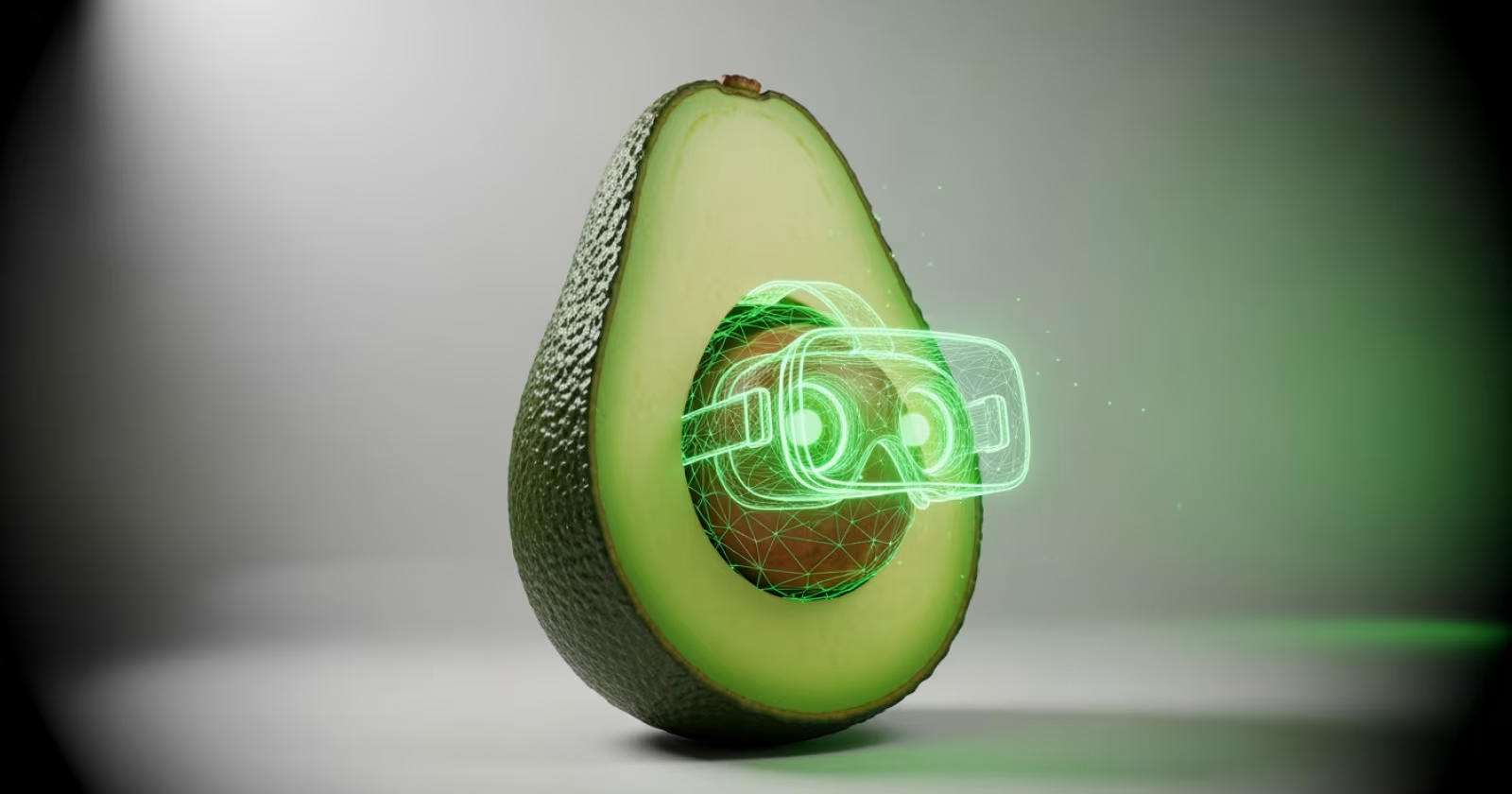
Avocado handling is getting a digital overhaul, and Woolworths is backing it in a way that could matter well beyond one fresh produce category. The avocado industry launches VR supply chain training with Woolworths to cut inconsistency, improve quality and give store teams a better read on what happens before fruit reaches the shelf.
For FMCG operators, the point is not the headset. It is the attempt to standardise behaviour across orchard, packhouse, transport and retail at a time when labour turnover and seasonal workforce pressure make face-to-face training harder to sustain.
What is the avocado industry launches VR supply chain training with Woolworths and why it matters for FMCG
The Australian Avocado Industry Virtual Reality Training Program, known as AV24010, has been developed with Hort Innovation funding and launched in partnership with Woolworths. It is designed to help everyone in the chain understand how handling decisions affect quality, shelf life and, ultimately, shopper confidence.
That matters because fresh produce failures rarely stay confined to the produce aisle. They show up as shrink, complaints, markdowns and lost repeat purchase, which is exactly why retailers and suppliers keep looking for better ways to train people at scale.
In practical terms, the program tries to close the gap between agricultural reality and retail execution. That is a familiar problem across FMCG, but it is especially acute in fresh categories where the product keeps moving and the margin for error stays thin.
Inside the Australian avocado industry VR training rollout
The industry confirmed the program was launched this week at Avo Connections in Adelaide and is in its final stages of development. Picking and packing modules will be available from July 1, while Woolworths plans to roll the program out across 1,100 stores nationally.
Woolworths commercial director, Fresh, Louis Eggar, said the retailer wants to support approaches that give teams a real-world understanding of the horticultural supply chain from orchard to store. The aspiration is to train about 18,000 Woolworths fruit and vege managers and team members.
Hort Innovation chief executive Brett Fitfield said the program brings growers, supply chain partners and technology together to solve a shared challenge. Avocados Australia chief executive John Tyas said the retail modules matter because handling and merchandising still have a direct impact on quality outcomes.
| Program element | Confirmed detail | Commercial significance |
|---|---|---|
| Funding | Funded by Hort Innovation | Shows industry-backed investment rather than a one-off retailer pilot |
| Retail partner | Woolworths | Signals national store-level relevance and retail execution focus |
| Audience | Around 18,000 Woolworths fruit and vege managers and team members | Targets the people most likely to affect display, rotation and shrink |
| Access | VR headsets, mobile devices and tablets | Makes the training more scalable across mixed workforce settings |
| Scope | Farm staff, orchard managers, packhouse workers and retail teams | Covers the whole supply chain rather than a single point of failure |
| National rollout | 1,100 Woolworths stores | Gives the program enough scale to influence category standards |
How the VR model works across orchard, packhouse and store
The program uses simulated supply chain environments to teach best-practice handling in a way that is easier to repeat than a classroom session and more consistent than ad hoc store coaching. Because it runs on VR headsets, mobile devices and tablets, the content can reach more workers without tying training to one location or one trainer.
That is where the commercial logic becomes clear. If an orchard worker, packhouse operator and produce manager all see the same handling expectations, the retailer has a better chance of reducing variation by the time fruit hits the shelf.
It also adds data analytics, which should matter to supply chain leaders. Training is no longer just a compliance exercise; it becomes a feedback loop that can show where understanding breaks down and where fresh produce handling needs reinforcement.
Avocado handling training compared with older retail induction methods
Most fresh produce training still relies on store walk-throughs, brief onboarding and tribal knowledge passed from one manager to another. That works when labour is stable, but it struggles when turnover is high and seasonal work moves fast.
The VR model does not replace the need for supervision, and it will not fix poor cold chain discipline or weak forecasting. But it does give the industry a more consistent base level of knowledge than many fresh departments currently enjoy.
The table below captures the practical difference:
| Training approach | Strength | Limitation |
|---|---|---|
| On-the-job coaching | Immediate and practical | Depends heavily on the skill of the trainer |
| Classroom induction | Structured and repeatable | Can feel detached from real supply chain conditions |
| VR supply chain training | Scalable and immersive | Needs adoption, device access and ongoing content discipline |
What the avocado industry launches VR supply chain training with Woolworths does not change
This is still a training program, not a market fix. It will not change avocado pricing, remove seasonal labour shortages or override the commercial pressure retailers place on suppliers.
It also does not guarantee better fruit on shelf unless stores, packhouses and growers actually use the program consistently. The impact will be limited if it sits alongside old habits rather than replacing them.
And while Woolworths is clearly committed, the source does not disclose any measured uplift in waste reduction, sales or customer satisfaction yet. Those are the numbers the industry will eventually want to see.
For growers, packhouses and fresh produce teams, the immediate beneficiaries are likely to be the operators who already feel the cost of inconsistency most sharply. Woolworths should gain first through better in-store handling discipline, while suppliers may benefit over time if the training reduces avoidable quality losses and improves communication across the chain.
Why retailers are using technology to fix fresh produce discipline
The broader story here is that fresh produce training is becoming more technology-led because manual induction no longer scales cleanly. That shift is not unique to avocados. It reflects a wider FMCG push to standardise execution in categories where waste, labour and store discipline have a direct margin impact.
I see this as part of a bigger move in grocery: retailers are trying to control quality earlier in the chain, not just at the point of sale. If the avocado industry launches VR supply chain training with Woolworths works as intended, it could become a template for other fresh categories that need better handling, faster onboarding and less variation across stores.
If I were a fresh produce supplier, I would treat this as a signal that retailer-led capability building is becoming a commercial expectation, not a side project. The next pressure point will be whether the training changes behaviour often enough to show up in shelf quality and shrink.
The avocado industry launches VR supply chain training with Woolworths could become a quiet benchmark for how Australian grocery lifts fresh produce performance without waiting for labour conditions to improve.
Please share this with your category, operations or produce team if you need to compare fresh training models, and use it as a prompt to review how well your own supply chain knowledge holds up at store level.