



Nobody Told Cooperative Society Members This About the 97th Constitutional Amendment

Nobody Told Cooperative Society Members This About the 97th Constitutional Amendment

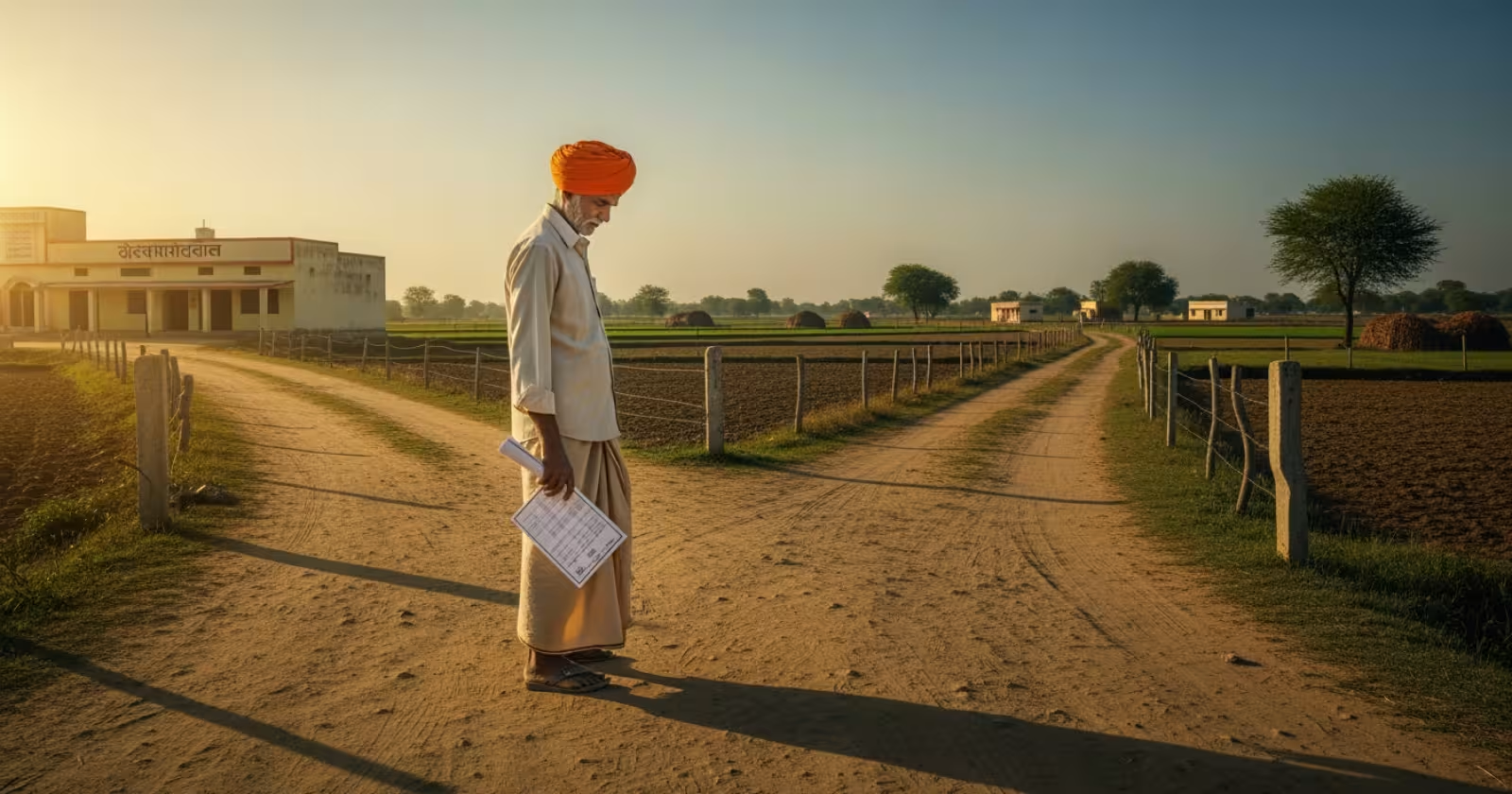
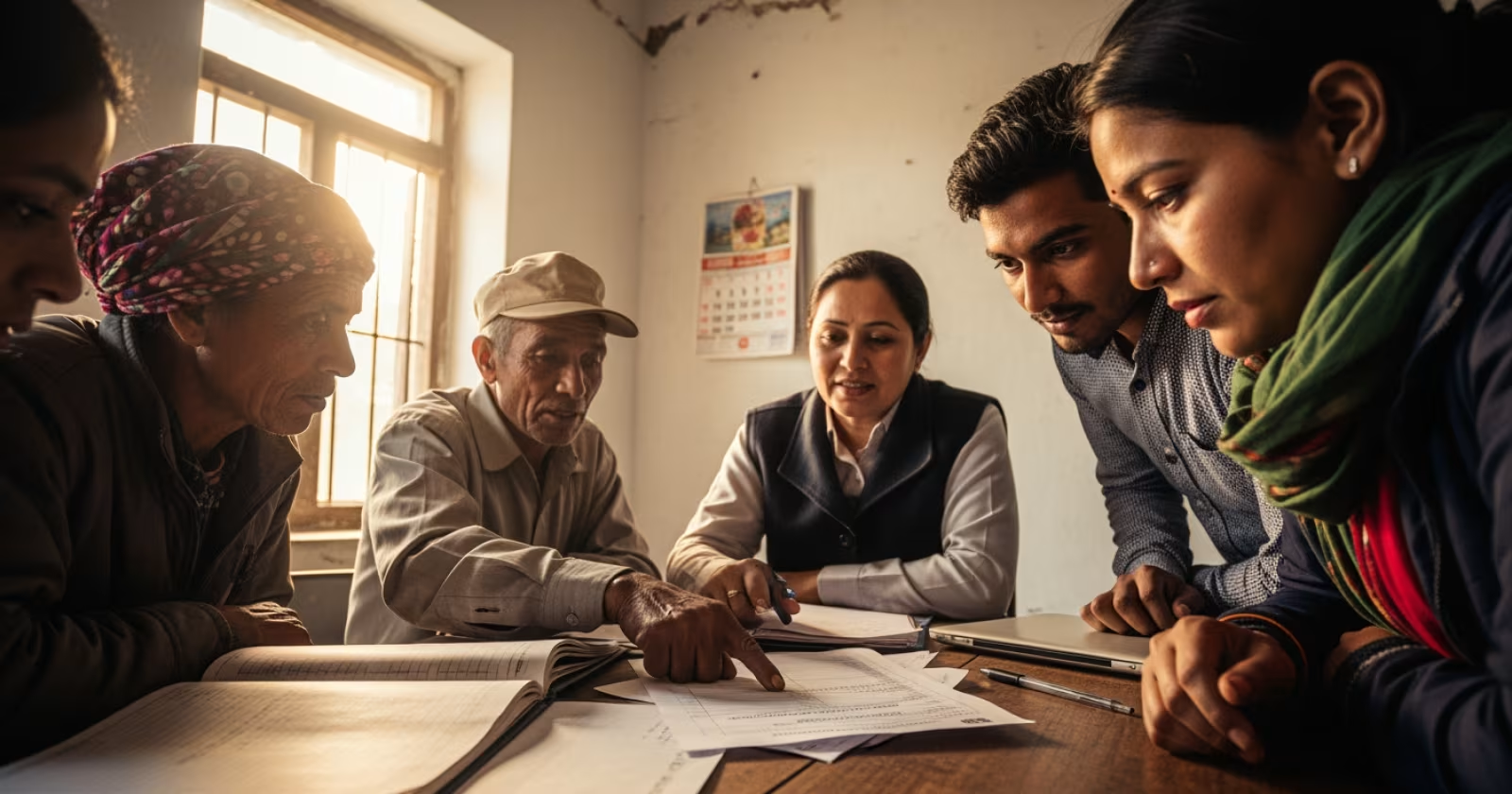
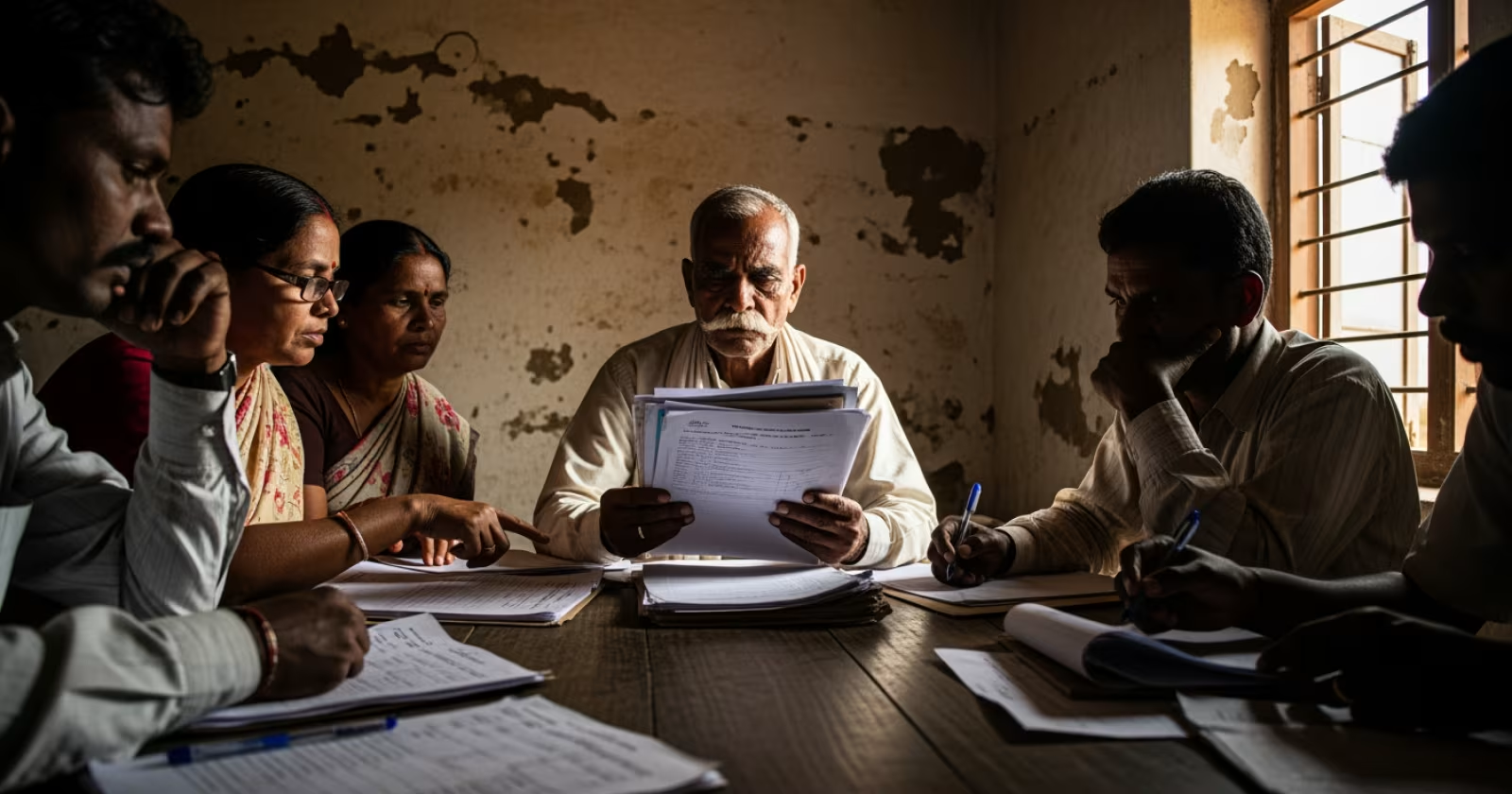
In the summer of 2012, a dairy farmer in Anand district, Gujarat, was told by a local cooperative officer that his society’s board could no longer have more than 21 directors. The farmer — a member of his village milk cooperative for over fifteen years — had never heard of the 97th Constitutional Amendment. Nobody explained what it meant for his voting rights, his access to audited accounts, or the five-year election cycle that was now supposedly guaranteed by the Constitution itself. A decade later, most cooperative society members across India still do not know what this amendment promised them, and fewer still know that the Supreme Court struck down its most critical provisions.

I have spent years covering India’s cooperative movement, and this remains one of the most consequential — yet least discussed — legal developments affecting over 29 crore cooperative members nationwide. Let me walk you through what actually happened, why it matters in 2026, and what every cooperative member deserves to understand.

Read more

The Cooperative Cold Storage Network in UP That Potato Farmers Cannot Live Without

The Cooperative Cold Storage Network in UP That Potato Farmers Cannot Live Without

In February 2026, when the wholesale price of potatoes at the Agra mandi crashed to ₹4.20 per kilogram, a farmer named Ramveer in Hathras district did something his father never could — he simply refused to sell. Instead, he drove his tractor-trolley loaded with 80 quintals of freshly harvested potatoes to the nearest cooperative cold … Read more

Fonterra vs Amul: One Dairy Cooperative Made Farmers Rich, the Other Didn’t — Here’s Why

Fonterra vs Amul: One Dairy Cooperative Made Farmers Rich, the Other Didn't — Here's Why

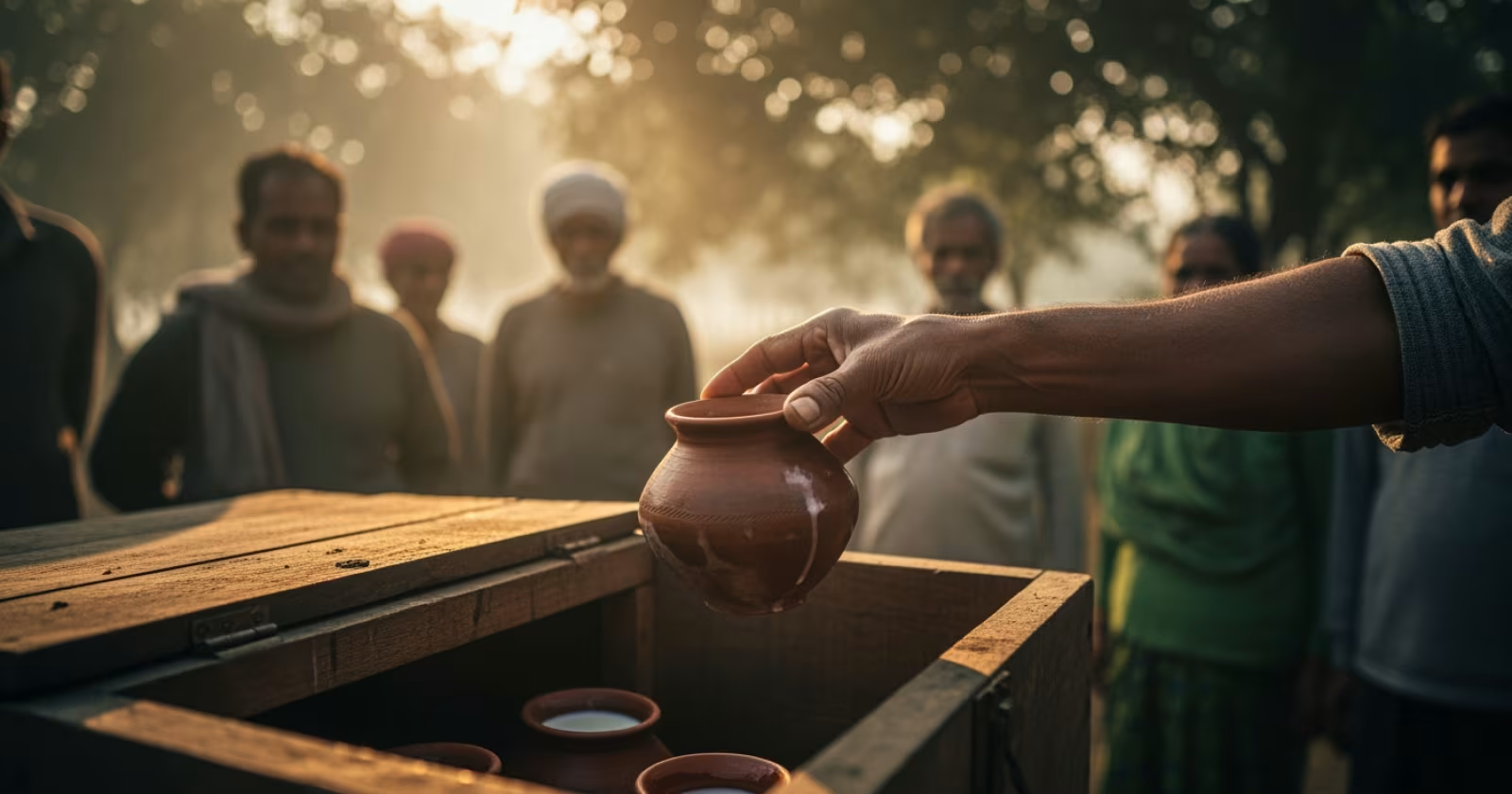
In the village of Kuha, roughly forty kilometres from Anand in Gujarat, a woman named Ramaben pours eight litres of buffalo milk into a steel canister every morning. She earns approximately ₹57 per litre — deposited directly into her bank account within days. Halfway across the planet, in the Waikato region of New Zealand, a Fonterra shareholder-farmer checks a global commodity index before breakfast, knowing that his annual payout depends not on local consumers but on the price Chinese importers are willing to pay for whole milk powder. Two cooperatives, both claiming to serve farmers first — but only one has consistently delivered on that promise.

I have spent years tracking the cooperative dairy sector across continents, and this comparison haunts me because it reveals something fundamental: structure determines destiny. The way a cooperative is designed — who controls it, where its revenue comes from, how decisions flow — matters more than scale, technology, or even geography. And the Amul-Fonterra divergence is the sharpest case study I know.

Read more

Punjab’s MARKFED Is India’s Largest State Cooperative — So Why Have Most Indians Never Heard of It?

Punjab's MARKFED Is India's Largest State Cooperative — So Why Have Most Indians Never Heard of It?

In the winter of 2024, a wheat farmer in Mansa district told a reporter from a Chandigarh daily that he had sold grain to “the government” every rabi season for nineteen years — and had never once heard the word MARKFED. Yet it was MARKFED that issued his payment, MARKFED that ran the mandi procurement centre, and MARKFED that moved approximately ₹25,000 crore worth of grain through Punjab’s cooperative supply chain in a single year. I find this paradox endlessly fascinating: India‘s largest state-level cooperative marketing federation operates at a scale that dwarfs most listed FMCG companies, and yet it occupies almost zero space in public imagination.

This isn’t just a branding failure. It’s a window into how India’s cooperative infrastructure — vast, essential, politically entangled — remains invisible to the very people it serves. And if you care about the future of Indian agriculture, MARKFED’s story demands attention.

Read more

Silk and Coir Cooperative Societies: Opportunities for Rural Entrepreneurs

Silk and Coir Cooperative Societies: Opportunities for Rural Entrepreneurs

Two of India‘s most ancient natural fibers — silk and coir — are quietly fueling a new wave of rural prosperity, and most people outside these communities have no idea how profitable these cooperative ventures have become. I’ve been tracking the growth of fiber-based cooperatives across southern and eastern India, and the numbers tell a … Read more

The Nilgiris Cooperative That Sells Tea, Coffee and Spices to 14 Countries — Without a Single Middleman

The Nilgiris Cooperative That Sells Tea, Coffee and Spices to 14 Countries — Without a Single Middleman

At 6,200 feet above sea level, in the mist-wrapped slopes above Coonoor, a 62-year-old Toda tribal woman named Lakshmi picks the season’s second flush of orthodox tea — two leaves and a bud, repeated hundreds of times before noon. Two decades ago, a private buyer would have paid her roughly ₹8 per kilogram of green … Read more

How Kerala’s Cooperative Rubber Sector Is Surviving the Southeast Asian Price War

How Kerala's Cooperative Rubber Sector Is Surviving the Southeast Asian Price War

In Pala taluk of Kottayam district, a 58-year-old rubber tapper named Thankachan rolls a sheet of smoked rubber between his fingers and shakes his head. The price he received last month — approximately ₹155 per kilogram — barely covers his cost of production. Five years ago, it was ₹180. Meanwhile, Thai RSS-3 grade rubber lands … Read more

List of State Cooperative Federations in India with Contact Details

List of State Cooperative Federations in India with Contact Details

India’s cooperative movement is one of the largest in the world, touching the lives of over 290 million members spread across more than 800,000 cooperative societies. Behind this vast network, state cooperative federations serve as the backbone, coordinating activities between primary societies and national-level apex bodies. I’ve put together a detailed resource covering these federations, … Read more

A Dalit Cooperative in Marathwada Did What No Government Scheme Could — Broke the Moneylender’s Grip

A Dalit Cooperative in Marathwada Did What No Government Scheme Could — Broke the Moneylender's Grip

In Kaij taluka of Beed district, a landless Dalit sugarcane cutter named Bhimrao Waghmare once paid ₹60,000 in interest on a ₹25,000 loan he had taken three years earlier from a local moneylender. By the time I visited this corner of Marathwada in early 2024 while reporting on agrarian credit, Bhimrao had not only cleared that debt — he had a savings account, a crop loan at 4% interest, and a small poultry unit financed entirely through a Dalit-led cooperative credit society. No government scheme had managed to reach him. A cooperative run by his own community did.

This is not an isolated anecdote. Across Marathwada’s eight districts, a quiet revolution in cooperative credit has been unfolding among Dalit communities — one that challenges everything we assume about who gets to participate in India‘s cooperative movement. I have spent months tracking these stories, and what I found deserves far more attention than it has received.

Read more

How Tamil Nadu’s Cooperative Spinning Mills Created an Entire Industrial Town in Coimbatore

How Tamil Nadu's Cooperative Spinning Mills Created an Entire Industrial Town in Coimbatore

On a damp morning in Singanallur, a suburb that bleeds into Coimbatore’s sprawling industrial belt, I watched Ramasamy Gounder, a 72-year-old retired mill worker, point at a row of concrete buildings stretching along the Noyyal River. “Every one of those structures,” he told a local reporter in 2023, “was built with money that belonged to … Read more