
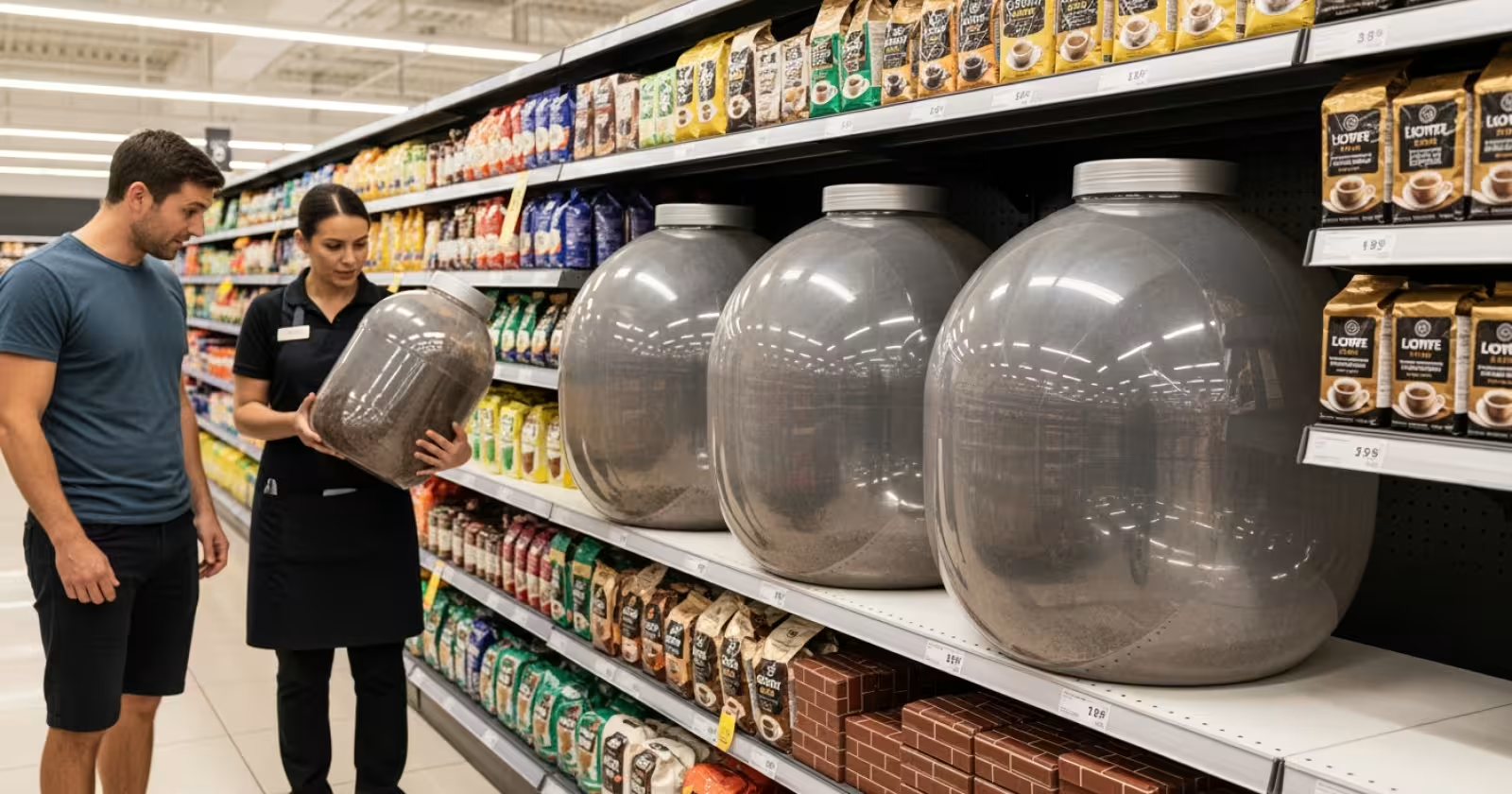
Plastic coffee cans have landed the kind of publicity FMCG brands dread: they have been named Australia’s worst packaging. For grocery and café suppliers, the verdict is less about one product than about where packaging design is heading in a market that is running out of patience with hard-to-recycle formats.
The award matters because it turns a packaging debate into a shelf-level commercial risk. If a format is single-use, mixed-material and excluded from container deposit schemes, buyers and brand owners will feel the pressure long before regulators step in.
What Is the Unpackit Awards and Why It Matters for FMCG
The Unpackit Awards are an annual competition focused on packaging performance, with categories for both the best and worst examples in market. The program started in New Zealand and is now run in Australia by the Australian Marine Conservation Society, the Plastic Free Foundation and WWF Australia.
Hundreds of nominations are assessed by packaging, plastics, waste and pollution experts. That matters for FMCG because it creates an external scorecard on decisions that once sat quietly inside procurement and product development teams. In a category where convenience often wins at the shelf, this kind of scrutiny can reshape how buyers, café chains and brand managers think about packaging trade-offs.
Why Plastic Coffee Cans Won Australia’s Worst Packaging Award
The award went to recently popularised plastic coffee cans after Unpackit said they represented “everything that’s problematic with packaging in Australia”. The organisers said the cans are single-use, designed for on-the-go consumption and therefore high-risk for littering.
They also said the format combines plastic and metal in a way that makes it unrecyclable. Just as importantly, the cans sit outside container deposit schemes, which removes both a clear disposal pathway and any financial incentive to return them. In other words, the pack fails at the point of use, the point of binning and the point of recovery.
Unpackit said there was no shortage of problematic packaging in the nominations. Even so, the coffee cans stood out because they capture several of the sector’s most persistent packaging failures at once.
Why the format falls down at collection and recovery
The issue is not only that the can is hard to sort. The deeper problem is that mixed-material packaging contaminates waste streams when it ends up in yellow bins, and that usually means it becomes waste anyway. For an industry that relies on scale, that contamination risk is not a side issue. It is a direct cost to recyclers, councils and brand owners trying to claim credible sustainability progress.
| Packaging feature | Commercial effect | FMCG implication |
|---|---|---|
| Single-use format | Higher litter and disposal risk | Weakens waste reduction claims |
| Mixed plastic and metal materials | Unrecyclable in practice | Raises recovery and contamination issues |
| Excluded from container deposit schemes | No return incentive for shoppers | Limits collection rates |
| On-the-go café use | High chance of immediate disposal | Creates visibility in street waste and bins |
That table is the real commercial warning for suppliers. A pack that looks convenient in a café can still be expensive once it enters the waste system.
What this does not change for brands and retailers
This award does not ban the product format, and it does not by itself force a redesign. It also does not change the fact that retailers and café operators still prioritise functionality, shelf life and cost when they make packaging decisions.
Nor does it mean every mixed-material pack is equally problematic. The point here is narrower and more practical: the specific coffee can format has been singled out because its disposal path is weak and its recyclability story does not hold up under scrutiny.
For FMCG teams, that means the issue is reputational as much as technical. Packaging claims that cannot survive expert review are becoming harder to defend.
Who benefits and when
Brands with genuinely recyclable, reusable or material-light coffee packaging stand to benefit first, particularly if they can prove it through clear labelling and easier disposal pathways. Recyclers and waste managers also gain when packaging is easier to sort and less likely to contaminate their streams.
The timing is immediate. Shopper expectations, retailer sustainability scorecards and procurement scrutiny are all moving now, not later. Even suppliers outside the coffee category should read this as a sign that packaging design is becoming a commercial filter, not just an environmental one.
The bigger picture for packaging design in FMCG
This is part of a broader shift across FMCG packaging: less tolerance for formats that look modern but perform badly after purchase. Australian brands are under growing pressure to design for reuse, reduction and recyclability at the same time, even when those goals pull in different directions.
Suzanne Toumbourou of the Australian Council of Recycling put the commercial standard plainly: packaging needs to prioritise material reduction, maximise reuse and be designed for recyclability so recycling can function as a true remanufacturing supply chain. That is a high bar, but it is also where the market is heading. The brands that ignore it will keep finding themselves on the wrong side of the packaging debate.
If you manage packaging, procurement or category strategy, this is the moment to review where mixed-material formats still sit in your range and decide whether they can survive the next round of scrutiny.