
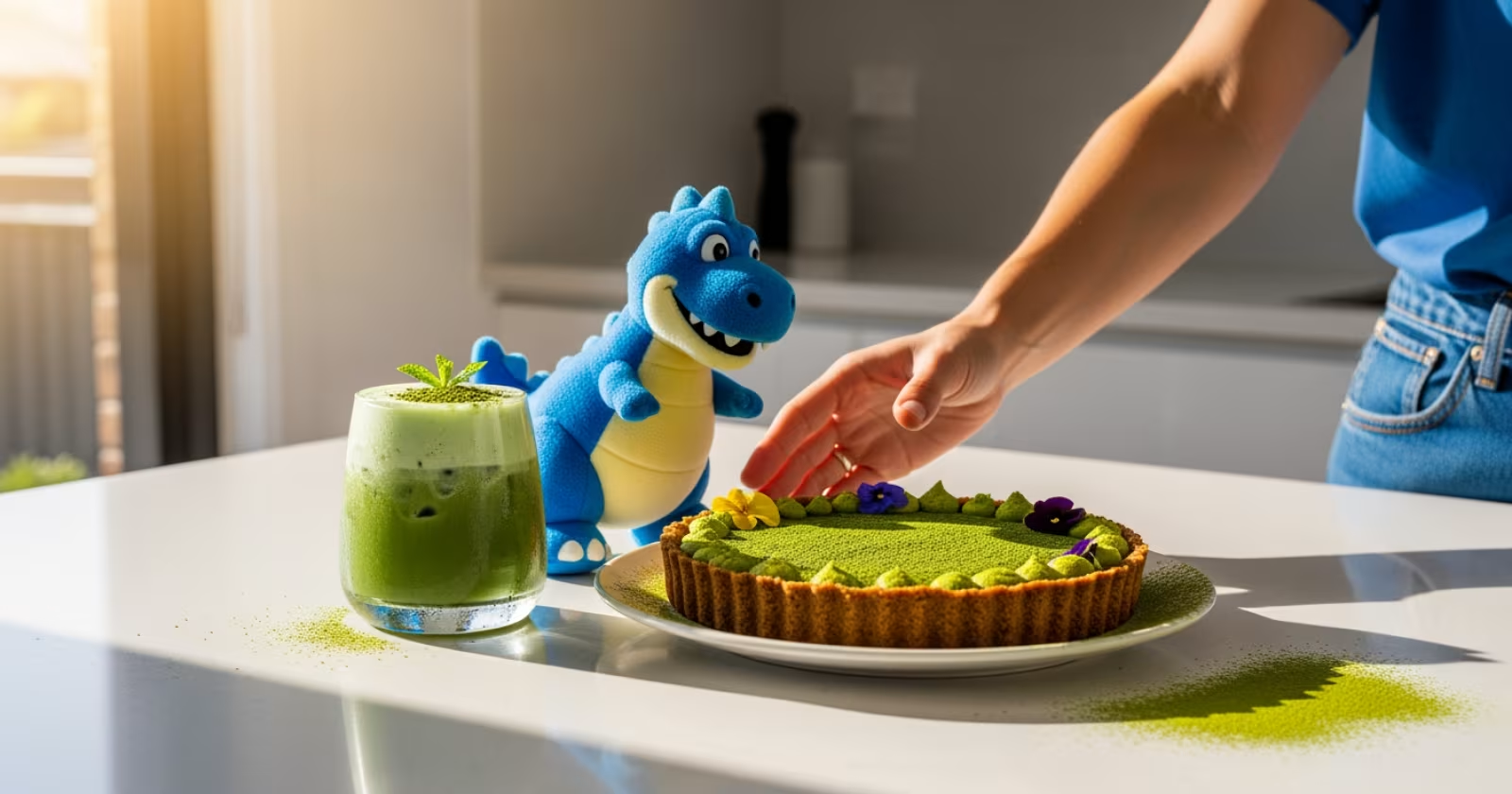
Blue Dinosaur and matcha are doing more than adding colour to OMG Group’s portfolio. They are now helping drive a sales run that points to real distribution traction, not just a short-lived launch spike.
For FMCG operators, the signal is simple. OMG Group is turning a niche snacking base and a wellness-led beverage platform into broader channel momentum, with e-commerce leading the way and new wholesale doors opening.
What Blue Dinosaur and matcha mean for FMCG
Blue Dinosaur is best known in the better-for-you snacking space, while matcha sits in the faster-moving wellness and cafe-adjacent drinks lane. Both categories reward repeat purchase, strong branding and fast route-to-market execution, which is exactly why they matter to buyers and competitors alike.
In Australia, that mix has become more important as shoppers trade up selectively and retailers look for ranges that can earn space without leaning too hard on discounting. For suppliers, the lesson is that a small brand can still punch above its weight if it builds enough velocity across online, pharmacy and foodservice channels.
That is why this latest update from OMG Group matters beyond one listed business. It shows how a portfolio can move from brand-building into commercial fulfilment when distribution broadens and the product-market fit is strong enough to carry through different channels.
OMG Group sales boom from Blue Dinosaur and matcha
OMG Group, which owns Oat Milk Goodness and Blue Dinosaur, told investors on the ASX that it posted $6.2 million in sales for the fiscal fourth quarter, up 57 per cent on the previous year. The company also said May delivered $650,000 in sales, a 75 per cent increase on 2026.
CEO Alex Aleksic said May was “one of the strongest trading months” in OMG Group’s history and credited the lift to “genuine commercial momentum across the business”. He pointed to Blue Dinosaur’s national ranging with Chemist Warehouse New Zealand, the arrival of the first Sandai Matcha shipment in Australia and the direct introduction of the Omura Matcha brand to cafe and hospitality buyers.
The company said its e-commerce sales were the fastest-growing part of the business, rising 87 per cent year on year. That matters because online growth often tells you whether a brand has moved past awareness and into repeatable demand.
| Metric | Result | What it means |
|---|---|---|
| Fiscal fourth quarter sales | $6.2 million | Shows the business is scaling across multiple channels |
| Year-on-year quarterly growth | 57 per cent | Signals demand is not confined to one product line |
| May sales | $650,000 | Suggests momentum continued late in the reporting period |
| May year-on-year growth | 75 per cent | Points to a strong base effect and faster sell-through |
| E-commerce growth | 87 per cent | Highlights the brand’s strongest demand channel |
How the distribution push is working
The company’s update reads like a classic staged roll-out. First comes brand awareness and digital traction, then comes national ranging, then trade buyers start to see enough consumer pull to justify broader shelf and menu access.
Chemist Warehouse New Zealand gives Blue Dinosaur pharmacy-adjacent reach in a market that still values convenience and wellness cues. Sandai Matcha and Omura Matcha, meanwhile, open different paths: one through retail and online, the other through cafe and hospitality buyers who can turn a product into a habit.
That channel mix matters because it reduces dependence on a single buyer group. It also gives OMG Group more ways to turn one successful brand story into repeat orders, which is what investors and category managers both want to see.
What this does not change
This result does not mean every new range will scale at the same speed. The company still has to defend velocity, manage supply and keep brand relevance high enough to justify space in competitive categories.
It also does not tell us the margin profile of each channel, or whether the current growth rate can hold once the easiest distribution wins are booked. ASX updates can show direction, but they do not replace retailer-level data or consumer sell-out analysis.
The biggest beneficiaries are likely to be brands that can move quickly across digital, pharmacy and hospitality without losing focus. Retailers and distributors also gain if these products keep bringing new shoppers into category rather than just switching spend between existing brands.
Why this matters for the next phase of FMCG growth
OMG Group’s update sits inside a broader FMCG shift towards smaller, sharper brands that can win across multiple channels before they reach full-scale supermarket penetration. That makes e-commerce, specialty retail and foodservice more important than ever as proving grounds.
For suppliers, the message is clear: distribution breadth now matters as much as brand story. If Blue Dinosaur and matcha continue to convert online demand into wholesale momentum, more emerging brands will try to follow the same path.
For buyers, category managers and brand teams, this is the kind of result worth studying closely. The next wave of growth will come from businesses that can turn niche demand into repeatable trade performance, and OMG Group is showing how that can start to happen.
If you are tracking better-for-you snacking or the matcha opportunity, this is the moment to watch how quickly strong online signals translate into shelf, cafe and pharmacy momentum.