
Somewhere on the sandy periphery of the Pushkar Camel Fair in 2019, a Raika herder named Bhawani Ram sold his last female camel for ₹8,000 — roughly the price of a mid-range smartphone. His family had maintained a herd of forty camels across three generations in Ajmer district, Rajasthan. By that winter, he was down to six animals and considering migrating to Jaipur for construction work.
Why Rajasthan’s Camel Economy Was Collapsing
I first heard Bhawani Ram’s story not from a news report but from a cooperative field worker near Pushkar who described entire Raika settlements emptying out. The Raika — Rajasthan’s traditional camel-herding community — had watched their livelihood erode for decades. Mechanised transport killed demand for draught camels. The Rajasthan Camel (Prohibition of Slaughter and Regulation of Temporary Migration or Export) Act, 2015 was intended to protect the state animal but inadvertently crashed camel prices by restricting sale outside the state. Herders could neither sell nor afford to feed animals that no longer generated income.
Rajasthan’s camel population, once estimated at nearly 5 lakh, had fallen to approximately 2.13 lakh by the 2019 Livestock Census — a staggering decline. Hundreds of Raika families in Nagaur, Barmer, Jodhpur, and Ajmer districts abandoned herding altogether. The cooperative movement, which had transformed dairy and oilseeds across India, had largely bypassed camel herders. That changed with a small experiment near Pushkar.
The Birth of a Camel Leather Cooperative in Pushkar
In 2017, a cluster of Raika families around Pushkar — supported by Lokhit Pashu-Palak Sansthan (LPPS), an NGO working on pastoralist rights — began exploring value-added camel products. Camel milk had some traction, but the real untapped resource was camel leather, specifically from animals that died naturally. Rajasthan’s slaughter ban meant no commercial killing, but natural mortality in a herd of thousands still produced significant raw hides that were going to waste.
By 2018, approximately 35 Raika families near Motisar and Ganhera villages registered as a cooperative society under the Rajasthan Cooperative Societies Act. The model was straightforward: members would collect hides from naturally deceased camels, process them at a small tanning unit, and craft finished goods — bags, wallets, journal covers, belts — for domestic and export markets. Initial seed funding came through an NABARD tribal development grant and a small NCDC margin money loan.
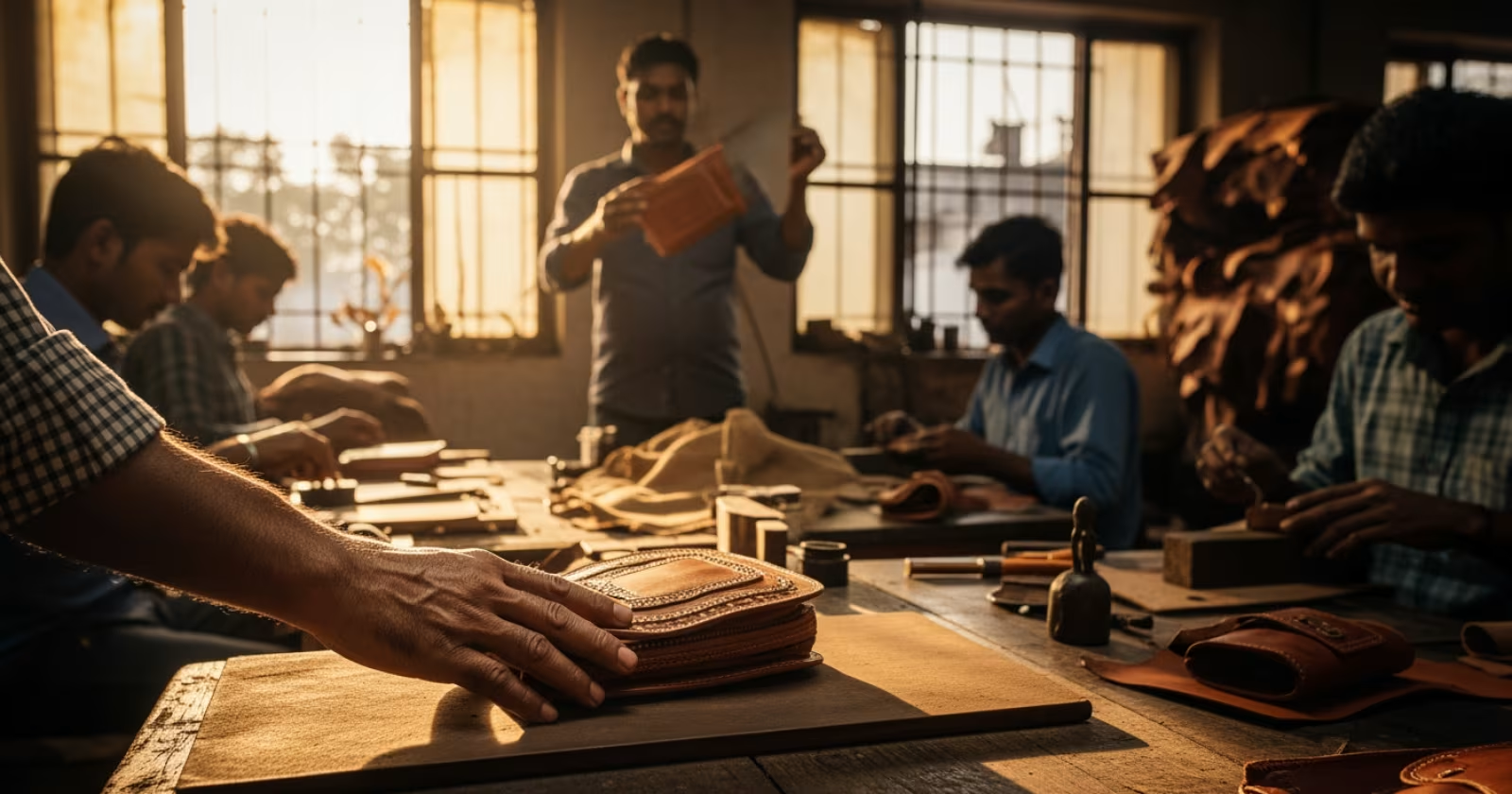
The cooperative’s early months were chaotic. Most members were herders, not leather workers. They partnered with traditional leather artisans — many from the Regar community — who understood tanning but had never worked with camel hide, which is thicker and more fibrous than goat or buffalo leather. A design consultancy from Jaipur’s craft sector helped develop products that could compete in urban retail.
How the Cooperative Model Actually Works
I find the revenue structure worth examining because it differs from typical artisan cooperatives. Here is how the value chain breaks down:
| Stage | Who Does It | Value Added |
|---|---|---|
| Hide collection | Raika herder-members | ₹200–400 per hide (previously ₹0) |
| Tanning and processing | Regar artisan partners | ₹600–1,000 per processed hide |
| Product crafting | Trained women SHGs and artisans | ₹300–800 per finished product |
| Marketing and sales | Cooperative society + online partners | 30-40% retail margin |
| Export (emerging) | Via Jaipur-based export houses | Premium of 50-70% over domestic price |
By 2022, the cooperative was processing approximately 400-500 hides annually and producing around 3,000 finished goods. A camel leather satchel retailing at ₹2,500–4,000 in Jaipur boutiques or on e-commerce platforms meant that members earning nothing from dead animals were now generating ₹15,000–25,000 in supplementary annual income. Not life-changing wealth, but enough to make keeping camels economically rational again.
Membership grew to roughly 80 families by 2024, including women’s self-help groups handling stitching and finishing. The cooperative registered with the One District One Product (ODOP) initiative under Ajmer district and began exploring GI Tag possibilities for Rajasthani camel leather craft.
The Challenges That Could Unravel Everything
The legal landscape remains the cooperative’s biggest headache. The 2015 slaughter ban creates a grey zone around hide collection. Even though cooperative members only collect from naturally deceased camels, transporting raw hides across district lines sometimes invites police scrutiny. Documentation protocols — veterinary death certificates, cooperative collection logs — add bureaucratic weight that semi-literate herders struggle with.
Then there is the tanning problem. Chrome tanning, the standard industrial process, raises environmental concerns. The cooperative’s small unit near Pushkar uses a semi-vegetable tanning method, but scaling up would require compliance with Central Pollution Control Board norms and investment in effluent treatment that the cooperative cannot currently afford. Estimates suggest a compliant tanning upgrade would cost ₹18-25 lakh — roughly equal to two years of the cooperative’s entire revenue.
Competition from synthetic leather and machine-made goods further squeezes margins. A factory-produced faux-leather bag sells for ₹400 on Amazon; the cooperative’s handcrafted camel leather version starts at ₹2,500. Without strong branding and storytelling — which requires marketing budgets the cooperative lacks — the price gap is hard to justify to average consumers.
What Jaisalmer and International Models Reveal
Interestingly, a parallel effort in Jaisalmer district tried a similar model but focused exclusively on camel milk rather than leather. The Kumbhalgarh Camel Dairy Cooperative (informally named) struggled with FSSAI approvals for camel milk products but eventually gained traction through direct-to-consumer channels. The lesson: cooperatives that combine multiple camel-derived products — milk, leather, wool, dung-based crafts — diversify risk better than single-product models.
Internationally, Mongolia’s National Federation of Pastureland User Groups offers a striking comparison. Mongolian herder cooperatives successfully export camel wool and leather to European markets through fair-trade certification. Their secret was not product quality alone but institutional support — government subsidies for processing infrastructure and trade facilitation. India’s Ministry of Cooperation, established in 2021, has yet to develop a specific pastoralist cooperative policy.
What the Next Five Years Could Look Like
There are cautious reasons for optimism. The National Livestock Mission now includes a component on value-added livestock products that cooperatives can tap for processing infrastructure grants. If the Pushkar cooperative secures even a modest ₹10 lakh grant for tanning upgrades, production could double.
The export angle is where real money lies. Camel leather is a niche luxury material in European and Japanese markets, fetching €40-80 for a simple wallet. A Jaipur-based export house has already placed trial orders worth approximately ₹6 lakh with the cooperative for 2026 delivery. If quality and supply consistency hold, this channel alone could triple member incomes within three years.
Digital traceability — blockchain-based provenance tags showing “ethically sourced from naturally deceased camels, crafted by Raika herder cooperative” — could be the branding breakthrough. Two Rajasthan-based startups are already piloting such systems for handloom; extending it to leather is technically straightforward.
Back to Bhawani Ram’s Story
When I last heard about Bhawani Ram through the field network in early 2026, he had not left for Jaipur. He had joined the cooperative in 2021, contributed hides from three camels that died during a harsh summer, and his wife had joined the women’s stitching unit. Their combined cooperative income was modest — roughly ₹30,000 annually — but it supplemented camel milk sales and seasonal fair income enough to keep the family in Pushkar.
His herd was back up to eleven animals. Not forty, like his father’s time. But eleven camels sustained by a cooperative that figured out how to extract value from death itself — turning an end-of-life animal into a ₹3,000 leather journal that sits on someone’s desk in Tokyo or Berlin. That is the quiet, imperfect, deeply Indian genius of cooperative economics at work.
If you are involved in pastoralist communities, artisan craft networks, or cooperative policy anywhere in India, I would urge you to study this model closely. The Pushkar experiment is small, fragile, and far from proven — but it holds lessons for every community trying to turn a dying livelihood into a living one. Follow IICTF for more stories from India’s cooperative frontlines.