
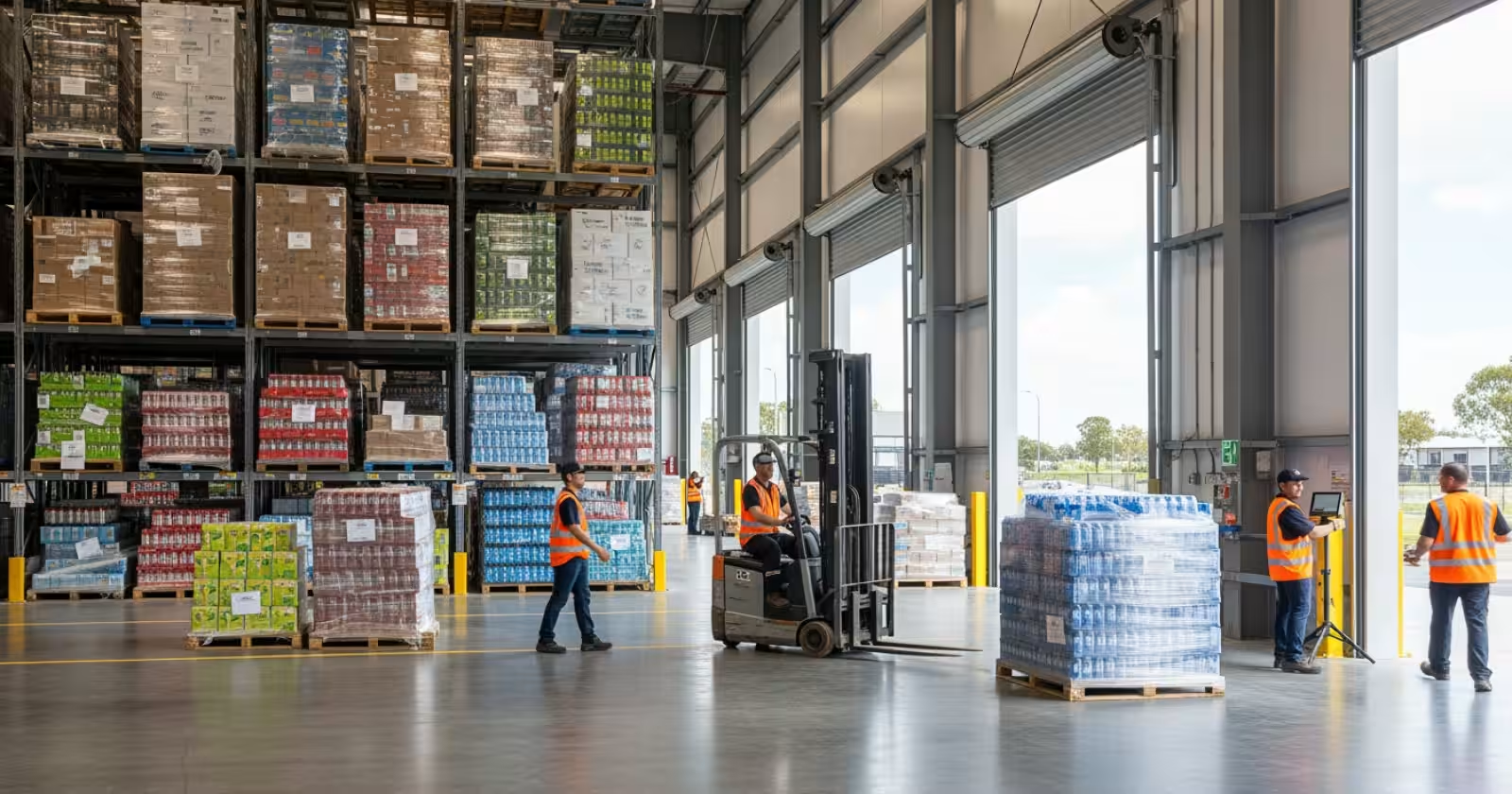
Asahi Beverages is putting $150 million into a Queensland distribution centre because East Coast freight is now too important to leave to chance. For FMCG operators, the real story is not the slab of concrete in Redbank, but the fact that the drinks giant is redesigning how it gets beer, soft drinks and water onto shelves.
The move matters because it will change where stock sits, how fast it moves and how much pressure lands on the rest of the network. For suppliers, buyers and logistics teams, Asahi Beverages’ first Queensland distribution centre signals a longer-term shift in beverage distribution across Australia.
What Is Asahi Beverages’ Queensland distribution centre and Why It Matters for FMCG
The new site is a purpose-built logistics hub in Redbank, outside Brisbane, in the City of Ipswich. It will become a key East Coast distribution point when it is fully operational in 2028, and it sits inside a wider multi-year investment in warehousing and freight operations.
That matters because beverage supply chains depend on speed, temperature control, storage density and reliable transport links. In a category with heavy pallets and fast retail turnover, one well-placed distribution centre can trim lead times, tighten replenishment and reduce the drag that comes from moving goods across state lines too often.
For Queensland, the investment also reflects how much logistics capacity is now part of the competition for shelf space. The closer a supplier is to a retailer’s demand centre, the more flexibility it has when promotions spike or stores need urgent replenishment.
Asahi Beverages first Queensland distribution centre at Redbank
The company said it has broken ground on its first distribution centre in Queensland, with the site designed as a $150 million logistics hub. It will handle Asahi’s full beverage range, including beer brands Great Northern and Victoria Bitter, along with non-alcoholic lines such as Schweppes, Pepsi Max and Cool Ridge water.
The facility will use advanced automation technology, including a high-speed shuttle system and robotics. Asahi said those systems are intended to lift storage capacity and improve order fulfilment efficiency, which is exactly where distribution centres earn their keep in a high-volume category.
Construction is expected to take about 18 months, followed by a 12-month automation and commissioning phase. That means the site is not an overnight fix, but a staged bet on future network efficiency.
| Project element | Confirmed detail | Commercial significance |
|---|---|---|
| Investment | $150 million | Signals long-term network upgrade |
| Location | Redbank, City of Ipswich | Places stock closer to East Coast demand |
| Operational timing | Fully operational in 2028 | Sets a medium-term supply chain shift |
| Technology | High-speed shuttle system and robotics | Improves storage density and picking efficiency |
| Sustainability target | 5 Star Green Star rating | Supports environmental and energy goals |
How the automation changes warehouse economics
I see this kind of project as a warehouse version of supermarket shelf optimisation. The more product the site can store and move with automation, the less time staff spend on manual handling and the more predictable the flow becomes between production, storage and dispatch.
Asahi said the site will include 1MW of solar power, native landscaping and rainwater harvesting systems, and it is targeting a 5 Star Green Star rating. Those features matter, but only within the limits of a logistics business where energy use, labour efficiency and transport access still do most of the financial work.
The real commercial gain comes from consolidating volume and making the freight task more efficient. In beverage, that can have a direct effect on service levels for retailers such as Coles, Woolworths, Aldi and independents that rely on tight replenishment windows.
What this Queensland logistics hub does not change
This project does not remove the pressure on the rest of Asahi’s supply chain. The company still needs to manage freight costs, labour availability, retail demand swings and the normal risk that comes with large automation projects.
It also does not mean every product will move through Redbank immediately, or that the new site will solve every distribution bottleneck across Australia. The benefits will depend on how smoothly the build, commissioning and network transition all land.
For suppliers and logistics partners, the clear winners are likely to be those already working in beverage manufacturing, warehousing, transport and equipment installation. The broader gains should flow gradually as the site comes online, with the clearest impact likely appearing once Asahi Beverages’ Queensland distribution centre starts handling full East Coast volumes.
Why Asahi Beverages’ Queensland distribution centre fits the next FMCG cycle
This is part of a bigger pattern in FMCG: big suppliers are treating logistics as strategy, not just overhead. When freight costs rise and service expectations stay high, distribution centres become a competitive asset, especially in categories where one missed delivery can affect a whole week of shelf availability.
The Redbank project also shows how sustainability and automation now travel together in new warehouse builds. In practice, that means future supply chain investment will be judged not only on throughput and labour savings, but also on energy use, site design and how well the network can support growth without adding unnecessary miles.
For FMCG leaders, the next step is to assess where their own network still relies on legacy freight patterns, because Asahi Beverages’ Queensland distribution centre suggests the category is moving toward faster, denser and more localised distribution.