
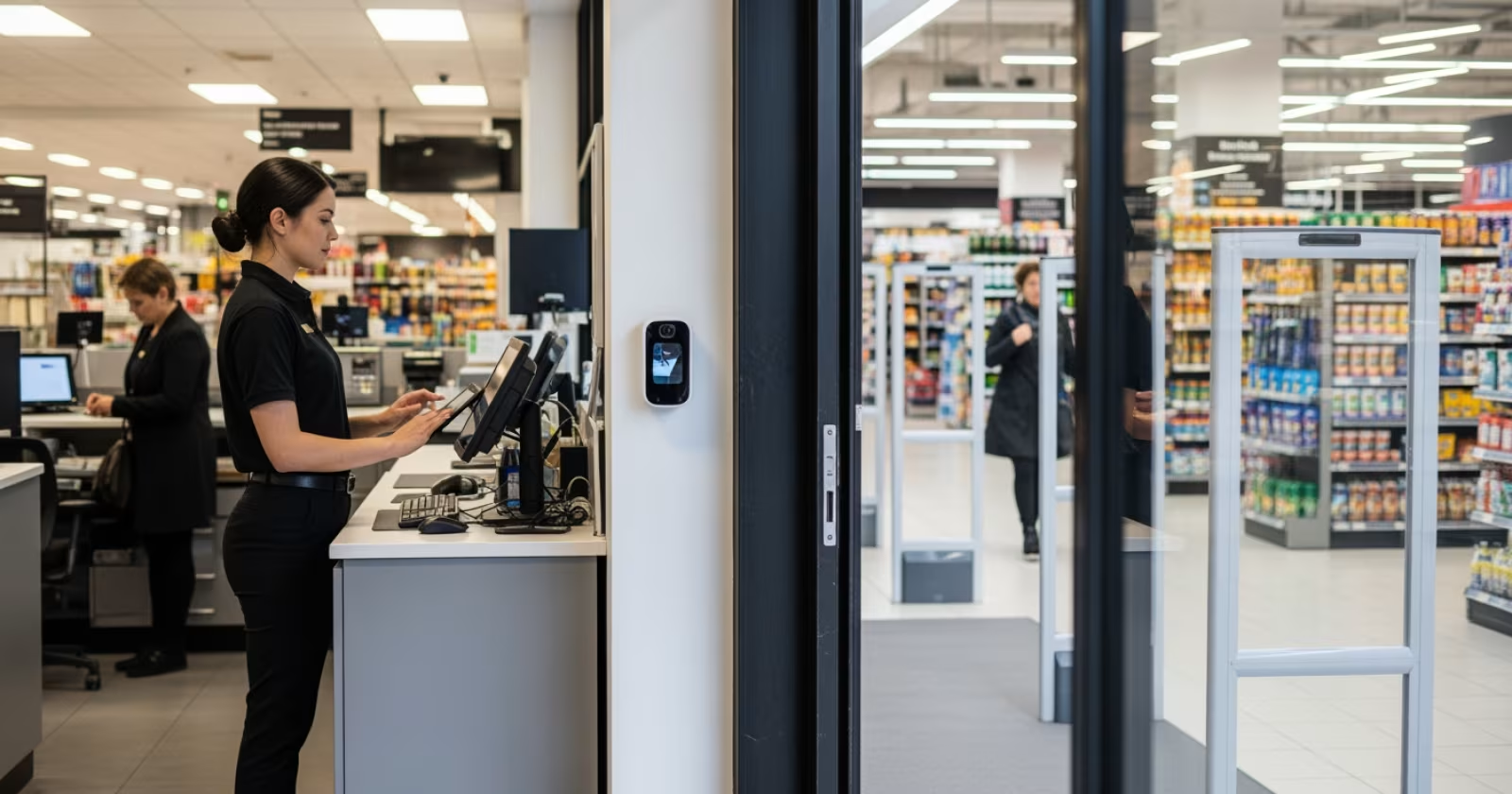
Foodstuffs South Island is moving facial recognition beyond a small trial and into more stores, which puts store safety, privacy controls and front-end retail operations on the same line. For FMCG operators, that matters because this is no longer just a security experiment; it is becoming a live store-management tool.
The three Christchurch stores in the trial will keep using the system, and New World Stanmore will start from June 8. The company says the technology helped reduce harmful in-store behaviour, and it is now asking more stores to consider it if they have a problem with repeat offenders.
What facial recognition means for FMCG retail and why it matters
Facial recognition in supermarkets is not about scanning every shopper at the door. In this case, Foodstuffs South Island says the system is aimed at identifying people with a history of serious and harmful in-store behaviour so teams can respond earlier and protect staff and customers.
That distinction matters for FMCG because store safety has become a real operating cost. When threats, abuse or repeat offending rise, labour gets diverted from service to incident management, and shrink, staff turnover and lost trade can follow. In New Zealand and Australia, retailers are under pressure to keep stores welcoming while also showing they can control what happens inside them.
This is why the facial recognition debate goes well beyond technology. It sits at the intersection of customer trust, legal risk and the day-to-day grind of running a supermarket network with tight margins.
Foodstuffs South Island facial recognition trial results and rollout
Foodstuffs South Island said the three-month trial ran from October last year to January this year. Across that period, the system recorded 531 confirmed matches with people of interest and, according to the company, did not produce any misidentifications or false positives.
Kent Mahon, head of retail at Foodstuffs South Island, said the results showed the technology could be deployed carefully and responsibly. He said the focus remained on reducing harm, while keeping accuracy high and respecting customer privacy.
The company also said staff feedback suggested repeat offenders were less likely to return to the trial stores. It added that incidents involving threatening or harmful behaviour declined, which allowed teams to intervene earlier and lower risk for employees and customers.
That is the commercial heart of the story. If the technology genuinely reduces repeat incidents, it can improve staff confidence, preserve trading conditions and cut the hidden cost of constant disruption at store level.
| Store or trial detail | Confirmed information |
|---|---|
| Trial locations | Three Christchurch stores |
| Ongoing use | The three trial stores will continue using facial recognition |
| New rollout | New World Stanmore from June 8 |
| Trial period | October last year to January this year |
| Confirmed matches | 531 |
| False positives | None recorded, according to Foodstuffs South Island |
How the system works in practice at store level
Foodstuffs South Island said each store must complete privacy, legal and risk assessments before the technology is switched on. That is an important checkpoint because the deployment is not being treated like a standard software upgrade. It is being handled more like a controlled compliance rollout.
Signage will also be displayed in stores to tell customers the technology is in use. The company said it will keep monitoring performance and update the list of stores on its website, which suggests the rollout will remain selective rather than immediate or chain-wide.
For store teams, the practical effect is simple. Instead of waiting for a situation to escalate, staff may be alerted to a known person of concern sooner, giving them time to step back, call support or manage the interaction before it becomes dangerous.
That is not the same as solving every safety issue. It does, however, give retailers another layer of control at the point where most problems are felt first: the shop floor.
What this facial recognition rollout does not change
This expansion does not mean every Foodstuffs South Island store is getting the system. The company has not confirmed any broader network rollout, and it has only said that other stores dealing with harmful in-store behaviour have expressed interest.
It also does not remove the need for careful governance. Privacy concerns, legal review and store-by-store risk assessment remain central, and that will keep the pace of adoption slower than a typical retail technology upgrade.
For suppliers and FMCG brands, the biggest near-term benefit is indirect. Safer stores mean fewer disruptions for staff, better operating discipline and, in some cases, a more stable shopping environment for shoppers. If the rollout grows, the strongest gains should appear in stores with repeated security incidents rather than across the full network at once.
The bigger picture for supermarket security and retail technology
This story sits inside a broader shift in supermarket security technology. Retailers are getting less patient with repeated antisocial behaviour, but they also know that any surveillance tool can backfire if it is not tightly governed and clearly explained.
That tension is now shaping how operators approach everything from access control to in-store monitoring. Foodstuffs South Island’s decision to expand facial recognition suggests the next phase of retail technology adoption will be less about sales uplift and more about protecting labour, trading continuity and customer confidence.
If the system keeps delivering cleaner stores without losing public trust, more supermarket groups will feel pressure to test the same balance for themselves.
Foodstuffs South Island is expanding facial recognition because the first trial gave it a result retailers value most: fewer incidents, not more noise. For FMCG leaders, the real question is whether that safety gain can scale without creating a bigger trust problem later.
I would treat this as a signal that store security is moving up the retail agenda again. If you manage sales, operations or supply partnerships, start thinking about how safer stores affect execution, staffing and shopper behaviour at the shelf edge.