
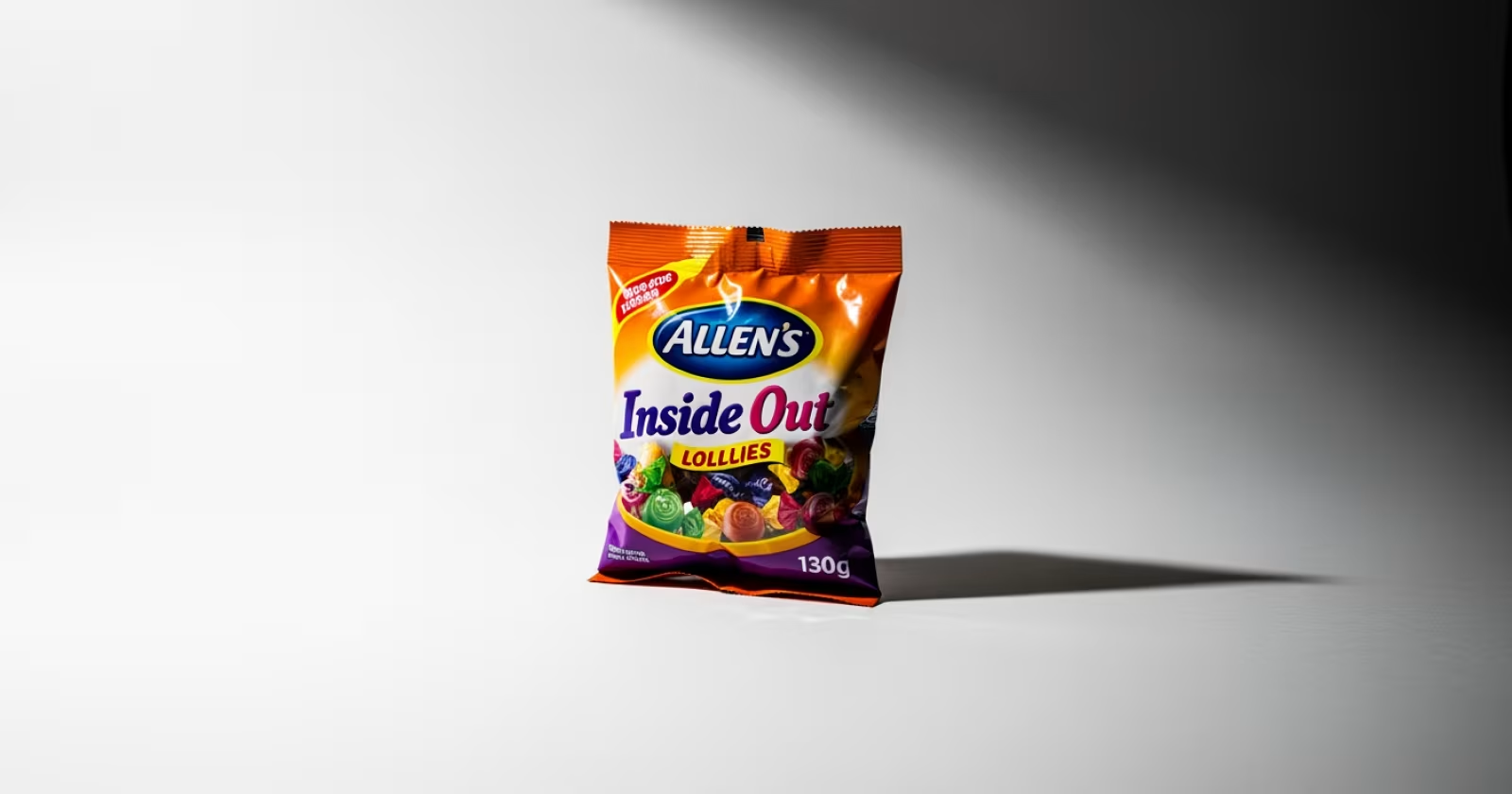
Plastic contamination in a mainstream lolly line is the kind of recall that lands fast with buyers, category managers and store operations teams. Nestlé Australia has pulled Allen’s Inside Out 130g from sale nationwide, and the issue cuts across the majors, independents and convenience channels.
For FMCG professionals, the commercial risk is not just the product withdrawal itself. It is the interruption to shelf availability, the supplier response burden and the reputational hit for a trusted confectionery brand that already trades on familiarity.
What the Allen’s Inside Out recall means for FMCG
I look at this as a plain but serious food safety event rather than a branding story. Nestlé Australia has recalled the Allen’s Inside Out lollies in 130g packs because of the presence of foreign matter, specifically plastic.
The product was sold nationwide through Coles, Woolworths and independent retailers, including IGA, as well as convenience and petrol retailers. That broad distribution matters because it pushes the recall beyond one chain’s shelf reset and into a much wider retail execution problem.
Consumers have been told not to eat the product and to return it to the place of purchase for a full refund. Anyone worried about their health has been advised to seek medical advice.
Allen’s Inside Out 130g recall details and affected batches
The recalled product carries a date marking of 30/Jun/2027. Nestlé Australia identified seven batch numbers in the recall notice: 6072T941, 6073T941, 6074T941, 6075T941, 6085T941, 6086T941 and 6088T941.
That is the level of detail buyers and store teams need to pull stock from the shelf, check back-of-house inventory and brief customer service teams. In a recall like this, precision matters because the wrong batch code can mean either missed stock or unnecessary write-offs.
| Recall field | Confirmed detail | Commercial relevance |
|---|---|---|
| Brand | Allen’s | High household recognition raises shopper attention and complaint volume |
| Product | Inside Out lollies, 130g | Single-SKU action simplifies removal but still affects multiple channels |
| Reason | Foreign matter, plastic | Food safety risk drives immediate recall and refund handling |
| Sales channels | Coles, Woolworths, IGA, convenience and petrol retailers | Broad distribution increases execution complexity |
| Batch numbers | 6072T941 to 6088T941, specific listed batches | Batch-level control is essential for stock segregation |
| Date marking | 30/Jun/2027 | Helps stores and consumers identify affected packs quickly |
How the recall works in practice
For retailers, this sort of recall is less about the headline and more about the mechanics. Stock teams need to isolate the affected date code and batch numbers, remove product from the floor, and confirm whether any units remain in the warehouse or on promotional displays.
For suppliers, the response usually runs through traceability, root-cause review and customer communication. In confectionery, where products often move through mixed warehousing and high-volume replenishment, the speed of that trace-back can determine how much product is recovered before shoppers notice the problem.
Here is the practical difference between a contained recall and a messy one:
| Execution step | Best-case result | Worst-case result |
|---|---|---|
| Batch identification | Only listed codes are withdrawn | Over-withdrawal and unnecessary stock loss |
| Store removal | Shelf stock disappears quickly | Product remains on shelf or in impulse bays |
| Consumer return process | Refunds handled smoothly at store level | Service desks absorb complaints and confusion |
| Supplier investigation | Cause isolated and corrected | Repeat incident risk stays open |
That is why the Allen’s Inside Out recall matters beyond the product itself. A confectionery recall can look small on paper, yet it can still consume retail labour, customer trust and supplier time across a national network.
What this recall does not change
This notice does not say there is a wider issue across the Allen’s range. It also does not suggest every pack of Inside Out is affected, only the date-marked and batch-listed product identified in the recall.
It is also not yet a signal that the category is under new regulatory pressure. This is a standard food recall response to a foreign matter issue, and the commercial impact depends on how quickly the product is removed and whether further stock turns up in channel.
Brand owners, category managers and supermarket buyers will feel the main effect first, followed by store operations and customer service teams. The strongest immediate burden sits with chains and independents that carry confectionery at high velocity, because they need to act quickly while still keeping shelves full.
Why food recalls keep exposing supply chain pressure
I keep coming back to the same point on recalls: they are rarely just a quality issue. They test traceability, warehouse discipline and retail execution at the same time, which is why they matter so much in FMCG.
For Nestlé Australia, the immediate task is containment and customer reassurance. For the market, the broader lesson is that even a familiar line like Allen’s Inside Out can become an operational headache the moment packaging integrity fails.
If you manage confectionery, convenience or grocery supply, I would treat this as a reminder to tighten batch control and recall readiness before the next issue lands.