
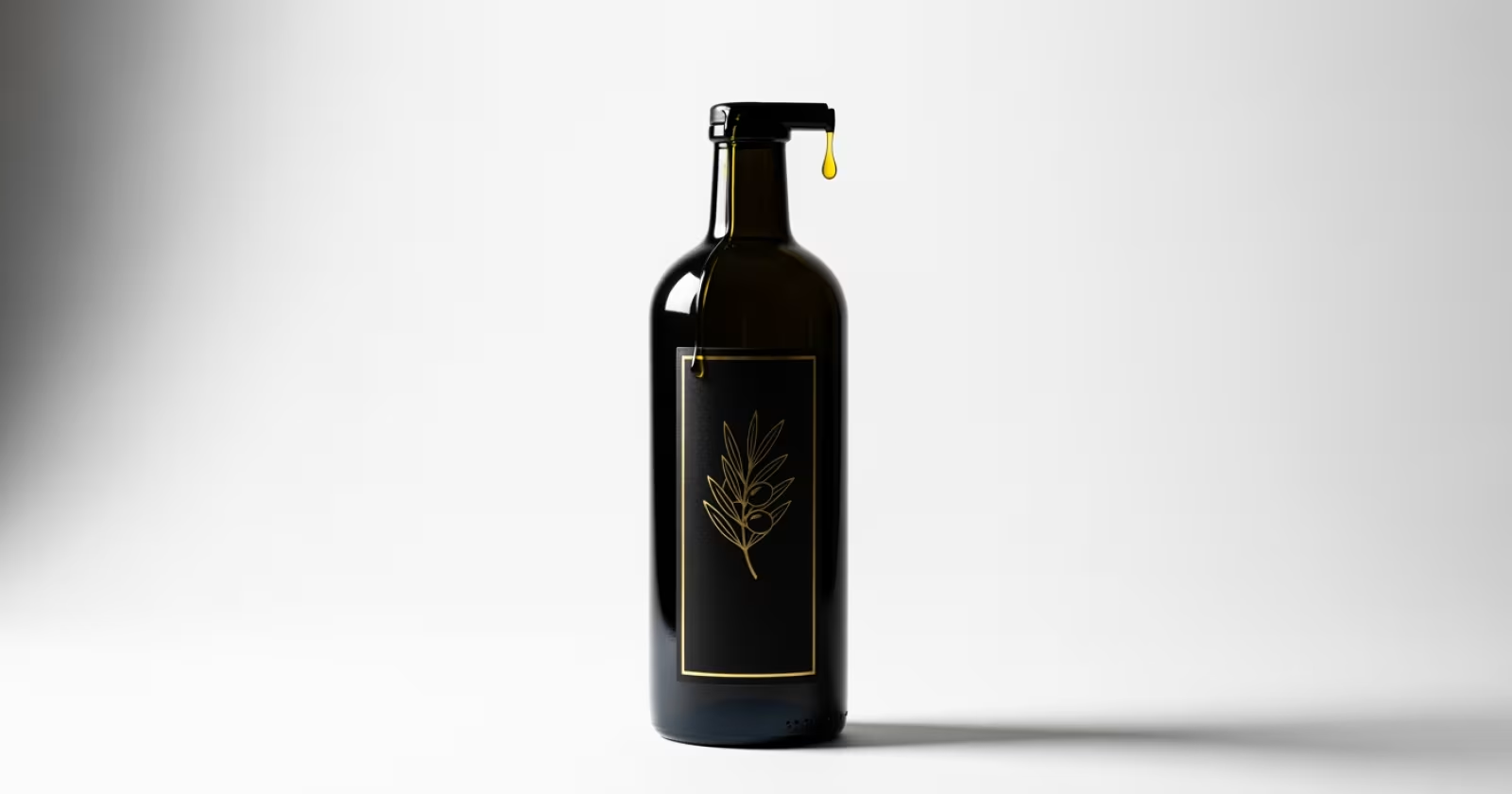
Two former business owners have turned a personal obsession with fresh extra virgin olive oil into a niche import and subscription play aimed at Australian shoppers who want more than a supermarket bottle. The Good Oil Club is betting that provenance, education and taste can convert curiosity into repeat demand.
For FMCG operators, the signal is clear. This is not just another artisan food label; it is a reminder that premium olive oil can still support a direct-to-consumer model when the story is strong and the product difference is obvious.
What Is The Good Oil Club and Why It Matters for FMCG
The Good Oil Club is a specialist olive oil business built by Ben and Leanne Koutoukidis after they sold their Melbourne underground infrastructure company, Total Underground Solutions. Rather than retire, they took a year off, travelled through France, Italy and Greece, and came back convinced that Australian shoppers were missing out on truly fresh, high-quality extra virgin olive oil.
That matters because olive oil sits at the intersection of premium pantry goods, health positioning and imported specialty food. In a market where many consumers still treat olive oil as a commodity, any brand that can educate shoppers on freshness, harvest timing and flavour has a chance to move the category beyond price comparison.
How The Good Oil Club Premium Olive Oil Subscription Works
The founders launched The Good Oil Club as a subscription model, with members receiving a different premium olive oil each month alongside tasting notes, producer stories and recipe inspiration. They are also importing oils from small producers they describe as artisans committed to craft, which gives the business a tighter provenance story than a broad-market grocery brand can usually claim.
Ben and Leanne have both qualified as professional olive oil tasters, which gives the venture added credibility when they talk about freshness, quality and authenticity. They say they focus on oils made from olives harvested while still green and milled quickly on high-quality equipment, with an emphasis on polyphenols and other compounds linked to flavour and perceived health benefits.
The commercial logic is straightforward: the more the product can justify its difference, the less it depends on promotions. For buyers and category managers, that makes The Good Oil Club a useful case study in how premium pantry brands can build loyalty without a supermarket shelf-first strategy.
| Business element | What The Good Oil Club says it offers | Commercial relevance |
|---|---|---|
| Model | Subscription-led premium olive oil | Creates repeat purchasing and direct customer contact |
| Content | Tasting notes, producer stories, recipe inspiration | Supports education and brand stickiness |
| Product focus | Extra virgin olive oil from small producers | Reinforces provenance and quality positioning |
| Founder capability | Qualified olive oil tasters | Builds trust in a crowded premium category |
What This Premium Olive Oil Subscription Does Not Change
This does not alter the wider reality of grocery retail, where shelf space is limited and mainstream olive oil still competes heavily on price. It also does not prove that every premium pantry brand can win through subscription alone.
The business has not disclosed scale, sales or distribution beyond its direct model, so the impact remains early-stage. And while the founders talk up provenance and freshness, shoppers will still decide whether those cues justify a premium at checkout.
For now, the most obvious beneficiaries are small olive growers, import specialists and consumers who already pay for specialty food. Supermarket buyers may also take note, because stories like this show how quickly premium categories can migrate from niche discovery to broader retail interest when consumer education lands properly.
Why The Good Oil Club Fits the Next Phase of Premium Pantry Growth
The Good Oil Club sits inside a broader FMCG trend: the return of the founder-led food brand that sells expertise as much as product. In categories such as olive oil, coffee, chocolate and condiments, shoppers increasingly reward freshness, traceability and a human story, especially when those cues come with clear sensory benefits.
That creates pressure on mainstream brands to sharpen their provenance claims and on retailers to decide where premium specialty lines belong in the range. If Australian consumers keep trading up in oils and pantry staples, the brands that explain quality best will keep winning attention, even before they win volume.
For FMCG teams, the lesson is simple: if you are building in premium food, make the product difference easy to taste, easy to explain and easy to repeat, because that is where enduring loyalty starts.