
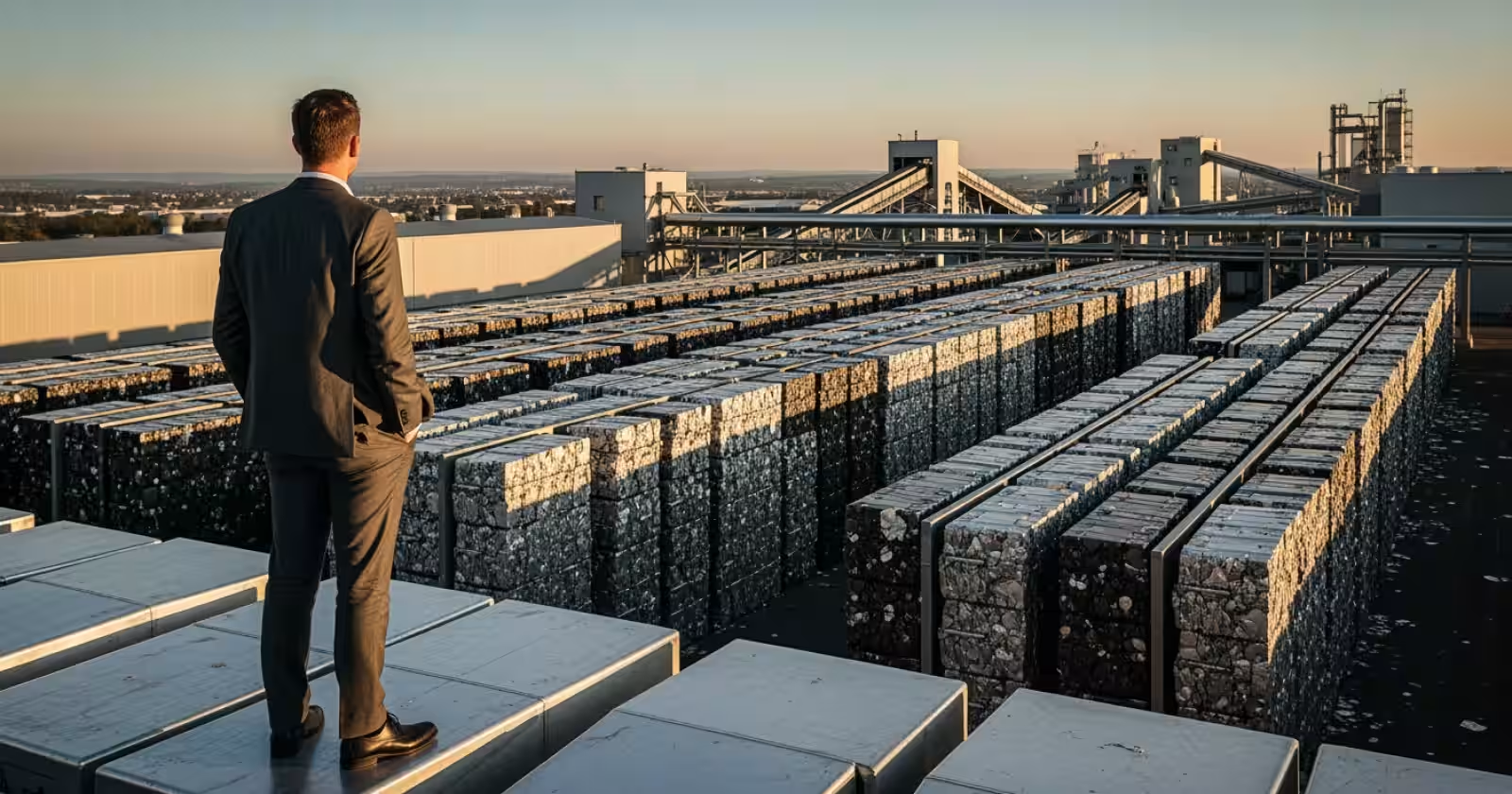
When a Gulf industrial giant starts buying up recycling operations across three continents, the strategy is no longer about hedging — it’s about controlling the supply chain from scrap to smelter. Emirates Global Aluminium’s latest move into northern Italy puts that ambition into sharp focus.
EGA has signed an agreement to acquire an 80% stake in Eco Green, an aluminium recycling company based in Villafranca di Verona, Italy. The deal, which remains subject to regulatory approvals, will push EGA’s total recycling capacity beyond 400,000 tonnes per year across the UAE, Europe, and the United States. Financial terms were not disclosed.
What Is EGA’s Recycling Push and Why It Matters for MENA
Emirates Global Aluminium is one of the world’s largest premium aluminium producers, jointly owned by Mubadala Investment Company of Abu Dhabi and the Investment Corporation of Dubai. For decades, EGA’s identity centred on primary aluminium smelting — energy-intensive operations powered largely by natural gas in the UAE.
The pivot toward recycling reflects a structural shift in global aluminium markets. Recycled aluminium requires roughly 5% of the energy needed to produce primary metal, making it a critical input for manufacturers chasing lower carbon footprints. European automakers, construction firms, and packaging companies increasingly demand verified low-carbon aluminium, and the scrap market is where that supply begins.
For MENA-based industrial groups, building a recycling footprint in Europe and the US is not charity — it’s commercial positioning. EGA is placing itself at the intersection of sustainability regulation and raw material demand, two forces that are only tightening.
EGA’s Eco Green Acquisition and European Expansion
Eco Green operates from its facility in Villafranca di Verona in northeastern Italy, where it manages the collection, sorting, and distribution of approximately 23,000 tonnes of aluminium scrap annually. The company is also progressing with an expansion at a second site in Nogara di Verona, which will add 15,000 tonnes per year of recycling capacity. That project is expected to reach completion in the early part of the second half of 2026.
According to CEO Abdulnasser bin Kalban, EGA is accelerating the development of its global aluminium recycling platform alongside the expansion of its primary aluminium operations. He stated that Eco Green will strengthen EGA’s presence and capabilities within the European aluminium scrap market, supporting the region’s sustainability objectives.
Beyond Eco Green, EGA has an additional 200,000 tonnes of recycling capacity currently being developed across facilities in Europe and the US. This pipeline, combined with the Eco Green acquisition, signals that EGA views recycling not as a side business but as a core growth vertical.
| EGA Recycling Acquisition | Location | Stake | Capacity / Investment |
|---|---|---|---|
| Leichtmetall | Germany | Acquired May 2024 | $170 MN investment to increase capacity 6x |
| Spectro Alloys Corporation | United States | 80% | Not disclosed |
| Eco Green | Italy | 80% | 23,000 tonnes/year (expanding to 38,000) |
| Total Recycling Capacity (post-deal) | UAE, Europe, US | — | 400,000+ tonnes/year |
How EGA’s Recycling Network Functions Across Three Continents
The logic behind acquiring recycling operations in multiple geographies is straightforward. Aluminium scrap is bulky and expensive to ship long distances, so recycling capacity needs to sit close to where scrap is generated. Europe and the US produce enormous volumes of post-consumer and post-industrial aluminium waste — from beverage cans to automotive components — and local processors capture the most value.
By owning facilities in Germany, Italy, and the US alongside its UAE operations, EGA can source scrap locally, process it into recycled aluminium, and sell directly into regional supply chains. This reduces logistics costs and gives EGA access to premium pricing that European and American buyers are willing to pay for verified recycled content. The model also insulates EGA from the volatility of primary aluminium prices, which are tied to energy costs and global commodity cycles.
Eco Green’s expansion at Nogara di Verona will bring its combined Italian capacity to roughly 38,000 tonnes per year — modest by global standards, but strategically placed in one of Europe’s most active aluminium scrap markets.
What This Does Not Change
The Eco Green deal does not alter EGA’s dependence on primary aluminium production for the bulk of its revenue. Recycling capacity of 400,000 tonnes, while significant, remains a fraction of EGA’s total output. The financial terms of the acquisition were not disclosed, making it difficult to assess the return profile or how much capital EGA is deploying across its recycling platform.
Regulatory approval is still pending, and the Nogara expansion timeline — early second half of 2026 — introduces execution risk. European scrap markets are also competitive, with established local players and tightening export regulations that could affect supply availability.
Investors looking for a clear earnings impact from this deal will need to wait for more disclosure from EGA on how recycling contributes to its consolidated financials.
The most immediate beneficiaries are European manufacturers seeking verified low-carbon aluminium supply. EGA’s growing recycling network gives them a new source with Gulf-backed financial stability. For Mubadala and ICD as shareholders, the recycling push diversifies EGA’s revenue base and aligns the company with tightening EU sustainability regulations — a positioning play that should pay off over the next three to five years.
Gulf Industrials Are Building Global Circular Supply Chains
EGA’s acquisition pattern — Germany in 2024, the US later that year, Italy now — traces a deliberate arc. Gulf-based industrial companies are no longer content to export raw materials and let others capture downstream value. The circular economy, once a European policy buzzword, is becoming a commercial strategy for MENA’s sovereign-backed firms.
As the EU’s Carbon Border Adjustment Mechanism tightens and global automakers demand lower-carbon inputs, companies that control both primary production and recycled supply will hold pricing power. EGA is building exactly that kind of integrated position, and the Eco Green deal is the latest piece in a structure that stretches from Abu Dhabi to Verona to Minnesota.
The 400,000-tonne recycling threshold EGA is crossing now will look like a starting point, not a ceiling, if European demand for low-carbon aluminium follows the trajectory regulators are setting.