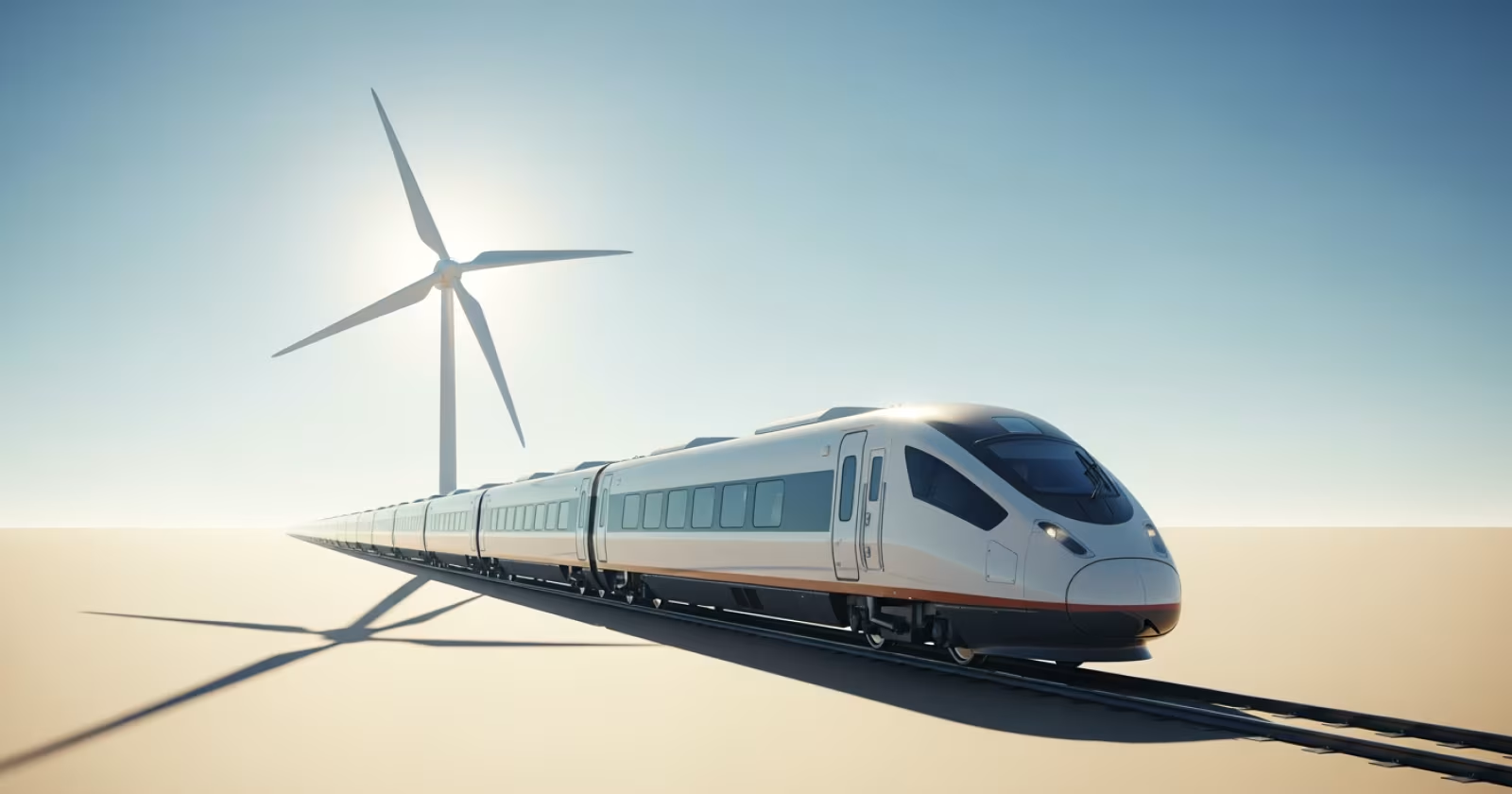
When a utility giant and the operator of the UAE’s national railway network start talking about strategic collaboration, the real story is not the meeting itself. It is the possibility of linking clean energy, smart grids and freight corridors into one national infrastructure plan.
That matters for the UAE because transport and utilities are increasingly being designed together, not separately. For investors, contractors and policy watchers, the signal is clear: the next phase of growth is likely to reward systems that cut emissions while improving efficiency.
What Is DEWA and Etihad Rail Collaboration and Why It Matters for MENA
DEWA and Etihad Rail occupy two of the most important infrastructure lanes in the UAE. DEWA brings experience in electricity, water, solar energy, energy storage solutions and smart grid systems, while Etihad Rail is building and operating the country’s national railway network.
In a region where governments are pushing harder on decarbonisation, the overlap is commercially important. Rail already offers a lower-carbon transport option than road freight, but pairing it with clean power, digital controls and AI-powered infrastructure can reduce operating costs and strengthen resilience. For MENA, that combination fits a broader shift from isolated assets to integrated national platforms.
DEWA and Etihad Rail Strategic Collaboration Focuses on Clean Energy and Mobility
Saeed Mohammed Al Tayer, Managing Director and CEO of Dubai Electricity and Water Authority, welcomed a senior Etihad Rail delegation led by Mohammed Abdulla Alshehhi, Chief Projects Officer, alongside Ahmed Lootah, Executive Director of Commercial. During the meeting, Al Tayer praised Etihad Rail’s role in sustainable economic development and national connectivity.
He said the railway network is an important enabler of the UAE’s future ambitions and a key part of the country’s long-term growth strategy. He also highlighted DEWA’s capabilities in energy and smart technologies, saying these strengths support Etihad Rail’s position as a logistics and mobility network across the UAE.
The two sides explored areas of cooperation that could bring clean energy into railway operations and support intelligent, sustainable transport and utility corridors. The companies did not disclose a financial value, timeline or binding agreement, and the discussion appears to be strategic rather than transactional at this stage.
| Organisation | Core Strength | Potential Role in Collaboration |
|---|---|---|
| DEWA | Solar energy, storage, smart grids, AI-enabled infrastructure | Support clean power and digital utility systems |
| Etihad Rail | National railway development and operations | Provide the transport backbone for low-carbon mobility |
| UAE Infrastructure Strategy | Connectivity, sustainability, economic diversification | Link utilities and logistics in one national framework |
For me, the significance lies in the architecture of the idea. A railway network powered and supported by advanced utility systems is not just cleaner; it is easier to integrate into industrial zones, ports and logistics hubs that depend on predictable energy and transport flows.
How the Data Points to a Broader Infrastructure Model
The source does not offer hard numbers, but it does show where the conversation is moving. DEWA’s emphasis on solar energy and energy storage solutions suggests a push toward distributed, lower-carbon power support, while Etihad Rail brings the physical network that can anchor those systems.
That matters because infrastructure projects in the Gulf are increasingly evaluated on more than capacity alone. Investors and decision-makers now look at emissions intensity, operating efficiency, digital readiness and how well an asset fits national net-zero goals. In that context, strategic collaboration between a utility and a rail operator can become a template for future projects.
The table below shows the practical logic behind the discussion.
| Element | Current Function | Strategic Value |
|---|---|---|
| Solar energy | Clean electricity generation | Reduces reliance on higher-emission power sources |
| Energy storage solutions | Balances power supply and demand | Improves reliability for transport infrastructure |
| Smart grid systems | Monitors and manages electricity flows | Supports efficiency and resilience |
| AI-powered infrastructure | Data-led system optimisation | Helps coordinate utility and mobility corridors |
What This Does Not Change for the Market
This discussion does not mean a contract has been signed, nor does it guarantee immediate capital spending. The source provides no disclosed project scope, no procurement process and no operating targets.
It also does not change the fact that rail networks and utility systems take time to align technically and commercially. Any meaningful execution will still depend on approvals, engineering compatibility and a clear business case.
Even so, the conversation itself matters because it confirms that sustainability is moving from policy language into infrastructure planning.
For developers, suppliers and industrial users, the near-term impact is mainly informational, but it still matters. I see this as a signal to watch for future tenders, utility integration work and logistics projects that could benefit from cleaner transport corridors and stronger energy infrastructure.
The Bigger Picture for UAE Net-Zero Infrastructure
In the UAE, infrastructure is increasingly being designed as an ecosystem rather than a collection of separate projects. That approach matters for a country trying to expand logistics capacity, improve connectivity and meet net-zero goals without sacrificing growth.
DEWA and Etihad Rail fit neatly into that strategy. One side brings the power and digital backbone; the other brings the mobility network that can connect cities, ports and industrial zones. For the wider MENA region, this kind of alignment is likely to become more common as governments look for lower-carbon ways to build competitiveness.
The next phase of UAE infrastructure will favour partnerships that can link clean energy, logistics and data into one operating model. Investors should pay close attention to where those systems begin to converge.
The DEWA and Etihad Rail discussion shows how the UAE is turning sustainability into an operating framework, and the projects that follow could define the next decade of national infrastructure.
If you track UAE infrastructure, clean energy and rail logistics, this is the kind of partnership worth following closely as it moves from strategic dialogue to execution.