
Beer waste is becoming a material story, not just a recycling footnote. For FMCG operators, the commercial signal is clear: byproducts that once sat at the edge of the value chain are now being designed into premium products with real shelf and brand potential.
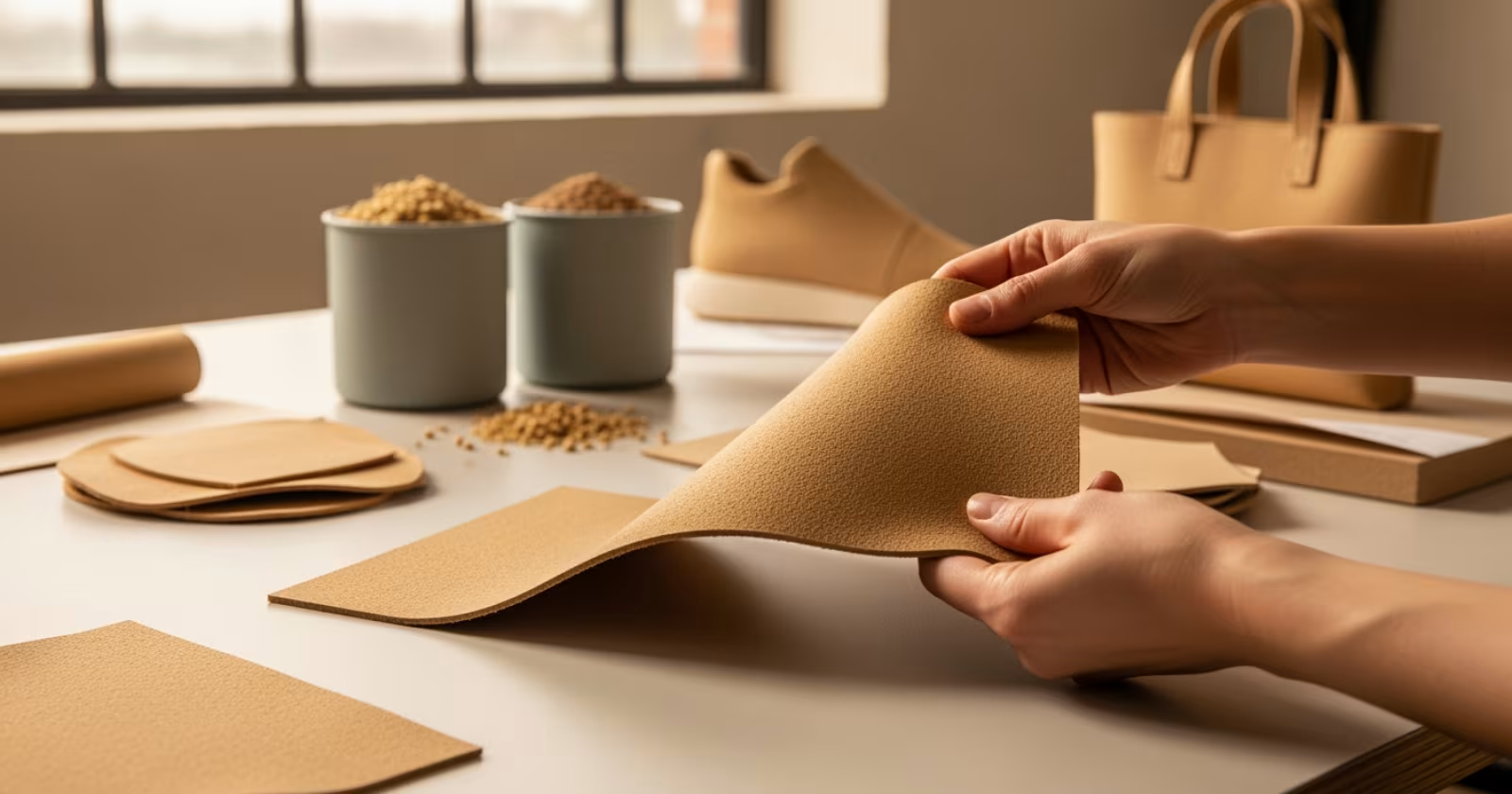
Arda Biomaterials has turned brewer’s spent grain into a plastic-free leather alternative called New Grain. The startup is aiming first at accessories, with a limited commercial launch planned this year, and it is already talking to major beverage groups about supply and development.
What Is Beer Waste Leather and Why It Matters for FMCG
Brewer’s spent grain, sometimes called draff, is one of brewing’s most abundant byproducts. It is usually sent into low-value uses such as animal feed, so any higher-value application immediately changes the economics of the stream.
That matters for FMCG because ingredient and packaging side streams are no longer just waste management issues. They are becoming inputs into premium goods, sustainability claims and new revenue lines, especially where brands want to cut petrochemical content without losing performance.
In Australia, where sustainability claims face more scrutiny and supply chains are under pressure to show clearer circularity, this kind of development will interest beverage makers, ingredient suppliers and product developers alike. It also fits a wider shift in consumer goods toward traceable, lower-impact materials that can still meet commercial demands.
Arda Biomaterials and the New Grain launch
The company says New Grain is made by transforming brewer’s spent grain into a soft, durable leather alternative. It positions the material against both animal leather and synthetic leather, which is often made with polyurethane and other petroleum-based plastics.
Arda says the key difference is that New Grain stays entirely plastic-free. Camelia Hamdi-Cherif, the company’s commercial lead, said many plant-based leather substitutes still depend on plastic binders or top coats to perform, and that Arda sees that as a dead end rather than a fix.
The startup was founded by Edward ‘TJ’ Mitchell and Brett Cotten after they began testing biomaterials and looked for a locally available waste stream. They found one in brewer’s spent grain, which contains significant amounts of protein, and built a proprietary process around those proteins.
Arda says it has partnerships with AB InBev and Diageo to support grain sourcing and product development. It has also shown the material in handbags and tennis racquet covers through a collaboration with Been London.
How New Grain works in practice
Arda’s process isolates and restructures the plant proteins in brewer’s spent grain so they behave more like collagen, which gives animal leather much of its structure. In simple terms, it is taking a loose, messy fibre base and rebuilding it into a more coherent material stack.
The company says the material is blended with bio-based ingredients, coloured with natural pigments and textured to mimic traditional leather finishes. It is then attached to a natural textile backing, which helps give it the feel and handling required for consumer goods.
For FMCG and adjacent categories, that matters because material choice is only half the battle. Buyers and brand teams need something that can be manufactured at scale, look right on shelf and survive the wear and tear of real use.
| Material | Feedstock | Plastic content | Reported carbon footprint | Likely near-term use |
|---|---|---|---|---|
| New Grain | Brewer’s spent grain | None | 96% lower than cow leather; 72% lower than synthetic leather | Wallets, bags and accessories |
| Cow leather | Animal hide | Not applicable | Baseline for comparison | Footwear, fashion, interiors |
| Synthetic leather | Petrochemical inputs such as polyurethane | Yes | Baseline for comparison | Wide consumer and industrial use |
Arda says New Grain has a carbon footprint 96 per cent lower than cow leather and 72 per cent lower than synthetic leather. It is also testing biodegradability against industry standards, which will matter as soon as more buyers start asking for end-of-life proof, not just recycled content claims.
What this does not change for brands and buyers
This does not mean leather alternatives are suddenly ready to replace every existing material. Arda is starting with smaller accessories because footwear, furniture and automotive interiors demand tougher performance standards and much larger volumes.
Pricing also remains a constraint. Hamdi-Cherif said New Grain is currently priced closer to luxury animal leather, even though the company expects costs to fall as production scales.
That means the near-term market is still limited to premium use cases, not mass-market FMCG packaging or broad private label adoption. The real test will be whether roll-to-roll manufacturing can bring unit costs down fast enough to matter.
For beverage groups, material scientists, sourcing teams and sustainability leads, the timeline is the part worth watching. The first commercial wins will likely sit in high-margin accessories, while suppliers of brewer’s spent grain may find a new route for a stream that has historically carried very little value.
The bigger picture for circular materials in FMCG
This is part of a broader move to turn industrial byproducts into branded, premium inputs. The logic is simple: if a waste stream has enough protein, fibre or functional value, someone will try to build a cleaner, lower-carbon material around it.
For FMCG, that creates both opportunity and pressure. Brands will want proof that these materials are genuinely lower impact, genuinely scalable and genuinely different from greenwashed plastics with a thinner label story.
Beer waste as a leather alternative may never become a mass staple, but it shows where innovation is headed: into tougher claims, tighter sourcing and a market that rewards materials with a credible commercial and environmental case.
If Arda can prove scale without sacrificing performance, more beverage and consumer goods players will start treating waste streams as strategic inputs rather than disposal problems.
As the category develops, I’d expect sourcing teams to move first, then premium brands, and finally the larger retailers that want sustainability stories backed by real material change.