
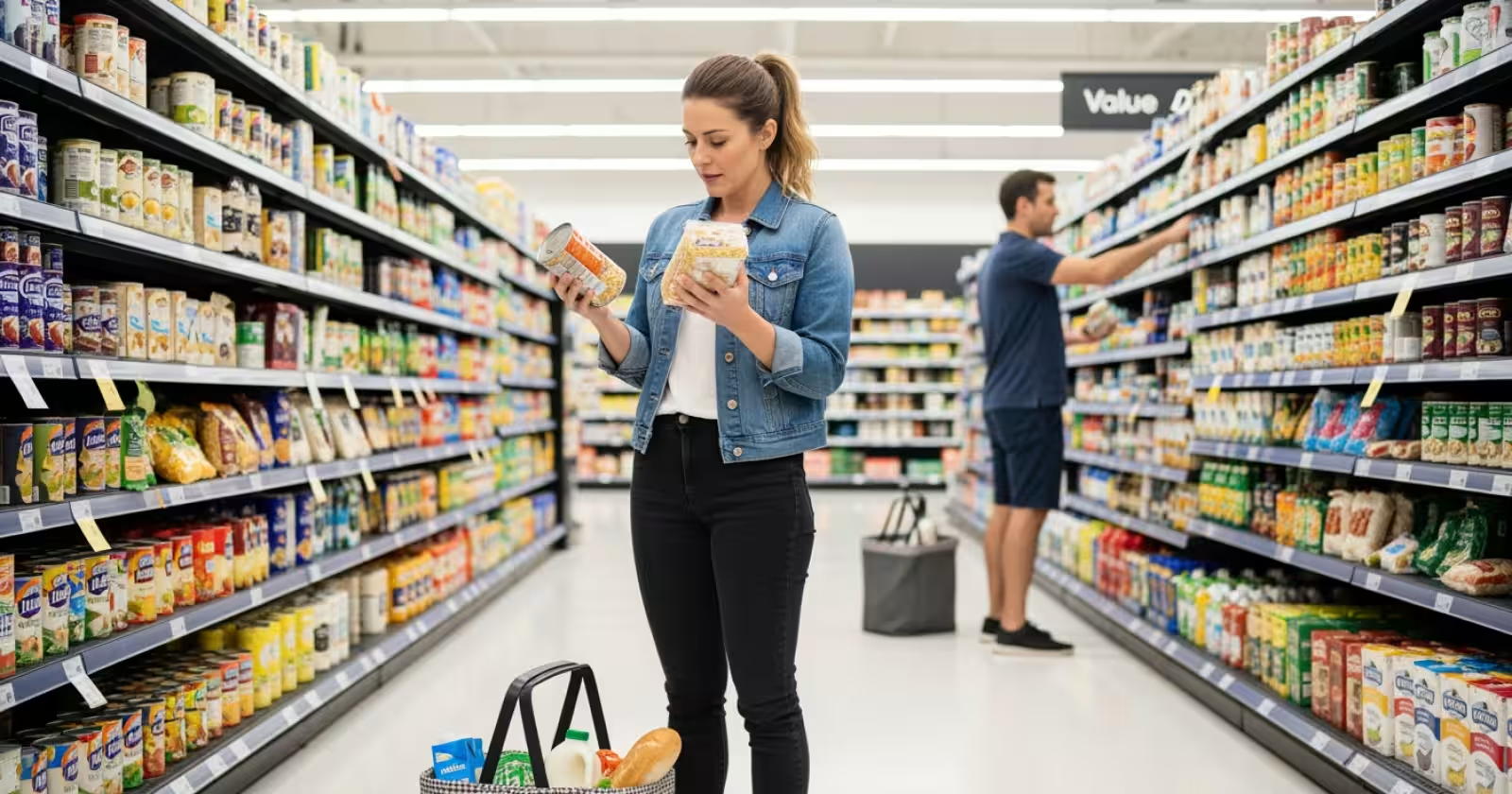
Cost-of-living pressure is no longer just squeezing baskets. It is changing the way Australians plan, compare and buy groceries, and that matters for every supplier chasing share on shelf.
The latest ING Sense of Us 2026 report shows households are trading down, bulk buying and using promotions more deliberately. For FMCG executives, that means the battle is shifting from impulse to planning, with supermarket pricing and value cues doing more of the heavy lifting.
What is driving the shift in grocery buying habits and why it matters for FMCG
I see this story as part consumer sentiment, part retail behaviour. When shoppers feel budget stress, they do not just spend less; they change where and when they shop, which categories they stock up on and how much trust they place in promotions.
That is especially relevant in Australia, where supermarket competition already hinges on value perception, private label growth and promotional depth. A household that switches banners or buys in bulk can move margin across the whole chain, from brand owner to retailer to wholesaler.
The commercial point is simple. If shoppers are planning around price more carefully, brands need to earn their place earlier in the decision process, not just at the shelf edge.
ING Sense of Us 2026 report: the numbers behind cost-conscious grocery shopping
ING surveyed more than 2,000 Australians for the Sense of Us 2026 report. The survey found 83 per cent of respondents regard the cost of living as a major issue, while 88 per cent have noticed higher grocery prices.
At the same time, average grocery spending rose to $169 a week, up from the 2023 report. That does not mean households are comfortable; it suggests many are absorbing higher prices by changing behaviour rather than matching inflation dollar for dollar.
Among respondents, 83 per cent said they have taken steps to reduce weekly expenses. In grocery, the most common responses were switching to lower-priced supermarkets at 31 per cent and buying in bulk at 26 per cent.
That is a meaningful signal for retailers and suppliers. It shows value is not only about a lower shelf ticket, but about basket architecture, pack sizing and promotional timing.
| Behaviour | Survey result | Commercial read-through |
|---|---|---|
| Cost of living seen as a major issue | 83 per cent | Budget pressure remains a dominant shopper lens |
| Noticed higher grocery prices | 88 per cent | Price sensitivity is broad-based, not limited to low-income households |
| Reduced weekly expenses | 83 per cent | Shoppers are actively adjusting the basket |
| Switched to lower-priced supermarkets | 31 per cent | Banner switching remains a direct threat to loyalty |
| Buying in bulk | 26 per cent | Pack-size strategy and stock-up occasions matter more |
A separate YouGov survey commissioned by Shopfully points in the same direction. It found 70 per cent of Australian adults buy at least one product category in bulk during major sales events.
That suggests promotional periods are increasingly being used to plan future purchases of household essentials. In other words, consumers are deciding in advance which categories to stock up on, rather than drifting into the basket at checkout.
How bulk buying and sales events are reshaping the shelf
I think the important detail here is not just that shoppers are hunting value. It is that they are becoming more deliberate about timing, which means promotions now influence the basket earlier in the path to purchase.
For suppliers, that creates pressure on promotional mechanics. A shallow discount may not be enough if households are waiting for a clearer bulk-buy signal, while a strong promotion can pull volume forward and distort the following trading period.
For retailers, the upside is clearer traffic capture during major events. The downside is that value-led behaviour can train shoppers to delay purchases until they expect a deal, which makes everyday full-price sales harder to defend.
Matt Bowen, ING’s head of consumer and market insights, said shoppers are taking a more active role in managing their money, with behaviour shaped by mindset as well as circumstance. Melanie Evans, ING Australia chief executive, said saving has become about everyday wins rather than long-term sacrifice.
That message matters because it frames the shift as structural, not temporary. Once shoppers learn new habits around bulk buying, switching and promotional planning, those habits can stick even if inflation eases.
What this does not change for retailers and suppliers
This does not mean every household is trading down in the same way. The survey still shows 64 per cent of respondents feel positive about the year ahead, and some categories will keep trading on convenience, loyalty or premium cues.
It also does not prove that all grocery growth is now value-led. Average weekly spend has risen, which means baskets are still carrying price inflation, category mix changes or both. The pressure is real, but the response is uneven.
Brands with sharp value propositions, clear pack architecture and credible promotion calendars should benefit first. Retailers with strong private label and disciplined price image will also have an advantage, particularly as shoppers compare banners more aggressively. I expect the next 12 months to reward businesses that treat value as a system, not a single discount mechanic.
Why Australian grocery value battles are likely to intensify
I read this as another sign that Australian grocery is moving deeper into a behaviour-led value cycle. When shoppers plan around bulk buys, lower-priced supermarkets and major sales events, the industry has to compete on anticipation as much as availability.
That raises the stakes for range decisions, promo planning and loyalty design across Coles, Woolworths, Aldi and the wider independent sector. It also makes it harder for brands to rely on passive demand, because the shopper is now actively managing the basket with a sharper eye on savings.
If the current pattern holds, the winners will be the FMCG players that make saving feel effortless, visible and worth repeating.
I would be watching the next round of promotional calendars, private label moves and pack-size decisions closely, because they will tell us who is adapting fastest to the new grocery habit loop. If you work in brand, retail or supply chain, this is the moment to stress-test how your value message actually lands at shelf.