
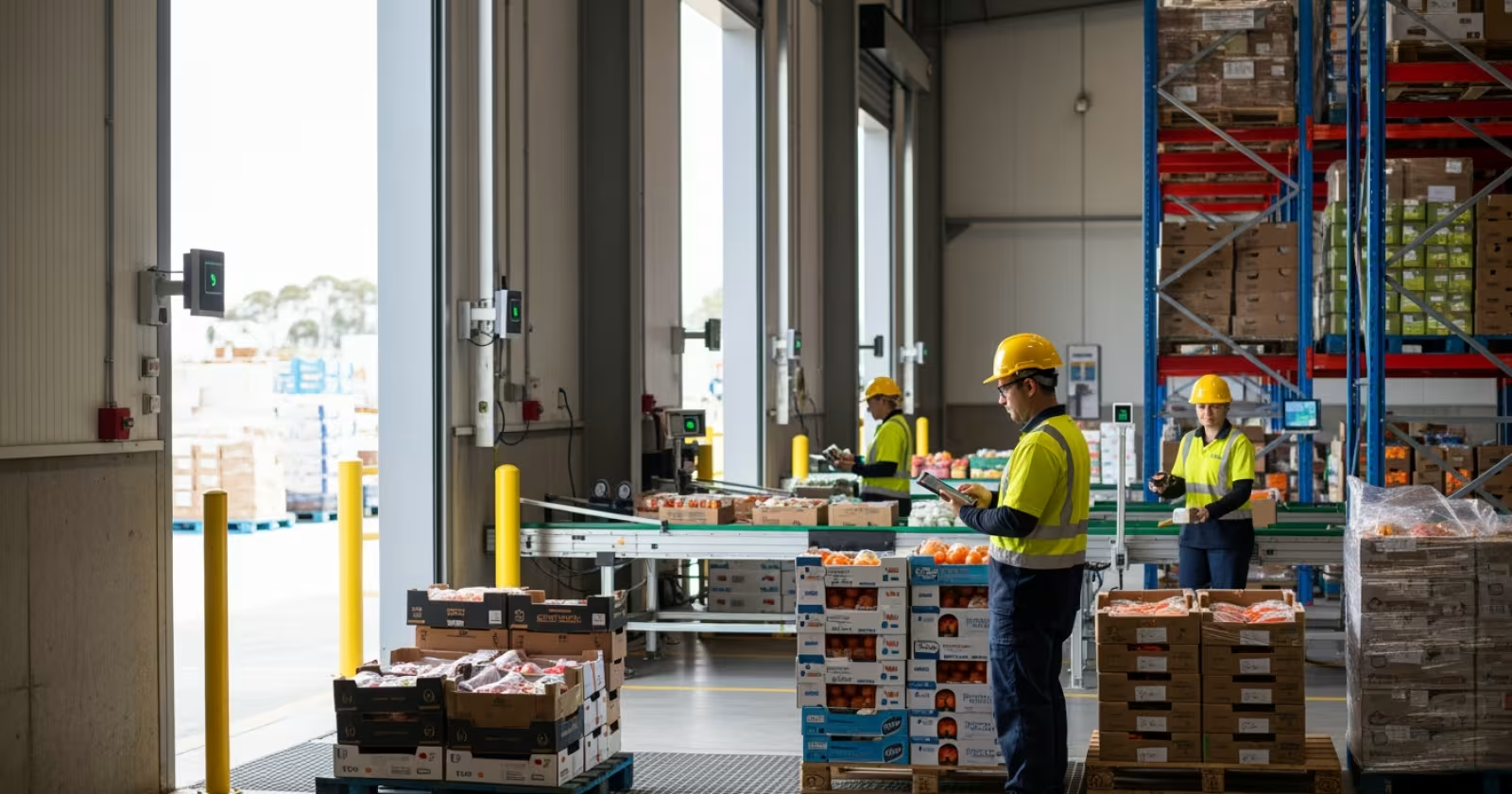
Food waste usually starts as a quality problem, then shows up as a margin problem. AI sensors are now being positioned as one of the few tools that can spot spoilage early enough to stop product from being dumped unnecessarily.
That matters for retailers and suppliers because the cost hits both sides of the shelf. If the technology can scale beyond pilot use, it could change how freshness is monitored in stores, warehouses and transport legs.
What AI sensors mean for food waste in FMCG
In plain terms, AI sensors combine machine learning with sensing tools that can read changes in food quality without destroying the product. That makes them very different from traditional inspection methods, which often rely on manual checks, sampling and slow lab-based testing.
For FMCG businesses, the appeal is simple. Better detection means fewer write-offs, less energy wasted on storing product that is already turning, and lower emissions linked to food loss. In Australia, where supermarkets and suppliers already face pressure to cut waste and improve ESG reporting, that is a commercial issue as much as an environmental one.
Flinders University has put fresh attention on the category through a review led by associate professor Vi-Khanh Truong. The research points to AI-integrated sensing systems as a practical way to improve sustainability outcomes across the supply chain, not just at the point of sale.
Flinders University study on AI sensors and spoilage detection
The study says AI sensors could help retailers and suppliers identify spoilage before products are unnecessarily discarded. It also links the technology to lower greenhouse gas emissions, reduced fuel use and less energy consumption across food operations.
Truong said conventional methods of assessing food quality and safety are often labour-intensive, time-consuming and difficult to scale. He also argued the global food supply chain needs monitoring systems that are accurate, rapid, non-destructive and scalable.
The technologies already being adopted include AI-enabled optical sensors, hyperspectral imaging, electronic noses, spectroscopy tools and IoT-connected sensors. Each tool reads product condition in a different way, but the commercial logic is the same: detect deterioration earlier and act before waste is locked in.
| Technology | What it does | Commercial value |
|---|---|---|
| AI-enabled optical sensors | Read visible signs of quality change | Fast screening in production and retail settings |
| Hyperspectral imaging | Detects hidden changes across light bands | Useful for non-destructive quality assessment |
| Electronic noses | Identify aroma patterns linked to spoilage | Supports early intervention before disposal |
| Spectroscopy tools | Measures product composition and condition | Helps standardise quality checks at scale |
| IoT-connected sensors | Send live data through storage and transport | Improves traceability across the chain |
That mix matters because no single sensor solves every waste problem. A chilled warehouse, a fresh produce line and a supermarket shelf all need different signals, but the same basic idea applies: if you can measure deterioration earlier, you can make a better call on stock.
What this AI sensors research does not change yet
This research does not mean the industry can retire manual checks tomorrow. Costs, integration with existing systems and retailer-specific requirements will still shape where the technology lands first.
It also does not guarantee immediate adoption across Australian grocery. Suppliers will want proof that the data is accurate, repeatable and worth the capital outlay, while retailers will still control how much of the shelf and supply chain they are willing to instrument.
For now, the study is a signal rather than a rollout.
For brands selling fresh, chilled or high-risk products, the likely early winners are the operators already spending heavily on waste, quality assurance and refrigeration. The first gains should come in pilots, then in larger distribution and store environments where the cost of a failed stock decision is high.
Why AI sensors fit the next phase of food waste reduction
I see this as part of a wider shift in FMCG toward preventative, data-led operations. The industry has already squeezed a lot out of traditional efficiency programs, so the next gains are more likely to come from better visibility rather than bigger warehouses or more stock buffer.
That is why AI sensors are more than a tech story. They sit at the intersection of sustainability, supply chain resilience and margin protection, which is exactly where the strongest investment cases in grocery tend to survive. If the systems can prove themselves in live operations, they may become standard kit in the same way temperature monitoring once did.
For teams managing fresh categories, now is the time to map where spoilage is costing money and where sensor data could tighten decisions. The businesses that act early will be the ones best placed to turn food waste from a cost centre into a measurable operational gain.