
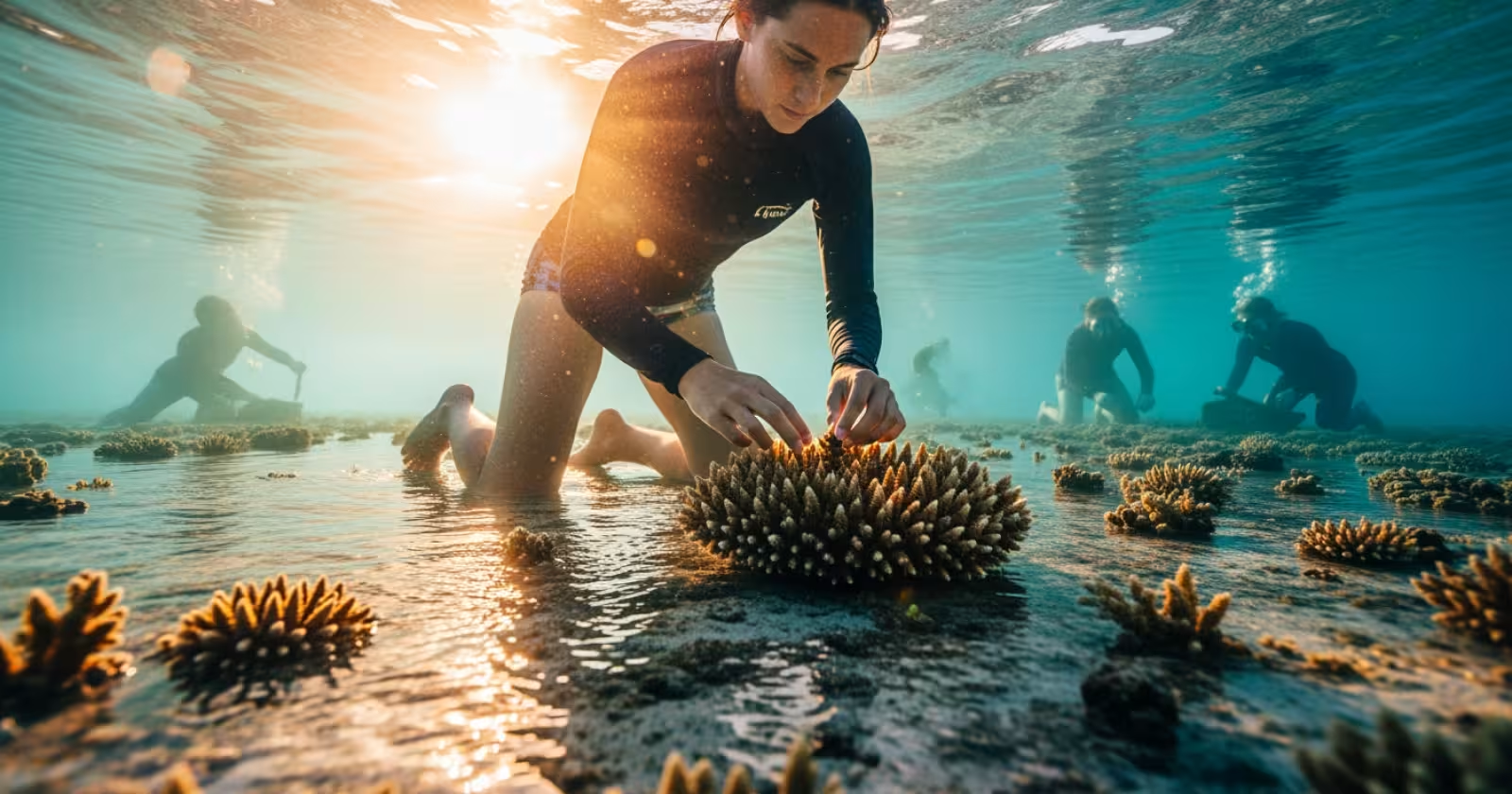
More than 32,000 coral fragments planted. That is the number sitting behind Dine’s bid to turn a supermarket shelf decision into a measurable conservation outcome on the Great Barrier Reef — and it is a harder figure to dismiss than most cause-marketing claims.
What catches my attention here is not the environmental intent, which is straightforward enough. It is the mechanics: a purchasing link to a verifiable reef site, real-time progress updates, and a digital certificate tied to a named location. For brand managers watching how sustainability activation evolves past vague pledges, this structure is worth unpacking.
What Is the Hope Grows Program and Why It Matters for FMCG
Cause-related marketing in the FMCG sector has a credibility problem. Years of vague commitments — “supporting sustainability,” “giving back to the community” — have trained professional buyers and increasingly sceptical consumers to look past the label copy.
What Mars Petcare’s Hope Grows program attempts to do differently is attach each purchase to a traceable, science-backed restoration effort. The program works in partnership with marine scientists and non-government organisations, positioning it upstream of typical brand sponsorship territory.
For Australian FMCG operators, the broader context matters. The Great Barrier Reef carries genuine cultural weight with Australian consumers, and pet care is a category where emotional connection already drives premiumisation. Combining the two is not accidental brand strategy.
Dine and Coles Launch Restoring Our Reefs Across the Great Barrier Reef
Mars Petcare AuNZ has confirmed that Dine cat food has partnered with Coles Group to launch Restoring Our Reefs, a coral restoration initiative operating under the Hope Grows umbrella. The activation is live now, with customers directed to dinehopegrows.com following any Dine purchase.
At that site, customers receive a digital certificate recognising their contribution, along with progress updates from an allocated reef site. Those updates cover reef star installation, coral planting, and related restoration activity in progress.
Field stories and broader program updates are accessible through local partner Citizens of the Reef. Since the Hope Grows program launched, 2,149 reef stars have been installed and 32,235 coral fragments planted across 52 coral species.
Melodie Nye, MD and GM of Mars Petcare AuNZ, framed the initiative in direct terms. “The Great Barrier Reef is part of Australia’s DNA and seeing it under pressure resonates with many Australians,” Nye said. “This initiative gives cat owners a way to support restoration efforts Dine is proud to champion, while feeling connected to the work taking place beneath the surface.”
How the Reef Restoration Activation Works in Practice
The consumer journey is designed to close the gap between purchase and proof. A shopper buys Dine at Coles, visits the dedicated URL, and is linked to a specific reef site — not a generalised fund. That site-level specificity is where the model differs from standard donation-matching programs.
Reef stars are steel structures used to stabilise damaged reef substrate, onto which coral fragments are attached to encourage regrowth. The approach is established in marine restoration science, which gives the program a credibility floor that brand-only conservation claims typically lack.
Citizens of the Reef acts as the on-ground communication partner, providing field stories that keep the consumer loop open beyond the point of purchase.
| Program Metric | Confirmed Figure |
|---|---|
| Reef stars installed | 2,149 |
| Coral fragments planted | 32,235 |
| Coral species covered | 52 |
| Retail partner | Coles Group |
| Consumer touchpoint | dinehopegrows.com |
| On-ground partner | Citizens of the Reef |
What This Initiative Does Not Change
The activation does not alter Dine’s shelf positioning, pricing, or range at Coles — this is a marketing overlay, not a product reformulation or distribution expansion. Suppliers watching for a supply chain or ranging signal will not find one here.
Whether the digital certificate model drives measurable repeat purchase uplift remains unconfirmed. Mars Petcare has not disclosed sales data linked to the Hope Grows program, and any attribution between purchase behaviour and conservation engagement is, for now, internal to the brand.
The initiative also applies to Coles specifically as the named retail partner. No confirmation has been made regarding whether the program extends to other major retailers.
From a margin perspective, the consumer-facing cost of the initiative — digital certificates, site tracking, partner coordination — is absorbed by the brand. Coles carries no disclosed cost obligation.
Who Gains Most and When
Dine benefits most immediately, with a credible environmental narrative at shelf level inside Australia’s second-largest supermarket. For Mars Petcare AuNZ, it reinforces a responsible ownership platform across a category where competitor activity around sustainability is intensifying. Coles gains an ESG-aligned supplier activation that costs nothing on the retailer’s balance sheet. Citizens of the Reef gains program visibility and funding reach tied to commercial volume.
Where Pet Care Sustainability Activation Is Heading
The pet care category in Australia is accelerating faster than most FMCG segments on sustainability messaging, partly because pet owners skew toward the same consumer cohorts driving growth in health, wellness, and ethical sourcing. What Mars Petcare is building with Hope Grows is a replicable infrastructure — a model that connects purchase frequency to verifiable environmental output, rather than one-off sponsorship moments. As regulatory scrutiny of greenwashing claims tightens following enforcement actions across the sector, the shift toward traceable, measurable commitments is not optional for category leaders. It is the minimum standard an informed retail buyer will expect.
If you work in pet care, sustainability, or retail partnerships, the structure of this activation is worth benchmarking against your own cause-marketing approach — because the gap between a vague pledge and a reef star with GPS coordinates is exactly where consumer trust is being won or lost right now.