
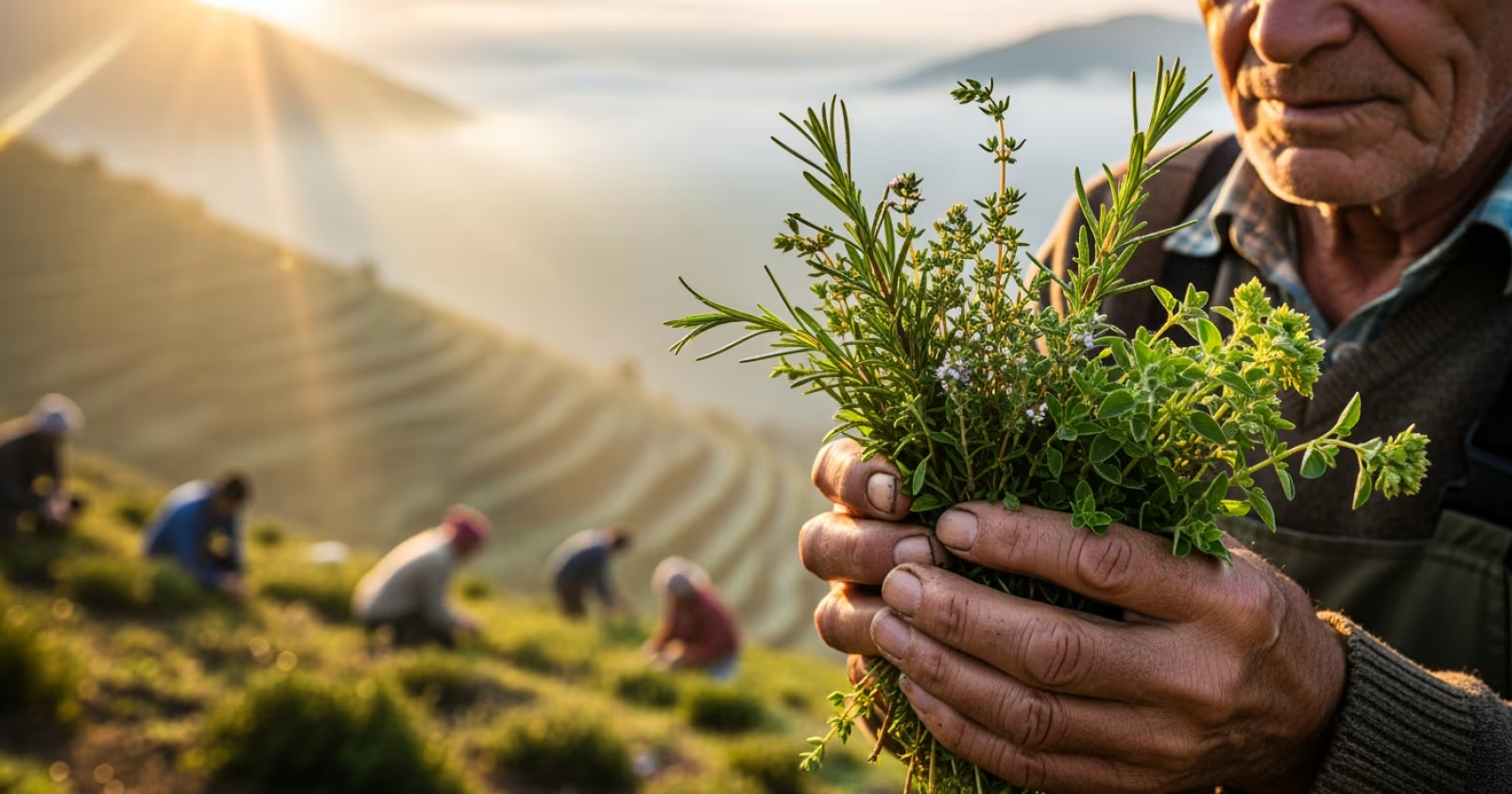
In the winter of 2019, Kamla Devi of Joshimath block in Chamoli district earned ₹1,200 for an entire season’s collection of wild jatamansi roots — a Himalayan herb that high-end wellness brands in Mumbai were retailing for ₹3,500 per kilogram. By 2026, she earns closer to ₹48,000 a season. The difference? A cooperative that decided middlemen had stolen enough from these mountains.
Why Uttarakhand’s Mountain Herbs Matter Beyond the Hills
I first came across this story while researching how India‘s cooperative movement intersects with the booming wellness economy. The Indian herbal and AYUSH market is projected to cross ₹1.5 lakh crore by 2028, yet most Himalayan herb collectors — predominantly women — have historically captured less than 4% of the final retail value. Uttarakhand sits on a botanical goldmine: over 1,700 known medicinal plant species, many of them endemic to altitudes above 3,000 metres. The state’s cooperative infrastructure, though historically weak compared to Gujarat or Maharashtra, has quietly produced one of the most compelling transformation stories in India’s cooperative sector.
From Forest Floors to Federated Power
The roots of this transformation trace back to the early 2000s. Several village-level self-help groups in the Garhwal and Kumaon divisions had been informally collecting herbs — kutki, atis, jatamansi, chirayata, and the high-value keeda jadi (Himalayan caterpillar fungus). But the supply chain was brutally extractive. Traders from the plains would arrive post-monsoon, buy raw herbs at rock-bottom rates, and sell them to pharmaceutical and cosmetic companies at 15-20x markups.
Around 2005, with support from NABARD’s Tribal Development Fund and the National Medicinal Plants Board, a cluster of village cooperatives in Chamoli and Pithoragarh began federating. The idea was simple but radical for these remote valleys: collective bargaining, shared drying and grading infrastructure, and direct linkage to end buyers. By 2010, approximately 140 primary societies across six districts had come together under a federated cooperative structure that I’ll refer to here as the Uttarakhand mountain herbs cooperative network, since the actual federation operates through multiple registered entities.
The National Cooperative Development Corporation (NCDC) provided critical early-stage capital — roughly ₹12 crore in soft loans between 2008 and 2013 — for setting up solar drying units at altitude, a processing centre in Gopeshwar, and a rudimentary quality testing lab.
How the Cooperative Model Actually Works
Here’s what I find genuinely impressive about the structure. At the village level, each primary cooperative has between 30 and 80 members, mostly women. Members collect wild herbs during the permitted season (regulated by the Uttarakhand Forest Department to prevent overharvesting) and bring them to common collection centres. The cooperative handles grading, drying, and packaging — three steps that historically destroyed value when done poorly by individual collectors.
The federated body then negotiates directly with buyers: AYUSH pharmaceutical companies, wellness brands, export houses, and increasingly, direct-to-consumer channels. By cutting out three layers of middlemen, the cooperative has managed to return approximately 38-45% of the final sale price to collectors — up from that abysmal 4% a decade ago.
Revenue has scaled dramatically. The cooperative network’s combined turnover was approximately ₹85 crore in 2020. By 2024-25, that figure had reportedly crossed ₹400 crore, driven by three factors: the post-pandemic wellness boom, GI Tag applications for specific Uttarakhand herbs, and the cooperative’s own branded product line launched in 2022.
| Parameter | 2015 | 2020 | 2026-26 (Est.) |
|---|---|---|---|
| Member Households | 3,200 | 8,500 | 18,000+ |
| Annual Turnover (₹ Crore) | 18 | 85 | 400+ |
| Collector’s Share of Retail Price | 8% | 28% | 38-45% |
| Processing Centres | 3 | 9 | 22 |
| Districts Covered | 3 | 6 | 9 |
| Branded Products (SKUs) | 0 | 4 | 35+ |
What Threatens This Growth Story
Not everything is smooth sailing at 3,000 metres. The cooperative faces at least three serious headwinds. First, climate change is shifting the altitude bands where key species grow. Jatamansi, which once thrived at 3,200 metres in Chamoli, is now found reliably only above 3,600 metres — making collection harder and more dangerous for ageing collectors. Second, the regulatory framework around wild herb collection remains tangled. Forest department permits, biodiversity board clearances, and CITES restrictions on certain species create compliance burdens that a cooperative can manage but that discourage younger members.
Third — and this is the concern I hear most often from cooperative sector watchers — political capture. As the cooperative’s revenue has grown, local political figures have shown increasing interest in its governance. Two board elections in the past four years have been contested along party lines, a pattern that has historically damaged cooperatives across India.
A Comparison That Sharpens the Point
Consider Nepal’s Himalayan Bio Trade model, where a similar network of community-managed enterprises exports wild herbs worth approximately $12 million annually. Nepal’s cooperatives benefit from clearer forest tenure rights and a more streamlined export regime. Uttarakhand’s cooperative, despite operating in a far larger domestic market, still exports less than 8% of its output because AYUSH export certifications remain cumbersome. The lesson is clear: cooperative energy alone isn’t enough. Policy infrastructure must match the ambition of the members.
What the Next Five Years Look Like
The Ministry of Cooperation’s push to digitise and strengthen primary cooperative societies — including the ambitious plan to revive PACS as multi-service centres — could be transformative for this network. If mountain herb cooperatives are integrated into the PACS digitisation drive, members could access crop insurance equivalents for wild harvest, direct benefit transfers, and formal credit lines from NABARD.
The cooperative is also piloting blockchain-based traceability for its premium export line, allowing end buyers in Europe and Japan to trace a packet of kutki powder back to the specific valley and collector cooperative it came from. If this works at scale by 2028, it could command a 20-30% price premium in international markets.
Back to the Mountains
Kamla Devi, the collector I mentioned at the start, now leads a 52-member primary society in her village. Her daughter studies pharmaceutical sciences in Dehradun — funded entirely by cooperative dividends and collection income. When I think about what the cooperative movement can achieve in India’s most marginalised geographies, this is the image that stays with me: not a government scheme brochure, but a woman at 3,400 metres who finally earns what her labour is worth.
If you work in the cooperative sector, study it, or simply believe that collective action can still reshape rural economies, I’d encourage you to look closely at what Uttarakhand’s mountain herb cooperatives have built. Follow IICTF for more stories like this — and if you have a cooperative story from your own district, share it. The movement grows when we document it honestly.