
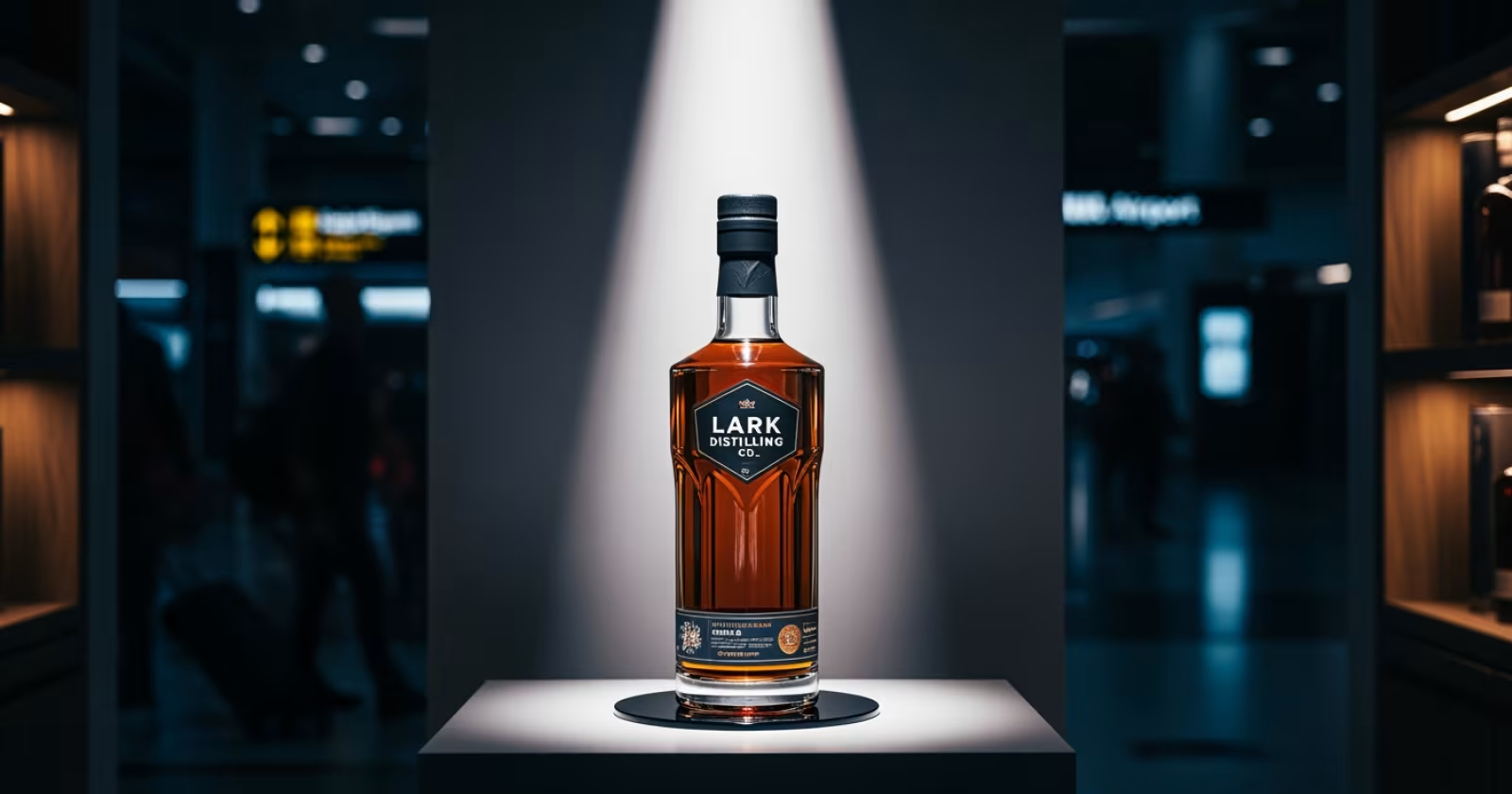
Travel retail can still change a whisky brand’s trajectory fast, and Lark Distilling Co has just shown how. A Sydney airport pop-up has taken the Tasmanian distiller from niche prestige player to the top of the single malt category at the terminal, which is a meaningful signal for any premium spirits supplier watching shelf conversion and traveller spend.
The activation sits inside Heinemann Tax & Duty Free and is built around Lark’s new 700ml Single Malt lineup. For FMCG teams, the commercial point is simple: airport space can deliver both volume and brand theatre if the range, story and display are aligned tightly enough.
What Is Lark Distilling Co Sydney Airport Pop-Up and Why It Matters for FMCG
Lark’s Sydney airport pop-up is a travel retail activation designed to sell and showcase the distiller’s latest whisky release to departing and transiting passengers. It matters because airport retail rewards brands that can justify premium pricing with clear provenance, strong gifting appeal and a simple point of difference.
In spirits, that often means a narrower range can outperform a wider one. Travellers are buying with less time, less brand familiarity and more impulse, so the brands that win are the ones that can explain themselves quickly and still feel premium.
For the broader FMCG market, this is another reminder that travel retail remains a useful proving ground for premium alcohol, especially when domestic grocery shelves are crowded and discount pressure is heavy.
Lark Distilling Co’s Sydney Airport Pop-Up and the Travel Retail Push
The company said the campaign will run throughout this month and continue until the end of June. It is located at Heinemann Tax & Duty Free at Sydney Airport and features Lark’s Tasmanian collection alongside its new 700ml Single Malt range.
The activation includes three travel-exclusive Tasmanian single malt whiskies: Cinder Forest No168, Wild Haven No 172 and Ember Eclipse No 294. Lark said these are produced using a multi-cask method that draws on fortified-wine casks from Seppeltsfield Wines, plus rum and cognac finishes.
The display also carries Devil’s Storm No 183 and Ruby Abyss No 285, both of which received design accolades at the World Whiskies Awards 2026. Lark said that since the campaign began, it has moved to first place in the single malt category and third overall in the airport alcohol category, up from 17th in the same period last year.
| Item | Confirmed detail | Commercial relevance |
|---|---|---|
| Venue | Sydney Airport, Heinemann Tax & Duty Free | High-footfall travel retail exposure |
| Campaign timing | This month through to the end of June | Extended selling window for premium conversion |
| Core range | 700ml Single Malt lineup | Supports broader premium whisky positioning |
| Travel-exclusive SKUs | Cinder Forest No168, Wild Haven No 172, Ember Eclipse No 294 | Creates exclusivity and gifting appeal |
| Recognition | Devil’s Storm No 183 and Ruby Abyss No 285 won design accolades at World Whiskies Awards 2026 | Strengthens shelf story and shopper confidence |
That ranking jump matters because airport liquor shoppers are often a proxy for how well a premium brand can convert curiosity into purchase. If the product architecture is right, the store environment can do some of the selling that media spend usually has to cover elsewhere.
How the Activation Works on the Shelf and in the Terminal
I see this as a carefully staged retail story rather than a simple product drop. Lark is using limited exclusives, award cues and a distinct Tasmanian identity to create a mini brand world inside the airport, which helps justify the premium price tier.
The multi-cask method is part of that pitch. Fortified-wine casks, rum finishes and cognac finishes give the whiskies enough technical language for enthusiasts, while the packaging and airport setting do the rest for less engaged shoppers.
Heinemann’s role also matters. Airport duty free is not the same as supermarket retail, where scale and price elasticity dominate. In travel retail, presentation, scarcity and story can matter as much as the liquid in the bottle.
What This Lark Distilling Co Sydney Airport Pop-Up Does Not Change
Even a strong airport result does not mean the brand has solved its broader distribution challenge. The campaign only covers one channel, and it does not tell us how the range will perform in domestic off-trade, bars or wider export markets.
It also does not reveal the economics behind the activation. Terms were not disclosed, so there is no public detail on margin, listing support or promotional spend.
The ranking claim is encouraging, but it is still a channel-specific snapshot. Airport success can be real without translating automatically into national share.
Still, there is a clear near-term benefit for Lark, Heinemann and any premium supplier studying the airport aisle. The brand gains visibility now, while the retailer gets a differentiated Australian story to push through a high-value gifting corridor over the next few months.
Why Travel Retail Matters More for Premium Spirits in 2026
This looks like another sign that premium spirits brands are leaning harder into curated, channel-specific retail to defend price and build desire. In a market where consumers are selective and trade spend is under pressure, the airport gives brands a way to sell scarcity without looking inaccessible.
For Australian whisky in particular, the opportunity is obvious. Local provenance, award recognition and a strong design story travel well, and Lark is leaning into all three at once. That is a sensible move when attention is scarce and premium shelf space is expensive to win.
For me, the key lesson is that travel retail is no longer just a souvenir channel. It is a strategic stage for brand building, and Lark Distilling Co has used the Sydney airport pop-up to show how quickly that stage can lift a category position.
If the run holds through June, more premium spirits brands will start treating airport space less like an add-on and more like a serious route to market.