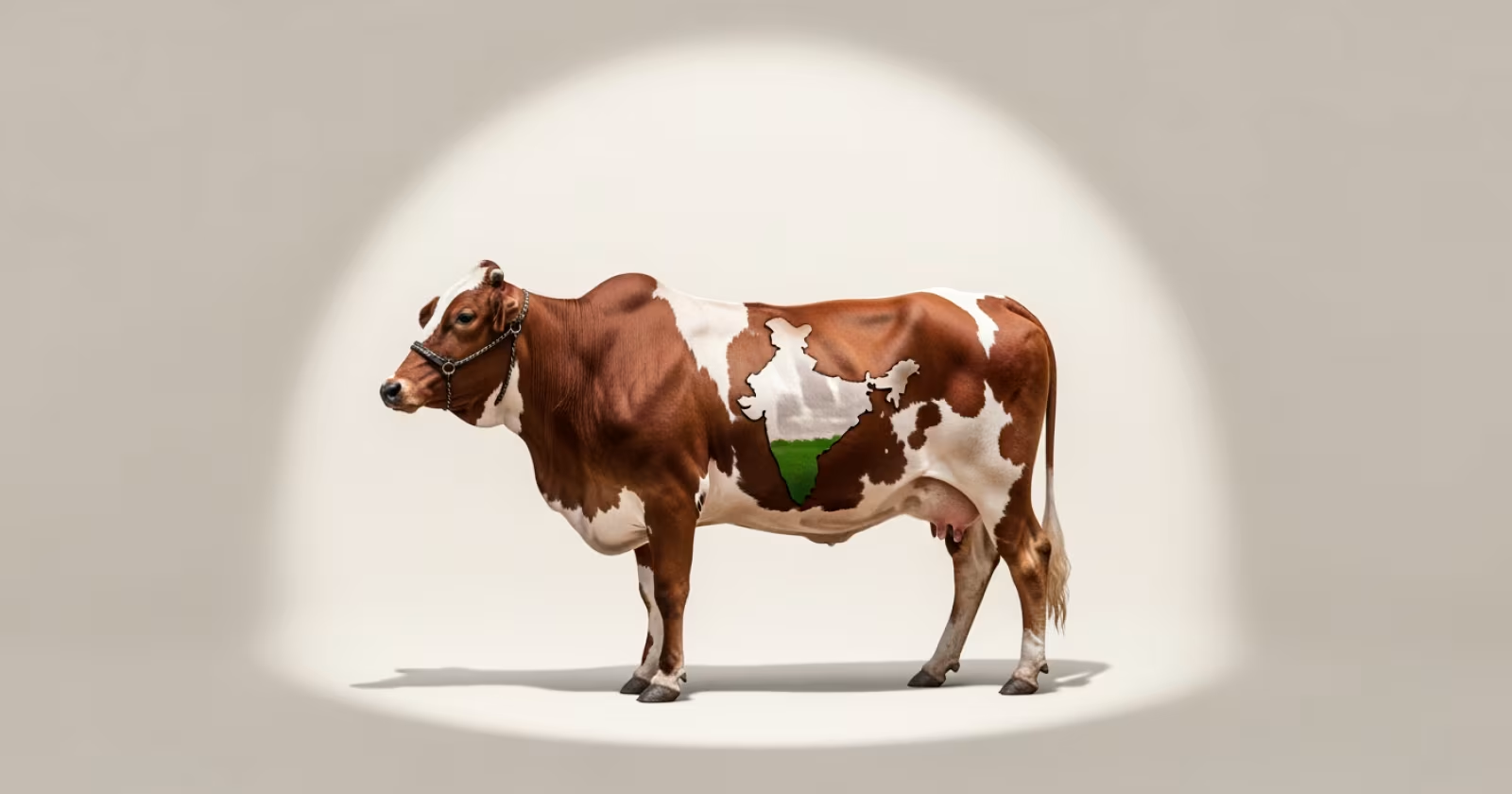
Most dairy farmers in India work hard every single day but still struggle to grow their business — not because opportunities don’t exist, but because the right information never reaches them in time. The problem is not that schemes don’t exist — it’s that most people never understand how to use them.
In 2026, the Indian government continues to run several strong support programs for dairy farmers covering loans, subsidies, infrastructure, and breed improvement. Here is a clear, honest breakdown of what is available and how you can actually access it.
Quick Answer: What Support Is Available for Dairy Farmers?
This is not a single government scheme. Dairy farmers in India can benefit from a combination of different schemes run by central ministries, NABARD, NDDB, and state governments. Depending on your situation, you may be eligible for capital subsidies ranging from 25% to 33%, soft loans, breed improvement support, and infrastructure funding. The key is knowing which scheme fits your need.
| Scheme Name | Benefit | Subsidy / Interest | Who Can Apply | Apply Mode |
|---|---|---|---|---|
| Dairy Entrepreneurship Development Scheme (DEDS) | Loan for dairy unit setup | 25%–33% capital subsidy via NABARD | Farmers, SHGs, cooperatives | Through scheduled banks / NABARD |
| Kisan Credit Card (KCC) for Animal Husbandry | Short-term working capital | Approx. 4%–7% interest (bank-dependent) | Individual farmers with livestock | Nearest bank branch |
| Rashtriya Gokul Mission | Breed improvement, Gokul Grams | Fully government-funded program | Farmers with indigenous cattle | State Animal Husbandry Dept. |
| Animal Husbandry Infrastructure Development Fund (AHIDF) | Loan for dairy processing infrastructure | 3% interest subvention | Cooperatives, FPOs, private dairy units | Udyami Mitra portal / banks |
| PM Matsya Sampada Yojana (Dairy Component) | Support for integrated farming | State-specific subsidy | Small and marginal farmers | State government portals |
Dairy Entrepreneurship Development Scheme (DEDS)
DEDS is one of the most well-known central schemes for dairy farmers. It is implemented through NABARD and provides back-ended capital subsidies to help farmers set up small dairy units, purchase milch animals, or build milk processing infrastructure.
The subsidy is approximately 25% of the project cost for general category applicants and around 33% for SC/ST farmers. The loan itself comes from a scheduled commercial bank or regional rural bank. NABARD releases the subsidy after the bank disburses the loan and the unit becomes operational.
Important: the subsidy is not given upfront. It is deposited in a locked account and adjusted against your loan after a defined period. Many farmers misunderstand this and feel the scheme did not work — it did, just not the way they expected.
Kisan Credit Card for Livestock and Dairy
The Kisan Credit Card scheme was expanded to cover animal husbandry and dairy activities. If you own milch animals, you can apply for a KCC to meet day-to-day expenses like feed, veterinary costs, and labour.
The credit limit depends on the number and type of animals you own. Interest rates are approximately 4% per annum for loans up to ₹3 lakh if repaid on time, due to the government’s interest subvention support. Actual rates vary by bank and repayment record.
Rashtriya Gokul Mission
This scheme focuses specifically on the conservation and development of indigenous cattle breeds. Under Rashtriya Gokul Mission, the government funds Gokul Grams — integrated cattle development centres — and supports farmers who rear indigenous breeds like Gir, Sahiwal, and Tharparkar.
Farmers benefit through access to high-quality bulls for natural service, subsidised artificial insemination, and training programs. This scheme does not provide direct cash to individual farmers but improves the productivity and value of their herd over time.
Animal Husbandry Infrastructure Development Fund (AHIDF)
AHIDF was set up with a corpus of ₹15,000 crore to support investment in dairy processing, meat processing, and animal feed infrastructure. It is more relevant for cooperatives, Farmer Producer Organisations (FPOs), and private dairy entrepreneurs than for individual small farmers.
Eligible entities can get loans at a 3% interest subvention for up to 10 years. Applications are processed through the Udyami Mitra portal or directly through scheduled banks empanelled under the scheme.
Who Can Apply for These Schemes
- Individual farmers owning milch cattle or buffaloes
- Self Help Groups (SHGs) involved in dairy activities
- Dairy cooperatives and milk producer companies
- Farmer Producer Organisations (FPOs)
- SC/ST farmers (eligible for higher subsidy in DEDS)
- Women farmers (priority in many state-level dairy schemes)
- Rural youth setting up new dairy units
Documents You Will Typically Need
- Aadhaar card and PAN card
- Land ownership or lease documents
- Bank account details (passbook copy)
- Caste certificate (if applying under SC/ST category)
- Project report or business plan (for DEDS and AHIDF)
- Animal ownership proof or purchase invoice
- Passport-size photographs
How to Apply — Step by Step
For DEDS and KCC, the process starts at your nearest bank branch — preferably a nationalised bank, regional rural bank, or cooperative bank that handles agricultural loans. Carry all documents listed above and ask specifically for the scheme you want to apply under.
For Rashtriya Gokul Mission benefits, contact your district’s Animal Husbandry Department or the nearest Krishi Vigyan Kendra. They will guide you to the nearest Gokul Gram or artificial insemination centre.
For AHIDF, visit the Udyami Mitra portal (udyamimitra.in) or approach a scheduled bank with your project report. The bank evaluates the proposal and forwards it for interest subvention approval.
Reality Check — What Actually Happens on the Ground
Many farmers apply for DEDS and wait months without hearing back. In many cases, the delay is at the bank level — not the government. Banks are cautious about dairy loans because repayment depends on milk prices, which fluctuate. If your credit history is weak or your land documents are unclear, approval can take very long or get rejected.
Common rejection reasons include incomplete project reports, no prior banking relationship, unclear land ownership, and low milk procurement rates in the area. The subsidy under DEDS is also back-ended, meaning you carry the full loan burden initially — this surprises many first-time applicants.
State-level schemes vary significantly. What is available in Gujarat or Punjab may not be active in your state. Always verify with your district agriculture or animal husbandry office before assuming a scheme applies to you.
A Practical Example
For example, a farmer in Uttar Pradesh with 5 buffaloes and a small shed can apply for a DEDS loan of approximately ₹5–7 lakh to expand to a 10-animal unit. If approved, the bank disburses the loan, and after the unit is operational, NABARD releases a back-ended subsidy of around 25% — roughly ₹1.25–1.75 lakh — which gets adjusted against the outstanding loan. The farmer’s effective loan burden reduces over time.
This is not a guaranteed outcome. Actual amounts depend on the bank’s assessment, project cost, and NABARD’s verification. But in many cases, this is how the process works for eligible applicants.
What You Should Do Next
If you are a dairy farmer looking to grow your operation in 2026, start by visiting your nearest bank branch and your district Animal Husbandry Department in the same week. Ask about DEDS eligibility and KCC for livestock. Get your documents in order — especially land papers and Aadhaar. If you are part of a cooperative or SHG, explore AHIDF as a group. The schemes exist, the money is allocated, and the process is real — but it rewards those who show up prepared and ask the right questions.