
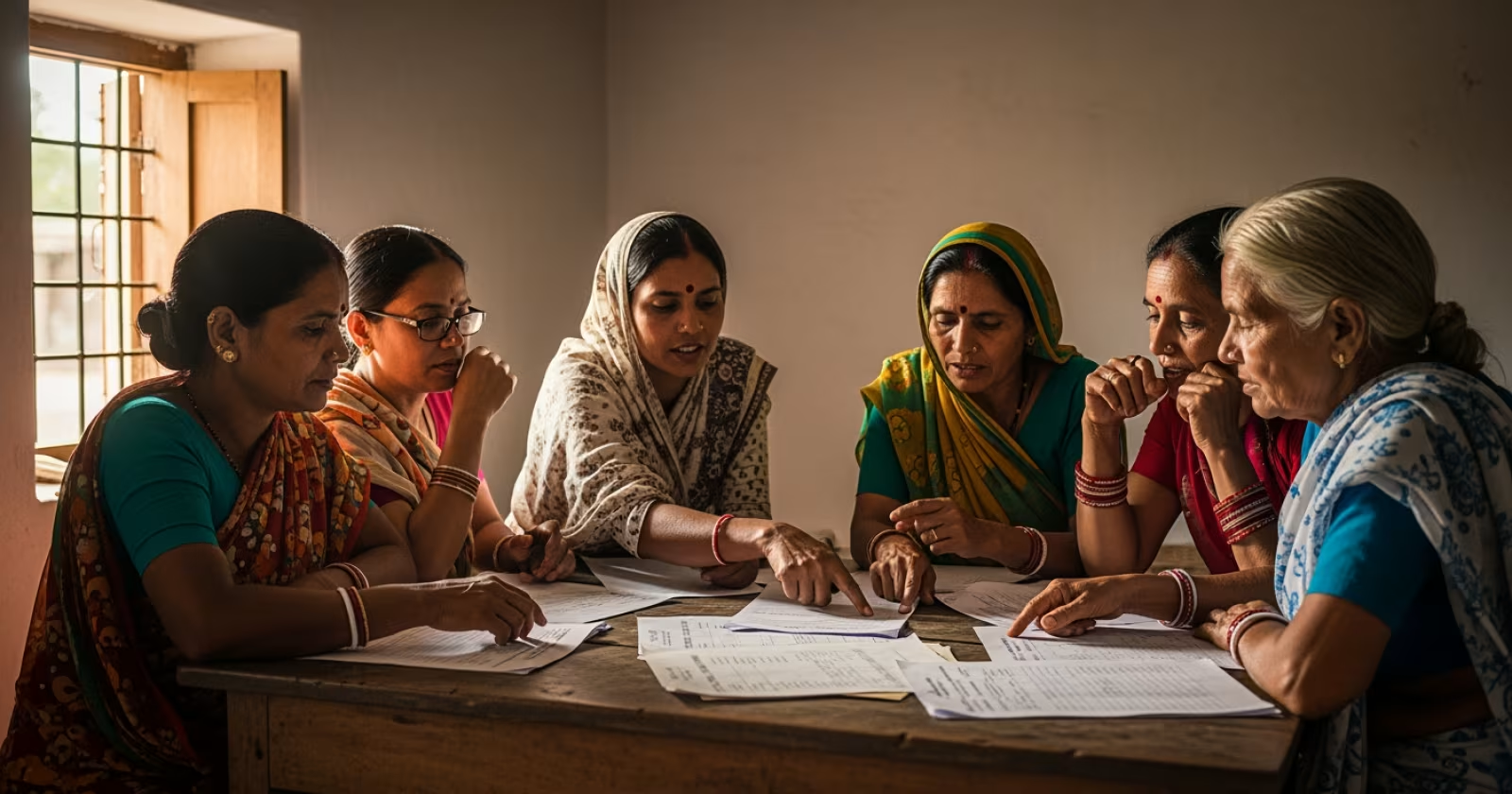
India‘s handloom sector employs over 31 lakh weavers and allied workers, yet most of them struggle with fluctuating incomes and limited market reach. The cooperative model has been one of the most reliable pathways for these artisans to secure fair prices, access subsidized raw materials, and gain visibility in both domestic and international markets. I’ve spent years tracking how cooperatives reshape the livelihoods of rural weavers, and the story is both inspiring and practically useful for anyone considering membership.
Why Handloom Cooperatives Matter for Indian Weavers
Handloom cooperative societies are voluntary, member-owned organizations registered under state cooperative acts or the Multi-State Cooperative Societies Act, 2002. They pool resources from individual weavers, negotiate collectively for raw materials like yarn and dyes, and market finished products under unified branding. This collective bargaining power is something an individual weaver operating from a village simply cannot achieve alone.
The Ministry of Textiles, Government of India, has historically anchored its welfare programs around the cooperative structure. Schemes like the National Handloom Development Programme (NHDP) channel subsidies, design inputs, and technology upgrades primarily through registered cooperative societies. Without cooperative membership, many weavers remain invisible to government support systems, missing out on direct benefit transfers and credit linkages.
State-level apex cooperatives such as Co-optex in Tamil Nadu, Boyanika in Odisha, and Tantuja in West Bengal have built strong retail networks, including showrooms in major cities and e-commerce portals. These bodies aggregate handloom output from hundreds of primary cooperative societies, giving village-level weavers access to urban and export markets they could never penetrate independently.
Key Benefits of Joining a Handloom Cooperative Society
The advantages of cooperative membership go well beyond just marketing support. I find that weavers who join cooperatives experience tangible financial and social improvements within the first two to three years. Here are the most significant benefits structured for clarity:
- Subsidized supply of yarn and raw materials through the National Handloom Development Corporation (NHDC), often at 10–15% below market rates.
- Access to credit facilities and working capital loans facilitated through NABARD refinance schemes at concessional interest rates.
- Insurance coverage under the Handloom Weavers’ Comprehensive Welfare Scheme, including health insurance and life cover up to ₹60,000.
- Design and technology support through government-funded Weavers’ Service Centres for product diversification.
- Participation in national and international trade fairs, expos, and Handloom Expos organized by the Ministry of Textiles.
- Eligibility for thrift fund contributions where the government matches the weaver’s savings under specific schemes.
Beyond these direct benefits, cooperative membership creates a social safety net. Weavers gain a collective identity, which helps in advocacy before district administrations and block-level planning committees. Women weavers, who constitute nearly 70% of the handloom workforce according to the Fourth All India Handloom Census, particularly benefit from the structured support that cooperatives provide.
Structure and Types of Handloom Cooperative Societies
Handloom cooperatives in India generally operate at three tiers. At the base are primary weaver cooperative societies (PWCS), which are village or cluster-level bodies with anywhere from 50 to 500 weaver members. These primary societies handle day-to-day procurement, production coordination, and wage payments. Above them sit district-level cooperative unions, and at the apex are state handloom cooperative apex societies that manage branding, showrooms, and large-scale procurement contracts.
Some cooperatives specialize in a single product—Pochampally ikat, Banarasi silk, Chanderi, or Sambalpuri—while others handle diversified product lines. Specialized cooperatives often secure Geographical Indication (GI) tags for their products, which adds legal protection and market premium. The GI tag system has been particularly beneficial for cooperatives producing Kanchipuram silk, Pashmina, and Muga silk from Assam.
| State | Apex Cooperative | Primary Societies (Approx.) | Key Products |
|---|---|---|---|
| Tamil Nadu | Co-optex | 900+ | Kanchipuram Silk, Cotton Sarees |
| Odisha | Boyanika | 400+ | Sambalpuri, Ikat, Bomkai |
| West Bengal | Tantuja | 600+ | Jamdani, Baluchari, Tant |
| Andhra Pradesh | APCO | 500+ | Mangalagiri, Uppada, Pochampally |
| Uttar Pradesh | UPICA | 350+ | Banarasi Silk, Chikan |
| Assam | Artfed | 300+ | Muga Silk, Eri Silk, Gamosa |
Step-by-Step Process to Join a Handloom Cooperative
Joining a handloom cooperative society is straightforward, though the exact procedures vary slightly by state. I’ve outlined the general process that applies across most Indian states, based on provisions under state cooperative acts and guidelines issued by the Registrar of Cooperative Societies.
First, identify the primary weaver cooperative society nearest to your location. You can do this by visiting the District Industries Centre (DIC), contacting the Assistant Director of Handlooms in your district, or checking the Ministry of Textiles handloom portal. Many state cooperative apex bodies also maintain directories of affiliated primary societies on their official websites.
Once you identify a suitable cooperative, obtain a membership application form from the society’s office. You will need to provide proof of identity (Aadhaar card), proof of address, evidence that you are a practicing handloom weaver or allied worker, and a passport-size photograph. Some cooperatives require an endorsement from an existing member or the village panchayat head confirming your weaving background.
Submit the completed form along with the prescribed membership fee and share capital contribution. Share capital varies from ₹100 to ₹1,000 depending on the cooperative’s bylaws. The managing committee of the cooperative reviews applications and grants membership, usually within 30 to 60 days. Once admitted, you receive a membership certificate and become eligible for all scheme benefits routed through the cooperative.
Government Schemes Accessible Through Cooperative Membership
In 2026, several central and state government schemes remain active for handloom weavers who are members of registered cooperatives. The NHDP continues to provide block-level cluster development funding, covering costs for loom upgrades, new designs, and marketing events. The Yarn Supply Scheme operated through NHDC ensures that cooperatives receive quality yarn at mill-gate prices, eliminating middlemen who typically inflate costs by 20–30%.
NABARD’s refinance window for handloom cooperatives allows state cooperative banks and regional rural banks to extend credit at reduced interest rates, typically 2–4% below standard commercial lending rates. Additionally, the Mahatma Gandhi Bunkar Bima Yojana provides life and accident insurance to weavers enrolled through cooperatives, with the government bearing the majority of the premium cost.
State-specific schemes add another layer of support. Tamil Nadu’s free saree and dhoti distribution program, for example, sources a significant portion of its material from Co-optex-affiliated cooperatives, guaranteeing bulk orders for member weavers. Odisha’s Boyanika regularly participates in international fairs in Europe and Southeast Asia, giving its members exposure to export markets.
Challenges Facing Handloom Cooperatives and How to Navigate Them
Despite the clear advantages, handloom cooperatives face real challenges. Dormant or inactive primary societies are a persistent problem—according to government data, nearly 40% of registered PWCS are non-functional due to poor management, lack of working capital, or dwindling membership. Before joining, I recommend verifying whether the cooperative is actively operational by checking its last audit report with the Registrar of Cooperative Societies.
Another issue is delayed payments. Some cooperatives take 60–90 days to pay weavers after accepting finished goods, which creates cash flow problems for families dependent on daily or weekly income. Prospective members should inquire about the payment cycle and whether the cooperative has a revolving fund to ensure timely disbursements. Well-managed cooperatives like Co-optex and Boyanika have addressed this through digital payment systems and dedicated working capital funds.
If you are a handloom weaver or someone connected to the weaving community, I strongly encourage you to explore cooperative membership as your next step. Visit your nearest District Industries Centre, ask about active primary societies in your area, and take advantage of the government schemes designed specifically for cooperative members. The handloom tradition thrives when weavers organize collectively—and this is the most practical way to protect your craft while improving your livelihood.