
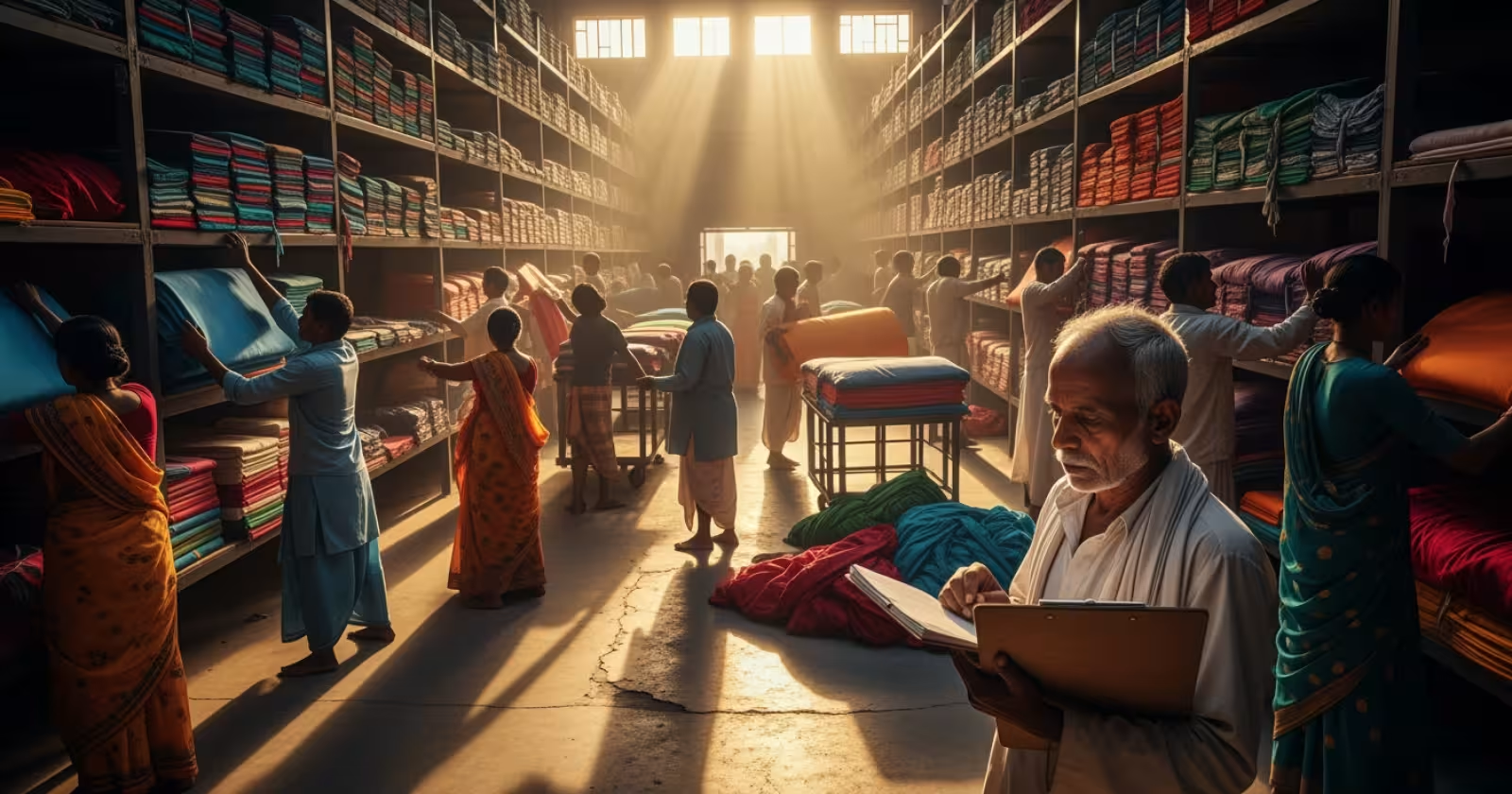
India‘s textile sector employs over 45 million people directly, and a significant share of that workforce operates through cooperative structures that protect artisan livelihoods. I have spent considerable time mapping these cooperatives across states, and the sheer scale of organization — from tiny village-level primary societies to apex marketing federations — is genuinely remarkable. If you are a weaver, designer, policy researcher, or entrepreneur looking to connect with textile cooperatives, this directory will serve as your go-to reference.
Role of Cooperative Structures in India’s Textile Sector
Cooperative societies have been the backbone of handloom and powerloom production since India’s independence. The cooperative model allows small weavers to pool resources, access raw materials at fair prices, and market finished goods collectively. The Ministry of Textiles has consistently supported these bodies through subsidized yarn supply, design upgradation, and marketing assistance under schemes like the National Handloom Development Programme (NHDP).
Primary weaver cooperative societies operate at the village and block level, while district-level and state-level apex societies coordinate procurement, branding, and retail. As of 2026, India has over 25,000 registered primary handloom cooperative societies, with the highest concentration in Andhra Pradesh, Tamil Nadu, Assam, and Uttar Pradesh. Registration is governed either by respective State Cooperative Societies Acts or the Multi-State Cooperative Societies Act, 2002 for bodies operating across state boundaries.
Major State-wise Apex Textile Cooperatives
Each state with a significant handloom or powerloom base typically has an apex cooperative society that anchors the entire value chain. These apex bodies procure yarn from agencies like the National Handloom Development Corporation (NHDC), distribute it to primary societies, collect finished fabric, and sell it through their own retail showrooms or e-commerce platforms. Below is a consolidated directory of key apex textile cooperatives across major states.
| State | Apex Cooperative | Headquarters | Key Product Focus |
|---|---|---|---|
| Tamil Nadu | Co-optex (Tamil Nadu Handloom Weavers’ Cooperative Society) | Chennai | Silk sarees, cotton fabrics |
| Andhra Pradesh | APCO (AP State Handloom Weavers’ Cooperative Society) | Hyderabad / Amaravati | Mangalagiri, Uppada sarees |
| Telangana | Telangana State Handloom Weavers’ Cooperative Society | Hyderabad | Pochampally ikat, Gadwal sarees |
| Kerala | Hantex (Kerala State Handloom Weavers’ Cooperative Society) | Thiruvananthapuram | Kasavu mundu, set sarees |
| Assam | Assam Apex Weavers’ Cooperative Society (Artfed) | Guwahati | Muga silk, Eri silk |
| Uttar Pradesh | UP State Handloom Corporation / cooperative federations | Lucknow | Banarasi brocade, Chikankari |
| West Bengal | Tantuja (Bengal State Handloom Weavers’ Cooperative Society) | Kolkata | Jamdani, Baluchari, Tant sarees |
| Odisha | Boyanika (Odisha State Handloom Weavers’ Cooperative Society) | Bhubaneswar | Sambalpuri ikat, Bomkai |
| Karnataka | Karnataka Handloom Development Corporation | Bengaluru | Ilkal, Molakalmuru silk sarees |
| Madhya Pradesh | MP State Handloom Weavers’ Cooperative Union | Bhopal | Chanderi, Maheshwari fabrics |
These apex bodies typically have their contact details and product catalogs available on their official state government portals. I recommend reaching out through the respective state’s Directorate of Handlooms and Textiles, which maintains updated phone numbers, email IDs, and office addresses of every registered cooperative.
Northeast and Eastern India Textile Cooperatives
The northeastern states harbor some of India’s most distinctive textile traditions, and cooperatives play a crucial role in preserving them. In Assam, the Assam Apex Weavers’ Cooperative Society (Artfed) serves over 3,000 primary societies and directly benefits approximately 300,000 weaver families. Muga silk, which is endemic to Assam, receives special attention through dedicated cooperative clusters in Sualkuchi and Sivasagar districts.
Manipur’s handloom cooperatives focus on Moirang Phee and other traditional shawls, while Nagaland’s cooperatives produce distinctive tribal shawls with geometric motifs. Tripura and Meghalaya also have state-level cooperative federations, though they are smaller in scale. The National Cooperative Development Corporation (NCDC) has been funding infrastructure upgrades for northeastern cooperatives, including common facility centers, dyeing units, and design studios.
West Bengal’s Tantuja operates over 60 retail outlets and manages a network of nearly 1,200 primary societies. Their Jamdani and Baluchari products carry Geographical Indication (GI) tags, which adds legal protection and marketing value. Odisha’s Boyanika similarly retails Sambalpuri and Bomkai textiles through its own showrooms across the country.
South and Western India Cooperative Networks
Tamil Nadu leads the country in organized handloom cooperative membership. Co-optex, founded in 1935, is one of the oldest textile cooperatives in Asia and operates flagship showrooms in every major Indian city. The society provides yarn at subsidized rates, offers wage guarantees, and runs social security schemes for its member weavers. I have personally visited Co-optex outlets and found their Kanchipuram silk collections competitively priced compared to private retailers.
In Kerala, Hantex oversees about 600 primary cooperative societies and employs roughly 175,000 weavers. Kerala’s handloom cooperatives benefit from strong state government support, including pension schemes and housing grants specifically earmarked for cooperative weavers. Karnataka’s cooperatives center around Ilkal sarees and Mysore silk, with the Karnataka Handloom Development Corporation acting as the primary marketing channel.
Western India has a different cooperative landscape. Maharashtra’s powerloom cooperatives in Bhiwandi, Malegaon, and Ichalkaranji focus on mass-produced suiting, shirting, and grey fabrics. Gujarat’s cooperatives, particularly around Patan and Surendranagar, specialize in Patola silk and Bandhani tie-dye textiles. The National Cooperative Union of India (NCUI) provides training and capacity-building support to cooperatives in these regions.
How to Contact and Join a Textile Cooperative
If you are a weaver or artisan looking to join a cooperative, the process typically starts at the primary society level in your village or block. You need to hold a valid weaver identity card (issued under the National Handloom Census), pay a nominal membership fee, and commit to supplying a minimum quantity of fabric. Primary societies forward applications to the district cooperative registrar for formal enrollment.
For buyers, designers, or exporters seeking to source directly from cooperatives, I recommend contacting the apex society of the relevant state through their official website or the state textile directorate. Many apex cooperatives now accept bulk orders through email and have started listing products on the Government e-Marketplace (GeM). Co-optex, Tantuja, and Boyanika also sell through their own e-commerce portals, making it easier than ever to purchase authentic handloom products.
Researchers and policy professionals can access cooperative registration data, membership figures, and financial performance reports through the Ministry of Cooperation’s portal and the annual reports published by each state’s Registrar of Cooperative Societies. The NCDC publishes consolidated data on textile cooperatives that receives funding under various central schemes.
Government Schemes Supporting Textile Cooperatives in 2026
Several central and state government schemes directly benefit textile cooperatives. The National Handloom Development Programme provides subsidized yarn, design support, and marketing assistance. The Comprehensive Handloom Cluster Development Scheme (CHCDS) targets specific geographic clusters with infrastructure funding, and cooperatives are the primary implementing agencies at the ground level.
The PM Mega Integrated Textile Region (PM MITRA) parks, announced to create world-class textile manufacturing hubs, are expected to offer cooperative societies preferential allotment in plug-and-play factory spaces. Additionally, the NCDC’s loan and subsidy programs continue to finance working capital, modernization of looms, and construction of godowns for textile cooperative societies across the country.
I strongly encourage every weaver, artisan, and textile enthusiast to connect with their nearest cooperative society. Whether you want to preserve a dying craft, source authentic handloom products, or simply support the cooperative movement, the directory above gives you a solid starting point. Pick up the phone, visit the nearest apex cooperative showroom, or reach out through official state portals — your engagement directly sustains millions of artisan families across India.