
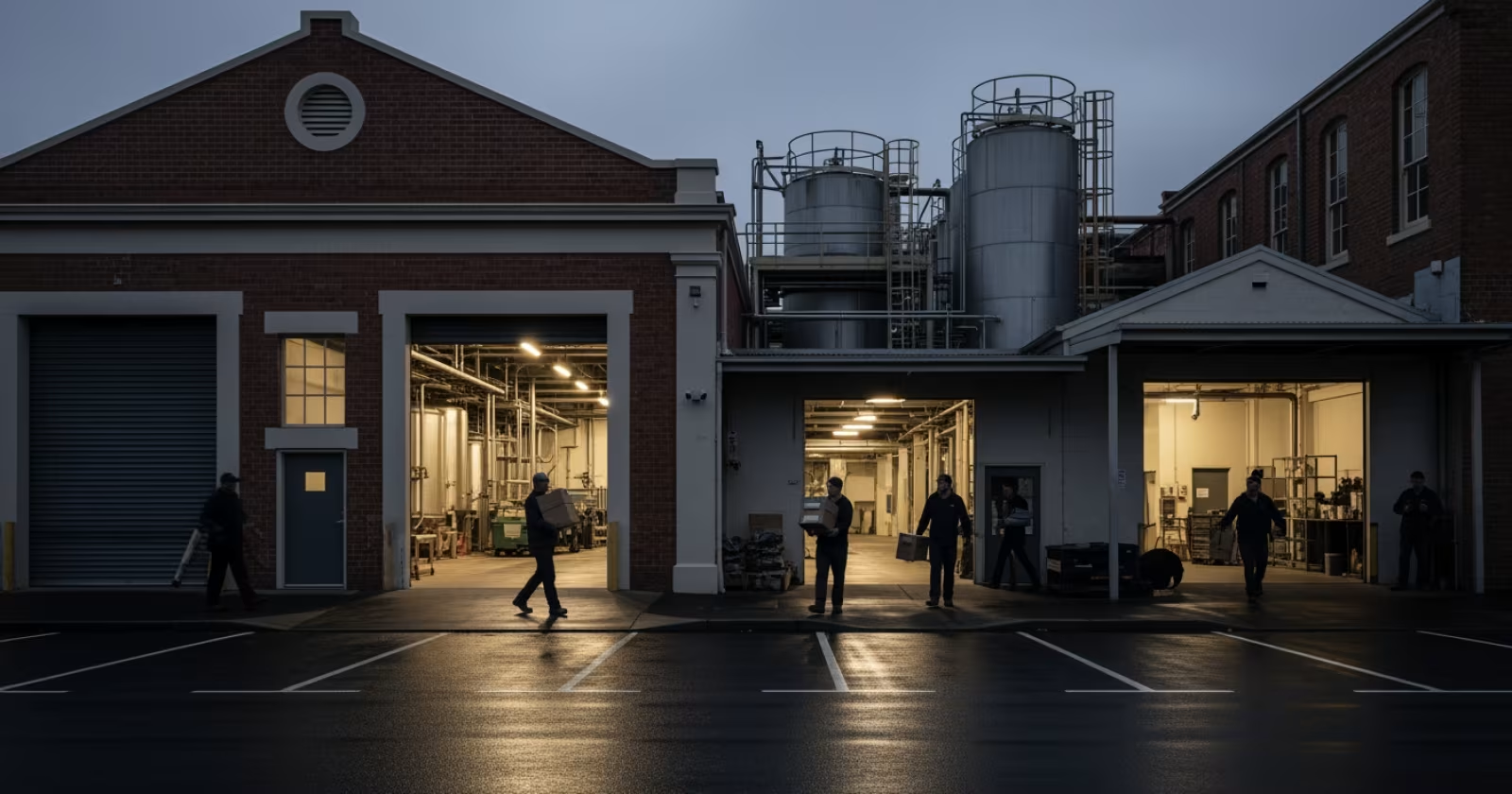
James Boag brewery closure is not just a heritage story. It marks a hard commercial decision in a beer market that has been shrinking for years, and it will shift production out of Tasmania by November.
For FMCG operators, the bigger signal is capacity discipline. Lion is pulling brewing activity onto the mainland, keeping the visitor centre in Launceston, and trying to manage the people impact through redeployment, redundancy support and a reskilling fund.
What Is James Boag Brewery Closure and Why It Matters for FMCG
The planned James Boag brewery closure ends 145 years of beer production at the Launceston site. That matters because brewery footprints are not just symbols of local history; they are fixed-cost assets that have to earn their keep through volume, throughput and logistics efficiency.
When national beer demand weakens, underused plants quickly become expensive. In this case, Lion says the brewery has been operating well below capacity because of a long-term decline in the Australian beer market. For suppliers, buyers and category managers, the move is a reminder that manufacturing networks in FMCG often follow volume, not sentiment.
Tasmania also loses something harder to replace: a local production base tied to a well-known beer brand. Even if the brand remains on shelf, the production story, labour footprint and regional spend will change.
What Lion Confirmed About the James Boag Brewery Closure
Lion has confirmed it plans to close the James Boag’s Brewery in Launceston by November 2026. Brewing will move to Lion’s mainland facilities, while the newly redeveloped Boag’s Brewhouse visitor centre will remain open in Launceston.
The company said the decision follows a long-term decline in the national beer market and the site’s low utilisation. Anubha Sahasrabuddhe, speaking for Lion, said the proposal does not reflect on the brewery team’s capability, commitment or effort, which is the kind of language companies use when they know a closure carries reputational weight.
Lion has also opened a consultation period with affected staff. It has committed to meeting all redundancy obligations for workers who cannot be redeployed within the remaining brewery network.
| Item | Confirmed detail | Commercial impact |
|---|---|---|
| Closure date | By November 2026 | Ends local production in Launceston |
| Production plan | Moves to Lion’s mainland facilities | Consolidates brewing capacity |
| Staff support | Consultation, redeployment, redundancy obligations and a $500,000 reskilling initiative | Softens workforce disruption |
| Community support | $500,000 fund over five years | Targets Northern Tasmania organisations |
| Government support | $1 million grant to be repaid | Reverses prior redevelopment funding |
Lion will also provide a $500,000 community fund over five years for grassroots organisations in Northern Tasmania. It has said it will repay a $1 million Tasmanian Government grant that had supported redevelopment of the visitor facility.
How the Restructure Will Work in Practice
In practical terms, the brewery closure separates production from place. The beer brand stays in market, but the brewing process shifts into Lion’s wider mainland network, where it can be matched more closely to demand and plant utilisation.
That is a familiar FMCG play. When a site becomes too small relative to the cost of labour, utilities, maintenance and freight, companies often centralise output and keep only the parts that carry consumer value, such as a visitor centre, brand home or tourism asset.
For staff, the key question is redeployment. Lion says it will look for internal roles before relying on redundancies, which is sensible from both a public relations and labour perspective. For the region, the question is broader: how much of the economic effect sits in direct jobs, and how much sits in supplier, hospitality and visitor traffic around the brewery?
What This Does Not Change for the Beer Category
The James Boag brewery closure does not mean the brand disappears, and it does not automatically signal a wider retreat from Tasmania by other beverage makers. It is a site-specific decision shaped by Lion’s network and the economics of a declining beer category.
It also does not resolve the pressure points that caused the move in the first place. Beer volumes are still under strain, and manufacturers still face high fixed costs when plants run below capacity. The heritage value of the Launceston site may matter to locals, but it does not change the arithmetic.
Nor does the community fund replace lost production activity. It may help soften the blow, but it will not restore the same level of industrial spend in the region.
Brands with exposure to beer packaging, freight, cold-chain logistics and hospitality supply in Tasmania will feel the change most quickly. The operational shift should play out over the coming months, while the workforce and community adjustments will extend well beyond the closure date.
Why This Fits the Next Phase of FMCG Manufacturing
This is another sign that FMCG manufacturers are stripping back excess capacity and favouring network efficiency over legacy sites. The pressure is not confined to beer, either. Across food and beverage, firms are reassessing where production should sit, how much local presence they can justify, and which assets now matter more as brand touchpoints than manufacturing hubs.
The James Boag brewery closure also shows how modern restructuring now comes with multiple layers of response: consultation, reskilling, community funding and heritage management. That does not make these decisions easier, but it does show how much more complex the commercial and social calculus has become for big food and drink companies in Australia.
If the transition goes smoothly, other FMCG groups with ageing plants and soft volumes will read it as a template for how to exit a site without abandoning the brand.
If you track beer, beverage manufacturing or regional supply chains, this is a move worth briefing your team on now, because the next capacity review could be closer to your category than you think.