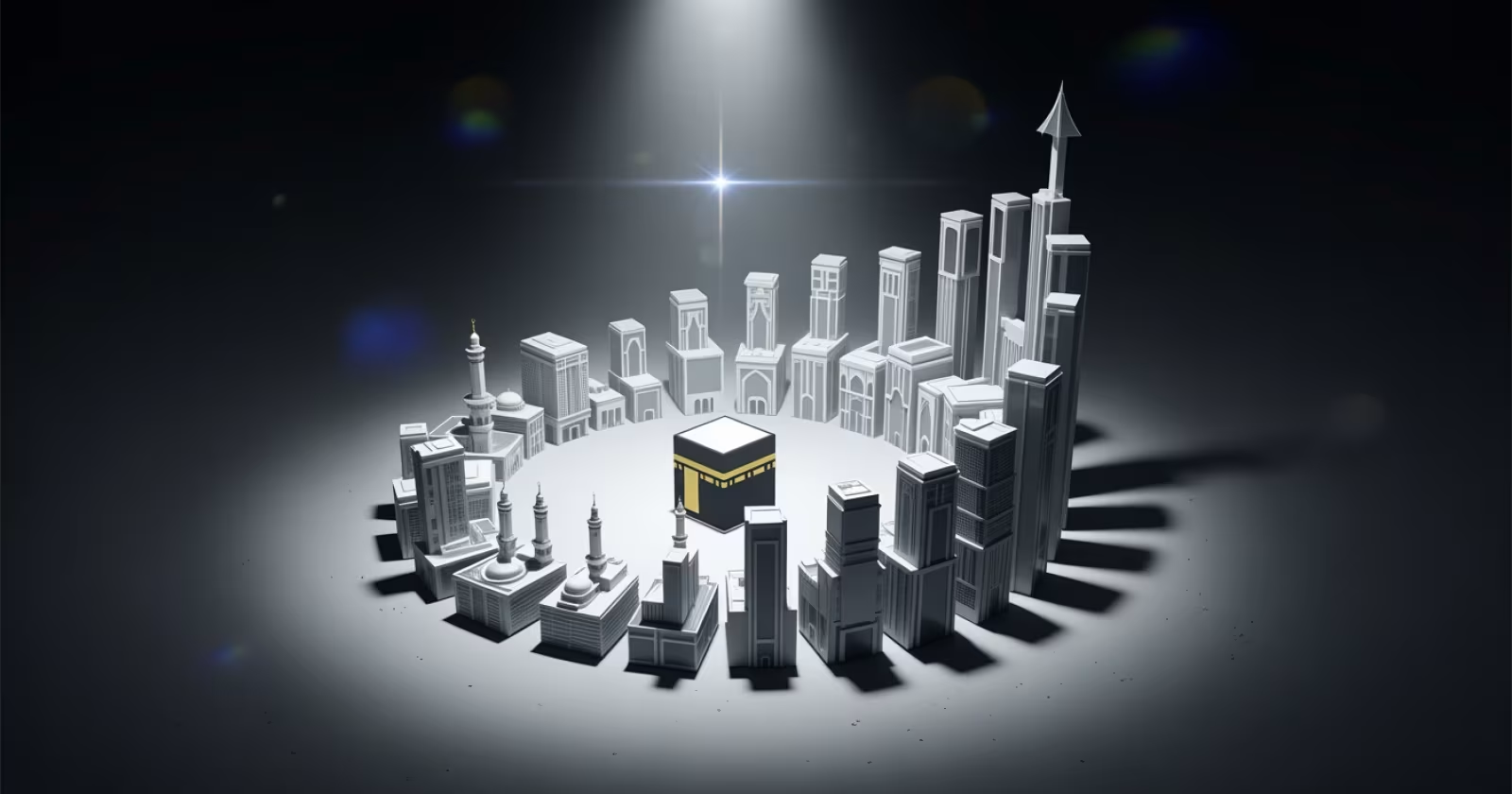
A $3.55 billion redevelopment push in Makkah is more than a property story. It signals how Saudi Arabia is using urban renewal, private capital and infrastructure upgrades to reshape one of the kingdom’s most important cities.
The Royal Commission for Makkah City and Holy Sites has awarded six major development sites under the Developed Districts Program. The projects cover more than 2.7 million square metres and are intended to improve infrastructure, raise living standards and strengthen Makkah’s appeal as an investment destination.
What Is Makkah Redevelopment and Why It Matters for MENA
Makkah redevelopment sits at the intersection of real estate, public policy and long-term urban planning. In a city that serves millions of residents and pilgrims, land use, transport links, utilities and service delivery all carry outsized economic importance. A project of this scale is therefore not just about building new assets; it is about improving how the city functions.
For MENA investors, the significance is broader. Saudi Arabia has been channeling capital into urban transformation, logistics, tourism and housing as part of its diversification agenda. Projects in Makkah matter because they combine a strategic location, strong demand fundamentals and state-backed planning. They also show how public authorities are increasingly using partnerships with developers, investment companies and funds to deliver urban assets at scale.
The Main News on Makkah Projects Worth $3.55 BN
The commission said the six sites were awarded for a combined SAR13.3 billion, equal to $3.55 billion. The developments span more than 2.7 million square metres and sit within priority districts targeted for redevelopment.
According to the commission, the initiative forms part of the Developed Districts Program and aims to modernise urban areas, improve infrastructure networks and enhance public services. It also seeks to address urban development challenges while creating new economic opportunities. The partnership structure brings together regulatory oversight and private-sector expertise, with delivery set to involve real estate developers, investment companies and investment funds.
That mix matters. In practical terms, the state is not acting alone as a builder and owner. It is setting the framework, then inviting market participants to help finance, design and deliver the redevelopment. For a city like Makkah, that can improve execution speed and bring commercial discipline to projects that must also meet social and planning goals.
| Project metric | Confirmed figure |
|---|---|
| Total value | SAR13.3 billion ($3.55 billion) |
| Land area | More than 2.7 million square metres |
| Number of sites | Six major development sites |
| Delivery model | Partnerships with developers, investment companies and funds |
How the Developed Districts Program Works in Practice
The Developed Districts Program appears designed to solve a familiar urban problem: how to upgrade older or under-served areas without leaving the public sector to carry the full cost and operational burden. The commission oversees the process, while private participants contribute capital and development capability. That arrangement can help unlock land value that has not been fully used.
The commission said the projects focus on improving land-use efficiency, upgrading infrastructure networks and enhancing public services. That combination is important because real estate value in a city such as Makkah depends not only on buildings, but also on roads, utilities, access and the quality of surrounding services. When those elements improve together, the economic case for redevelopment becomes much stronger.
Compared with a single-site project, this kind of multi-district programme can have a wider impact. It can support construction activity, attract related services and improve long-term investor confidence in the urban market. It can also create a clearer pipeline for institutional capital that wants exposure to Saudi real estate but prefers structured, policy-backed opportunities.
What the Makkah Projects Do Not Change Yet
The announcement does not mean the city’s urban challenges disappear quickly. The source does not provide timelines for completion, details on individual district names, or the exact phasing of the six sites. It also does not say how returns will be distributed among the various private partners.
That matters because large redevelopment schemes often take years before their economic effects become visible. Construction, permitting, infrastructure tie-ins and market absorption all shape outcomes. For now, the key fact is that the capital has been committed and the framework has been set; the full commercial impact will depend on delivery.
Who Benefits and When
In the near term, developers, contractors, planners and investment firms are likely to benefit first as the sites move into execution. Over time, residents and businesses should see gains from better services, stronger infrastructure and a more efficient urban environment. For investors, the appeal lies in a city with structural demand and a policy backdrop that continues to support urban transformation.
The Bigger Picture for Saudi Real Estate and MENA Capital
I see this as part of a wider Saudi pattern: the state is using urban redevelopment to support growth, diversify the economy and deepen the real estate market. That approach matters in MENA because it shows how infrastructure, planning and capital markets can reinforce one another. Makkah projects of this scale also signal that the kingdom wants its most important cities to compete not just on heritage, but on efficiency and investability.
For regional investors, the message is clear. Saudi urban development is moving from isolated projects toward coordinated programmes with clearer commercial logic. The Makkah projects worth $3.55 billion underline that shift, and the next phase will test how quickly that capital turns into visible urban and economic gains.
If you track Saudi real estate or sovereign-backed development trends, this is a story worth following closely, because the way these districts are delivered will shape investor sentiment far beyond Makkah.