A fresh sanctions package can move markets even when it contains no headline-grabbing dollar figure. The latest Iran oil sanctions matter because they land while diplomats are still trying to preserve a ceasefire framework tied to the Strait of Hormuz, one of the world’s most sensitive energy corridors.
The United States has targeted companies, vessels and networks accused of supporting Iran’s military-linked oil exports and petroleum trade. For Gulf investors, shipping firms, refiners and energy traders, the practical issue is not only who appears on a sanctions list, but how quickly compliance risk spreads across freight, insurance and crude flows.
What Iran Oil Sanctions Mean for MENA Energy Markets
Iran’s oil trade has long sat at the intersection of energy supply, regional security and financial compliance. When Washington tightens restrictions on petroleum networks linked to Tehran, the effect rarely stays inside Iran’s borders. It touches shipowners, insurers, banks, commodity traders and port-linked service providers that must screen counterparties before capital or cargo moves.
For MENA, the sensitivity is higher because the Strait of Hormuz remains central to crude and refined product shipping. Even when physical flows continue, the market prices in legal and geopolitical risk. I read this latest move as a reminder that sanctions enforcement and ceasefire diplomacy can run in parallel, even when they appear to pull in different directions.
The Gulf’s financial centres have become more important to global trade finance, commodity settlement and maritime services. That means sanctions linked to oil tankers or shipping networks can create operational pressure beyond the firms directly named by US authorities.
US Treasury Targets Oil Networks Despite Hormuz Ceasefire Push
The US Treasury Department has rolled out new restrictions focused on Iran’s oil sector, according to the available source material. The measures target companies, vessels and networks accused of supporting oil exports and petroleum trade connected to Iran’s military interests.
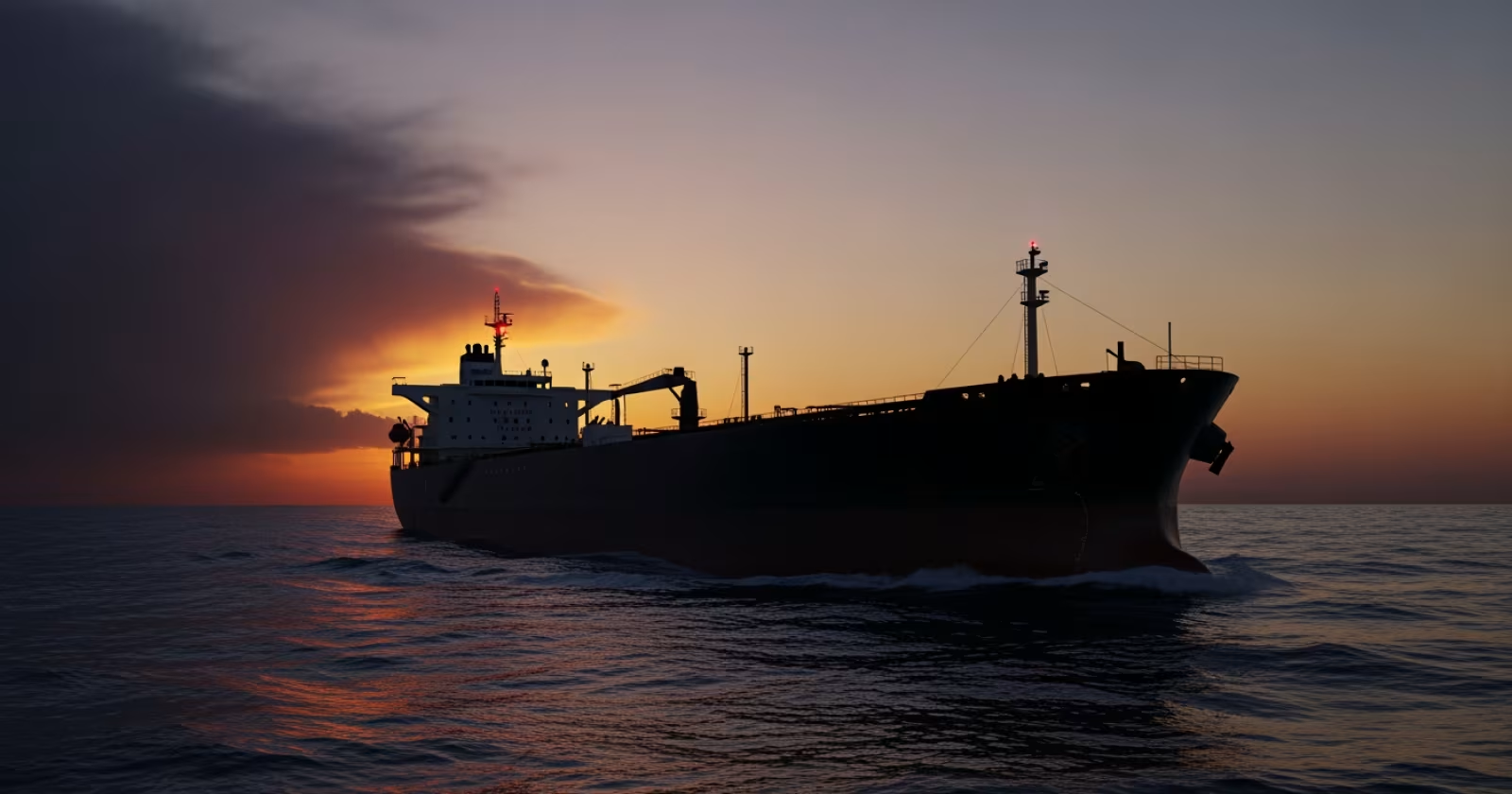
US authorities stated that the objective is to curb revenue streams allegedly used by Tehran to strengthen military operations and regional influence. Several shipping firms and oil tankers operating under multiple international flags were included in the sanctions package, according to the source.
The timing gives the action its market significance. The measures arrive while diplomatic discussions continue over regional stability and the future reopening of the Strait of Hormuz to smoother commercial shipping activity. That does not mean shipping has stopped, but it does mean compliance teams will treat certain routes, ownership structures and vessel histories with more caution.
The available details do not disclose the full list of affected companies, the flags involved, or any specific penalties beyond the sanctions designation itself. That distinction matters. Investors should separate confirmed restrictions from broader speculation about escalation, retaliation or disruption to Gulf oil exports.
What the Sanctions Signal for Shipping, Compliance and Crude Flows
Sanctions aimed at oil networks usually work through access rather than physical seizure. A listed vessel, company or intermediary can become difficult to finance, insure, charter or service, particularly when banks and insurers fear secondary exposure to US enforcement.
In practice, a tanker does not need to be blocked at sea for commercial risk to rise. If counterparties question ownership, cargo origin, payment flows or beneficial control, transactions slow down. That delay can affect freight costs, documentation timelines and credit approvals across the supply chain.
| Confirmed element | Market relevance | What remains unclear |
|---|---|---|
| Fresh US restrictions on Iran’s oil sector | Raises compliance risk for petroleum-linked transactions | Full commercial impact on regional cargo flows |
| Companies, vessels and networks targeted | Increases scrutiny of counterparties and vessel histories | Complete list of affected entities in the available brief |
| Oil tankers under multiple international flags included | Signals maritime enforcement beyond one jurisdiction | Which flags and ownership structures face the highest exposure |
| Measures announced amid Hormuz ceasefire efforts | Keeps energy markets alert to political and shipping risk | Whether diplomacy will reduce operational uncertainty |
For banks and commodity finance desks, the key issue is documentation. They need to know who owns a vessel, who controls the cargo, who receives payment and whether any party sits within a sanctioned network. When any of those answers look incomplete, the safest commercial response is often to pause.
For energy markets, the Strait of Hormuz remains the pressure point. It is not just a waterway on a map; it is a pricing variable for crude, freight and insurance whenever geopolitical risk rises in the Gulf.
What This Does Not Change for Gulf Investors
The latest Iran oil sanctions do not automatically imply a disruption to all Gulf shipping. They also do not prove that the ceasefire framework has collapsed. The source states that diplomatic discussions continue, which means the sanctions track and the stability track remain active at the same time.
The measures also do not create new oil supply figures, price forecasts or confirmed cargo losses in the available brief. I would avoid treating this as a confirmed supply shock unless fresh evidence emerges from shipping data, official statements or energy market pricing.
For UAE and wider MENA investors, the immediate change is risk perception. Port operators, logistics firms, insurers, banks and traders may face more screening work, but most regional commercial activity remains governed by existing contracts, compliance systems and geopolitical monitoring.
Who Benefits First and Where Pressure Builds
The clearest near-term beneficiaries are compliance advisers, maritime due diligence providers and insurers with strong sanctions-screening capabilities. Banks with disciplined trade finance controls may also gain trust as counterparties seek safer execution. The pressure builds fastest for smaller shipping firms and intermediaries that lack transparent ownership records or rely on complex cross-border payment chains.
Energy traders will watch freight rates, tanker availability and any change in risk premiums connected to the Strait of Hormuz. Even modest uncertainty can affect margins when cargoes move through a corridor that global crude markets treat as strategically critical.
The Bigger Picture for Gulf Energy Security and Capital Markets
This episode fits a broader MENA trend: financial markets now price energy security, sanctions compliance and maritime risk as one connected story. The Gulf is investing heavily in ports, logistics, digital trade systems and financial infrastructure, but those systems must operate inside a geopolitical environment that can shift quickly.
For the UAE, Saudi Arabia and other regional energy players, the lesson is commercial rather than theoretical. The more global capital and trade flows through Gulf-linked platforms, the more important transparent compliance becomes. That may not remove geopolitical risk, but it can reduce the cost of uncertainty for serious investors.
I would use this moment to review exposure to energy logistics, shipping finance and sanctions-sensitive counterparties, because Iran oil sanctions will keep shaping Gulf risk pricing as long as the Strait of Hormuz remains central to global crude trade.