
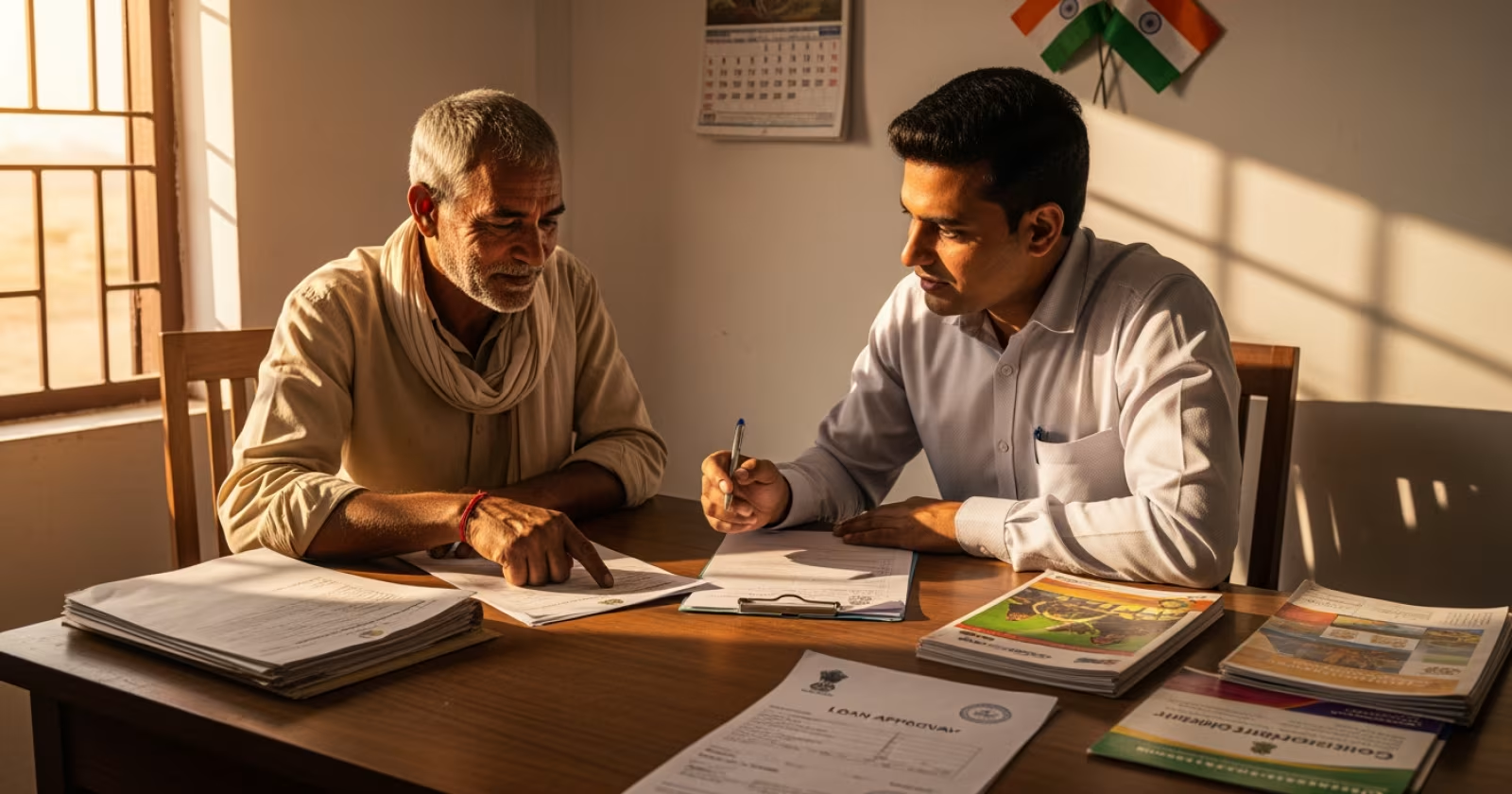
Most people think starting a farming business requires either inherited land or a lot of personal savings. The reality is different — the Indian government has built a wide network of schemes, loans, and subsidies specifically to help new and small farmers get started with minimal upfront capital.
The problem is not that support doesn’t exist. It’s that most farmers never find out how to actually access it. This guide breaks it down step by step.
Quick Answer: What Support Is Available?
Starting a farming business in India with government support means combining multiple schemes — not relying on one single program. You can access subsidized loans through NABARD or Kisan Credit Card, crop insurance under PM Fasal Bima Yojana, direct income support via PM Kisan, and infrastructure funding through the Agri Infrastructure Fund.
This is not a single government scheme. It is a combination of different financial tools available to farmers depending on their state, crop type, land ownership, and bank relationship. Loan amounts typically range from ₹50,000 to ₹25 lakh or more depending on the scheme and purpose.
| Scheme / Support Type | Benefit | Interest Rate | Who Can Apply | Apply Mode |
|---|---|---|---|---|
| Kisan Credit Card (KCC) | Up to ₹3 lakh short-term credit | 4% (after interest subvention) | All farmers with land | Bank / CSC |
| PM Kisan Samman Nidhi | ₹6,000/year direct transfer | N/A | Small and marginal farmers | pmkisan.gov.in |
| NABARD Agriculture Loan | ₹1 lakh to ₹25 lakh+ | Varies by bank (approx. 7–9%) | Farmers, FPOs, agri entrepreneurs | Through partner banks |
| Agri Infrastructure Fund (AIF) | Up to ₹2 crore with 3% interest subsidy | Subsidized rate | Farmers, FPOs, startups | agriinfra.dac.gov.in |
| PM Fasal Bima Yojana | Crop loss insurance coverage | Premium: 1.5–5% of sum insured | All farmers growing notified crops | Bank / CSC / pmfby.gov.in |
| Mudra Yojana (Agri-linked) | Up to ₹10 lakh for agri business | Varies by bank | Small agri entrepreneurs | Any scheduled bank |
What These Schemes Actually Cover
Government support for farming in India broadly falls into three categories: working capital (seeds, fertilizers, labor), infrastructure (storage, irrigation, equipment), and risk protection (crop insurance, income support).
The Kisan Credit Card covers day-to-day farming expenses at a heavily subsidized interest rate — effectively 4% per year if repaid on time. NABARD-backed loans through regional rural banks and cooperative banks cover larger investments like land development, drip irrigation, or polyhouse farming.
The Agri Infrastructure Fund is specifically designed for post-harvest infrastructure — cold storage, warehouses, processing units. If you are planning a farming business beyond just growing crops, this is one of the most useful tools available in 2026.
Who Can Apply
- Individual farmers with own or leased agricultural land
- Tenant farmers and sharecroppers (in many states, with proper documentation)
- Self Help Groups (SHGs) and Farmer Producer Organizations (FPOs)
- Young agri-entrepreneurs starting allied businesses (dairy, poultry, fisheries)
- Women farmers — many schemes offer priority processing and additional subsidy
Land ownership is not always mandatory. Several NABARD and state government schemes accept lease agreements or tenancy certificates as proof of farming activity. Check with your nearest Krishi Vigyan Kendra or district agriculture office for state-specific rules.
Documents You Will Need
- Aadhaar card (mandatory for most schemes)
- Land ownership documents or lease agreement
- Bank account linked to Aadhaar
- Khasra / Khatauni (land record from state revenue department)
- Passport-size photographs
- Caste certificate (if applying under SC/ST category for additional benefits)
- Project report (required for AIF and larger NABARD loans)
How to Apply — Step by Step
Start by registering on the PM Kisan portal at pmkisan.gov.in if you have not already. This establishes your identity as a farmer in the government database and makes future applications smoother.
For a Kisan Credit Card, visit your nearest nationalized bank or regional rural bank with your land documents and Aadhaar. Most banks process KCC applications within 2–4 weeks. You can also apply through a Common Service Centre (CSC) in your village.
For NABARD-backed loans or the Agri Infrastructure Fund, you will need a basic project report explaining what you plan to do, estimated costs, and expected income. District-level NABARD offices often provide free guidance on preparing this. You can also visit agriinfra.dac.gov.in to apply for AIF directly online.
For crop insurance under PM Fasal Bima Yojana, apply before the cutoff date for your crop season — typically before sowing. Your bank or CSC can help enroll you. The premium is low, and in case of crop loss, claims are processed through the same bank account.
Reality Check — What Actually Happens on the Ground
Government schemes for farming exist on paper in a strong form. The gap is in implementation. Bank branches in rural areas are often understaffed, and loan officers may ask for documents beyond what is officially required. Approval timelines can stretch from weeks to months in some districts.
Common rejection reasons include incomplete land records, Aadhaar-bank account mismatch, or an existing loan default in the family. If your application is rejected, ask for a written reason — you have the right to know, and many rejections can be resolved with corrected documents.
Subsidy disbursement under some state schemes is delayed due to budget allocation issues. Do not plan your farming calendar assuming the subsidy will arrive on time. Treat it as a bonus, not a guaranteed upfront resource.
A Practical Example
For example, consider a small farmer in Maharashtra with 2 acres of land wanting to start vegetable farming. In many cases, they could apply for a KCC of ₹1–1.5 lakh for seeds and inputs, enroll in PM Fasal Bima Yojana for crop protection, and simultaneously apply for a drip irrigation subsidy under the state’s horticulture department. Combined, this setup requires very little personal capital to begin.
This is not a guaranteed outcome — it depends on the bank, the district, and the crop. But it represents a realistic path that many farmers have successfully used.
What You Should Do Next
If you are serious about starting a farming business, begin with two things this week: get your land records updated at the local tehsil office, and open or verify your Aadhaar-linked bank account. These two steps unlock almost every scheme mentioned here.
Then visit your district agriculture office or the nearest Krishi Vigyan Kendra. Ask specifically about schemes active in your state for 2026 — state governments often run additional programs on top of central schemes that most farmers miss entirely.
You can also explore more on this site: , , and . The support is there — the next step is yours to take.